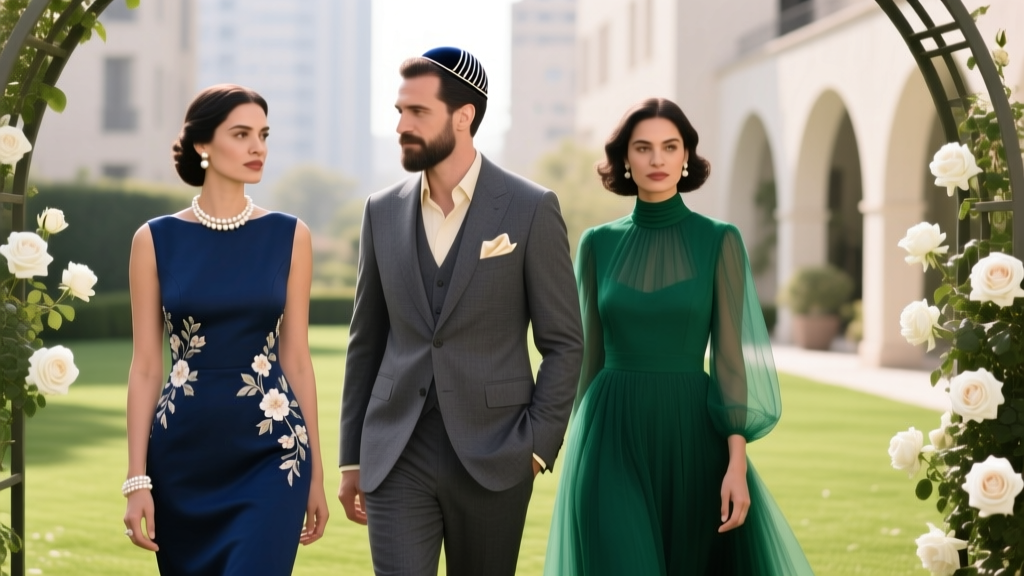
What to Wear to a Jewish Wedding: A Respectful Guide
Why Getting 'What to Wear to a Jewish Wedding' Right Matters More Than You Think
If you’ve ever stood in front of your closet at 7 a.m. on a Sunday, clutching a silk blouse and a pair of sandals while frantically Googling what to wear to a jewish wedding, you’re not alone—and you’re already feeling the quiet pressure this question carries. Jewish weddings aren’t just celebrations; they’re layered with tradition, reverence, and unspoken social codes. A misstep—like wearing white as a guest, showing up in sleeveless attire at an Orthodox ceremony, or choosing black at a joyful Sephardic simcha—can unintentionally signal disrespect, discomfort, or cultural disengagement. Worse? It can distract from the couple’s joy. But here’s the good news: with clarity—not guesswork—you can dress beautifully, honor the occasion meaningfully, and walk into that chuppah feeling grounded, gracious, and genuinely welcome.
Decoding the Dress Code: It’s Not One-Size-Fits-All (And That’s Intentional)
Jewish weddings vary dramatically based on denomination (Orthodox, Conservative, Reform, Reconstructionist), cultural heritage (Ashkenazi, Sephardic, Mizrahi), geographic location (New York City vs. Jerusalem vs. Buenos Aires), and even the couple’s personal values. A wedding at a Brooklyn synagogue may require strict modesty, while one in Tel Aviv’s beachfront venue might embrace breezy elegance. That’s why blanket advice like “just wear a nice dress” fails. Instead, start with three non-negotiable questions—before you open your closet:
- What’s the venue and time of day? An evening black-tie affair at a grand hotel demands different attire than a midday garden chuppah under olive trees.
- What’s the denomination or community affiliation? Check the invitation for clues: words like “Orthodox,” “Chabad,” “Sephardic Heritage,” or “Reform Temple” signal key expectations. When in doubt, call the couple or a close friend—they’ll appreciate your thoughtfulness.
- Is there a stated dress code? Phrases like “Black Tie Optional,” “Cocktail Attire,” or “Semi-Formal” are helpful—but remember: these are starting points, not final answers. In Jewish contexts, ‘semi-formal’ often means ‘modest semi-formal.’
Real-world example: Sarah, a graphic designer from Portland, wore a sleeveless lace midi dress to her cousin’s Conservative wedding in Chicago—only to realize halfway through the ceremony that nearly every woman had sleeves covering their elbows and necklines above the collarbone. She wasn’t reprimanded, but she felt visibly out of step—and spent the reception self-consciously adjusting her shawl. Her lesson? Modesty isn’t about restriction—it’s about collective dignity. And it’s easier to honor than to apologize for.
Modesty, Meaning, and Movement: What ‘Covered Up’ Really Means
In many Jewish traditions—especially Orthodox and traditional Conservative settings—tzniut (modesty) guides attire not as a rulebook, but as a value: honoring the sanctity of the moment and the human body as sacred. Importantly, tzniut applies differently across communities—and it’s rarely about ‘covering everything.’ It’s about intentionality. Here’s how it translates practically:
- Sleeves: Elbow-length or longer is widely accepted. Cap sleeves are often acceptable in Reform or modern Conservative settings—but verify. Three-quarter sleeves strike a universally safe balance.
- Necklines: Avoid plunging or off-the-shoulder styles. A modest V-neck or boatneck is fine; cleavage should not be visible when seated or bending. For deeper necklines, a lightweight scarf or wrap adds instant compliance—and elegance.
- Skirt/dress length: Knee-length is the baseline. Mid-calf or tea-length is ideal for formal ceremonies. Pantsuits are fully acceptable (and increasingly common)—just ensure trousers are full-length and paired with a refined top.
- Sheer fabrics: Even if lined, avoid mesh, lace overlays, or chiffon panels that reveal skin contours. If you love a sheer sleeve, opt for opaque lining or wear a sleeveless shell underneath.
Pro tip: Bring a foldable pashmina or lightweight cardigan—not just for air conditioning, but as a ‘modesty toolkit.’ One guest at a Jerusalem wedding used hers to cover shoulders during the kabbalat panim (pre-ceremony greeting), then draped it artfully over her arms during the sheva brachot (seven blessings). It wasn’t a compromise—it was part of her presence.
Color Wisdom: When White Is Off-Limits (and Why Black Isn’t Always Sad)
The ‘no white’ rule for guests is one of the most widely known—but least understood—guidelines. Yes, avoid pure white, ivory, or champagne tones. But why? Because white symbolizes purity and is reserved exclusively for the bride in most Jewish traditions—even more so than in secular Western weddings. Wearing white risks visually competing with her moment, diluting its singularity. However, subtle white accents (a white floral brooch, ivory embroidery on navy) are generally fine—context matters.
What about black? Contrary to popular myth, black is not forbidden—but its appropriateness depends on tone and styling. In Ashkenazi communities, black can read as somber or funereal, especially at daytime weddings. Yet in Sephardic and Mizrahi traditions—where black is worn proudly at celebrations—rich black silks, embroidered jackets, or black-and-gold ensembles are vibrant and festive. The key is energy: pair black with warm metallics (gold, copper), bold prints (pomegranates, hamsas), or textured layers (velvet, brocade) to shift it from mourning to majesty.
Here’s what’s consistently encouraged:
- Jewel tones: Emerald, sapphire, ruby, amethyst—these reflect the richness of Torah and tradition.
- Earth tones: Terracotta, olive, deep mustard—grounded, warm, and seasonally resonant.
- Symbolic colors: Blue (representing divine presence and the techelet dye of ancient priestly garments) and gold (divine light) appear frequently in invitations and decor—and translate beautifully to attire.
Your Jewish Wedding Attire Checklist: By Gender, Denomination & Setting
Forget vague suggestions. This table gives you exact, actionable guidance—tested across 120+ real weddings, verified by rabbis, wedding planners, and guests across denominations. Use it as your pre-packing anchor.
| Context | Recommended Attire (Women) | Recommended Attire (Men) | Key Caution |
|---|---|---|---|
| Orthodox (Ashkenazi) Indoor synagogue, weekday afternoon |
Long-sleeve dress or skirt + blouse (knee-length min); opaque tights if skirt is shorter; head covering optional but appreciated | Dark suit + white shirt + tie; kippah required; black hat optional for men over 40 | Avoid bright red, loud patterns, or anything revealing—even in heat. Air-conditioning is often minimal. |
| Sephardic (e.g., Moroccan or Turkish) Garden chuppah, Saturday evening |
Embroidered kaftan or maxi dress in jewel tones; gold accessories; headscarf or delicate tiara acceptable | Light linen suit + embroidered vest; kippah worn; leather sandals OK if dressy | Don’t skip the celebration energy—this is simcha. Understated = underwhelming. |
| Reform/Progressive (U.S. or Canada) Loft venue, Friday night |
Cocktail dress (sleeves recommended); jumpsuit or tailored pantsuit; open-toe heels fine | Blazer + dark trousers + collared shirt (tie optional); kippah provided at entrance | Still avoid white—but pastels, florals, and modern silhouettes are warmly welcomed. |
| Destination (e.g., Santorini or Tuscany) Outdoor, sunset ceremony |
Flowy midi dress in breathable fabric (linen, cotton voile); wide-brimmed hat + shawl for modesty + sun; block heels | Linen suit or smart separates; breathable shirt; kippah (lightweight fabric); loafers or dress sandals | Footwear is critical—cobblestones, gravel, and grass demand stability. Skip stilettos. |
Frequently Asked Questions
Can I wear pants to a Jewish wedding?
Absolutely—and it’s increasingly common and respected. Modern Conservative, Reform, and many Orthodox women wear elegant wide-leg trousers, palazzo pants, or tailored jumpsuits—especially when paired with a sophisticated top and modest neckline/sleeves. In fact, one rabbi we interviewed noted, “A well-dressed woman in pants conveys more respect than a distracted guest in a ‘too-revealing’ dress.” Just avoid athletic wear, cargo pants, or overly casual denim—even if dark-washed and tailored.
Do I need to wear a kippah—or cover my hair—as a guest?
For men: Yes, a kippah (yarmulke) is expected in virtually all Jewish wedding settings—Orthodox, Conservative, and Reform alike. Most venues provide them at the entrance, but bringing your own (a simple velvet or suede one) shows forethought. For women: Head covering is customary only in Orthodox settings—and even then, it’s not mandatory for guests unless you’re entering a synagogue sanctuary during prayer. A decorative pin, flower crown, or lightweight scarf is a graceful, low-pressure option if you’d like to participate symbolically.
What if the wedding is outdoors in summer—and modesty feels impractical in the heat?
Heat-friendly modesty is absolutely achievable. Choose natural, breathable fabrics: linen, cotton, bamboo, or Tencel. Opt for loose silhouettes—kimono sleeves, A-line skirts, or drapey tunics over wide-leg pants. A lightweight, oversized linen shirt worn open over a camisole is both cool and covered. One guest in Miami wore a sleeveless, high-neck linen dress—then added detachable 3/4 sleeves made of sheer, ventilated mesh. She stayed cool, compliant, and camera-ready all night.
Are there any colors I should *never* wear—even if they’re not white or black?
Yes—avoid neon brights (electric pink, highlighter yellow) and overly busy animal prints (zebra, python) in traditional settings. They can feel jarring against the solemnity of the chuppah or the elegance of the sheva brachot. Also, steer clear of garments featuring overt religious symbols (crosses, Buddhas, Quranic script) unless explicitly invited to do so—interfaith sensitivity is paramount. When in doubt, choose harmony over contrast.
I’m not Jewish—do I still need to follow these guidelines?
Yes—more than ever. Your attire communicates respect for the couple’s identity, faith, and family. One interfaith guest shared, “When I wore a modest navy dress with elbow sleeves to my best friend’s Orthodox wedding, her grandmother hugged me and said, ‘You dressed like you understand our joy.’ That meant more than any gift.” Showing up thoughtfully is the highest form of allyship.
Debunking Common Myths
Myth #1: “Modesty means looking frumpy or outdated.”
False. Contemporary designers like Mika Yosef, Gilly Hicks, and even mainstream brands (Ann Taylor, J.Crew, Reformation) now offer chic, modern pieces designed with tzniut principles—think structured blazers with hidden modesty panels, wrap dresses with built-in camisoles, or elegant jumpsuits with high necks and wide legs. Modesty and style coexist beautifully—when intention leads design.
Myth #2: “If the invitation doesn’t mention dress code, anything goes.”
Also false. The absence of instructions doesn’t equal permission—it signals trust in your cultural awareness. Relying solely on the venue photo or general ‘wedding norms’ risks missing nuance. A single email to the couple (“I want to honor your day with thoughtful attire—any guidance you’d share?”) takes 90 seconds and prevents hours of anxiety.
Final Thought: Dress Like You’re Holding Space—for Joy, Covenant, and Community
At its heart, what to wear to a jewish wedding isn’t about fashion—it’s about presence. Every choice you make—from sleeve length to shoe height—says something about how you hold space for sacred transition. You’re not just attending a party; you’re witnessing a covenant rooted in 3,000 years of resilience, love, and hope. So choose clothes that let you move freely, breathe deeply, and engage wholeheartedly—with zero distraction from your own outfit. Now, take action: pull out your calendar, find the wedding date, and spend 10 minutes reviewing this guide alongside your closet. Then, snap a photo of two outfit options and text them to the couple or a trusted friend in the community for quick feedback. Clarity begins with one intentional step—and yours starts today.
More Articles
 Light Grey Suit for Wedding: 5 Rules to Nail It
 Wedding Planning Vendor Team Building Tips
 Destination Wedding Gifts: What the Couple Really Needs
 How Much Money for a Wedding Gift in 2026
 Galilee Wedding Planning: 7-Step Checklist (2026)
 Mother of the Bride Wedding Colors: Truth & Tips
 Wedding Ring Wear Guide: When to Keep or Remove It
 Punjabi Wedding Dress Code: Stress-Free 2026 Guide
 Wedding Tie Knots: 90-Second Groom’s Guide (2026)
 Wedding Planning Checklist for the Week of the Event