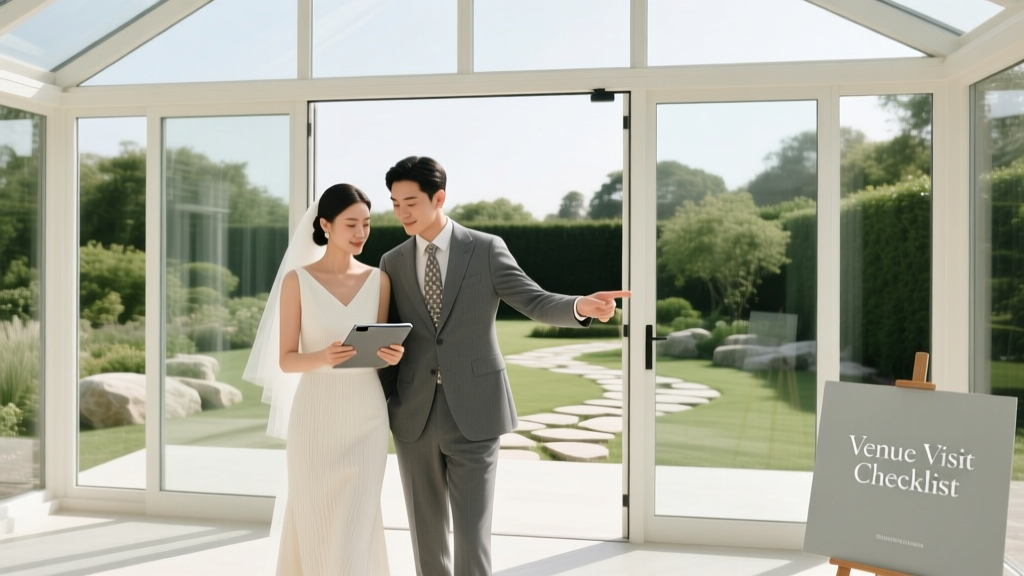
How to Plan a Wedding Venue Visit Efficiently
You finally booked the venue tour—exciting, right? It’s also the moment when wedding planning starts to feel very real. You’re not just scrolling photos anymore; you’re stepping into a space and trying to picture your people, your ceremony, your first dance, and yes… your budget. It’s normal to feel a little pressure to “know” if it’s the one.
The good news: you don’t have to rely on gut feeling alone. A wedding venue visit can be simple, efficient, and surprisingly calm when you walk in with a plan. The goal isn’t to make a decision on the spot—it’s to gather the right information so you can compare options confidently and avoid costly surprises later.
This guide will walk you through exactly how to prepare for a venue tour, what to ask, what to look for, and how to follow up afterward. Think of it like a trusted wedding planner friend giving you the checklist they use behind the scenes.
Before You Book the Visit: Get Clear on Your “Must-Haves”
Efficient venue visits start well before you arrive. If you and your partner are aligned on priorities, you’ll spend less time debating tiny details mid-tour and more time asking the questions that matter.
Quick pre-visit alignment (15 minutes)
- Ideal date range: a specific month or season, plus 1–2 backup dates
- Guest count range: your best estimate plus a buffer (example: 110–130)
- Overall wedding budget range: and what portion you can allocate to the venue + catering
- Top 3 priorities: food, location, aesthetic, dancing space, outdoor ceremony, convenience, etc.
- Non-negotiables: accessibility, indoor backup plan, BYO alcohol option, late-night end time, etc.
Budget reality check: what “venue cost” really includes
Many couples hear “$6,000 venue fee” and assume they’ve found a budget-friendly option—only to discover required rentals, staffing, and catering minimums later. Before you tour, write down your comfort zone for:
- Venue rental fee (space cost)
- Food and beverage minimum (often the biggest line item)
- Service charges + gratuities (can add 20–30% on top)
- Taxes
- Rentals (chairs, tables, linens, heaters, tenting, lighting)
- Staffing (bartenders, attendants, security, coat check)
How to Schedule Venue Tours for Maximum Efficiency
How you schedule your visits matters. A smart touring plan reduces decision fatigue and ensures you see each venue under similar conditions.
Best times to tour (and why)
- Same day of the week as your wedding day if possible (Saturday venues can feel different than weekday events)
- Late afternoon if you care about natural light and sunset photos
- When the venue is set for an event (if they allow it) so you can visualize layout
Touring timeline tips
- Limit to 2 venues in a day (3 max if they’re close). Anything more blends together.
- Schedule 30 minutes between visits for notes, a snack, and a quick debrief.
- If you’re touring several, do the “benchmark venue” first: a solid option that helps you compare all others.
Who to bring (and who not to)
Bring the people who will help you decide, not the people who will create competing visions.
- Ideal: you and your partner (plus one trusted decision-helper if needed)
- Optional: planner/coordinator (they’ll catch logistical red flags)
- Avoid: a large group of opinions, especially if you’re early in the search
What to Bring to a Wedding Venue Visit
Arriving prepared makes you look (and feel) confident—and it helps the venue coordinator give you accurate pricing and options.
Your venue tour kit
- A notes app or printed checklist (use the same format for every venue)
- Your estimated guest count and ideal date range
- A folder in your email for proposals and brochures
- Phone charger or portable battery
- Comfortable shoes (you’ll likely walk through outdoor areas or stairs)
- A tape measure (optional, helpful for bands/DJs and layout ideas)
Photos and videos: a simple system that saves hours later
Take more media than you think you need, but keep it organized:
- Start each venue with a quick video: stand at the entrance and say the venue name + date toured.
- Photograph key spaces in this order:
- Ceremony location(s)
- Cocktail hour space
- Reception room from multiple corners
- Bathrooms (yes, really)
- Getting-ready suites
- Outdoor photo spots
- Any stairs, ramps, or tight hallways
- Snap photos of posted rules, preferred vendor lists, and sample floor plans if available.
The Efficient Wedding Venue Tour Checklist (What to Ask and Look For)
Here’s a venue tour checklist you can use room by room, question by question. You don’t need to ask everything—focus on what affects budget, guest experience, and logistics.
Availability, pricing, and payment structure
- Is our date available? What are your backup dates?
- What is the site fee and what does it include?
- Is there a food and beverage minimum?
- What are service charges, gratuities, and taxes?
- What is the deposit and payment schedule?
- What is the cancellation or rescheduling policy?
Capacity, layout, and flow
- What is the comfortable guest count for a seated dinner with a dance floor?
- Where does cocktail hour happen if the reception room needs flipping?
- Can you show us example floor plans for our guest count?
- Where does the band/DJ set up? Is there adequate power?
- How does guest flow work—especially for older guests or anyone with mobility needs?
What’s included (and what you’ll pay extra for)
- Tables, chairs, linens, flatware, glassware—what’s included and what’s rented?
- Set-up and breakdown: who does it, and what’s the timeline?
- Do you provide staff (captain, servers, bartenders)? How many?
- What décor is allowed? Candles? Hanging installations? Confetti?
- Is there an on-site coordinator, and what do they handle on wedding day?
Catering and bar details
- Do you require in-house catering or allow outside caterers?
- Can we do tastings, and when?
- Bar options: open bar packages, consumption, BYO, corkage fees
- Are there restrictions on shots, specialty cocktails, or late-night service?
- Can we bring our own cake or dessert? Is there a cake-cutting fee?
Weather plans and seasonal considerations
- If the ceremony is outdoors, what is the indoor backup plan—and is it truly comparable?
- Who decides when to move inside, and by what time?
- Are heaters, fans, umbrellas, or tenting available, and what do they cost?
- How does the space perform in your wedding month (heat, bugs, wind, sunsets)?
Logistics that affect guest experience
- Parking capacity and cost; valet options
- Nearby hotels and transportation (shuttle-friendly pickup/drop-off?)
- Noise ordinances and end time (and whether after-parties are possible)
- Accessibility: ramps, elevators, restroom access
- Bathrooms: number, location, and whether attendants are required
Vendor rules and load-in/load-out
- Is there a preferred vendor list? Is it required?
- Vendor arrival times and loading access (especially for bands and florals)
- Are there fees for outside vendors or insurance requirements?
- Where can vendors park? How far is the load-in from the ballroom?
Real-World Scenarios: What Efficient Planning Looks Like
Scenario 1: The “Venue fee is low” surprise
You tour a gorgeous loft with a $4,500 rental fee and feel like you found a hidden gem. During the visit, you learn:
- You must rent tables, chairs, and all glassware
- You need to bring in a licensed caterer and hire security
- The building requires a freight elevator attendant
Efficient move: Ask for a realistic “all-in” estimate for your guest count and request a sample invoice. That one question can save weeks of back-and-forth.
Scenario 2: The outdoor ceremony dream with a risky backup plan
The garden ceremony space is stunning, but the rain plan is “we can squeeze inside.” For 140 guests, that might mean no center aisle, limited seating, or moving cocktail hour into a hallway.
Efficient move: Have the coordinator physically walk you to the backup space and show a floor plan for your guest count. If they can’t, consider it a yellow flag.
Scenario 3: The perfect room… with a layout bottleneck
Everything feels right until you notice the only path to the bathrooms cuts through the dance floor. That’s not a dealbreaker, but it will affect guest flow during speeches and dancing.
Efficient move: Ask, “Where do guests naturally queue for the bar and bathrooms?” Experienced venues will have solutions like stanchions, bar placement, or adjusted table layouts.
Common Mistakes Couples Make on Venue Visits (and How to Avoid Them)
- Touring before you know your guest count. A venue that feels perfect for 90 can feel cramped at 140. Bring a realistic range.
- Falling in love with the ceremony spot and ignoring the reception logistics. You’ll spend more time at the reception—prioritize comfort, acoustics, and flow.
- Not asking about total costs. Always ask for service charges, taxes, staffing, and typical add-ons.
- Forgetting to check sound and lighting. High ceilings, echo, dark corners, and limited outlets matter more than you think.
- Skipping the weather plan. A vague backup plan can create expensive tenting costs or guest discomfort.
- Not reviewing restrictions. Curfews, candle rules, décor limitations, and vendor requirements can change your entire vision.
Pro Tips from Wedding Planners for a Smooth, Fast Decision
Ask for the “most common” version of your wedding
Instead of building a fantasy on the tour, ask:
- “What does a typical 120-guest wedding cost here after taxes and service charges?”
- “What upgrades do most couples end up adding?”
- “What’s the most common timeline you see for ceremony-to-reception transitions?”
Use a simple scoring system right after the visit
Before you drive away, rate the venue from 1–5 on:
- Budget fit
- Guest experience (comfort, bathrooms, parking)
- Weather plan
- Aesthetic/“feels like us”
- Staff communication (do you feel supported?)
This prevents the “all venues blur together” problem.
Timeline advice: when to tour and book
- 12–18 months out: best for peak season Saturdays and high-demand venues
- 9–12 months out: still realistic for many venues, especially Fridays/Sundays
- 6–9 months out: you may need flexibility on date or guest count, or consider off-season
If you love a venue, ask how long they’ll hold a date after sending a proposal. Some will hold for 24–72 hours; others won’t hold at all.
After the Tour: What to Do in the Next 24–48 Hours
This is where efficiency really pays off. A quick, organized follow-up helps you compare venues clearly and move toward booking with confidence.
Your post-tour checklist
- Send yourself notes immediately (voice memo or quick bullet list): what you loved, what worried you, and what you need to clarify.
- Request a detailed proposal based on your guest count, date, and priorities.
- Confirm what’s included in writing (tables/chairs, staffing, hours, getting-ready suite, ceremony fee, etc.).
- Compare apples to apples using the same categories: venue fee, catering minimum, bar, rentals, service charges, taxes.
- Schedule one follow-up call with your top choice to clarify remaining questions.
Questions to email if you ran out of time on the tour
- Can you share a sample banquet event order (BEO) or sample invoice?
- What are your overtime fees (venue, staffing, bar)?
- Are there any required vendors or exclusive partnerships?
- How many weddings do you host in a weekend? Any shared spaces?
FAQ: Wedding Venue Visits
How many wedding venues should we tour before choosing?
Most couples find clarity after 3–6 venue tours. If you’re touring more than that, it usually means you need tighter priorities (budget, location, guest count) or clearer must-haves.
How long does a typical wedding venue tour take?
Plan for 60–90 minutes for a full tour and Q&A. If you have a long list of questions about catering, bar packages, and rentals, 90 minutes is more realistic.
Should we tour venues before we set a wedding date?
Yes—many couples tour with a date range and 1–2 preferred months, then choose the date based on venue availability and pricing. Just make sure you bring backup dates to the visit.
What should we wear to a venue visit?
Wear something comfortable and presentable, plus shoes you can walk in (including outdoor terrain). You don’t need to dress up—just aim for “smart casual” so you feel confident asking questions and taking photos.
Is it okay to negotiate wedding venue pricing?
Sometimes. Many venues won’t reduce core fees, but you may be able to negotiate added value—like upgraded chairs, an extra hour of getting-ready suite access, waived ceremony fee, or discounted off-season dates. Be polite and specific about what would make it work.
What’s the biggest red flag during a venue tour?
A vague or unrealistic answer about total cost, the rain plan, or what’s included. If you can’t get clear numbers and clear policies, budgeting and logistics will be stressful later.
Your Next Steps: Make the Decision Feel Easy
Pick your top two venues and do a quick side-by-side comparison using real numbers, not estimates. Then ask one final round of clarifying questions (in writing), review the contract carefully, and confirm exactly what’s included before you put down a deposit.
You’re not just choosing a pretty space—you’re choosing the team, the policies, the flow of your day, and the experience your guests will remember. With a focused venue visit plan, you’ll walk away feeling grounded and excited, not overwhelmed.
For more supportive, practical wedding planning tips—from budgets to timelines to vendor checklists—explore more guides on weddingsift.com.
More Articles
 Wedding Toast Length: The 2–4 Minute Sweet Spot
 Handwritten Wedding Thank You Cards: Truth & Tips
 Etsy Wedding Registry: How to Set One Up (2026)
 Wedding Cost Cutting: 12 Strategies That Saved $8K–$24K
 Open Bar Cost for Wedding (2026): Real Numbers & Tips
 Do I Need a Wedding Website? (2026 Guide)
 Wedding Savings Timeline: What 7,241 Couples Actually Did
 Must-Have Wedding Shots Checklist (2026)
 Small Wedding Cost Breakdown (2026)
 Hmong Wedding Cost Guide (2026)