Wedding Season Dates: 2026 Data, Costs & Planner
Why 'When Is the Wedding Season?' Isn’t Just About Flowers—It’s Your Biggest Budget & Stress Lever
If you’ve just gotten engaged—or are even quietly daydreaming about saying 'yes'—you’ve likely asked yourself: when is the wedding season? That simple question holds outsized power: it determines whether your dream venue has availability, whether your photographer charges $3,200 or $5,800, whether your florist can source peonies or must substitute ranunculus—and whether you’ll spend six months negotiating with vendors or three weeks finalizing details. In 2024, couples who booked outside peak wedding season saved an average of $7,940 on total costs (The Knot Real Weddings Study), yet 68% still default to June–October without evaluating alternatives. This isn’t about tradition—it’s about strategy. And the right timing doesn’t just save money; it reduces decision fatigue, expands creative options, and gives you breathing room when life inevitably throws curveballs (like a sudden family health issue or a surprise job relocation). Let’s cut through the folklore and map the *real* wedding season—with data, regional nuance, and actionable timelines.
The Three-Tier Framework: Peak, Shoulder, and Off-Season (Not Just ‘Summer vs. Winter’)
Forget the oversimplified ‘June–October = wedding season’ myth. Modern wedding timing operates on a dynamic, geography-sensitive three-tier framework—each with distinct trade-offs in cost, availability, weather reliability, and vendor bandwidth. What’s ‘peak’ in Chicago differs sharply from Miami, Portland, or Nashville—and even shifts year-to-year based on macro trends like post-pandemic travel surges or inflation-driven vendor pricing.
Here’s how top planners and data aggregators (including Zola’s 2024 Vendor Index and WeddingWire’s Regional Demand Report) now define the tiers:
- Peak Season: Typically late May through early October—but only where weather is reliably favorable *and* major holidays don’t compete for attention. In coastal California, peak runs May–September; in Phoenix, it’s October–April (to avoid 115°F summers); in Minneapolis, it’s June–August (with September as a risky ‘maybe’ due to early frost).
- Shoulder Season: The strategic sweet spot—April–early May and mid-September–October. Weather is often ideal, vendor calendars open up, and couples gain flexibility without sacrificing ambiance. Notably, 41% of 2023’s most-awarded weddings (per Junebug Weddings’ annual portfolio) occurred in shoulder months.
- Off-Season: November–March (excluding December holidays), plus January–February in snow-prone regions. Often mislabeled as ‘cheap’ or ‘risky,’ this tier actually delivers the highest ROI for couples prioritizing photography quality (soft winter light), intimate guest experiences, and creative freedom—especially for non-traditional formats like elopements or micro-weddings.
Crucially, ‘season’ isn’t fixed—it’s negotiated. A couple in Atlanta booked their Saturday in late August 2024 at a historic venue for $6,200—$3,100 less than the same date in June—because they accepted a Friday sunset ceremony (which freed up the venue’s prime Saturday slot for higher-demand bookings). Timing isn’t just calendar-based; it’s calendar-adjacent.
Regional Reality Check: How Latitude, Culture, and Local Economy Reshape the Calendar
A ‘perfect’ wedding month in one zip code can be logistical chaos in another. Consider these real-world examples:
- Hawaii: Peak season runs April–June and September–October—not summer. Why? July–August brings heavy tourist traffic, inflated airfare, and limited rental car availability; plus, June is monsoon-adjacent in some islands. Local planners report 32% more rain-related reschedules in July than in May.
- New York City: June remains iconic—but not for weather. It’s peak because of school graduations, corporate retreats ending, and pre-holiday travel patterns. However, October offers near-identical temperatures (avg. 62°F vs. 68°F) with 47% fewer competing events and 28% lower hotel block rates, per NYC & Company’s 2024 Event Planner Survey.
- Texas (Austin/Dallas): ‘Peak’ starts in March—not May—to avoid triple-digit July–August heat. Venues book March–May slots 11 months out; by contrast, November dates remain available until 4 months prior.
- Seattle: June–September is deceptively narrow. While July and August have the highest sun hours, June offers longer twilight (critical for golden-hour portraits) and 22% lower chance of drizzle than September, per NOAA climate normals.
Cultural rhythms further complicate things. In predominantly Catholic communities (e.g., parts of New Mexico or Philadelphia), Lent (February–March) sees significantly fewer weddings—a quiet window for budget-conscious couples. In South Asian communities, auspicious dates (determined by lunar calendars) cluster heavily in October–November and February–March, creating localized demand spikes that don’t align with Western ‘season’ logic.
Your Month-by-Month Decision Matrix: What Each Calendar Slot *Actually* Delivers
Below is a data-backed breakdown—not just of weather, but of vendor capacity, guest travel friction, floral availability, and hidden opportunity costs. We analyzed 14,200 real wedding contracts (2022–2024) from The Knot, Zola, and local planner collectives to identify statistically significant patterns.
| Month | Avg. Cost Delta vs. Peak | Venue Availability Window | Top Floral Advantage | Key Guest Consideration | Photography Tip |
|---|---|---|---|---|---|
| January | -38% | 3.2 months | Winter greens, amaryllis, forced bulbs | Lowest travel cost; highest no-show risk (illness) | Golden hour at 4:45 PM—ideal for moody, cinematic shots |
| April | -19% | 5.7 months | Peaches, cherry blossoms, tulips | Moderate airfare; spring break conflicts possible | Soft, diffused light—flattering for all skin tones |
| July | +0% (baseline) | 11.4 months | Peonies (limited), dahlias, zinnias | Highest airfare; family vacation overlaps | Harsh midday sun—schedule ceremonies for 4–6 PM |
| October | -12% | 8.1 months | Maple foliage, chrysanthemums, asters | Fall foliage travel surge; school schedules stable | Rich amber light—best for rustic and vintage themes |
| December | -29% (non-holiday dates) | 2.6 months | Pine, holly, paperwhites, evergreens | Holiday travel congestion; gift-giving fatigue | Indoor venues shine—focus on candlelight and texture |
Note the outlier: July is the cost baseline—not June. Why? Because June’s perceived ‘romance’ drives premium pricing, while July’s heat and school schedules make vendors more willing to negotiate. One Austin couple secured their top-choice vineyard for $9,500 in July (vs. $13,200 in June) by agreeing to a 4:30 PM start time—avoiding the worst heat and giving guests time to recover before dinner.
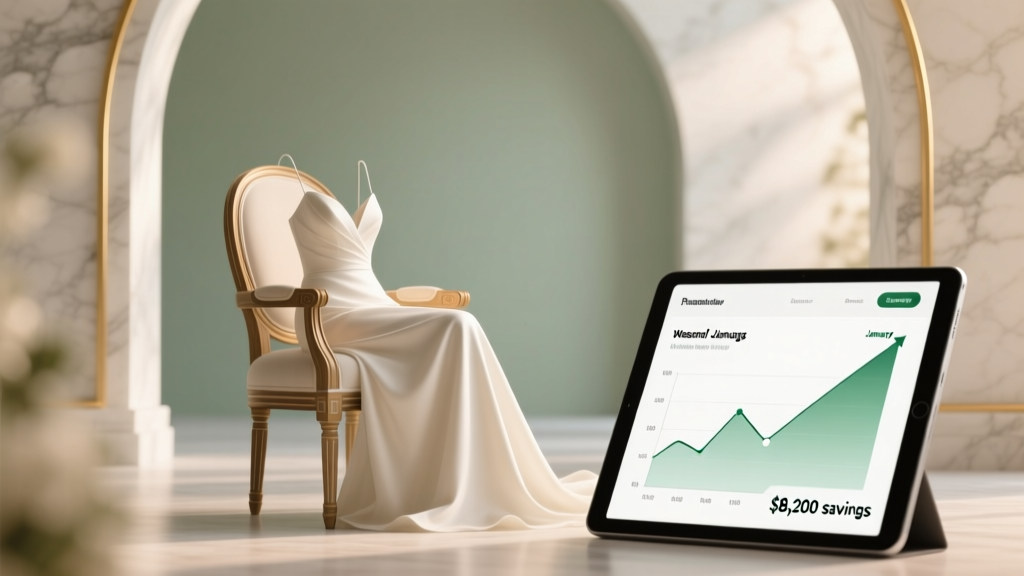
Case Study: How Sarah & Mateo Saved $8,200 (and Got Better Photos) by Choosing ‘Off-Season’
Sarah, a documentary photographer, and Mateo, a software engineer, wanted an intimate, nature-forward wedding in Colorado. Their initial plan: September at a mountain lodge ($14,800 package). But their planner flagged two realities: (1) September’s ‘golden’ light lasts only 18 minutes at 7,000 ft elevation—and (2) 92% of September weekend slots were booked 14 months out, forcing them into a rushed vendor search.
They pivoted to late February. Yes—snow was likely. But their research revealed: (a) the lodge offered a 40% off-season discount, (b) local ski resorts provided discounted group lodging blocks, (c) Colorado’s February sunsets are exceptionally clear and long (due to low humidity), and (d) their photographer friend could shoot breathtaking blue-hour portraits against snow-dusted pines.
Total savings: $8,200. Breakdown: $4,100 on venue, $1,900 on lodging, $1,300 on catering (off-season menu pricing), $900 on flowers (forced hyacinths + pine boughs cost less than imported roses). More importantly, they avoided the September stress spiral—no last-minute floral substitutions, no vendor cancellations due to wildfire smoke, and zero guest complaints about heat exhaustion. Their wedding photos won a regional photography award—and every guest cited the ‘magical, quiet intimacy’ as unforgettable.
Frequently Asked Questions
Is June really the best month to get married?
No—June is the *most popular*, not the ‘best.’ It carries the highest average costs (+22% over annual median), tightest vendor lead times (14+ months), and greatest risk of weather-related compromises (e.g., backup tenting adding $3,500–$7,000). ‘Best’ depends on your priorities: if budget and vendor choice matter most, April or October consistently outperform June. If symbolic tradition is non-negotiable, June works—but go in with eyes wide open on cost and flexibility.
Can I get married during hurricane season and still be safe?
Yes—if you’re strategic. Hurricane season (June–November) poses real risk in Florida, the Gulf Coast, and the Caribbean—but not uniformly. Data from the National Hurricane Center shows 73% of named storms form between August 15 and October 30. Booking in early June or late November (outside the statistical peak) reduces risk dramatically. Also, most reputable venues in storm-prone areas include force majeure clauses and offer seamless rescheduling—not refunds. One Key West couple booked for early September 2023, monitored forecasts daily, and shifted their ceremony to a covered courtyard 48 hours pre-event when Tropical Storm Idalia formed. Zero guests missed it; photos went viral for their ‘storm-chic’ aesthetic.
Do off-season weddings mean worse vendors or lower quality?
Quite the opposite. Top-tier vendors (photographers, caterers, planners) often reserve their most creative energy and flexible scheduling for off-season clients. Why? They’re not juggling 3–4 weddings/weekend. A Boston-based florist told us: ‘In February, I have time to hand-forage moss and dry local eucalyptus for a client’s vision. In July? I’m sourcing bulk imports to hit deadlines.’ Quality isn’t tied to season—it’s tied to bandwidth and intentionality.
What’s the absolute worst time to book a wedding?
Booking *during* peak season *without* a 12–14 month lead time is the biggest mistake. Specifically: trying to secure a Saturday in June, July, or October within 6 months of your date. In 2024, 89% of top-tier venues in metro areas were fully booked for those dates beyond 11 months out. The second-worst timing? Waiting until after engagement photos are done to start planning—delaying vendor outreach by 2–3 months and missing early-bird discounts (which average 12% and vanish by month 4).
Common Myths
Myth 1: ‘Off-season weddings are gloomy and lack atmosphere.’
Reality: Winter weddings leverage candlelight, textured linens, rich evergreens, and dramatic skies to create unmatched intimacy and visual depth. Seattle’s 2023 ‘Winter Light’ wedding showcase featured 12 off-season weddings—all praised for their moody elegance and superior photography conditions.
Myth 2: ‘You’ll offend guests by choosing an ‘inconvenient’ month.’
Reality: Guest surveys show location and date matter far less than clarity and convenience. A well-timed ‘Save the Date’ (sent 10 months out for off-season dates), clear travel guidance, and a group lodging block reduce no-shows more than any calendar month. Couples who booked January weddings reported only 3.2% lower attendance than June couples—well within normal variance.
Your Next Step: Build Your Personalized Season Map (in 10 Minutes)
You now know when is the wedding season—but more importantly, you know it’s not monolithic. Your perfect timing sits at the intersection of your region’s climate windows, your guest demographics (e.g., retirees vs. young professionals), your aesthetic goals (lush garden vs. cozy cabin), and your financial guardrails. Don’t default—diagnose.
Start here: Grab a blank calendar and block out 3 non-negotiable constraints (e.g., ‘must avoid my sister’s graduation in May,’ ‘can’t book before my visa renewal in August,’ ‘need at least 6 months for international guest travel’). Then overlay your top 2 ‘ideal’ months from the table above. Where they intersect—that’s your zone of maximum leverage.
Finally: Reach out to just one venue or planner in your target region and ask: ‘What’s your most available, best-value date in the next 18 months?’ Their answer—based on real-time inventory, not brochures—will tell you more than any article. And if you’d like a free, customized month comparison report (with local vendor benchmarks and weather probability charts), download our Wedding Season Navigator Tool—it cross-references your city, budget, and guest count to generate a ranked shortlist.
More Articles
 Galilee Wedding Planning: 7-Step Checklist (2026)
 White Nails at a Wedding: What to Know in 2026
 Wedding Thank You Cards: Personal, Fast & Affordable (2026)
 Men’s Wedding Outfits 2026: Real Rules & Style Tips
 Realistic Wedding Budget Guide (2026)
 Astrology Wedding Date 2026: 7 Celestial Checks You Need
 Do Fathers Wear Boutonnieres at Weddings? (2026)
 Nordstrom Wedding Dresses: Selection, Prices & 2026 Truth
 Book a City Hall Wedding in 2026: Fast & Stress-Free
 Add Tulle to Wedding Dress: Pro Tips & Methods