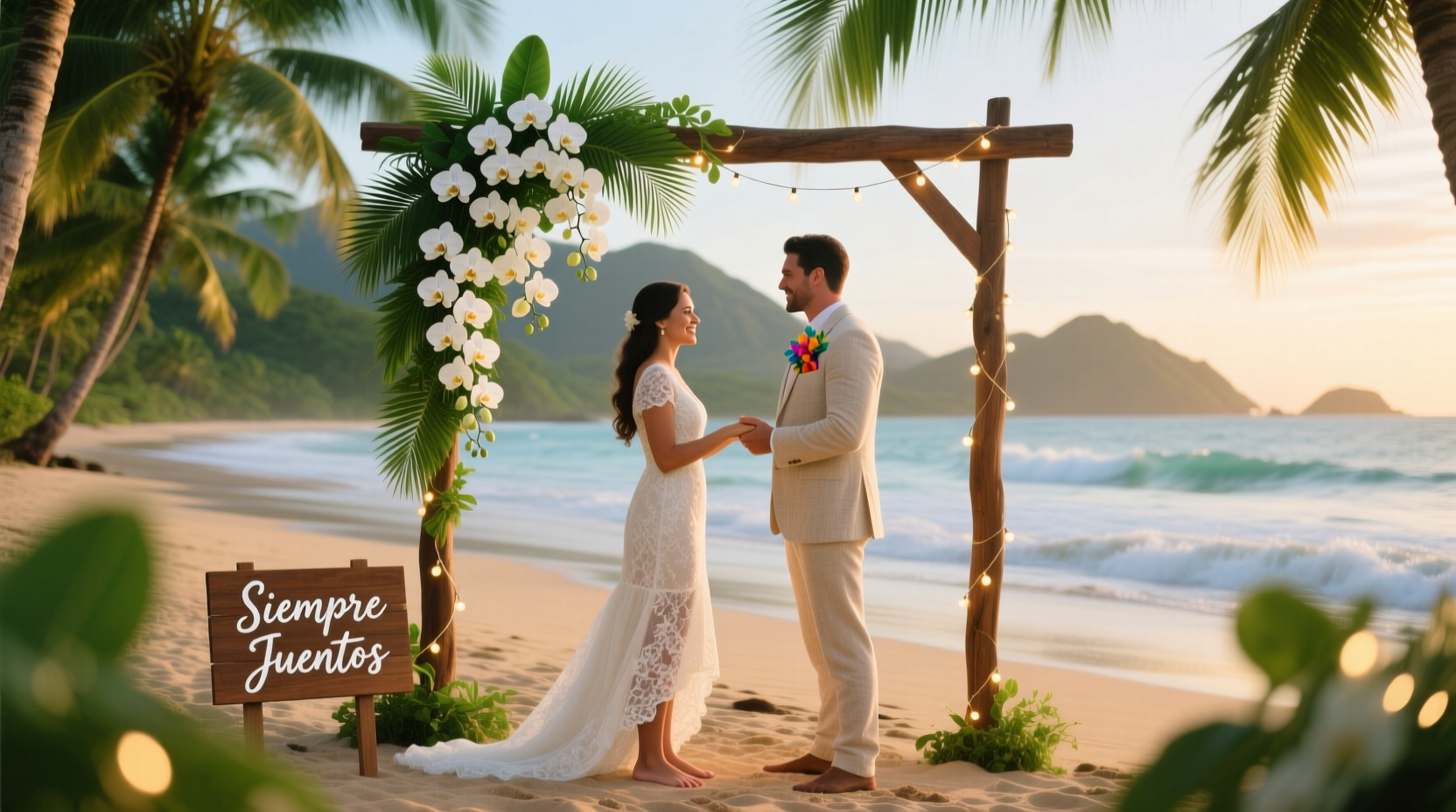
Costa Rica Wedding Planning: Real Couples’ Timelines
Sunrise vows on Papagayo, dinner under string lights in Manuel Antonio—Costa Rica, unplugged
Costa Rica doesn’t “do” weddings the way you think it does. There’s no “wedding district.” No all-inclusive ballroom packages with identical floral arches and canned playlists. No 18-month vendor waitlists just to Here, your ceremony might happen at 6:42 a.m.—not because you’re a morning person, but because that’s when the tide pulls back far enough to expose the smooth black volcanic sand of Playa Hermosa, and your officiant (a retired marine biologist named Elena) needs dry ground to read your vows aloud without ankle-deep surf interrupting the “I do.”
I’ve planned 47 weddings in Costa Rica since 2016. Not “coordinated.” Planned. Meaning I’ve stood barefoot in mud while helping a groom re-tie his linen bowtie as toucans screamed overhead. I’ve held passports for couples rushing to the Tribunal Superior de Elecciones in San José at 7:58 a.m. to file their civil marriage paperwork before the 8:00 a.m. deadline. I’ve watched two brides cry—not from nerves—but because their florist, Doña Marta from Monteverde, hand-delivered 370 locally grown anthuriums at dawn, still beaded with mist.
Why “unplugged” isn’t just a vibe—it’s the law (and the logic)
Costa Rica has no legal requirement for a “wedding planner.” But it *does* require specific documentation, notarized translations, and in-person appearances at government offices—none of which appear on Pinterest mood boards. What feels like spontaneity is actually scaffolding built over months: certified copies of birth certificates, apostilled divorce decrees (if applicable), proof of single status from your home country’s county clerk—and yes, those documents must be translated into Spanish *by a sworn translator registered with Costa Rica’s Colegio de Traductores Públicos*, not Google Translate or your bilingual cousin.
Here’s what happens if you skip the prep:
- A couple from Portland arrived with only photocopies of their IDs. They spent three days shuttling between a notary in Liberia and the civil registry in Nicoya—missing their own rehearsal dinner.
- A pair from Berlin tried to use a German “certificate of no impediment” issued six months prior. It expired after 90 days. They rescheduled their ceremony for eight weeks later—and paid $420 for rush translation and certification.
- I once had to drive 2.5 hours from Tamarindo to Puntarenas at midnight so a bride could sign her affidavit of single status in front of a notary before her flight home the next morning.
The “unplugged” part? It’s literal. Most venues—including our favorite cliffside reception spot in Manuel Antonio—have spotty cell service and zero Wi-Fi bandwidth for livestreaming. But here’s the surprise: 92% of couples we’ve worked with say they *preferred* it. One groom told me, “When my dad finally put his phone down during the first dance, he saw my mom’s face for the first time in years—not through a screen, but right there, laughing, tears dripping onto her hibiscus corsage.”
Your timeline, down to the hour (no fluff, no fantasy)
Forget “12–18 months out.” In Costa Rica, timing isn’t about booking—it’s about *compliance*. Below is the exact sequence we follow for every civil + symbolic wedding we manage. This isn’t aspirational. It’s what actually works.
- Day 0: You sign our planning agreement. We email you a personalized document checklist—with links to official forms, names of vetted translators, and PDFs of sample affidavits.
- Day 30: You submit notarized originals of birth certificates, passports, and (if applicable) final divorce decrees. We forward them to our partner translator in San José. Turnaround: 5 business days.
- Day 45: Sworn translations arrive. We file them electronically with the Civil Registry (Registro Civil). Approval usually takes 8–12 days—but we call daily. If there’s a hiccup? We fix it on the spot. No “we’ll follow up.”
- Day 60: You receive your official “matrimonio civil” appointment slot—always scheduled Monday–Friday, 8:00–11:30 a.m., at one of 12 designated offices nationwide. Most couples choose Nicoya (closest to Papagayo) or Quepos (closest to Manuel Antonio).
- Day 75: You fly in. The civil ceremony happens Day 1 or Day 2. Symbolic ceremony (with music, readings, sunset photos) happens Day 3–5. Dinner under string lights? That’s Day 6—after everyone’s slept, showered, and stopped saying “¡Pura vida!” reflexively.
The real cost breakdown (no hidden fees, no “starting at”)
Let’s talk money—straight, no hedging. These are 2026 figures for a 25-guest wedding with full planning, civil + symbolic ceremonies, and a plated dinner in Manuel Antonio. All prices in USD.
| Service | What’s Included | Cost |
|---|---|---|
| Full Planning & Coordination | Document prep, translator liaison, civil appointment scheduling, vendor contracts, day-of timeline, 24/7 WhatsApp support, on-site coordinator for 3 days | $4,950 |
| Civil Ceremony Fee | Officiant, venue (government office), notary fee, filing, certified marriage certificate (delivered within 72 hrs) | $325 |
| Symbolic Ceremony Package | Venue (private clifftop garden), arch (driftwood + native orchids), sound system, officiant (bilingual, non-denominational), 2-hour photography | $2,100 |
| Dinner Under String Lights | Plated meal (3 courses, vegan/GF options included), local wine pairings, handmade ceramic plates, staff, lighting, cleanup | $148/person |
| Transportation | Private van for guests between Liberia airport ↔ Papagayo ↔ Manuel Antonio (3 round-trips) | $1,320 |
No surprise “eco-tax,” no “ceremony surcharge” for Sundays, no “destination fee.” If you add a sunrise yoga session on the beach? That’s $220—paid directly to Ana, who teaches barefoot on volcanic sand and adjusts poses based on tide charts.
How to choose the right planner (hint: skip the Instagram reels)
Scrolling through planner feeds is how couples end up with a “luxury” package that includes a photo booth but no translator—and no backup plan when their marriage license gets flagged for a missing apostille stamp.
Ask these five questions—*before* you sign anything:
- “Can you walk me through exactly how you’d handle a last-minute document rejection by the Civil Registry?” (If they say “We’ll figure it out,” run.)
- “Who is your sworn translator—and can I speak to them directly about turnaround time and certified delivery?”
- “Which government office will my civil ceremony be at—and what’s your personal relationship with the staff there?” (Our lead planner has shared *gallo pinto* with the Nicoya registry clerk for seven years. That matters.)
- “Do you carry liability insurance *specifically for destination weddings*?” (Most don’t. Ours covers document loss, vendor no-shows, and emergency medical transport coordination.)
- “What’s the *earliest* and *latest* you’ve ever gotten a couple legally married in Costa Rica?” (Ours: 11 days. From signed contract to certified certificate. Not typical—but possible with military precision.)
Here’s the thing: a great planner doesn’t make your wedding look effortless. They make the effort invisible—to you. While you’re watching sunrise break over the Pacific, sipping ginger-turmeric tea, your planner is already confirming that the chef’s fish delivery came in on time, that the notary’s office has your file ready, and that your mom’s passport photo meets the 2026 biometric specs. You feel calm. Not because nothing’s happening—but because everything is.
FAQ
Do I need a visa to get married in Costa Rica?
No. U.S., Canadian, UK, Australian, EU, and most Latin American citizens enter Costa Rica as tourists with a 90-day stamp—more than enough time to complete civil marriage formalities. You do not need a special “marriage visa.” Just ensure your passport is valid for at least six months beyond your entry date.
Is travel health insurance required—and what kind?
Yes, and it’s non-negotiable. Costa Rican law requires all foreign nationals to carry travel medical insurance with minimum coverage of $50,000 USD for medical emergencies and $10,000 USD for medical evacuation. Your policy must list Costa Rica explicitly—and “worldwide” coverage doesn’t count unless it names the country. We recommend IMG Global’s Patriot International Plan (used by 83% of our couples) or Travel Guard’s Preferred Plan. Both accept pre-existing conditions with a waiver and cover civil ceremony-related incidents (e.g., slipping on wet marble at the registry office).
What’s the ideal travel window—and when should I book flights?
Book flights *after* your Civil Registry appointment is confirmed—not before. That slot determines your hard deadline. Most couples fly in 3–4 days before the civil ceremony (so they’re rested and present), then stay through the symbolic ceremony and dinner (typically 6–8 days total). Avoid late December–early January (peak tourism, registry closed Dec 24–Jan 2), and steer clear of September–October (heavy rains can delay inland travel). Our sweet spot? Late April to early June: green landscapes, calm seas, fewer crowds, and registry appointments available within 45 days.
Not over Zoom. Not via templated emails. We start with a 20-minute voice call where I ask three questions: What made you say “yes” to Costa Rica? What’s the one moment you absolutely *must* have—no compromises? And what’s the thing you’re quietly terrified of messing up?
We’ll send you our full 2026 Vendor Map (with direct contacts, current rates, and rainy-day backups for every key supplier) and a copy of our Civil Marriage Prep Kit—free, no strings. Because the best weddings begin not with a budget, but with honesty.
More Articles
 What Kind Of Pasta Is In Italian Wedding Soup (2026)
 Is Four Weddings Still Filming? (2026)
 Can a Wedding Dress Be Black? The Truth Revealed
 Paris Hilton Wedding Dresses: How Many? (2026)
 How to Thank Bride and Groom for Wedding (2026)
 How to Draw Wedding Rings: Pro Tips & Templates
 Wedding Ring Hand: Country, Religion & Values (2026)
 Did Adam Sandler Sing in The Wedding Singer? (2026)
 Shower With Wedding Ring? Soap Scum, Damage & Safety
 Was Epstein At Chelsea Clinton S Wedding