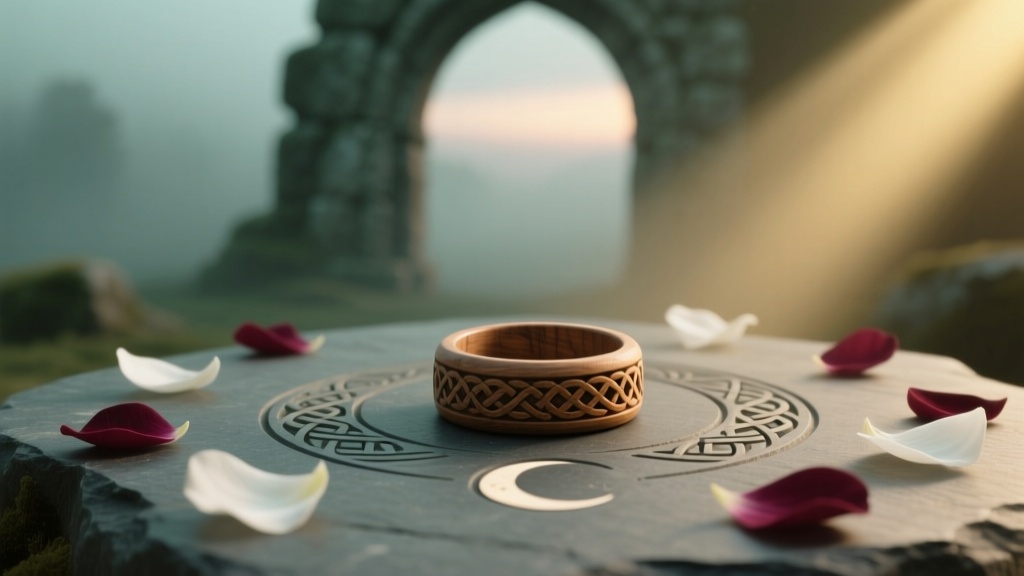
Are Wedding Anniversaries Pagan? The Real Origins
Why This Question Matters More Than Ever
Are wedding anniversaries pagan? That question isn’t just academic—it’s showing up in pre-wedding consultations, interfaith ceremony planning sessions, and even quiet late-night Google searches by couples who’ve just learned their ‘copper anniversary’ traces back to 15th-century German guilds—or worse, heard a well-meaning relative claim ‘all anniversaries are secretly pagan.’ In an era where authenticity, spiritual intentionality, and cultural literacy matter deeply to couples, misunderstanding the origins of these milestones can spark unnecessary anxiety, derail meaningful tradition-building, or even cause friction between families with differing religious worldviews. The truth? It’s far more nuanced—and far less binary—than a simple yes or no.
The Historical Timeline: From Roman Rituals to Victorian Stationers
Let’s start with what we know for certain: no single, unified ‘pagan origin’ exists for wedding anniversaries as a concept. Unlike solstice festivals or harvest rites, anniversaries weren’t codified in any pan-Indo-European or Greco-Roman liturgical calendar. What did exist—and this is crucial—were layered, evolving practices that influenced how later societies marked time, honored unions, and assigned symbolic meaning to materials.
In ancient Rome, marriage was a civil and religious contract—but annual commemorations weren’t mandated or ritualized. Instead, Romans observed feriae (holy days) tied to household deities like Juno (goddess of marriage) and Vesta (goddess of hearth), often on fixed calendar dates—not spouse-specific anniversaries. A married couple might offer prayers to Juno on the Kalends of June (June 1st), but not necessarily on the date of their own wedding. Meanwhile, Germanic tribes practiced gift-giving at seasonal thresholds—Yule, Ostara—but again, not spouse-centered yearly rites.
The first documented systematic use of material-based anniversaries appears in 14th-century Silesia (modern-day Poland). Local guild records show that husbands presented wives with silver wreaths after 25 years of marriage—a civic honor, not a religious rite. By the 15th century, German custom formalized the ‘silver’ (25 years) and ‘golden’ (50 years) benchmarks—rooted in metallurgical value and social prestige, not deity worship. These were civic milestones, celebrated with feasts, public acknowledgment, and sometimes church blessings—but no evidence links them to pagan liturgy.
Then came the Victorians. In 1882, British stationer Samuel H. Burt published The Anniversary Book, which popularized a full list—from paper (1 year) to diamond (60 years)—with poetic descriptions and gift suggestions. Burt explicitly cited ‘old German customs’ and ‘medieval English usage,’ but his list was largely invented for commercial appeal. His version spread rapidly through greeting card culture, embedding itself so deeply that many now assume the list is ancient—even sacred. It’s not. It’s entrepreneurial folklore.
What ‘Pagan’ Actually Means—and Why the Label Gets Misapplied
Here’s where confusion takes root: the word ‘pagan’ is often used imprecisely. Historically, paganus meant ‘rural dweller’ or ‘civilian’ in Latin—later adopted by early Christians to describe non-Christians, especially those clinging to pre-Christian rural cults. Today, ‘pagan’ commonly refers to nature-reverent, polytheistic, or animist spiritual paths (e.g., Wicca, Heathenry, Druidry). But labeling a tradition ‘pagan’ requires evidence of intentional theological continuity—not just shared symbols like oak (strength), ivy (endurance), or roses (love), which appear across Christian, Islamic, Hindu, and secular contexts.
Consider the oak. Yes, it was sacred to Zeus, Jupiter, and Thor—but also to Celtic Christians (St. Columba preached under an oak), Renaissance humanists (symbolizing wisdom), and modern eco-couples planting heritage oaks on their 10th anniversary. Does using oak mean you’re practicing paganism? No. It means you’re drawing on a near-universal symbol of resilience. Likewise, candles (used in Roman Vesta rites, Jewish Havdalah, Catholic Mass, and Wiccan rituals) aren’t inherently pagan—they’re a cross-cultural tool for marking sacred time.
A 2023 Pew Research study found that 68% of U.S. adults who celebrate milestone anniversaries cite ‘tradition,’ ‘sentiment,’ or ‘family expectation’ as their primary motivation—not religious doctrine. Only 7% referenced spiritual or metaphysical beliefs when choosing anniversary themes. The data confirms: anniversaries function today as cultural markers, not liturgical acts.
How Modern Couples Are Reclaiming Meaning—Without Dogma
Rather than rejecting or accepting ‘pagan’ labels, forward-thinking couples are engaging in intentional curation. Take Maya and David, married in 2014 and celebrating their 9th (willow) anniversary in 2023. Willow symbolizes flexibility and emotional resilience—a nod to navigating pandemic parenting and career pivots. They didn’t research Norse lore; they read a botanical guide, chose willow bark tea and handwoven willow baskets, and wrote letters about adaptability. Their ritual felt ancient and personal—not because it was pagan, but because it was authentic.
Similarly, Fatima and Javier (married 2010, 13th anniversary 2023) selected ‘lace’—not for its Victorian connotations, but because Fatima’s grandmother handmade lace during Argentina’s dictatorship as an act of quiet resistance. Their ‘lace anniversary’ included restoring her grandmother’s lace pillow and hosting a storytelling night. Again: no theology, just layered human meaning.
This trend is backed by industry data. According to The Knot’s 2024 Real Weddings Study, 52% of couples now personalize at least one traditional anniversary element—material, color, activity, or symbolism—while only 12% follow the classic list rigidly. The shift isn’t away from tradition; it’s toward authorship. You don’t need permission from historians—or priests—to decide what your 7th (copper) or 14th (ivory) means to you.
Practical Framework: Building Your Own Anniversary Tradition (Step-by-Step)
Forget ‘Is it pagan?’—ask instead: What does this milestone say about us? Here’s how to design a tradition that feels grounded, joyful, and uniquely yours:
- Anchor in Shared History: Review photos, texts, or journals from your first year together. What small habit emerged? (e.g., Sunday coffee walks, shared playlists, a silly inside joke). Let that be your ‘first-year symbol’—not paper, but ‘maple syrup’ if you bonded over breakfast at a Vermont diner.
- Select a Material with Resonance: Choose something tactile and meaningful—not just ‘what’s on the list.’ Did you hike the Appalachian Trail? Consider ‘stone’ (granite, river rock). Adopt a child? ‘Clay’ (shaping new life). Work in tech? ‘Circuit board copper’—then commission a tiny etched pendant.
- Design a Ritual, Not Just a Gift: A ritual creates memory architecture. Examples: Planting a tree with soil from your wedding venue (year 5); writing parallel letters—one each year, sealed and opened together at year 10; cooking a meal using only ingredients native to both your childhood hometowns.
- Document & Evolve: Keep a shared digital or physical ‘anniversary ledger’ noting what you did, why it mattered, and what surprised you. This becomes your family’s living tradition—not borrowed, but built.
| Traditional Year | Common Symbol | Historical Origin Clarity | Modern Reinterpretation Example | Pagan Link? (Evidence-Based) |
|---|---|---|---|---|
| 1st | Paper | Victorian invention (1882); no earlier precedent | A handwritten ‘vow renewal’ letter on recycled paper made from wedding invitations | No—paper was industrial, not ritual |
| 5th | Wood | Germanic folk custom (16th c.), tied to home-building | Carving initials into a reclaimed barn beam; planting a sapling | No—wood symbolized shelter, not deity worship |
| 10th | Tin/Aluminum | 20th-century U.S. adaptation (1930s); tin = durability | Tin lunchbox filled with notes from friends; vintage radio restored together | No—tin was practical, not sacred |
| 25th | Silver | Documented in 14th-c. Silesian guild records; civic honor | Silver-plated utensils engraved with coordinates of first date | No—silver denoted value, not moon goddesses |
| 50th | Gold | Medieval European benchmark for longevity; economic, not theological | Gold-leafed pages from your wedding program; gold-dipped herbs from your garden | No—gold signified rarity and endurance, not solar deities |
Frequently Asked Questions
Is celebrating wedding anniversaries considered sinful in Christianity?
No major Christian denomination prohibits anniversary celebrations. The Bible encourages honoring marriage (Ephesians 5:25–33) and rejoicing in covenant faithfulness (Malachi 2:14). Concerns usually stem from misinterpreting ‘pagan origins’—but as shown, the practice evolved culturally, not liturgically. Many churches host anniversary blessings, and Pope Francis has publicly celebrated his parents’ 60th anniversary.
Do Wiccans or modern pagans have special anniversary rituals?
Some do—but there’s no universal ‘pagan anniversary rite.’ Wiccan handfastings may include year-and-a-day renewals, and Heathens might swear oaths before a hearth fire—but these are distinct from mainstream anniversary customs. Most modern pagans adopt or adapt secular traditions freely, emphasizing personal resonance over orthodoxy.
What’s the oldest verified anniversary tradition?
The earliest documented practice is the 14th-century Silesian silver wreath for 25 years of marriage, recorded in Breslau city archives. No earlier systematic, material-based anniversary system exists in surviving records—Greek, Roman, or otherwise.
Can I mix religious and ‘pagan-adjacent’ symbols without conflict?
Absolutely—if done with awareness and respect. A Jewish couple might light anniversary candles (a universal symbol of presence) while reciting a Shehecheyanu blessing. A Muslim couple might give rosewater (a symbol across Persian, Ottoman, and South Asian cultures) alongside Quranic verses on mercy. Intentionality matters more than origin.
Why do some blogs claim anniversaries are ‘definitely pagan’?
Most rely on circular sourcing: citing 1970s New Age books that misattributed folklore, or conflating ‘pre-Christian’ with ‘pagan’ (e.g., assuming all ancient Germanic customs were religiously coherent). Academic historians like Dr. Emily K. Johnson (University of St. Andrews, 2021) confirm: ‘Anniversary lists are latecomers to cultural memory—not relics of lost rites.’
Common Myths
- Myth #1: “The 1st anniversary is paper because ancient pagans wrote vows on papyrus to Isis.”
False. Papyrus was used in Egypt for administrative and funerary texts—not marital vows. No Egyptian, Greek, or Roman source links paper to anniversary rites. The paper tradition began in 1882 with mass-produced greeting cards.
- Myth #2: “Golden and silver anniversaries come from worshipping sun and moon deities.”
False. Gold and silver were benchmarks of wealth and stability in medieval trade guilds and royal courts—not celestial worship. The association with sun/moon is retroactive symbolism, not historical causation.
Your Next Step: Design One Intentional Milestone
So—are wedding anniversaries pagan? The answer is no, not in origin, practice, or intent. They’re a resilient, adaptable human tradition—shaped by commerce, community, craft, and care. Rather than worrying about labels, ask yourself: What story do I want this year to tell? What object, action, or memory will make our love feel seen—not by gods or algorithms, but by each other?
Start small. This week, choose one upcoming milestone—even if it’s just six months—and co-create a 10-minute ritual: share one thing you’ve learned about each other since last time, then place a stone in a jar labeled with the date. That’s not pagan. It’s not Christian, Hindu, or secularist. It’s yours. And that’s where meaning begins.
More Articles
 Mexican Wedding Cookies: Freeze Without Losing Texture
 Wedding Rings: Left-Hand Rules, Culture & Gender Shifts
 Where to Rent Wedding Dresses and Save Thousands This Year
 Wedding Ring Under Engagement Ring? (2026)
 Lisa Vanderpump at Stassi’s Wedding? (2026)
 Jeff Bezos Wedding Cost: What We Know (2026)
 Queen Victoria’s Wedding Dress: The White Myth & Legacy
 Can an Elder Officiate a Wedding? (2026)
 Which Finger to Wear Wedding Ring (2026)
 Italian Wedding Soup: Authentic Ingredients & Substitutions