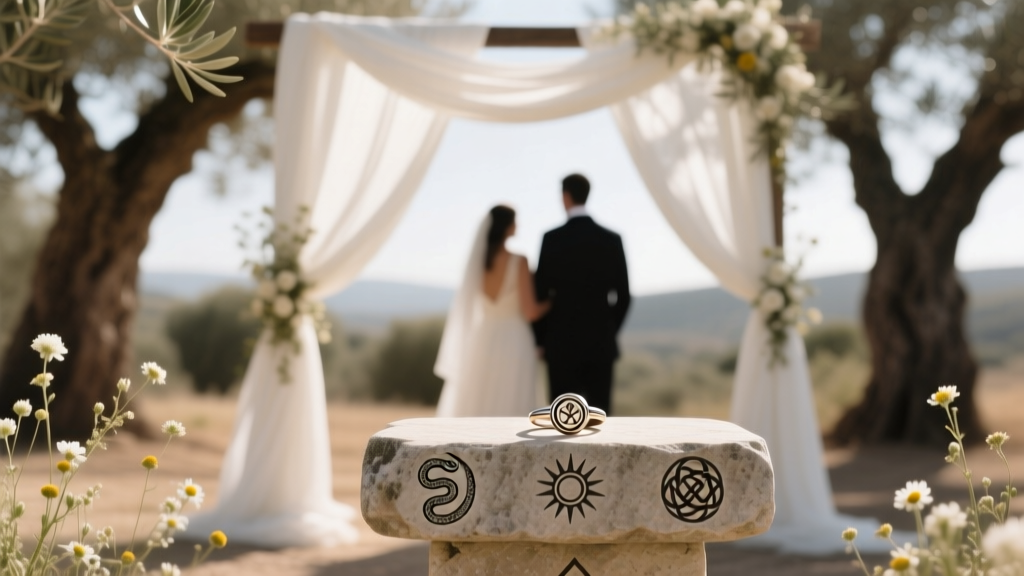
Are Weddings Pagan? Evidence-Based Tradition Origins
Why This Question Matters More Than Ever Right Now
As couples increasingly personalize their weddings—writing vows, blending faiths, ditching traditions, or reclaiming ancestral customs—the question are weddings pagan isn’t just academic curiosity. It’s a practical, emotional, and even spiritual checkpoint. If you’re choosing to jump over a broomstick, wear something blue, or hold your ceremony at sunrise, you deserve to know whether that gesture honors Celtic spirituality, Victorian superstition, or your own evolving values—not inherited assumptions. And yet, misinformation spreads fast: Pinterest pins label ‘handfasting’ as ‘ancient Celtic marriage,’ viral TikToks claim ‘something old, something new’ originated with Norse fertility rites, and well-meaning officiants recite ‘pagan blessings’ with zero historical grounding. In this article, we cut through the noise—not to dismiss symbolism, but to empower intentionality.
What ‘Pagan’ Actually Means (and Why It’s Often Misused)
Before we trace wedding rituals, we must clarify terminology. ‘Pagan’ wasn’t a self-identified religion in antiquity—it was a Roman administrative label (paganus, meaning ‘country dweller’ or ‘civilian’) applied to rural polytheists after Christianity became the empire’s official faith. There was no single ‘pagan religion,’ no unified doctrine, and certainly no global ‘pagan wedding liturgy.’ Instead, diverse cultures—from the Germanic tribes of Scandinavia to the Slavic communities of Eastern Europe, the Gaelic clans of Ireland, and the Baltic peoples of Lithuania—held distinct rites around betrothal, fertility, protection, and community witness. Many involved seasonal timing (e.g., handfasting often occurred at Beltane in May), symbolic bindings, feasting, and ancestor veneration—but none resembled today’s ‘wedding ceremony’ as a legal-spiritual contract. Crucially, early medieval Christian churches didn’t erase these practices; they absorbed, repurposed, and re-sanctified them. A 9th-century Irish monastic text warns priests not to bless ‘the pagan knotting of hands’—proof that handfasting persisted *alongside* Christian marriage rites for centuries.
So when someone asks, ‘Are weddings pagan?,’ the accurate answer isn’t yes or no—it’s layered. Modern Western weddings are palimpsests: Christian theology sits atop Roman legal frameworks, overlaid with Victorian social codes, filtered through 20th-century Hollywood romance, and now being selectively re-infused with reconstructed pre-Christian symbols—often by people who’ve never studied actual Indo-European cosmology. That nuance matters. Because intention changes impact: lighting a unity candle with awareness of its 1960s Methodist origins feels different than invoking Brigid with research-backed accuracy.
The 5 Most Commonly Misattributed ‘Pagan’ Wedding Traditions—And Their Real Origins
Let’s examine five staples of contemporary weddings—and separate verifiable history from romanticized myth:
- The Veil: Often claimed as a ‘pagan fertility symbol’ or ‘ward against evil spirits.’ Reality? In ancient Rome, the flammeum—a flame-colored veil—signified modesty and wifely obedience, tied to Jupiter’s wife Juno. Early Christian brides adopted it as a sign of chastity. No pre-Roman European culture used veils in marriage rites.
- ‘Something Old, Something New’: Attributed to ‘old English pagan charms.’ Fact: First appeared in an 1898 issue of Notes and Queries, a British folklore journal, as a Victorian rhyme for luck—not magic. Its structure mirrors other 19th-century mnemonic charms (like ‘Monday’s child…’), not ritual incantations.
- Jumping the Broom: Frequently labeled ‘West African or Celtic.’ Verifiable origin? Enslaved African Americans in the U.S. South developed it during slavery, when legal marriage was forbidden. Post-Emancipation, it spread as a powerful act of self-determination—not a revived ‘ancient tradition.’ While broom symbolism exists in Welsh folklore (sweeping away ill will), there’s zero evidence of broom-jumping in pre-Christian Wales.
- Handfasting: Yes—this term appears in medieval Scottish and Irish records, but as a *temporary* betrothal (often one year and a day), not a permanent marriage. The ‘binding of hands’ was a legal contract witnessed by clan elders—not a mystical rite. Modern neo-pagan handfasting ceremonies are 20th-century reconstructions, popularized by Aidan Kelly’s 1970s Wiccan liturgies.
- Wearing Blue: Cited as ‘Celtic sky-god protection.’ Actual root? Medieval Christian iconography: Mary wore blue robes symbolizing purity and heavenly grace. By the 1700s, ‘something blue’ entered English wedding lore as shorthand for fidelity—directly referencing the Virgin Mary, not Lugh or Danu.
This isn’t about ‘debunking fun’—it’s about honoring real histories. When a Black couple chooses to jump the broom, they’re connecting to resilience, not myth. When a Jewish bride circles her groom seven times, she’s enacting Talmudic law—not borrowing from ‘universal paganism.’ Precision deepens meaning.
How to Build a Ceremony That’s Authentic—Not Appropriative
So what do you do if you love the *feeling* of certain symbols but want integrity? Here’s a 4-step framework used by interfaith celebrants and historians alike:
- Identify Your Core Value: Is it continuity? Protection? Joy? Community? Don’t start with ‘I want a ring-warming.’ Start with ‘I want our guests to feel held.’
- Trace the Symbol’s Provenance: Use academic sources—not blogs. Check JSTOR, Oxford Reference, or university folklore archives. Ask: Who practiced this? When? Under what social conditions? Was it elite or folk practice? Was it gendered? Was it tied to land, season, or deity?
- Assess Power Dynamics: Does adopting this symbol risk flattening trauma (e.g., using Native American smudging without tribal consent) or erasing colonial violence (e.g., calling a plantation venue ‘romantic’)? If yes—pause and consult living practitioners.
- Adapt with Attribution: Instead of ‘We do this because it’s ancient,’ say ‘We light this candle in honor of the 1923 Chicago Jewish Wedding Manual, which taught couples to build light together.’ Naming sources builds bridges, not clichés.
Real-world example: Maya and David, an intercultural couple (Mexican Catholic and Korean Buddhist), wanted unity symbolism. Rather than defaulting to sand mixing (a 1980s California invention), they researched both traditions. They discovered that in Korean gwallye rites, the bride offers tea to elders as respect; in Mexican lazo ceremonies, a rosary or floral rope binds the couple. They created a ‘tea-and-lazo’ ritual: David poured ceremonial green tea while Maya draped a white silk cord—embroidered with lotus and marigold motifs—over their shoulders. No false claims. Full transparency. Deep resonance.
Historical Roots vs. Modern Practice: A Comparative Timeline
| Ritual/Element | Earliest Documented Use | Cultural Origin | Original Purpose | Modern Wedding Role |
|---|---|---|---|---|
| Exchange of Rings | 3rd century BCE | Roman | Symbol of ownership & legal contract (gold = permanence) | Symbol of mutual commitment (secular or sacred) |
| White Wedding Dress | 1840 (Queen Victoria) | British Victorian | Display of wealth (white fabric was expensive & hard to clean) | Conventional ‘bridal’ aesthetic (now diversifying rapidly) |
| Wedding Cake | 1st century CE | Roman | Breaking wheat cake over bride’s head for fertility | Social centerpiece & dessert (evolved into tiered confection) |
| Best Man | Anglo-Saxon era (c. 500 CE) | Germanic | Armed guard to prevent bride abduction | Honored friend; ceremonial support role |
| First Dance | 1920s USA | American Jazz Age | Public display of couple’s social confidence & rhythm | Emotional highlight; often choreographed |
Frequently Asked Questions
Is handfasting legally binding in the U.S.?
No—handfasting has no legal standing anywhere in the United States. Marriage legality requires a state-issued license and solemnization by an authorized officiant (judge, clergy, or certified celebrant). Some states allow ‘self-solemnization’ (e.g., Colorado, Pennsylvania), but even then, handfasting alone doesn’t fulfill statutory requirements. Couples use it as a symbolic ritual *within* a legally valid ceremony—or pair it with a civil license signed separately.
Did ancient Celts have wedding ceremonies like today’s?
No. Pre-Christian Gaelic societies recognized marriage through cohabitation, public acknowledgment, and property agreements—not ceremonial rites. Legal texts like the 7th-century Senchus Mór detail complex dowry systems and divorce protocols, but describe no standardized ‘ceremony.’ Rituals like tying knots or exchanging tokens existed, but were informal, familial acts—not liturgical events.
Can I include pagan elements if I’m Christian?
Yes—if done thoughtfully. Many mainstream denominations (Episcopal, Lutheran, progressive Catholic) welcome culturally resonant symbols when integrated respectfully. Key questions: Does it contradict core doctrine? (e.g., invoking multiple deities may conflict with monotheism.) Does it honor the symbol’s roots? (e.g., using oak leaves for strength—not as ‘druidic worship.’) Always discuss with your officiant beforehand. One pastor told us, ‘I’ve blessed Celtic knots beside crosses for 12 years—because the knot represents eternal love, not a god.’
Are destination weddings more ‘pagan’ because they’re outdoors?
No. Location doesn’t determine theological origin. Outdoor weddings echo 20th-century trends (post-WWII suburban expansion, 1970s environmentalism) and practical logistics—not ancient grove worship. Even Roman weddings occurred indoors (in the atrium) for legal validity. What matters is intention: Is the setting chosen for aesthetics, accessibility, or spiritual alignment? A forest ceremony becomes meaningful when paired with deliberate language—not just because it’s ‘natural.’
Do any modern religions require ‘pagan’ practices?
No major world religion mandates pre-Christian rites. However, some reconstructionist paths (e.g., Heathenry, Druidry, Romuva) incorporate historically informed rituals—including marriage rites modeled on archaeological and textual evidence. These are living, minority faiths—not ‘generic paganism.’ Participation requires study, community affiliation, and ethical engagement—not Pinterest-inspired aesthetics.
Common Myths About Wedding Origins
Myth #1: ‘Walking down the aisle is a pagan fertility procession.’
Reality: The aisle walk emerged in 17th-century England as a practical path for the bride to reach the chancel steps—where the priest stood. Before that, couples met at the church door. The ‘father giving away’ trope stems from feudal property transfer, not earth goddess worship.
Myth #2: ‘The wedding bouquet hides body odor—so it’s ‘pagan hygiene.’’
Reality: Medieval Europeans did carry herbs (rosemary, garlic) to ward off plague—but wedding bouquets as decorative accessories began in Victorian England, inspired by Queen Victoria’s orange blossom bouquet. Smell-masking was incidental, not ritual purpose.
Your Next Step: Design With Depth, Not Decoration
Now that you know are weddings pagan isn’t a binary question but a layered inquiry into cultural memory, power, and personal truth—you’re equipped to move beyond trend-chasing. Don’t ask ‘What looks mystical?’ Ask ‘What tells our story accurately?’ Research one tradition you love using the four-step framework above. Talk to elders in your family. Consult a historian or cultural liaison if adapting cross-cultural elements. And remember: the most powerful wedding isn’t the one with the most ‘ancient’ symbols—it’s the one where every choice echoes your shared values, your lived history, and your honest hopes. Ready to draft intentional vows? Download our evidence-based vow-writing workbook, co-created with linguists and interfaith chaplains—no templates, just prompts grounded in how language shapes commitment.
More Articles
 White Wedding Dress History: Truth Behind the Myth
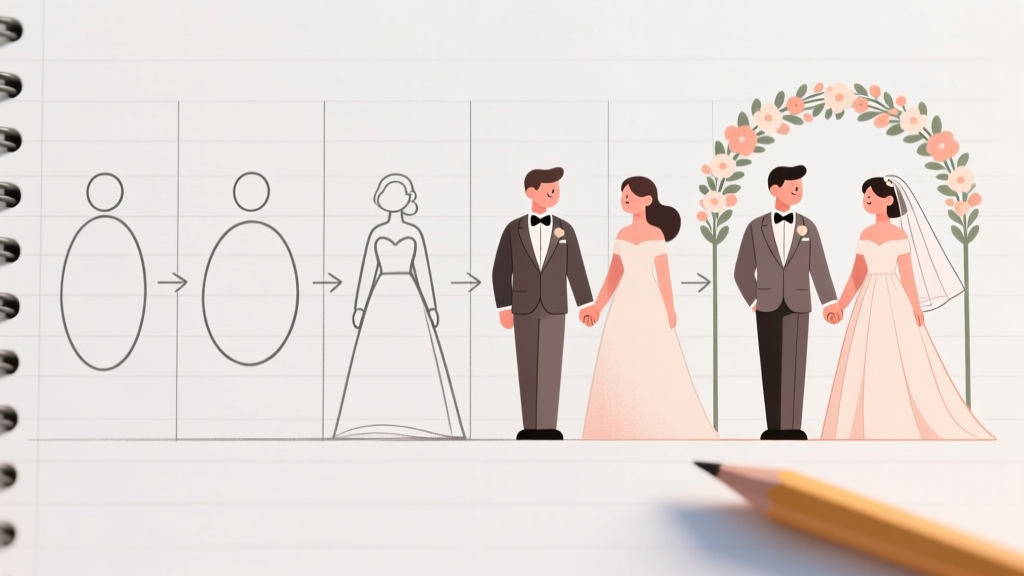 Draw Wedding Couple: 7-Step Visual Guide (2026)
 What to Do If Your Wedding Date Conflicts With a Holiday
 Can I Wash My Wedding Dress In The Washer
 Watch Madea's Destination Wedding (2026): 3 Legal Ways
 Elon Musk at Ambani Wedding? Truth Behind 2026 Rumors
 Lost Wedding Ring in House: 7 Proven Steps (2026)
 Who Gets a Corsage and Boutonniere at a Wedding
 Why Do Couples Have a Wedding Welcome Event
 Did Anil Ambani Attend the Wedding? (2026)