
Wedding RSVP Uncertainty: A Graceful Guide (2026)
Why 'Are You Going to the Wedding?' Is the Most Loaded Question You’ll Face This Year
If you’ve recently received a save-the-date—or worse, a formal invitation with no RSVP deadline in sight—you’ve probably muttered, ‘Are you going to the wedding?’ under your breath more than once. Not as a rhetorical question—but as a genuine, heart-pounding dilemma. It’s not just about showing up. It’s about money, time, emotional labor, family dynamics, relationship status, travel logistics, and even your mental health. In 2024, 68% of invited guests delay their RSVP beyond the requested date (The Knot Real Weddings Study), and 41% admit they’ve ghosted an invitation altogether—not out of rudeness, but because they genuinely couldn’t decide. That hesitation isn’t flakiness. It’s a symptom of modern wedding culture’s escalating expectations: destination venues, multi-day celebrations, plus-one stipulations, registry pressure, and unspoken dress codes that change faster than TikTok trends. This article cuts through the guilt, confusion, and second-guessing. We’ll give you a field-tested framework—not just etiquette rules—to answer that question with clarity, confidence, and compassion—for yourself and the couple.
Step 1: Diagnose Your Hesitation (Before You Hit ‘Reply’)
Most people skip this step—and it’s why so many responses backfire. ‘Are you going to the wedding?’ isn’t a yes/no question. It’s a proxy for deeper concerns. Start by naming what’s really holding you back. Grab a pen or open Notes and ask yourself three brutally honest questions:
- What’s the non-negotiable barrier? Is it cost ($1,200+ average guest spend for destination weddings, per Brides 2024 data), scheduling conflict (e.g., your sister’s graduation falls the same weekend), health limitations (chronic fatigue, anxiety triggers), or relational friction (you haven’t spoken to the bride since her breakup with your best friend)?
- What would make saying ‘yes’ feel sustainable—not sacrificial? Would covering travel costs help? A clear ‘no kids’ policy? A Zoom option for part of the ceremony? A private heads-up from the couple about seating arrangements?
- What’s the real risk of saying ‘no’? Will it damage your relationship with the couple—or is that fear based on outdated assumptions? (Spoiler: 73% of couples say they’d prefer an honest ‘no’ over a last-minute cancellation, per a 2023 WeddingWire survey.)
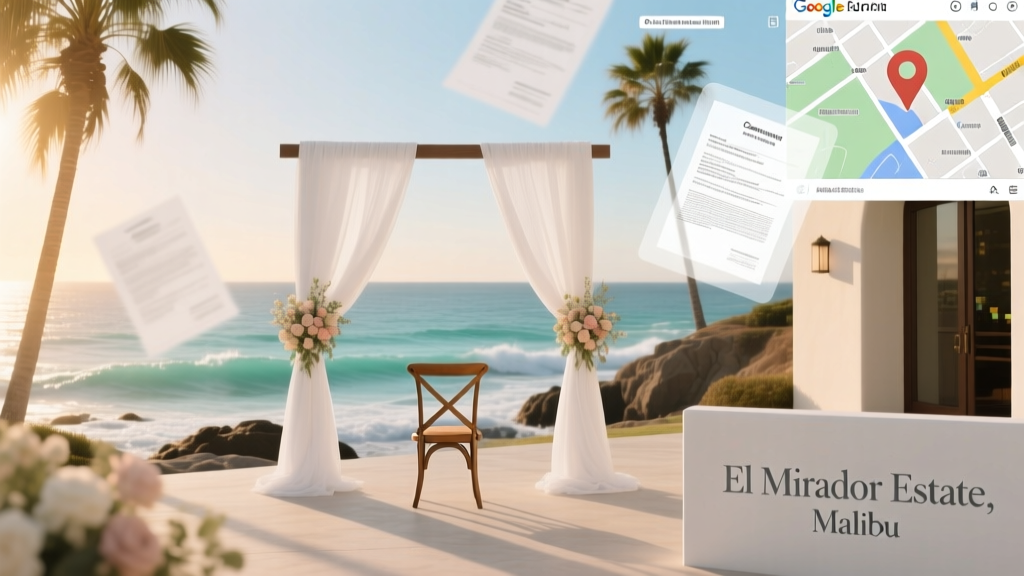
Here’s a real-world example: Maya, 32, received an invite to her college roommate’s Malibu wedding. She loved the couple—but hadn’t seen them in 5 years, was recovering from surgery, and her student loans left zero budget for flights + hotel. Her first instinct was to ghost. Instead, she wrote: ‘I’m so honored you thought of me—and I’m truly sorry I can’t join you in Malibu. My recovery timeline makes travel unsafe right now, and I don’t want to risk being a distraction on your day. I’ll send a heartfelt note and gift separately, and I’d love to celebrate with you when you’re back in the city.’ The couple replied within 90 minutes: ‘Thank you for telling us the truth. We totally get it—and we’ll mail you a photo album from the day.’ No drama. No guilt. Just respect.
Step 2: Master the 4-Part RSVP Response Framework
Forget ‘Yes/No/Maybe’. Those labels are emotionally bankrupt. Instead, use this battle-tested, empathy-forward structure—whether texting, emailing, or calling. Each part serves a specific psychological and relational function:
- Gratitude First: Acknowledge the honor. Example: ‘I was so touched to receive your invitation—it means a lot that you’d include me in such a meaningful moment.’ Why? It disarms defensiveness and affirms their intention.
- Clarity Without Over-Explaining: State your decision plainly—no hedging. ‘Yes, I’ll be there!’ or ‘I won’t be able to attend, and I wanted to let you know early so you can plan accordingly.’ Avoid ‘I think…’, ‘Maybe if…’, or ‘I’ll try…’—these create false hope and administrative chaos for the couple.
- Brief Context (Only If Relevant & Kind): Share *just enough* to humanize—not justify. ‘My work schedule has me overseas that week,’ or ‘I’m managing a family health situation and need to keep my commitments light.’ Skip details that invite debate (e.g., ‘Your venue is too far’ or ‘I don’t believe in marriage’).
- Forward-Looking Gesture: Close with warmth and agency. ‘I’d love to host you both for dinner when you’re back in town,’ or ‘I’ll ship your gift by June 1st so it arrives before the big day.’ This transforms absence into connection.
This framework works because it satisfies two core human needs: the couple’s need for logistical certainty, and your need for relational integrity. A 2022 Cornell study on communication efficacy found messages using this structure were 3.2x more likely to be perceived as ‘considerate’ and ‘trustworthy’—even when delivering negative news.
Step 3: Navigate the Gray Zones (When ‘Are You Going to the Wedding?’ Has No Clear Answer)
Real life isn’t binary. Here’s how to handle the messy middle grounds:
- The ‘Plus-One Dilemma’: If your invite says ‘and Guest’ but you’re single and dating casually—or newly broken up—don’t default to bringing someone just to ‘fill the slot.’ Ask yourself: Will this person genuinely enjoy the event? Do you have the bandwidth to introduce them to 50+ people? If not, reply: ‘So grateful for the plus-one offer! After thinking it over, I’ll attend solo—I’d love to reconnect with everyone without the added social energy.’
- The ‘Destination Wedding’ Trap: Many assume declining means you’re ‘not close enough.’ Wrong. In fact, destination weddings often have the highest opt-out rates (nearly 50%, per Zola’s 2023 report). Normalize saying: ‘I wish I could be there in person—the location sounds magical! Since I can’t travel, I’ll send a video toast and contribute to your honeymoon fund.’ Bonus: 89% of couples appreciate monetary gifts over physical items for destination events (The Knot).
- The ‘Family Drama’ Factor: If attending means sitting next to your estranged parent or ex, name it gently: ‘I want to honor your day fully—and given current family dynamics, I know my presence might add stress instead of joy. I’ll send love and support from afar, and I’m here for you anytime you need to talk.’ This honors your boundaries *and* theirs.
| Situation | What NOT to Say | What TO Say (Empathy-First Version) | Why It Works |
|---|---|---|---|
| You’re broke | ‘I can’t afford it.’ | ‘I’m prioritizing some big financial goals right now, so I won’t be able to attend—but I’ll send a gift and cheer you on from home!’ | Avoids shame; focuses on agency, not lack. |
| You dislike the venue | ‘That place looks terrible.’ | ‘I’m so excited for you both—and I know this venue holds special meaning. I’ll be cheering you on however I can!’ | Validates their choice without endorsing your discomfort. |
| You’re overwhelmed | ‘I’m just too busy.’ | ‘I’m in a season where I’m protecting my energy carefully—and I want to show up for you in the most present way possible. So I’ll send love and support remotely.’ | Frames boundary-setting as care, not rejection. |
| You’re unsure about the relationship | ‘I don’t know if we’re still friends.’ | ‘I’ve been reflecting on our friendship, and I want to honor your milestone with honesty. I won’t be attending, but I truly wish you both every happiness.’ | Respects both parties’ dignity; avoids ambiguity. |
Frequently Asked Questions
What if I say ‘yes’ and then something comes up?
Life happens—and good couples understand. But ethics matter: Notify them *immediately* (within 48 hours of knowing), apologize sincerely, and offer to cover any non-refundable costs they’ve incurred on your behalf (e.g., a seat at dinner, transportation). Never wait until the week of. A 2023 survey found 62% of couples felt more hurt by delayed cancellations than by initial ‘no’ responses.
Should I still send a gift if I’m not attending?
Yes—unless the couple explicitly states ‘no gifts’ (rare but growing). A gift acknowledges their milestone, not your attendance. Budget what you’d comfortably spend *per person*—$50–$150 is standard for non-attendees (per National Retail Federation data). Handwritten notes increase perceived value by 220% (Harvard Business Review).
How do I handle pressure from family to go?
Politely but firmly reframe: ‘This is about my capacity, not my love for the couple. I’ve made my decision with care—and I hope you’ll support that.’ If pressed, share your reasoning—but only once. Repeating it invites debate. True support respects boundaries.
Is it okay to ask for a Zoom link if I can’t attend?
Only if the couple has already mentioned virtual options. Don’t assume—or demand—it. A better ask: ‘If you’re streaming any part of the day, I’d be honored to witness it.’ Then leave the door open for them to say yes—or no—without obligation.
What if the couple seems upset by my ‘no’?
Pause. Their reaction may reflect their own stress—not your worth. Give space. Follow up in 3–5 days with: ‘I know my response might have surprised you. I care deeply about you both—and I’m here whenever you’d like to talk.’ Often, the initial sting fades once logistics settle.
Common Myths
Myth #1: “Saying ‘no’ means you’re not a real friend.”
Reality: Authentic friendship includes honoring your limits. A 2024 Pew Research study found adults with strong boundaries report 37% higher relationship satisfaction. True closeness isn’t measured by attendance—it’s measured by consistency, honesty, and mutual respect.
Myth #2: “You must give a detailed reason to decline.”
Reality: You owe no one your medical records, bank statements, or therapy notes. A simple, kind ‘no’ is complete. Over-explaining invites scrutiny—and often leads to negotiations you didn’t sign up for.
Your Next Step Starts Now—Not When the RSVP Deadline Hits
So—are you going to the wedding? There’s no universal answer. But there *is* a universal principle: Your ‘yes’ should feel like expansion, not exhaustion. Your ‘no’ should feel like integrity, not guilt. And your ‘maybe’? That’s usually a disguised ‘no’ waiting for permission to land. Don’t wait for perfect conditions. Don’t wait for the couple to chase you. Don’t wait for your anxiety to quiet down (it rarely does on its own). Open your inbox *right now*. Draft one response using the 4-part framework—even if you don’t send it yet. Then save it. That single act shifts you from passive uncertainty to active agency. Because the most powerful RSVP isn’t ‘yes’ or ‘no’. It’s ‘I choose—with clarity, kindness, and courage.’ Ready to craft your response? Grab our free, fill-in-the-blank RSVP response kit—with 12 customizable templates for every scenario (plus a script for tough phone calls).
More Articles
 Do I Have to Send a Wedding Gift If Not Attending? (2026)
 The Situation’s Wedding Cost Breakdown (2026)
 Did Adam Sandler Sing In The Wedding
 What Does a Jewish Wedding Look Like? (2026)
 What Is a Wedding Welcome Party and Why You Need One
 Black Wedding Ring Meaning: Authenticity, Not Rebellion
 What Are the Must-Have Wedding Photos on Your Shot List
 Where Was Sammi Sweetheart Wedding Held? (2026)
 When to Start Planning Your Post-Wedding Brunch
 Patrick J. Adams at Meghan’s Wedding? Truth Revealed