# Can I Clean My Own Wedding Dress? What You Need to Know Before Trying
Your wedding dress survived the big day — champagne toasts, outdoor photos, maybe a few tears. Now it's hanging in your closet, and you're wondering: can I just clean this myself? The honest answer is *sometimes*, but the details matter enormously. Get it wrong and you could permanently damage an irreplaceable garment.
## When DIY Cleaning Is Actually Safe
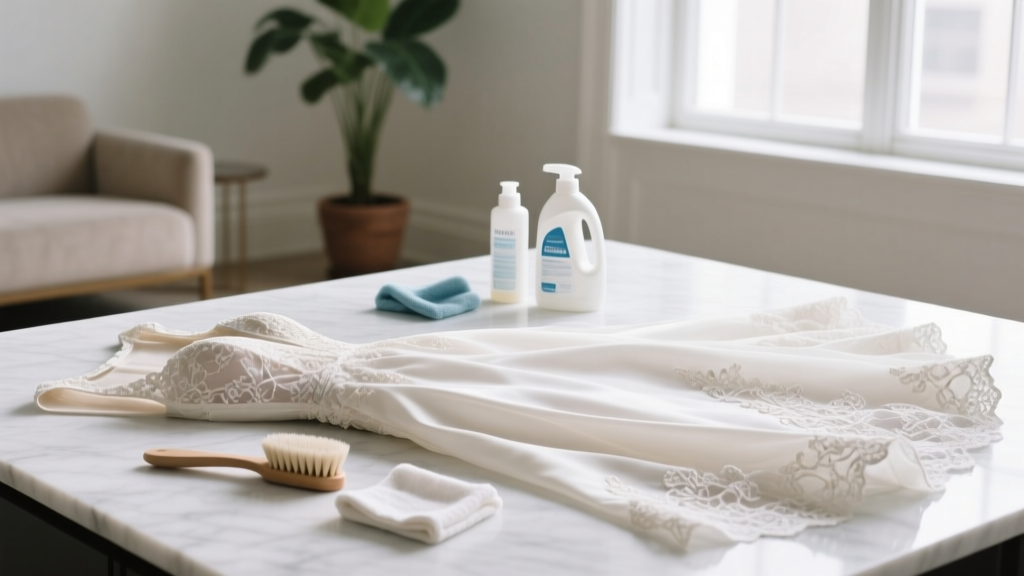
Not every wedding dress needs professional treatment. If your gown is made from a simple, sturdy fabric like polyester or cotton, and the soiling is minor — a small grass stain on the hem or a light dirt smudge — spot cleaning at home is reasonable.
Here's what works for light surface stains:
- **Cold water and mild dish soap**: Dab (never rub) with a clean white cloth. Works on most water-based stains.
- **White wine or club soda**: Effective on fresh red wine spills if applied immediately.
- **Cornstarch**: Sprinkle on oil-based stains, let sit 30 minutes, then brush away gently.
The key rule: always test any solution on a hidden seam or interior hem first. Wait 10 minutes and check for discoloration or fabric damage before touching the visible areas.
## Fabrics and Embellishments That Demand Professional Care
This is where most DIY attempts go wrong. Certain materials simply cannot tolerate home washing methods.
**Avoid home cleaning entirely if your dress features:**
- **Silk, charmeuse, or dupioni**: These fabrics water-spot easily and can shrink or warp when wet.
- **Beading, sequins, or embroidery**: Agitation loosens threads and causes beads to fall off. Even hand-washing creates enough movement to cause damage.
- **Structured boning or crinolines**: Internal structure can warp when soaked and may not return to its original shape when dried.
- **Vintage or heirloom gowns**: Older fabrics are often fragile and may have dyes that bleed unpredictably.
If your dress has any of these features, the $150–$400 cost of professional cleaning is genuinely worth it. Replacing lost beadwork alone can cost more than the cleaning bill.
## The Right Way to Spot-Clean at Home
If you've confirmed your fabric is safe and the stain is minor, follow this process carefully:
1. **Lay the dress flat** on a clean white sheet or towel — never hang it while wet, as the weight causes stretching.
2. **Work in small sections** using a soft-bristled toothbrush or clean white cloth.
3. **Blot, don't scrub.** Scrubbing pushes stains deeper into fibers and can cause pilling.
4. **Rinse thoroughly** with cold water to remove all soap residue. Leftover detergent attracts dirt and can yellow over time.
5. **Air dry completely** before storing. Even slight moisture trapped in a garment bag causes mildew and yellowing within months.
For full at-home washing of a simple polyester gown, use a mesh laundry bag, the delicate cycle, cold water, and a detergent formulated for delicates (Woolite or similar). Skip the dryer entirely.
## Two Common Misconceptions About Wedding Dress Cleaning
**Misconception 1: "Dry cleaning is always the safest option."**
Dry cleaning uses chemical solvents, not water, which is excellent for many fabrics — but it's not universally gentle. Some embellishments and dyes react poorly to perchloroethylene (the standard dry-cleaning solvent). Always tell your cleaner exactly what's on the dress and ask what process they'll use. A reputable cleaner will inspect the gown before committing to a method.
**Misconception 2: "If the dress looks clean, it doesn't need cleaning before storage."**
This is one of the most damaging myths. Invisible stains — body oils, sweat, sugar from champagne or cake — oxidize over time and turn yellow or brown. A dress that looks pristine today can emerge from a decade of storage with mysterious brown patches. If you're storing your dress long-term, clean it first, even if it appears spotless.
## The Bottom Line
Yes, you can clean your own wedding dress — but only under the right conditions. Simple fabrics, minor stains, and careful technique make DIY cleaning viable. Delicate fabrics, heavy embellishments, or significant soiling are a different story: the risk of permanent damage outweighs the cost savings.
When in doubt, consult a specialist. Many bridal cleaners offer free inspections and will tell you honestly whether your dress needs professional treatment or if a home spot-clean will do the job.
**Ready to preserve your gown properly?** Whether you clean it yourself or hand it off to a pro, act within a few weeks of your wedding — the longer stains sit, the harder they are to remove.
 Wedding & Engagement Rings: Truth, Timing, Stacking (2026)
 Engagement Ring First? The 3-Second Rule (2026)
 How to Get Wedding Dress in Stardew Valley (2026)
 Red Wedding: The Shocking Truth Behind Westeros’ Betrayal
 Chelsea Clinton Wedding Guest Count: Verified 2026
 Why Is Wedding Cake Strain So Popular? (2026)
 Who Played in The Wedding Singer? Cast Guide (2026)
 Is My Dress Too White for a Wedding? (2026)
 Stardew Valley Wedding Ring: 7-Step Craft (2026)
 White Wedding Dress Origin: Victoria’s Role Revealed