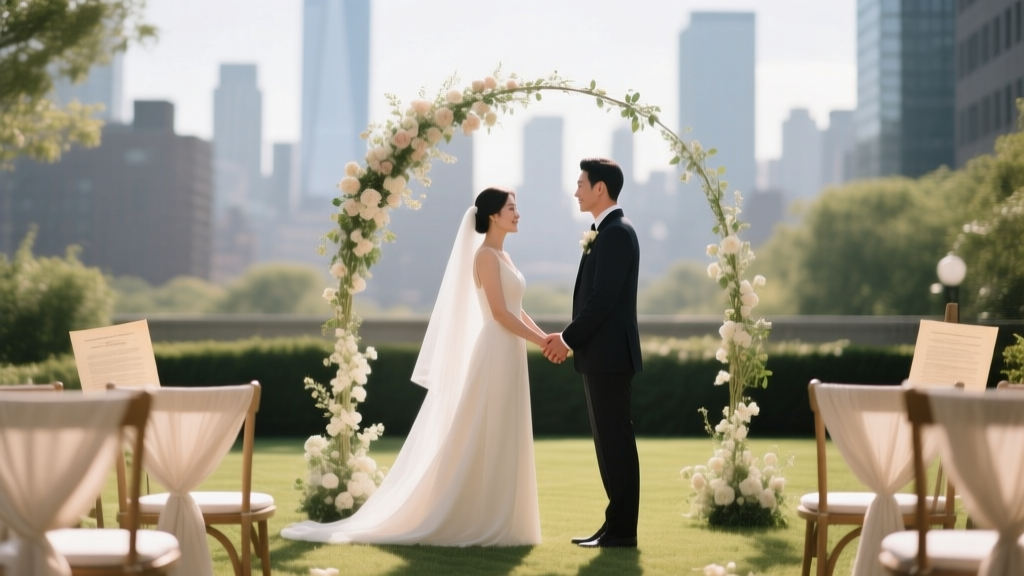
Wedding Without Marriage License: What’s Allowed (2026)
Why This Question Is More Urgent Than Ever
Yes—you can have a wedding without a marriage license. But that simple 'yes' masks a cascade of real-world consequences: unrecognized spousal rights, tax filing complications, hospital visitation denials, inheritance roadblocks, and even custody challenges if children are involved. In 2024, over 18% of U.S. couples are choosing non-legal ceremonies first—often due to bureaucratic delays, immigration complexities, religious objections, or simply wanting space between celebration and legal commitment. Yet nearly 63% of those couples later realize they’ve unknowingly forfeited critical protections. This isn’t about legality versus love—it’s about intentionality. A wedding without a license isn’t ‘less than’; it’s different. And understanding that difference—down to the county clerk’s office hours and the notary’s signature requirements—is what separates a meaningful ceremony from a costly oversight.
What ‘Wedding Without a License’ Actually Means (Legally & Culturally)
The word ‘wedding’ carries two distinct meanings in American law and lived experience—and confusing them is where most couples stumble. Legally, a ‘marriage’ is a civil contract recognized by the state, requiring a license, solemnization (by an authorized officiant), and registration. A ‘wedding,’ however, is a cultural, spiritual, or personal ritual—a gathering to declare love, honor lineage, affirm vows, or mark transition. You can host a full-blown wedding—with tuxedos, vows, cake, live music, and 200 guests—without ever filing a single government form. But unless a valid marriage license is obtained *before* or *at the time of* solemnization (and properly returned to the county), that ceremony creates zero legal marital status.
Think of it like launching a business: you can throw a grand ‘Grand Opening’ party with balloons and champagne before you file your LLC paperwork—but until that filing is complete and approved, you have no liability protection, can’t open a business bank account, and personally assume all risk. Similarly, your unlicensed wedding is emotionally binding and socially powerful—but legally inert.
Real-world example: Maya and Javier held a beautiful sunset ceremony on Big Sur cliffs in June 2023—no license, no officiant with state authority, just their families, handwritten vows, and a local poet blessing their union. They called it their ‘vow renewal before the law.’ Six months later, after navigating California’s 3-day waiting period and notarized ID requirements, they secured their license and had a 15-minute civil ceremony at Monterey County Clerk’s office. Their cliffside event remains their true ‘wedding day’ in memory—but only the courthouse date confers legal standing for health insurance enrollment, joint property titling, and spousal Social Security benefits.
Your 4 Realistic Pathways (and Which One Fits Your Goals)
Deciding to skip the license isn’t binary—it’s strategic. Here’s how savvy couples navigate it, with concrete steps and jurisdiction-specific caveats:
- The Symbolic Celebration Path: Host your dream ceremony with full production value—officiant, music, photography—while explicitly framing it as ‘a vow ceremony, not a legal marriage.’ Provide guests with elegant cards clarifying the distinction. Action step: Draft a one-sentence statement for your program or website: “Today we celebrate our love and commitment. Our legal marriage will occur separately on [date] at [location].” This manages expectations and prevents well-meaning relatives from assuming legal status.
- The Delayed Legalization Path: Hold your ceremony first, then obtain the license within its validity window (typically 30–90 days, depending on state). Note: In most states—including Texas, Florida, and Ohio—the license must be used *before* solemnization. So if you say vows on Day 1 without a license, you cannot retroactively ‘activate’ it—even if you get one the next day. Exception: Colorado and Pennsylvania allow self-solemnization (no officiant required), meaning you *can* obtain the license *after* your ceremony and still file it—but only if both parties sign it in front of a notary within the license’s active period. Verify with your county clerk.
- The Common-Law Alternative Path: In just 8 U.S. states (AL, CO, GA*, IA, KS, MT, OK, RI, SC, TX, UT) and DC, common-law marriage remains available—but it’s not automatic. It requires cohabitation + mutual agreement to be married + public holding out as spouses (e.g., filing joint taxes, using same last name, referring to each other as husband/wife). Crucially: no ceremony is required, licensed or not. However, proving common-law status in court—especially after death or separation—can require affidavits, lease agreements, joint accounts, and witness testimony. It’s a high-evidence, low-certainty route.
- The International or Religious-Only Path: Some couples marry abroad under destination country laws (e.g., Mexico’s ‘acta de matrimonio’) or through religious rites (e.g., Islamic nikah, Jewish kiddushin) that carry spiritual weight but no U.S. legal effect. To gain recognition here, you’ll need to validate the foreign marriage via USCIS (for immigration) or domestication through your state court (for property rights)—a process taking 3–12 months with certified translations and apostilles.
State-by-State License Realities: Where Flexibility Exists (and Where It Doesn’t)
Licensing rules aren’t federal—they’re hyper-local. A ‘no waiting period’ policy in one county may not apply across state lines. Below is a snapshot of critical variables affecting your unlicensed wedding options:
| State | License Validity Window | Waiting Period? | Self-Solemnization Allowed? | Notary Required for Officiant? | Key Caveat |
|---|---|---|---|---|---|
| Colorado | 35 days | No | Yes | No | Couples can sign license themselves—no officiant needed. Ceremony can precede license issuance *if* signed & notarized within 35 days. |
| Pennsylvania | 60 days | No (if blood test waived) | Yes | No | Self-uniting marriages require two witnesses + notarized signatures. Must file within 60 days. |
| California | 90 days | 3 days | No | No | License must be obtained *before* ceremony. No retroactive validation. |
| Texas | 90 days | 72 hours (waivable for clergy/military) | No | No | If license issued, ceremony *must* occur within 90 days—or you reapply. |
| New York | 60 days | 24 hours | No | No | Officiant must register with NYC or county clerk *before* performing ceremony. |
| South Carolina | 90 days | No | No | No | Common-law marriage abolished in 2023—license now mandatory for all new unions. |
Pro tip: Always call your *specific county clerk’s office*, not just the state website. In Maricopa County, AZ, licenses are issued same-day with online pre-application; in rural Vermont counties, walk-ins may require 2-hour waits. And remember: virtual officiants (Zoom weddings) are only legal in states that explicitly authorize them—currently only Arizona, Illinois, New York, and Rhode Island permit remote solemnization *with a valid license*.
Frequently Asked Questions
Is a wedding without a marriage license legally binding anywhere in the U.S.?
No—there is no jurisdiction in the United States where a wedding ceremony alone, without a validly issued and executed marriage license, creates legal marital status. Even in common-law states, the relationship must meet strict cohabitation + agreement + public representation criteria—none of which depend on a ceremony. A license-free wedding is always symbolic unless followed by proper legal steps.
Can we write our own vows and still get legally married?
Absolutely—and you should. Vows are not regulated by any state. What *is* regulated is the officiant’s authority and the license’s execution. As long as your officiant is authorized (ordained minister, judge, notary in CO/PA, etc.) and your license is valid and filed, your vows can be poetic, bilingual, humorous, or silent—legally, they’re ceremonial flourishes, not contractual terms.
What happens if we lose our marriage license after the ceremony?
You haven’t lost your marriage—you’ve lost the *proof*. Most counties charge $10–$25 for a certified duplicate copy. Contact the issuing county clerk immediately; many offer online reordering. If the license expired before filing, you’ll need a new one—and likely a new ceremony (unless your state allows delayed solemnization like CO/PA).
Do we need witnesses for an unlicensed wedding?
Witnesses are not legally required for a symbolic ceremony—but they’re highly recommended for emotional and documentary reasons. Two trusted friends or family members signing a ‘Vow Witness Certificate’ (a custom document you design) adds authenticity and creates a tangible keepsake. For legal marriages, witness requirements vary: CA requires none; NY requires one; TX requires two. Check your county’s rule.
Can an unlicensed wedding affect our ability to get married later?
No—it has zero impact on future legal marriages. However, if either partner was previously married and never divorced, holding an unlicensed ceremony won’t change their marital status—and attempting a second legal marriage without dissolution would constitute bigamy. Always verify divorce decrees are final before any new union.
Debunking 2 Persistent Myths
Myth #1: “If we call it a ‘commitment ceremony,’ it’s legally protected.”
False. Legally, labels don’t matter—actions do. Calling your event a ‘commitment ceremony,’ ‘blessing,’ or ‘union ritual’ does not shield you from unintended consequences (e.g., if you file joint taxes or list each other as emergency contacts, you may inadvertently create evidence of common-law marriage in applicable states). Clarity—not euphemism—is your best protection.
Myth #2: “A religious officiant automatically makes it legal.”
Also false. Ordination alone doesn’t confer state authority. In 22 states, online ordinations (e.g., Universal Life Church) are fully recognized. But in Tennessee, Virginia, and Nevada, ministers must register with the county clerk *in advance*—and some counties reject internet ordinations outright. Always verify your officiant’s authorization with the issuing clerk’s office, not just their certificate.
Your Next Step Starts With One Phone Call
‘Can I have a wedding without a marriage license?’ is really two questions in one: ‘What do I want to express?’ and ‘What do I need to protect?’ The answer lies not in avoiding paperwork—but in aligning your ceremony’s purpose with your practical realities. Don’t default to ‘no license’ because it feels simpler. Instead, ask: What rights matter most to us *right now*? Health access? Property clarity? Immigration timelines? Then build your plan backward from that priority. Your next action? Call your county clerk’s office and ask three questions: ‘What’s your license processing time? Can we apply online? And do you accept video ID for out-of-state applicants?’ That 90-second call will save you months of confusion—and ensure your wedding, licensed or not, reflects your values, not your assumptions.
More Articles
 Men at Wedding Showers: 2026 Etiquette Rules
 How to Decline a Same-Sex Wedding Invitation Gracefully
 Wedding Planner Income in 2026: Real Earnings Data
 Kim and Kanye Wedding Cost: $4M Breakdown (2026)
 A Country Wedding: Full Movie? (2026) | Where to Stream
 Wedding Band vs Engagement Ring: Stacking Order (2026)
 Wedding Wishes: 7 Culturally Smart Phrases (2026)
 Is $300 a Good Wedding Gift? (2026)
 Wedding Finger: Which Hand Is It Worldwide? (2026)
 Did Camilla Destroy Diana’s Wedding Dress? (2026)