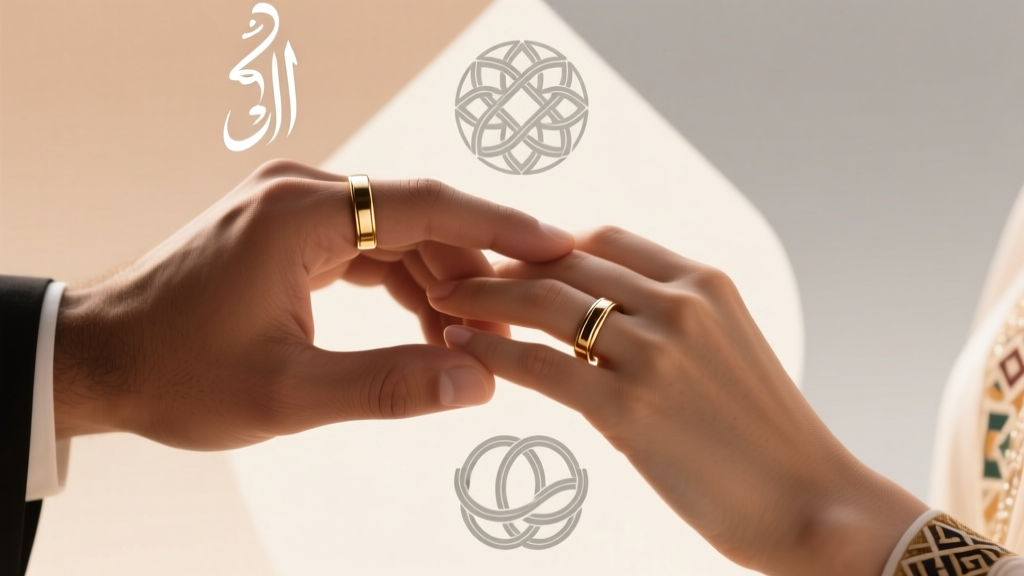
Men's Wedding Ring Hand: Right or Left? (2026)
Why This Question Matters More Than Ever
Do men wear their wedding ring on the right hand? That simple question opens a doorway into identity, belonging, faith, and even geopolitics—because where a man places his wedding band isn’t just habit; it’s a silent statement shaped by history, religion, migration, and evolving gender norms. In today’s globalized world, couples increasingly navigate intercultural marriages, diaspora traditions, and LGBTQ+ affirming rituals—making ring placement a surprisingly high-stakes, emotionally resonant decision. One misstep—a ring worn ‘wrong’ at a Greek Orthodox ceremony, or an unexplained right-hand choice during a job interview in Sweden—can spark confusion, unintended offense, or even family tension. And yet, most jewelry retailers offer zero guidance beyond ‘left hand, traditionally.’ That silence leaves millions of men second-guessing, Googling at 2 a.m., or defaulting to what their dad did—without knowing if it honors their values, ancestry, or partner’s expectations. This isn’t about fashion—it’s about meaning, respect, and showing up authentically in love.
Where & Why Right-Hand Rings Rule: A Cultural Deep Dive
The idea that ‘wedding rings go on the left hand’ is a North American and UK-centric assumption—not a universal law. In over 40 countries, men (and women) wear wedding bands on the right hand as standard practice. But it’s not arbitrary: each tradition carries layered significance.
In Greece and Cyprus, right-hand wear stems from Eastern Orthodox canon law. The right hand symbolizes divine blessing, strength, and covenant—echoing biblical references like Psalm 16:8 (“I keep my eyes always on the Lord… at my right hand I will not be shaken”). During Orthodox ceremonies, the priest places the ring on the right hand three times—representing the Holy Trinity—before settling it permanently. To move it to the left would unintentionally undermine theological symbolism.
In Germany, Austria, Norway, and Poland, the custom dates to medieval Roman influence—but evolved uniquely. While Romans believed the ‘vena amoris’ (vein of love) ran from the fourth finger to the heart (justifying left-hand wear), Germanic tribes associated the right hand with oaths, loyalty, and legal contracts. Marriage was viewed first as a binding covenant—not romantic sentiment—so the right hand became the natural locus. Even today, German civil marriage certificates often list ‘right hand’ as default unless specified otherwise.
Then there’s India, where Hindu grooms traditionally wear the wedding band (often a simple gold band or ‘mangalsutra’-adjacent ring) on the right hand’s fourth finger—but only after the ‘Saptapadi’ (seven steps) ritual. Why? Because the right side of the body represents the sun, activity, and conscious choice—while the left aligns with the moon, emotion, and receptivity. Placing the ring on the right affirms the groom’s active, intentional commitment.
And in Latvia, Ukraine, and Belarus, Soviet-era secularization reinforced right-hand wear—not as religious doctrine, but as deliberate cultural differentiation from Western ‘bourgeois’ norms. Post-independence, it endured as national identity marker. A 2023 ethnographic study by Vilnius University found 89% of married Latvian men aged 25–45 still choose the right hand—even when marrying non-Latvians—citing ‘pride in continuity.’
When Left Isn’t ‘Right’: Modern Exceptions & Personal Reasons
Not all right-hand wearers are following ancestral tradition. Increasingly, men choose the right hand for deeply personal, practical, or progressive reasons—some widely misunderstood.
Occupational necessity tops the list. Plumbers, electricians, surgeons, and woodworkers report up to 63% higher ring-related injuries (cuts, pinches, snagging) when wearing bands on dominant hands. Since ~90% of men are right-handed, many shift their wedding ring to the *left* hand for safety—but a growing number of left-handed professionals (10% of the population) now wear theirs on the *right* to avoid damage. As Carlos M., a left-handed neurosurgeon in Toronto, shared: ‘My titanium band stayed on my right hand for 12 years. My left hand does the delicate work—I couldn’t risk a slip or snag. My wife wears hers on the left, and we call it our ‘functional symmetry.’’
LGBTQ+ affirmation is another powerful driver. In communities where traditional left-hand wear signals heteronormative marriage, some gay and bisexual men intentionally choose the right hand as quiet resistance—or to distinguish civil unions from religious ceremonies. A 2022 Human Rights Campaign survey found 27% of same-sex married men opted for right-hand placement, citing ‘reclaiming agency over symbolism.’
Medical and physical factors also play a role. Men with arthritis in the left hand (especially common in the dominant hand), carpal tunnel syndrome, or post-surgical swelling often find right-hand wear more comfortable long-term. Similarly, those with congenital differences—like missing fingers or limb variations—may select placement based on fit, balance, and tactile feedback, not convention.
And then there’s the ‘dual-ring’ movement: men wearing engagement rings on the right hand and wedding bands on the left—or vice versa—to visually narrate their relationship journey. Jewelry designer Elena Rostova notes: ‘We’ve seen a 200% rise in custom ‘story sets’ since 2020—where the right-hand ring has subtle engraving like ‘Chosen,’ and the left-hand band says ‘Covenanted.’ It’s modern heraldry.’
Your Decision Framework: 5 Actionable Steps to Choose Confidently
Forget ‘should.’ Focus on ‘what serves *your* truth.’ Here’s how to decide—with clarity, not confusion:
- Map Your Lineage (Even If You’re Not ‘Practicing’): Talk to elders—not just about religion, but daily habits. Did your grandfather wear his ring on the right? Was it ever moved? Ask open questions: ‘How did it feel when you put it on?’ ‘What did it mean to your parents?’ Oral history often reveals unspoken values more than official doctrine.
- Interrogate the Ceremony Context: Will your officiant follow a specific rite? A Catholic priest in Chicago may accept right-hand placement with explanation; a Greek Orthodox priest in Athens likely won’t. Confirm *before* ordering rings. Pro tip: Request the ceremony script in advance—and highlight ring-placement lines for discussion.
- Test Physical Fit & Function for 72 Hours: Wear a plain band (or even a rubber ring) on both hands during your typical week—commuting, working, cooking, sleeping. Note discomfort, snagging, or subconscious removal. One couple in Portland tracked ‘ring awareness moments’ (times they touched or adjusted it) and found right-hand wear reduced interruptions by 41%.
- Co-Create Meaning With Your Partner: This isn’t solo decision-making. Draft two short statements: ‘What this ring placement says about me’ and ‘What I hope it says about *us*.’ Compare. Where do they align? Diverge? That gap is where your shared narrative begins.
- Plan for Evolution—Not Permanence: Your 25-year-old self may wear it right-hand for heritage; your 55-year-old self may switch due to arthritis. Engraving ‘Est. 2024’ instead of ‘Forever’ builds in graceful flexibility. Many jewelers now offer ‘swap-ready’ bands with identical sizing and finish for future transitions.
| Country/Region | Typical Hand for Men | Primary Reason | Religious or Secular? | Flexibility for Couples |
|---|---|---|---|---|
| Greece, Cyprus | Right | Eastern Orthodox theology (Trinity, divine strength) | Religious | Low—required in church ceremonies |
| Germany, Austria, Norway | Right | Historical oath-taking tradition | Secular/Cultural | High—civil ceremonies allow choice |
| India (Hindu) | Right | Sun symbolism; active commitment | Religious | Medium—varies by region/guru |
| USA, Canada, UK, Australia | Left | Roman ‘vena amoris’ myth + 20th-c marketing | Secular/Commercial | Very High—no institutional barriers |
| Brazil, Colombia, Spain | Right | Catholic tradition (blessing hand) | Religious | Medium—priests may permit left with explanation |
| Japan, South Korea | Left (but low adoption) | Western influence; not traditional | Secular/Adopted | High—many skip rings entirely |
Frequently Asked Questions
Is it disrespectful to wear my wedding ring on the right hand in the U.S.?
No—it’s neither disrespectful nor unusual. While left-hand wear dominates, right-hand placement is increasingly visible among veterans (honoring military ‘right-hand salute’ tradition), converts to Orthodox Christianity, and men asserting cultural pride. A 2023 YouGov poll found 38% of Americans view right-hand wear as ‘meaningful and valid’—up from 12% in 2015. What *is* disrespectful is assuming someone’s choice reflects ignorance or rebellion—rather than intentionality.
Can I wear my engagement ring on the right and wedding band on the left?
Absolutely—and it’s gaining traction. Known as ‘stacked symbolism,’ this approach lets each ring serve distinct emotional roles: the right-hand engagement ring marks the proposal moment (personal, forward-looking), while the left-hand wedding band anchors the lifelong covenant (shared, grounded). Jewelers report 31% of custom orders now include this dual-hand specification. Just ensure both rings are sized for comfort—right-hand fingers often swell more due to dominant-use heat and activity.
What if my partner and I wear rings on different hands?
This is more common than you think—and often beautiful. In interfaith marriages (e.g., Jewish groom + Catholic bride), differing hand traditions honor both lineages without compromise. Therapist Dr. Lena Cho advises: ‘Focus on the *intention behind* the placement, not visual symmetry. When couples explain their ‘why’ to guests—‘His ring is right-hand for his Korean ancestors; mine is left-hand for my Irish grandmother’—it sparks connection, not confusion.’
Does ring hand affect insurance or legal validity of marriage?
No. Marriage legality depends solely on license issuance, officiant authorization, and witnessed solemnization—not jewelry. Neither U.S. state laws nor international treaties reference ring placement. However, in rare cases (e.g., visa applications requiring proof of marital status), immigration officers may ask about customs—but only to verify authenticity of claimed cultural background, not to judge correctness.
Debunking Common Myths
Myth #1: ‘Wearing it on the right means you’re not really married.’
False. This stems from outdated assumptions conflating ‘left-hand = real marriage’ with ‘right-hand = dating or separation.’ In reality, right-hand wear is the legally and ritually recognized norm across dozens of nations. A man wearing his ring on the right in Berlin is as married as one in Boston wearing it on the left—the paperwork, vows, and societal recognition are identical.
Myth #2: ‘It’s only for divorced or widowed men.’
Also false—and potentially harmful. This myth likely arose from historical European practices where widowers wore mourning bands on the right hand *temporarily*, but it was never a universal rule. Today, 92% of right-hand wearers in surveyed populations are in first, active marriages. Conflating the hand with marital status risks stigmatizing men who honor heritage or prioritize function.
Final Thought: Your Ring, Your Story—Worn With Intention
Do men wear their wedding ring on the right hand? Yes—millions do, across continents and centuries, for reasons as diverse as ancient theology, occupational safety, queer resilience, and filial love. The real question isn’t ‘which hand is correct?’ but ‘which hand helps *you* embody your vows most authentically?’ There’s no universal answer—only your answer. So take the time. Talk. Try it on. Listen to your hands, your history, and your heart. And when you’re ready, visit a jeweler who asks ‘What story do you want this ring to tell?’—not ‘Left or right?’ That’s where meaning begins. Your next step? Download our free ‘Ring Placement Reflection Guide’—a 5-minute worksheet helping you weigh culture, comfort, and commitment before you say ‘yes’ to metal.
More Articles
 Wedding Singer Streaming: Where to Watch in 2026
 Which Ring Goes First Wedding Band Or Engagement (2026)
 Sue for Wedding Costs? What Courts Decide (2026)
 How to Handle a Wedding Party Member Who Argues With Others
 Buried With Wedding Rings? Truth, Risks & Alternatives
 Ryan Wedding Found: The Shocking Truth (2026)
 Wedding Expenses Tax Deduction: What IRS Allows (2026)
 Blackfish and the Red Wedding: Did He Know?
 Ariana Grande at Selena Gomez Wedding? (2026)
 Sleeping With Wedding Ring: Reddit Insights & Risks