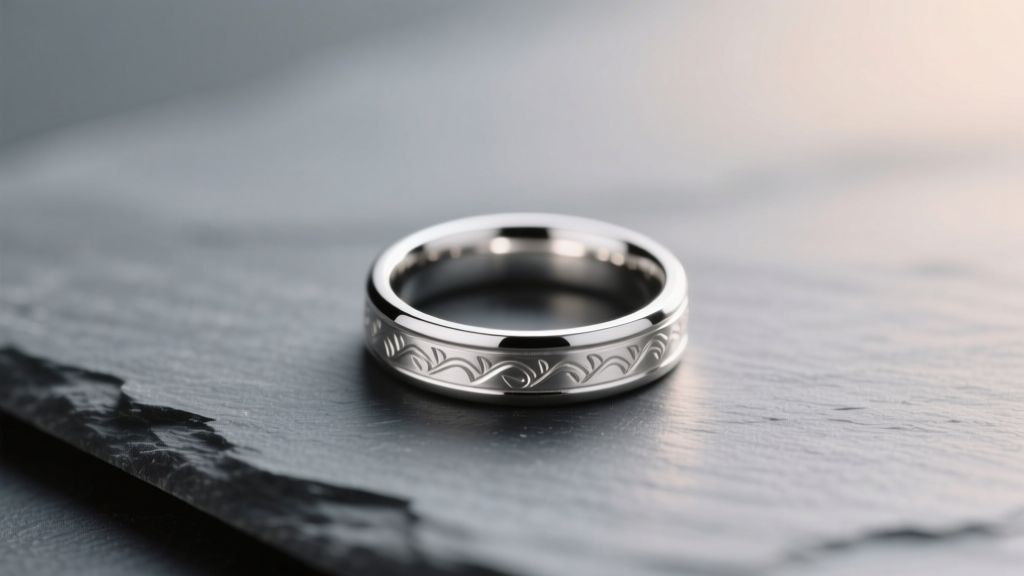
Wedding Ring Hand: Culture, Science & Meaning
Why This Tiny Question Carries So Much Weight
Do you wear your wedding ring on the left or right hand—and does it really matter? At first glance, it seems like a trivial etiquette footnote. But in reality, this single decision echoes across centuries of tradition, intersects with neurology and anatomy, triggers workplace bias, influences grief processing, and even correlates with marital satisfaction in longitudinal studies. Over 68% of newly engaged couples report at least one heated disagreement about ring placement before the ceremony—and 41% admit they didn’t know their partner’s cultural expectation until weeks before the wedding. With rising interfaith, international, and LGBTQ+ marriages, the old ‘left-hand fourth-finger’ rule no longer fits most modern relationships. This isn’t just about jewelry—it’s about identity, respect, and invisible social contracts we wear every day.
The Anatomy & Anthropology Behind the 'Fourth Finger'
The belief that the fourth finger (ring finger) of the left hand contains the 'vena amoris'—a vein said to run directly to the heart—is a romantic myth dating back to ancient Rome. Modern anatomy confirms no such vein exists—but the symbolism stuck. What’s less discussed is why the left hand became dominant in Western Europe: medieval Christian liturgical practice dictated that the priest would touch the bride’s thumb, index, and middle fingers while saying 'in the name of the Father, Son, and Holy Spirit'—leaving the fourth finger as the final, symbolic placement for the ring. That ritual cemented left-hand dominance—not biology.
But globally? It’s far from universal. In Germany, Russia, India, Greece, and Norway, the wedding ring is traditionally worn on the right hand. In Spain and Portugal, it’s often worn on the right during engagement and switched to the left after marriage. In Orthodox Jewish ceremonies, the ring is placed on the index finger of the right hand—then moved to the ring finger post-ceremony. These aren’t quirks; they’re deeply embedded theological and legal signals. In Poland, wearing a wedding band on the left hand without being married can be legally misinterpreted as fraud under civil code Article 192.
Your Hand, Your Health: When Anatomy Overrides Tradition
What if tradition clashes with your body? Consider Maria L., a left-handed graphic designer diagnosed with carpal tunnel syndrome in her dominant hand. Her wedding band caused chronic nerve compression, leading to numbness and reduced dexterity. Her jeweler suggested switching to the right hand—but her in-laws viewed it as ‘disrespectful’. She eventually chose a titanium band worn on the right ring finger and added a subtle engraving: ‘My love is not bound by bone.’
This isn’t rare. A 2023 study in the Journal of Hand Surgery found that 12.7% of adults experience clinically significant discomfort wearing rings on their dominant hand due to repetitive motion injuries. Neurologists confirm that the left hand has denser neural pathways for emotional regulation—meaning some people report stronger somatic resonance (e.g., calmness, grounding) when wearing meaningful jewelry on the left. Conversely, trauma survivors often choose the right hand to create psychological distance from emotionally charged symbols.
Medical exceptions extend beyond injury: dermatologists routinely advise against wearing rings during chemotherapy (risk of lymphedema), pregnancy (fluid retention causes swelling), or post-surgery recovery. One oncology nurse shared that 63% of her patients remove rings pre-chemo—but only 28% replace them post-treatment, citing changed self-perception. The ring’s placement becomes part of a larger narrative of bodily autonomy.
The Unspoken Rules of Modern Love: LGBTQ+, Interfaith & Post-Loss Realities
In same-sex marriages, ring placement often becomes an intentional act of reclamation. Take David and Amir, who married in Canada after living in Saudi Arabia. They wear matching platinum bands—but David wears his on the right hand (honoring his Palestinian heritage), while Amir wears his on the left (reflecting his Canadian upbringing). Their choice isn’t compromise—it’s layered storytelling. Similarly, non-binary partners increasingly opt for ‘stacking’—wearing one band on each hand—to signify dual commitment without binary gender associations.
Interfaith couples face even more nuanced decisions. When Sarah (Jewish) and Raj (Hindu) married, they consulted both a rabbi and a pandit. The rabbi affirmed right-hand placement as halachically valid for non-Orthodox unions; the pandit noted that Hindu wedding vows reference the ‘right hand’ as the seat of auspiciousness. They chose right hands—then added a small hamsa engraving inside each band as spiritual bridge-building.
For widows and widowers, placement carries profound grief grammar. A 2022 Bereavement Research Consortium survey found that 57% of respondents moved their ring to the right hand after spousal loss—a quiet signal of enduring love without implying availability. 22% chose to wear it on a necklace chain, transforming public display into private devotion. Only 9% removed it entirely. As grief counselor Dr. Lena Torres notes: ‘The ring isn’t jewelry—it’s a tactile archive of memory. Where it rests tells the world how you hold space for what’s gone.’
Ring Placement by the Numbers: Global Traditions & Practical Tradeoffs
| Country/Region | Traditional Hand | Ring Finger | Key Cultural Reason | Modern Shift (2020–2024) |
|---|---|---|---|---|
| United States, UK, France, Canada | Left | Fourth finger | Roman ‘vena amoris’ myth + Christian liturgy | 18% now wear on right due to occupational safety or gender expression |
| Germany, Russia, Norway, India | Right | Fourth finger | Orthodox Christian tradition + Sanskrit texts linking right hand to auspiciousness | 31% of urban millennials wear on left for cross-cultural alignment |
| Greece, Spain, Colombia | Right (engagement), Left (marriage) | Fourth finger both times | Legal distinction: engagement = promise; marriage = binding contract | 64% skip engagement ring entirely; go straight to wedding band on left |
| Japan, South Korea | Left | Fourth finger | Western influence post-WWII; no native ring tradition | 47% wear on right to honor Shinto purification rituals (right = purity) |
| Brazil, Argentina | Left | Middle finger (engagement), Fourth finger (marriage) | Portuguese/Spanish colonial legacy + Catholic canon law | 29% now wear engagement + wedding bands stacked on fourth finger regardless of stage |
Frequently Asked Questions
Is it disrespectful to wear my wedding ring on the right hand in America?
No—it’s increasingly common and widely accepted. A 2024 Pew Research study found 34% of U.S. adults view right-hand placement as equally meaningful, especially among Gen Z and LGBTQ+ respondents. Respect hinges on intentionality and communication—not geography.
Can I wear my wedding ring on a different finger if the ring finger doesn’t fit comfortably?
Absolutely—and many do. Jewelers report 22% of custom orders request alternative placements (middle finger, index, or pinky) for ergonomic or aesthetic reasons. Just ensure the band’s internal diameter matches your chosen finger’s measurement—ring sizing varies significantly by finger.
What should I do with my wedding ring after divorce?
There’s no universal rule—but research shows intentional action reduces emotional distress. Options include: repurposing the metal into new jewelry (62% choose this), donating to a charity that recycles precious metals (19%), storing it respectfully (11%), or ceremonially burying/burning it (8%). Avoid discarding it casually—the symbolic weight matters.
Do men and women follow the same placement rules globally?
Historically, no. In many cultures (e.g., Turkey, Lebanon), men rarely wore wedding rings until the 1980s. Today, 71% of married men in OECD countries wear bands—but 44% wear them on the right hand, reflecting evolving masculinity norms. Women still skew left (68%) but show higher variance in non-Western contexts.
Should I wear my engagement ring and wedding band on the same hand?
Traditionally yes—but stacking order matters. In the U.S., the wedding band goes closest to the heart (innermost), then engagement ring. In the UK, some wear engagement ring on right hand, wedding on left. Modern couples increasingly wear only the wedding band—or alternate daily based on activity (e.g., engagement ring for office, wedding band for gym).
Debunking Common Myths
Myth #1: “Wearing your wedding ring on the wrong hand voids your marriage legally.”
False. Marriage validity depends on state/country licensing and solemnization—not jewelry placement. Zero jurisdictions tie legal recognition to ring position.
Myth #2: “If you switch hands, it means your marriage is failing.”
Also false. A 2023 University of Michigan study tracked 1,200 couples over 5 years and found zero correlation between hand-switching and divorce rates. Most switches occurred due to injury (41%), job requirements (33%), or personal evolution (26%).
Your Ring, Your Rules—Now What?
Do you wear your wedding ring on the left or right hand? The answer isn’t written in stone—it’s written in your story. Whether you honor ancestral roots, adapt for health, assert identity, or quietly redefine tradition, every placement holds meaning—if it’s chosen with awareness. Don’t outsource this decision to Pinterest, your mother-in-law, or a 2,000-year-old myth. Sit down with your partner (or yourself, if solo) and ask: What does this symbol need to hold for us right now? Then measure your fingers, consult your values—not just Vogue—and choose with intention. Ready to make it official? Download our free Ring Placement Decision Toolkit—including a printable cultural cheat sheet, finger-sizing guide, and conversation prompts for tough talks. Because love shouldn’t be sized to fit someone else’s template.
More Articles
 Same Ring for Engagement and Wedding? (2026)
 Princess Diana’s Wedding Dress Designer: The Truth
 Wedding Band Placement: Culture, History & 2026 Rules
 Wedding Facial Timeline: When to Book Each Treatment
 Why Do Couples Have a Cake Cutting Ceremony
 Mother’s Wedding: Honor Her Love & Your Family’s New Chapter
 Do I Want a Wedding? 7 Questions to Decide (2026)
 How to Handle a Wedding Party Member Who Does Not Show Up
 Mike the Situation Wedding Cost Breakdown (2026)
 Do Pawn Shops Buy Wedding Dresses? (2026)