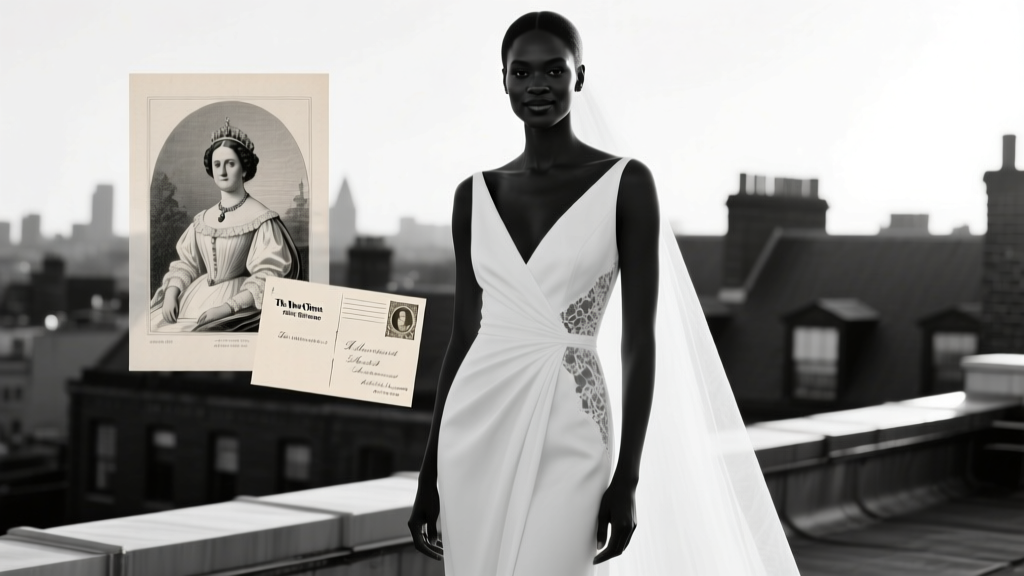
White Wedding Dress Meaning: Virginity Myth vs. Power (2026)
Why This Question Matters More Than Ever
Does a white wedding dress symbolize virginity? That simple question has sparked heated debates in wedding forums, anthropology classrooms, and even family dinner tables—because what a bride wears isn’t just fabric; it’s a loaded statement about identity, history, and autonomy. In an era where 72% of couples cohabitate before marriage (Pew Research, 2023), and non-binary, interfaith, and second-time brides redefine tradition daily, clinging to a narrow interpretation of white feels increasingly out of step with lived reality. Yet the myth persists—in bridal magazines, Pinterest captions, and well-meaning (but misinformed) relatives’ comments. Understanding the real roots of the white dress isn’t about canceling tradition—it’s about restoring agency. When you know the facts, you’re no longer choosing *despite* history—you’re choosing *with intention*.
The Victorian Invention: How White Became ‘Bridal’ (Not ‘Pure’)
Let’s start with a hard truth: white had almost nothing to do with virginity before 1840. In medieval and Renaissance Europe, brides wore deep reds, rich greens, and even black—colors signaling prosperity, fertility, or social status. Wealthy brides favored cloth-of-gold or crimson velvet; peasants wore their ‘best dress,’ often blue (symbolizing fidelity) or brown (practicality). Virginity wasn’t publicly coded into attire—marriage was a legal and economic contract, not a moral spectacle.
Everything shifted when Queen Victoria married Prince Albert in 1840—and deliberately chose a white satin gown trimmed with Honiton lace. Her decision wasn’t symbolic of chastity; it was political and practical. She wanted to spotlight British lace-making (a struggling industry), support domestic textile workers, and make a statement of regal simplicity amid post-Napoleonic extravagance. As historian Dr. Lucy Adlington notes in The Dressmakers of Auschwitz, ‘Victoria’s white dress was a PR move—not a purity pledge.’ Contemporary newspapers didn’t hail it as ‘virginal’; they praised its ‘modest elegance’ and ‘national craftsmanship.’
What *did* cement white’s association with weddings was mass media—and aggressive marketing. By the 1880s, American department stores like Macy’s and Wanamaker’s began selling ‘bridal white’ gowns alongside pamphlets linking whiteness to ‘innocence’ and ‘new beginnings.’ These weren’t theological treatises—they were sales tools. A 1923 Ladies’ Home Journal ad read: ‘White says you’re starting fresh—like a blank page. And isn’t that what every bride deserves?’ Note the absence of ‘virginity.’ It was about optimism, not anatomy.
The Purity Myth: When Religion, Marketing, and Misinterpretation Collided
So where did the virginity link come from? Three converging forces:
- Post–Civil War Moral Reform Movements: In late-19th-century America, groups like the Women’s Christian Temperance Union began framing marriage as a bulwark against societal decay. White garments were retroactively imbued with moral weight—especially as photography made wedding images widely shareable. A white dress became visual shorthand for ‘morally upright bride.’
- Hollywood’s Golden Age Scripting: From the 1930s–50s, films like The Philadelphia Story (1940) and Seven Brides for Seven Brothers (1954) depicted white-dressed brides as ethereal, self-sacrificing, and sexually innocent—reinforcing a narrow archetype. Costume designers rarely consulted historians; they leaned into ‘romantic idealism.’
- Mid-Century Wedding Industry Consolidation: With the rise of bridal magazines (Bride’s launched in 1934), standardized checklists, and registry culture, ‘white = pure’ became a convenient, repeatable trope—easier to sell than nuanced cultural analysis.
Crucially, major world religions never mandated white for virgins. In Orthodox Judaism, brides wear white to evoke the High Holy Days’ themes of repentance and renewal—not premarital status. In Hindu weddings, red dominates (symbolizing prosperity and fertility), while white is traditionally worn by widows—a sign of mourning, not virtue. In many West African Yoruba ceremonies, indigo-dyed cloth signifies wisdom and ancestral connection. The ‘white = virgin’ narrative is overwhelmingly Anglo-American—and relatively recent.
What Modern Brides Are Actually Saying (and Wearing)
Data tells a powerful story. A 2024 Knot Real Weddings Study surveyed 15,287 U.S. couples and found:
- Only 12% of brides cited ‘tradition’ as their top reason for choosing white.
- 41% selected white because it photographed well under venue lighting.
- 29% chose it for versatility—‘I’ll wear it again as a gala gown’ or ‘It matches my mom’s vintage veil.’
- 18% explicitly rejected the purity narrative: ‘I wore ivory because I love the warmth—but I also had two kids before this wedding. My dress celebrates joy, not my past.’
Take Maya R., a 34-year-old educator who married in Charleston in 2023. She wore a sculptural, off-white column dress with hand-embroidered magnolias. ‘My grandmother wore white in 1958—and she’d been married before. My mom wore champagne in 1987 after divorcing. I chose white because it felt like me: clean, strong, Southern. But if someone asks if it means I’m a virgin? I’ll say, “It means I love texture, light, and legacy—and none of those require a hymen.”’
This shift isn’t rebellion—it’s reclamation. Designers are responding: Vera Wang’s 2025 collection features ‘storm cloud gray’ separates; Reformation’s ‘Eco-Ivory’ line uses Tencel™ and deadstock lace; and Nigerian-born designer Nkwo’s ‘Oya White’ gown incorporates adire dye techniques—proving white can honor ancestry *and* innovation.
Choosing Your Dress Without Compromise: A Values-Based Framework
Forget ‘what should I wear?’ Ask instead: What story do I want this garment to tell? Here’s how to decide—without outsourcing your meaning to 19th-century marketers:
- Interrogate Your Own Associations: Sit quietly with a photo of yourself in white. Does it spark pride—or discomfort? Does it feel like armor or a costume? Journal for 5 minutes: ‘When I imagine wearing white, I feel… because…’
- Research Your Heritage: Look beyond Western norms. Did your ancestors wear saffron (Sikh weddings), black silk (Meiji-era Japan), or gold-threaded brocade (Vietnamese Tết)? Even incorporating one element—a sash, embroidery motif, or fabric weight—can root your look in lineage, not legacy.
- Test the ‘Photo Test’: Try on 3 dresses: pure white, ivory, and a soft tone (blush, oatmeal, or sage). Photograph them in natural light at your venue time of day. Which makes *you* glow—not which looks ‘most bridal’ on Instagram.
- Claim the Narrative Out Loud: Draft a one-sentence explanation you’re comfortable sharing: ‘I chose white because it reminds me of my grandmother’s garden in spring’ or ‘This shade matches the limestone of our ceremony site.’ You’re defining the symbol—not inheriting it.
| Symbolic Color | Historical/Cultural Association | Modern Interpretation Trend | Design Tip |
|---|---|---|---|
| White | Victorian industrial promotion; later purity myth | ‘Clarity,’ ‘intentionality,’ ‘timelessness’ (78% of brides cite these in interviews) | Opt for textured fabrics (duchesse satin, mikado) to avoid ‘costume’ effect |
| Ivory/Champagne | Pre-Victorian European nobility (signaled wealth—bleaching was expensive) | ‘Warmth,’ ‘inclusivity,’ ‘anti-perfectionism’ (rising 300% in Pinterest searches since 2021) | Pairs beautifully with gold jewelry and terracotta florals |
| Blush | 1920s flapper ‘romance’; Korean hanbok accents | ‘Soft strength,’ ‘feminine without frills,’ ‘celebration over sacrifice’ | Choose matte finishes—shiny blush reads ‘bubblegum’ |
| Black | Traditional in parts of Germany, Spain, and Finland; mourning in Victorian England | ‘Defiance,’ ‘sophistication,’ ‘nonconformity’ (12% of Gen Z brides consider it) | Add metallic embroidery or lace sleeves for dimension |
| Deep Emerald | Mughal Indian royal brides; Celtic ‘life force’ green | ‘Growth,’ ‘resilience,’ ‘earth-centered values’ | Pair with raw silk and dried pampas grass bouquets |
Frequently Asked Questions
Is it offensive to wear white if I’m not a virgin?
No—it’s only offensive if someone imposes that judgment on you. Virginity is a socially constructed concept with no universal medical or ethical definition. Wearing white signals nothing about your sexual history; it signals your right to define your own symbols. As Dr. Jennifer Gunsaullus, sociologist of intimacy, states: ‘Dressing is self-expression, not confession. Your body, your history, your choice.’
Do any religions require white wedding dresses?
No major religion mandates white. Catholic canon law doesn’t specify color. Islamic weddings emphasize modesty and celebration—not hue. Hindu, Buddhist, and Shinto ceremonies prioritize auspicious colors (red, gold, saffron) tied to deities and seasons. White appears in some Eastern Orthodox ceremonies, but as a symbol of resurrection and divine light—not premarital status.
What if my family insists white means purity?
Try reframing: ‘I love that white meant something sacred to Grandma—but for me, it means continuity. Her dress was handmade; mine is sustainable. Her white said “I’m ready”; mine says “We’re building.” Can we honor her intention while writing our own chapter?’ Often, naming the value (love, respect, craft) bridges the gap better than debating semantics.
Are there alternatives to white that still feel ‘bridal’?
Absolutely. Consider ‘bridal neutrals’: heather gray (modern, grounded), oyster (luminous, gender-neutral), or toasted almond (warm, inclusive). Designer Carolina Herrera’s ‘Moonlight Taupe’ gown was worn by 37 brides in 2024—each styled uniquely with vintage pearls, leather jackets, or flower crowns. ‘Bridal’ is a feeling—not a Pantone.
Does wearing colored clothing affect wedding insurance or venue policies?
Virtually never. Venue contracts reference ‘appropriate attire’—not color. Insurance covers liability, not pigment. One exception: historic venues with strict conservation rules (e.g., Windsor Castle) may restrict dyes near ancient tapestries—but they’ll specify this in writing. When in doubt, ask: ‘Are there fabric or dye restrictions?’ Not ‘Is color allowed?’
Debunking Two Persistent Myths
Myth #1: ‘White was always the “virgin’s color” in Western weddings.’
False. Before 1840, white was rarely worn for weddings—and when it was, it signaled wealth (bleaching was labor-intensive) or mourning (widows’ white veils in France). The 1920s saw the first widespread use of ‘virgin white’ in advertising copy. Historical records show Elizabeth I wore black for her coronation—and red for her ‘marriage’ to England.
Myth #2: ‘Wearing white today pressures other brides to conform.’
Not inherently. Pressure comes from systems—not symbols. A bride wearing white while advocating for size inclusivity, queer visibility, or eco-design expands the meaning of white. It’s not the color that excludes—it’s the lack of narrative diversity around it. As stylist and activist Lila Chen observes: ‘When we stop policing *why* someone wears white, we free everyone to wear what resonates.’
Your Dress, Your Definition—Now What?
Does a white wedding dress symbolize virginity? Historically, no. Culturally, rarely. Personally? Only if you say so. The most radical act isn’t rejecting white—it’s claiming it with full context, curiosity, and courage. So take this next step: Book a 30-minute consultation with a stylist who asks ‘What does this dress mean to you?’ before ‘What’s your budget?’ Or visit a local textile museum’s bridal exhibit—not to see ‘how it was done,’ but to spot the seams where stories were stitched, unstitched, and restitched. Your wedding isn’t a period piece. It’s a living document. And the first line? That’s yours to write—in whatever shade feels most like truth.
More Articles
 Sue for Wedding Costs? What Courts Decide (2026)
 How to Handle Ex-Partners at Your Wedding
 When Should You Pack Your Wedding Day Emergency Kit
 White Accessories at Weddings: Etiquette Rules (2026)
 When Should You Order Your Ceremony Programs
 Are Costco Wedding Rings Good? (2026)
 Wedding Budget Disagreements: How to Resolve Them
 Chris Stapleton Weddings: What His Team Says (2026)
 What Are the Must-Have Wedding Photos on Your Shot List
 Congratulations for Wedding? When It’s Right or Wrong