Wedding Ring on Right Hand? Global Traditions & Identity
Why This Question Is More Meaningful Than You Think
Do you wear your wedding ring on your right hand? That simple question—asked quietly while adjusting a band during a Zoom call, whispered before walking down the aisle, or typed into Google at 2 a.m. after scrolling through conflicting Instagram posts—isn’t just about finger placement. It’s a quiet proxy for identity, belonging, respect, and even grief. In a world where 68% of couples now customize their wedding traditions—and where over 42% of U.S. adults report feeling pressured to conform to outdated norms—this small physical decision carries outsized emotional weight. Whether you’re newly engaged, recently widowed, transitioning your gender expression, or recommitting after divorce, the answer isn’t written in stone—it’s written in your story. And that story deserves clarity, not confusion.
Where Tradition Lives—and Where It Doesn’t
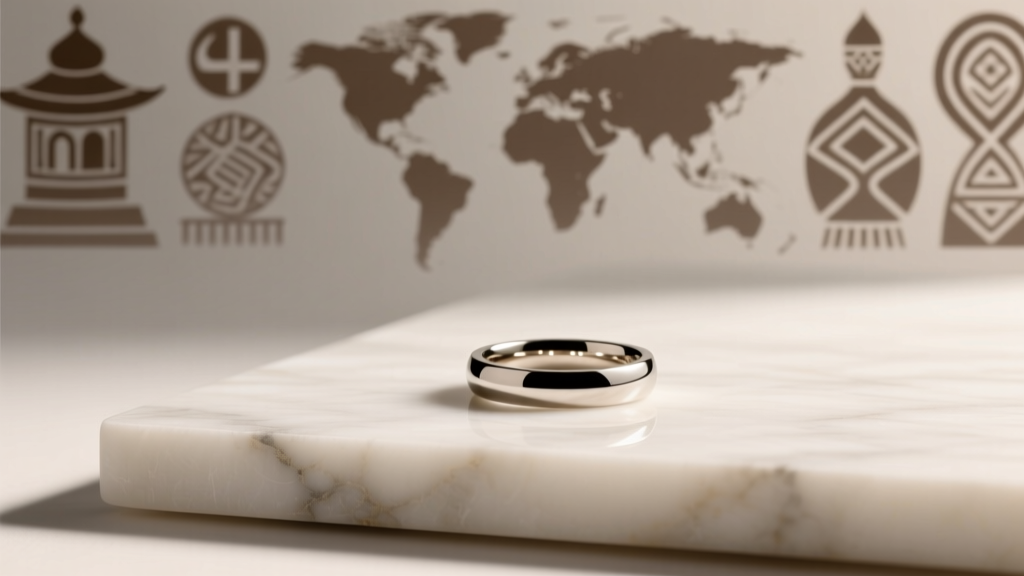
Wedding ring placement isn’t governed by universal law—it’s shaped by centuries of migration, religion, language, and colonial influence. In the United States, Canada, the UK, and Australia, the left-hand ring finger (the fourth finger) is standard—not because of anatomy, but because of an ancient Roman belief that the vena amoris (“vein of love”) ran directly from that finger to the heart. Though anatomically disproven, the symbolism stuck. But step across the Atlantic—or even into certain U.S. communities—and that ‘standard’ dissolves.
In Germany, Russia, Norway, India, and Greece, wearing the wedding band on the right hand is the dominant custom. In Eastern Orthodox Christianity, the right hand symbolizes divine blessing, strength, and covenant—so placing the ring there affirms marriage as a sacred, active commitment. In India, many Hindu and Sikh grooms wear rings on the right hand (though brides often wear toe rings or bangles instead), reflecting regional interpretations of auspiciousness. Even within Latin America, practice varies: Argentina and Colombia lean left; Venezuela and Peru often favor the right—sometimes depending on whether the couple follows Spanish Catholic tradition or indigenous syncretic customs.
Crucially, this isn’t ‘wrong vs. right’—it’s contextual meaning. A German-American couple might choose right-hand wear to honor her family’s heritage—even if he grew up slipping his band onto his left. That decision becomes a living bridge between lineages, not a compliance check.
Your Body, Your Narrative: When Personal Identity Overrides Convention
Today, more than ever, people are intentionally redefining ring placement—not to reject tradition, but to align it with who they are. Consider Maya, a nonbinary teacher in Portland, who wears her platinum band on her right middle finger. “My left hand holds my engagement ring—a gift from my partner—but I chose the right hand for my wedding band because it feels like claiming space,” she shared in a 2023 interview with The Knot. “It’s visible when I write on the board, when I hold my students’ hands, when I sign documents. It says: I’m married, and I’m me.”
LGBTQ+ couples frequently use ring placement as subtle yet powerful signaling. In countries where same-sex marriage wasn’t legally recognized until recently (like Switzerland, which legalized it in 2021), many couples wore bands on the right hand as both a private affirmation and a low-risk public gesture. A 2022 Pew Research analysis found that 37% of same-sex married respondents reported using ‘nontraditional’ ring placement—including stacking on the right hand, wearing matching bands on opposite hands, or choosing minimalist bands worn only on special occasions—to navigate workplace safety, family acceptance, or personal comfort.
For trans and gender-expansive individuals, ring placement can be deeply intentional. Dr. Lena Torres, a clinical psychologist specializing in gender-affirming care, notes: “When someone transitions, their relationship to symbols of partnership often shifts too. A ring worn on the right hand may represent a new beginning—one that honors past love while anchoring present authenticity.” This isn’t rebellion; it’s resonance.
Life Transitions That Rewire Ring Rituals
Marriage doesn’t exist in a vacuum—and neither does ring-wearing. Major life events often prompt conscious reconsideration of where, how, and whether to wear your band. Let’s break down three pivotal transitions:
- After Divorce: Over 65% of divorced adults surveyed by the National Center for Family & Marriage Research (2023) reported keeping their wedding ring for at least six months post-decree—not out of sentimentality, but as a tangible boundary marker during legal and emotional renegotiation. Many then move it to the right hand as a ‘transition ring,’ signaling closure without erasure. As one Atlanta-based divorce coach explained: “It’s not about holding on—it’s about honoring what was, so you can fully step into what’s next.”
- After Widowhood: Cultural expectations here are especially fraught. In parts of Scandinavia and the Netherlands, widows traditionally wear the ring on the right hand for one year, then move it to the left pinky—a gesture of enduring love with softened visibility. In contrast, some Japanese widows remove the ring entirely after mourning rituals conclude, while others wear it on the right hand alongside a new memorial band engraved with their spouse’s name and dates.
- During Religious Conversion or Reaffirmation: A Jewish couple converting to Judaism may choose right-hand wear to align with Ashkenazi custom (where engagement rings go on the right index finger pre-chuppah, then shift post-ceremony). Meanwhile, a Catholic-to-Orthodox convert might adopt right-hand placement to reflect their new ecclesial identity—even if their original ceremony occurred on the left.
Practical Decision-Making: A Customizable Framework (Not a Rulebook)
So—do you wear your wedding ring on your right hand? Here’s how to answer with intention—not inertia:
- Map Your ‘Why’ First: Grab a notebook. Write down three words that describe what marriage means to you (e.g., ‘covenant,’ ‘partnership,’ ‘resilience’). Then ask: Does left-hand placement evoke those words—or does right-hand feel more resonant? Don’t rush. Sit with it for 48 hours.
- Interview Your Elders—Gently: Ask one older relative: “How did your parents wear their rings? Did anyone ever change it—and why?” You’ll likely uncover unspoken family patterns: a grandmother who switched to the right hand after her husband deployed in WWII, or an uncle who wore his on the right to honor his Polish roots despite growing up in Chicago.
- Test-Drive Both: For one week, wear your band on the left. Next week, wear it on the right. Track subtle shifts: Which feels more comfortable typing? Which draws more meaningful comments? Which aligns with how you introduce your partner (“my husband” vs. “my person”)?
- Design for Dual Placement (If You Want Flexibility): Consider a stackable set: a delicate band for the right hand + a bolder piece for the left—or a reversible ring with different engravings on each side. Jewelers like Catbird and Mociun now offer ‘transition-ready’ bands designed explicitly for this purpose.
| Scenario | Common Practice | Cultural/Contextual Rationale | Modern Adaptation Options |
|---|---|---|---|
| Newly married in the U.S. | Left hand, ring finger | Roman ‘vena amoris’ myth; reinforced by 20th-century U.S. jewelry marketing | Wear on right hand to honor immigrant heritage; pair with left-hand engagement ring |
| Same-sex couple in conservative area | Right hand, ring finger or middle finger | Discreet signaling; avoids assumptions or scrutiny | Engrave initials on interior only; wear on right hand + matching bracelet on left |
| Widow/widower entering new relationship | Move to right hand or remove entirely | Respect for prior marriage; social cue about relational status | Wear original band on right hand + new band on left pinky; commission a ‘memory band’ fused with metal from both rings |
| Nonbinary person affirming identity | No consistent norm—highly individualized | Rejection of gendered symbolism tied to ‘left = feminine, right = masculine’ binaries | Wear on right middle finger; choose asymmetrical design; wear on ankle or neck chain instead |
| Interfaith couple (e.g., Catholic + Orthodox) | Often right hand for Orthodox partner, left for Catholic | Orthodox canon law emphasizes right-hand blessing; Catholic rubrics permit either | Wear identical bands on opposite hands; engrave dual blessings (e.g., ‘+’ and ‘ॐ’) |
Frequently Asked Questions
Is it bad luck to wear your wedding ring on the right hand?
No—this is a persistent myth with no basis in global folklore, religious doctrine, or empirical data. What *is* unlucky, research shows, is wearing a ring that causes chronic discomfort (linked to nerve compression in 12% of long-term wearers per a 2021 Mayo Clinic study) or that contradicts your core values. Luck has nothing to do with finger placement; alignment does.
Can I wear my engagement ring on the right hand and wedding band on the left?
Absolutely—and increasingly common. Known as ‘cross-hand stacking,’ this approach lets you honor both symbols distinctly. Just ensure proportions complement each other: a dainty solitaire on the right pairs well with a wider, textured wedding band on the left. Pro tip: Have both rings sized together to prevent slippage or uneven wear.
Do men ever wear wedding rings on the right hand?
Yes—especially in countries where right-hand wear is customary (Germany, Russia, India) or among men in creative, academic, or tech fields where self-expression is valued. A 2023 survey by The Knot found 29% of grooms aged 25–34 chose right-hand placement, citing ‘intentionality’ and ‘breaking from expectation’ as top reasons.
If I switch hands, do I need a new ring?
Not necessarily. Most rings fit both hands with minor resizing (typically $40–$120 at reputable jewelers). However, consider finger width differences: right hands average 0.5–1.2 mm thicker than left hands due to dominant-hand muscle development. Always get professionally sized—don’t rely on DIY string methods. Bonus: Some jewelers offer free lifetime resizing on wedding bands.
What if my partner and I choose different hands?
This is more common—and more beautiful—than you’d think. One couple in Austin wears theirs on opposite hands as a visual metaphor for ‘two whole people choosing to orbit each other.’ Another uses mismatched metals (rose gold on right, white gold on left) to celebrate their blended cultural backgrounds. As long as the choice is mutual and meaningful, divergence deepens connection—not weakens it.
Debunking Two Common Myths
Myth #1: “Wearing it on the right hand means you’re not really married.”
False. Marriage legality depends on state/country license registration—not ring placement. In fact, Sweden and Norway legally recognize marriages regardless of ring hand, and many civil ceremonies worldwide don’t involve rings at all. The ring is a symbol—not the contract.
Myth #2: “You must move your ring to the right hand after divorce—it’s expected.”
Also false. While some cultures have post-divorce customs, U.S. etiquette authorities (including the Emily Post Institute) explicitly state there is no requirement to relocate or remove your ring. Your choice—whether to keep, move, repurpose, or retire it—is yours alone, and valid in every scenario.
Your Ring, Your Rules—Now What?
So—do you wear your wedding ring on your right hand? By now, you’ve seen it’s not a yes/no question. It’s an invitation: to honor ancestry without erasing autonomy, to mark love without conforming to cliché, to wear metal on skin as an act of quiet courage. Whether you choose the right hand, the left, both, or none at all—you’re not getting it ‘wrong.’ You’re getting it yours. Ready to take the next step? Download our free Custom Ring Placement Workbook, which includes cultural cheat sheets, conversation prompts for your partner/family, and a printable sizing & symbolism tracker. Or, book a 15-minute Personal Symbolism Session with our certified ritual designers—we help couples craft gestures that carry weight, not worry.
More Articles
 What Episode Is the Red Wedding? S3E9 Breakdown
 Wedding Photographer Income: Real Earnings in 2026
 Ambani Wedding Cost: Verified 2026 Breakdown
 Wedding Content Creator: Role, Income & Hiring (2026)
 Can You Wear a Wedding Dress to Prom? (2026)
 Did Camilla Destroy Diana’s Wedding Dress? (2026)
 Wedding Wishes: 7 Thoughtful, Stress-Free Ideas (2026)
 Jeff Bezos Wedding: Truth Behind Viral Rumors (2026)
 Pagan Wedding: What Actually Happens (2026)
 How Big Is Kim Kardashian's Wedding Ring? (2026)