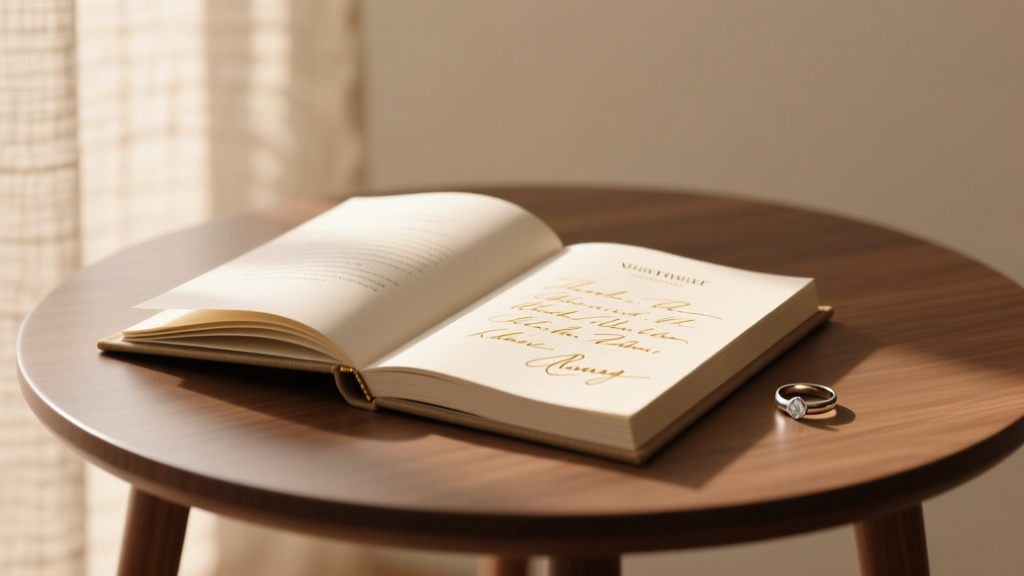
Why Do Weddings Have a Guest Book and Is It Necessary
Why Do Weddings Have a Guest Book and Is It Necessary?
If you’ve been to a few weddings, you’ve probably seen the guest book table near the entrance: a pretty pen, a sign, maybe a few photos of the couple. Some guests happily sign, others walk right past it. So it’s completely normal to wonder: Do we actually need a wedding guest book—or is it just another tradition to manage?
This question matters because guest books sit right at the intersection of two big wedding planning priorities: creating meaningful memories and keeping your day simple. Couples today are thoughtful about what’s worth the time, money, and attention—and guest books are one of the first “optional” items people reconsider.
Quick answer: Why weddings have guest books—and whether you need one
Weddings have guest books to capture a lasting record of who celebrated with you and to collect messages you can reread for years. And no, a guest book isn’t strictly necessary. You won’t break etiquette rules by skipping it. The better question is: Do you want a keepsake of your guests’ presence and well-wishes? If yes, you can do a traditional guest book or a modern alternative. If no, you can absolutely opt out—especially if it doesn’t fit your vibe.
Q: Where did the wedding guest book tradition come from?
Guest books have roots in older hospitality customs, where hosts kept a written record of visitors. At weddings, that evolved into a way to document attendance—especially when weddings were community-wide events and photos were rare or expensive.
Even now, a guest book serves two practical purposes:
- Memory-keeping: It’s a time capsule of who was there, including plus-ones, distant relatives, and friends from different seasons of your life.
- Message collecting: It gives guests a simple way to share advice, love, and congratulations—often the kind of heartfelt notes that don’t show up in a quick reception conversation.
As wedding planner “Nina Alvarez” (fictional) puts it: A guest book is one of the few wedding items that gets more valuable with time. Ten years later, couples rarely rewatch every video clip, but they do flip through messages from people who mattered.
Q: Is a guest book required by etiquette?
No. Traditional etiquette supports the idea of offering guests a way to leave well-wishes, but it doesn’t require a physical book. Modern wedding etiquette is about thoughtful hosting, not checking boxes.
If you’re hosting a smaller wedding, an elopement, a courthouse ceremony, or a nontraditional celebration, it’s especially common to skip the guest book—or to replace it with something more personal.
One real-world example: “Maya & Chris” (fictional couple) had a 35-person backyard wedding and chose no guest book. Maya shared: We spent the cocktail hour actually talking to everyone. It felt more “us” than trying to funnel people to a table to sign.
Q: Why do some couples still love having a guest book?
Even couples who keep their weddings simple often keep a guest book because it solves a problem you don’t realize you have until after the wedding: your memories get blurry. The day moves fast. You’ll meet plus-ones you didn’t know. You’ll have quick hugs with friends you haven’t seen in years.
A guest book helps answer:
- “Who came with our cousin again?”
- “What did Grandpa write?”
- “Who was that colleague my mom introduced us to?”
It also becomes more meaningful over time—especially when loved ones age or pass away. Couples often say the guest book is one of the few tangible items they’re grateful they kept.
Q: What are modern guest book alternatives (and which trend is most popular)?
Current wedding trends lean toward interactive, personalized guest books—things guests actually want to participate in. The classic “sign your name” book can feel like homework. Alternatives feel more like part of the experience.
Popular modern guest book ideas couples are using right now:
- Photo guest book: Guests take a photo (often with an instant camera) and tape it into a book with a note. This is a favorite for casual, fun receptions.
- Audio guest book (voicemail-style): Guests pick up a phone and leave a message. Great for couples who love hearing voices and laughter—especially if older relatives aren’t big writers.
- Jenga blocks or wooden hearts: Guests sign pieces you can display or play with later. Works well for relaxed weddings and backyard receptions.
- Recipe cards: Guests write a favorite recipe plus marriage advice. Perfect for food-loving couples and bridal shower carryover.
- Advice cards in a box: Guests answer prompts like “Date night idea” or “Your best marriage tip.” This often leads to more meaningful notes than “Congrats!”
- Custom art print: Guests sign around an illustration (venue sketch, pet portrait, or constellation map). Beautiful for home decor.
Photographer “Devon Park” (fictional) notes: Interactive guest books photograph well and get used more. When guests are already taking a Polaroid or dropping a card into a box, participation jumps.
Q: When does it make sense to skip the guest book entirely?
Skipping can be a great choice if:
- You’re eloping or doing a micro-wedding and you’d rather focus on being present.
- Your timeline is tight and you don’t want a forgotten detail to manage.
- You know your crowd won’t use it (some groups genuinely won’t, and that’s okay).
- You hate clutter and don’t want another item to store.
If you skip it, you can still capture well-wishes in other ways: ask guests to write notes on their RSVP cards, set up a shared digital album, or encourage toasts and record them.
Q: If we do have a guest book, how do we make sure people actually sign it?
This is the number-one guest book frustration: you buy something lovely and end up with eight signatures.
Try these practical tips (they work):
- Put it where guests naturally pause: near the entrance, escort card display, or bar—not hidden in a corner.
- Add clear signage: a simple sign like “Please sign our guest book” or a prompt such as “Leave a date night idea!”
- Assign a helper: ask a cousin, wedding party member, or coordinator to gently remind guests during cocktail hour.
- Keep it simple: one good pen, good lighting, and a stable surface. If it’s fussy, guests abandon it.
- Use prompts: “How do we know each other?” or “Your best marriage advice?” encourages fuller messages.
- Time it right: cocktail hour is ideal. Once dancing starts, signing drops fast.
Q: What about digital guest books—are they tacky?
Digital guest books aren’t tacky; they’re practical. They’re especially common for destination weddings, couples with lots of out-of-town guests, and celebrations with multiple events (welcome party, ceremony, brunch).
Options include:
- QR code sign linking to a guest book form where guests can write notes and upload photos
- A private shared photo album (great for candid moments guests capture)
- Wedding website message wall for pre-wedding well-wishes
The main downside: digital messages can feel less “special” than a tangible book. A smart compromise is printing the messages later in a small keepsake album.
Related questions couples ask (and quick answers)
What if someone forgets to sign?
Totally normal. If it matters to you, you can follow up after the wedding with a “We’d love a note from you” message and a digital link.
Do we need a guest book at a rehearsal dinner or bridal shower?
Not required, but a small version can be sweet for showers (recipe cards are especially popular). For rehearsal dinners, it’s usually unnecessary unless it’s a large, wedding-like event.
What if we’re having a very formal wedding?
A classic book fits beautifully. Consider having it match your stationery suite for a cohesive look.
What if we’re having a casual wedding?
Go interactive: instant photos, advice cards, or a “sign our cooler” style item if that feels like you.
Should guests sign with both names (especially plus-ones)?
If you want a clear record, add a small note: “Please sign both names.” Otherwise, don’t stress—this is a keepsake, not an attendance sheet.
Conclusion: The best choice is the one you’ll actually treasure
A wedding guest book exists for one reason: to help you remember the people who showed up for your marriage, not just your party. It’s not mandatory, and you’re not “less traditional” or “less polite” if you skip it. If you love the idea of reading notes later, choose a guest book style your guests will enjoy using. If it feels like clutter or pressure, give yourself permission to let it go and capture memories another way.
More Articles
 Wedding Anniversary Message to My Husband (2026)
 Did Meghan Markle Invite Suits Cast to Her Wedding?
 Megan Moroney Wedding Dress Rumor Debunked (2026)
 Wedding Photos for Proof of Marriage: What Officials Require
 25th Wedding Anniversary Wishes: 7 Tear-Jerking Ideas
 White at Weddings: Respectful? Context & Culture Matter
 How to Handle a Bridesmaid Who Does Not Contribute
 Gabriel at Royal Wedding: Truth Behind Viral Photo (2026)
 Was Scott Disick at Kourtney’s Wedding? (2026)
 What to Wear to a Beach Wedding (2026)