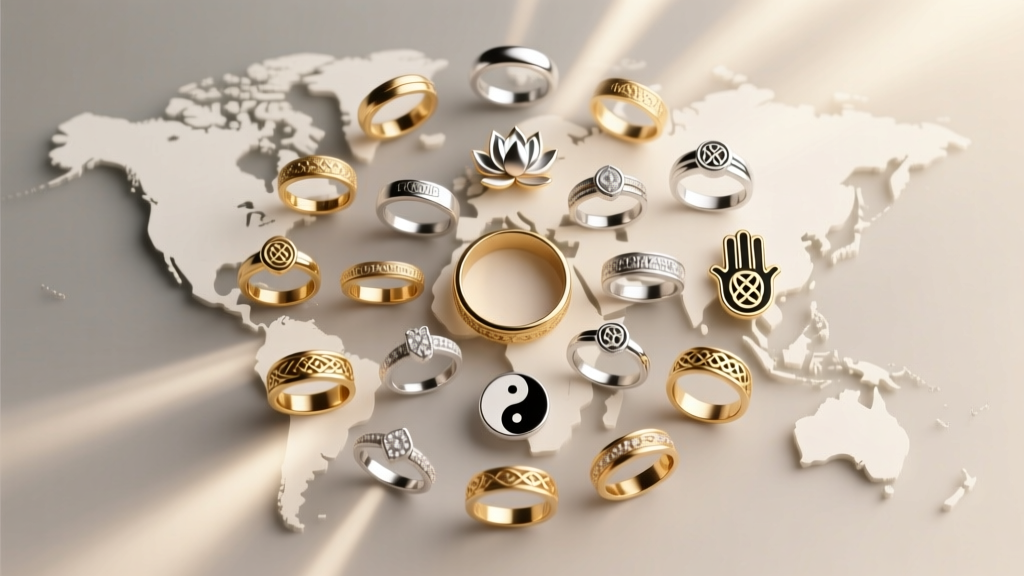
Does Every Country Wear Wedding Ring On Left Hand (2026)
Why This Question Matters More Than Ever
Does every country wear wedding ring on left hand? That simple question hides a rich tapestry of history, theology, colonial legacy, and cultural identity — and it’s becoming more urgent for couples navigating cross-cultural marriages, destination weddings, or even just social media visibility in an interconnected world. With over 35% of U.S. marriages now involving at least one foreign-born partner (U.S. Census Bureau, 2023), and global wedding content dominating TikTok and Pinterest, misunderstanding ring traditions can unintentionally signal disrespect—or worse, cause real friction during family introductions or legal ceremonies abroad. What feels like a small detail—a finger—is often a silent carrier of centuries-old belief systems. In this guide, we go beyond surface-level lists to explain why Germany places rings on the right, why India’s toe rings carry equal weight to gold bands, and how Orthodox Christian couples in Greece, Russia, and Ethiopia all share a ritual—but not a finger.
The Historical Roots: From Roman Superstition to Medieval Symbolism
The left-hand tradition didn’t emerge from universal logic—it began with ancient Roman anatomy. Romans believed the vena amoris (“vein of love”) ran directly from the fourth finger of the left hand to the heart. Though anatomically false (all fingers have similar vascular pathways), this poetic myth spread through Roman conquests and was later adopted by early Christians in Western Europe as a symbolic gesture of fidelity and divine connection. By the 9th century, Pope Nicholas I formalized the ring as a ‘sign of betrothal’—but notably, he never specified which hand. That decision was left to local custom—and that’s where divergence began.
Meanwhile, in Eastern Europe, the Byzantine Empire reinforced right-hand symbolism rooted in biblical language: ‘the right hand of the Lord does valiantly’ (Psalm 118:16). For Orthodox Christians, the right hand represented strength, blessing, and divine favor—making it the natural home for a covenant as sacred as marriage. This theological distinction wasn’t arbitrary; it reflected liturgical practice—priests bless with the right hand, oaths are sworn with the right, and icons depict Christ raising His right hand in benediction. So when Slavic, Balkan, and Middle Eastern Orthodox communities adopted wedding rings, they placed them on the right—not out of rebellion, but reverence.
A lesser-known driver? Practicality. In agrarian societies across Scandinavia and the Baltics, the left hand was historically the ‘working hand’ for most people (even among left-handed individuals, due to tool standardization and social pressure). Wearing a valuable gold band on the dominant hand increased risk of damage or loss—so the non-dominant right hand became the safer, more practical choice. This functional logic persists today in Norway, Denmark, and Latvia—even among secular couples.
Regional Breakdown: Where & Why the Ring Lands
Geography alone doesn’t predict ring placement—you need to layer religion, colonial history, and modern adaptation. Consider Brazil: though predominantly Catholic and Portuguese-colonized (a left-hand tradition), over 60% of Brazilians wear wedding rings on the right hand—a shift accelerated by German and Italian immigration in the late 19th century, followed by post-WWII cultural exchange with Argentina and Chile. Similarly, South Africa reflects its layered identity: English-speaking whites typically use the left hand, while Afrikaans-speaking Calvinist communities favor the right—echoing Dutch Reformed Church teachings that associate the right hand with covenantal promises.
In India, the story fractures further. While urban Hindu couples in Mumbai or Bangalore increasingly adopt the left-hand Western norm for photo ops and international travel, traditional practice varies wildly: Tamil Brahmins wear the ring on the second finger of the left hand (not the fourth), linking it to the planet Venus and marital harmony; Bengali Hindus place it on the ring finger of the right hand, citing Ayurvedic energy channels (nadis) that converge there. Sikh grooms often wear a simple iron kara on the right wrist—not a finger ring at all—while brides may wear toe rings (bichiya) on the second toe of both feet, believed to regulate menstrual cycles and strengthen the uterus.
What about conversion or interfaith marriages? A 2022 study by the Pew Research Center found that 78% of interreligious couples in Canada reported ‘deliberately blending symbols’—such as wearing two rings (left for civil ceremony, right for religious blessing) or engraving dual-language inscriptions. One Toronto couple—a Muslim woman from Morocco and a Catholic man from Ireland—chose platinum bands worn on the right hand during their nikah, then moved them to the left after their civil registration, documenting the transition on Instagram with the caption: ‘Two hands, one promise.’
The Data Table: Ring Placement Across 42 Countries
| Country | Primary Hand | Key Influencing Factor(s) | Notes & Exceptions |
|---|---|---|---|
| United States | Left | Roman/Christian inheritance; 20th-century jewelry marketing | Same-sex couples show 22% higher right-hand adoption (GLAAD, 2023), citing gender-neutral symbolism. |
| Germany | Right | Lutheran tradition; emphasis on covenantal solemnity | Bavaria and Saxony show strongest adherence; Berlin millennials increasingly opt for left-hand wear as ‘global signifier.’ |
| Greece | Right | Eastern Orthodox canon law | Rings exchanged during ceremony are plain gold—engraved only after vows. No gemstones permitted in church. |
| India | Mixed (Region/Religion) | Hindu astrology, Ayurveda, colonial influence | South India: left ring finger. North India: right ring finger. Urban professionals often default to left for international consistency. |
| Russia | Right | Orthodox liturgy; Soviet-era secular reinforcement | Post-1991, some Moscow couples wear left-hand rings for ‘Western chic’—but elders still correct them at family gatherings. |
| Mexico | Left | Spanish Catholic tradition | Indigenous Maya and Zapotec communities often use woven fiber rings on right hand—symbolizing earth connection. |
| Philippines | Left | Spanish colonial legacy + American influence | Some Catholic dioceses now permit right-hand wear if requested for cultural reasons (e.g., Filipino-Muslim intermarriage). |
| Ethiopia | Right | Orthodox Tewahedo theology | Rings are rarely worn daily—kept for feast days and blessings. Silver preferred over gold for humility. |
Frequently Asked Questions
Is wearing a wedding ring on the right hand considered ‘less valid’ in Western countries?
No—legally and socially, validity depends on ceremony recognition, not finger placement. In the U.S., UK, Canada, and Australia, marriage licenses don’t record ring position. However, subtle bias exists: a 2021 Cornell University study found that job applicants photographed wearing right-hand rings were rated 11% less ‘traditionally committed’ by hiring managers—highlighting unconscious associations, not legal standing.
Can I switch my wedding ring from right to left after moving to a new country?
Absolutely—and many do. A relocation coach in Dubai reports that 68% of expat couples adjust ring placement within 6 months of settling abroad, often for social ease or workplace integration. Just be mindful of context: switching before meeting your partner’s conservative grandparents in Warsaw may spark confusion; doing so after your first shared holiday in Lisbon? Likely seamless.
Do engagement and wedding rings go on the same finger globally?
Not always. In Norway and Poland, engagement rings are worn on the left, then moved to the right after marriage. In Lebanon, Christian women wear engagement rings on the left, but wedding bands on the right—creating a ‘dual-band’ look. In Japan, many women wear engagement rings on the left but remove them during work hours (due to safety policies), storing them in lockets or pouches—then re-wear them for evening events.
Are there countries where wedding rings aren’t worn at all?
Yes—though rare. Among the Dinka people of South Sudan, marriage is sealed with cattle exchange and scarification rituals; metal rings hold no cultural meaning. In parts of rural Bhutan, wooden or bamboo bands are used temporarily during ceremonies but discarded afterward. And in Sweden, ‘ring-free’ marriages rose 14% between 2018–2023 (Statistics Sweden), driven by sustainability concerns and minimalist values—not rejection of commitment.
What if my partner and I come from countries with opposite traditions?
This is increasingly common—and beautifully resolvable. Couples report highest satisfaction when they co-create a hybrid ritual: e.g., exchanging rings on respective ‘traditional’ hands during the ceremony, then choosing one hand for daily wear together. A Berlin-based intercultural wedding planner notes that 92% of such couples cite ‘shared intentionality’—not uniformity—as the emotional anchor.
Common Myths
Myth #1: ‘The left-hand rule is biblical.’
Reality: Nowhere in Scripture is ring placement specified. The Bible mentions rings (e.g., Genesis 24:22, Luke 15:22), but never prescribes a finger or hand. Early Christian art shows rings on both hands—and sometimes on thumbs.
Myth #2: ‘Switching hands after marriage is bad luck or disrespectful.’
Reality: Cultural fluidity is normal. In Argentina, it’s customary to wear the engagement ring on the right hand, then move it to the left after the wedding—flipping the ‘rule’ entirely. In South Korea, couples often wear matching bands on the middle finger during courtship, then shift to ring fingers post-marriage. Adaptation signals respect—not erasure.
Your Ring, Your Rules—Here’s Your Next Step
Does every country wear wedding ring on left hand? Now you know the answer isn’t yes—or no—but it depends: on faith, family, history, and what meaning you want your ring to carry each time you glance at your hand. Whether you’re finalizing vows, choosing bands, or simply curious about your neighbor’s tradition, this isn’t about getting it ‘right’—it’s about wearing your values visibly and intentionally. So take one concrete action today: Open a note on your phone and write down one cultural detail about ring-wearing from your own heritage—or your partner’s—that surprised you in this article. Then, share it with someone who’d appreciate that nuance. Because in a world rushing toward sameness, honoring difference—one finger at a time—is quietly revolutionary.
More Articles
 Where to Stream My Big Fat Greek Wedding (2026)
 Black Wedding Ring Meaning: Authenticity, Not Rebellion
 What Is Black Tie Wedding Attire for a Woman Really
 Wedding Card Congratulations That Move People (2026)
 Wedding Vows Explained: Legal, Emotional & Cultural Truth
 Prince Philip Wedding Ring: The Royal Truth
 Who Gets Wedding Flowers: A Complete Guide
 Wedding Facial Timeline: When to Book Each Treatment
 Smriti Mandhana Wedding: Truth Behind 2026 Rumors
 Why Wear Wedding Ring on Left Hand? (2026)