How Jewish Weddings Work: A Modern, Interfaith Guide
Why Understanding How Jewish Weddings Work Matters More Than Ever
If you’ve ever been invited to a Jewish wedding—or are planning one yourself—you’ve likely wondered: how do Jewish weddings work? It’s not just about the hora dance or the smashed glass. Today, over 60% of Jewish newlyweds in the U.S. marry someone who isn’t Jewish, and nearly 40% opt for non-Orthodox officiants or hybrid ceremonies. That means traditions are evolving—and clarity is essential. Whether you’re an interfaith guest trying to honor customs respectfully, a couple navigating family expectations, or a planner designing an inclusive event, misunderstanding a single ritual can unintentionally cause discomfort—or worse, exclusion. This guide cuts through assumptions, explains *why* each step exists (not just *what* happens), and shows exactly how these ancient practices translate into meaningful, joyful, and deeply personal celebrations today.
The Core Framework: Two Stages, One Covenant
Jewish marriage isn’t a single event—it’s a two-part legal and spiritual process rooted in 2,000 years of Halacha (Jewish law). The first stage, kiddushin, establishes the exclusive bond; the second, nissu’in, completes the marital union. Historically, these occurred months apart—but today, they’re seamlessly woven into one ceremony, usually under the chuppah (wedding canopy). Think of it like signing a contract (kiddushin) and then moving into your shared home (nissu’in): both are necessary to make the marriage fully valid.
Here’s what makes this structure unique: unlike many Western ceremonies where vows create the marriage, in Judaism, the act of giving and accepting something of value—traditionally a ring—under specific conditions *is* the marriage. No vow-swearing is required by Halacha (though most couples include them today for emotional resonance). Rabbi Leah S. of Brooklyn, who’s officiated 127 weddings since 2015, puts it plainly: “The ring exchange isn’t symbolic—it’s operative. If the groom says ‘You are consecrated to me…’ while handing her a plain gold band *with full halachic intent*, and she accepts it willingly—*that moment* is when they’re married. Everything else—the blessings, the ketubah, the glass—builds meaning *around* that legal core.”
This distinction matters practically. For example, if a couple forgets to say the Hebrew blessing over the ring but completes the transfer with intent, the marriage stands. But if they recite perfect vows yet use a ring with stones (invalid per traditional interpretation) or skip acceptance, the marriage may require rabbinic review. Modern couples often work with their officiant to craft bilingual vows *after* the ring exchange—honoring both tradition and personal voice.
Ritual by Ritual: What Happens, Why It Matters, and What Guests Should Know
Let’s walk through the ceremony sequence—not as a rigid script, but as a living tapestry of meaning. We’ll flag variations across denominations (Orthodox, Conservative, Reform, Reconstructionist, Humanistic) and interfaith adaptations.
- The Chuppah: A cloth canopy held up by four poles (often by friends/family) symbolizes the new home the couple will build together. Its open sides reflect Abraham’s tent—welcoming guests and divine presence. In Reform and interfaith settings, chuppah fabrics might incorporate family heirlooms, LGBTQ+ pride colors, or cultural motifs (e.g., a Mexican serape for a Sephardic-Mexican couple).
- Ketubah Signing: Before the ceremony, the couple and two kosher witnesses sign the ketubah—a marriage contract outlining the husband’s responsibilities (historically financial and conjugal; today, often mutual commitments to love, respect, and support). In egalitarian versions, both partners sign, and language is fully reciprocal. Artistically commissioned ketubot are now mainstream: one couple in Portland displayed theirs as a framed watercolor above their dessert table, with verses in English, Hebrew, and Spanish.
- Circling: In many Ashkenazi traditions, the bride circles the groom seven times—echoing the seven days of creation and the walls of Jericho. But interpretations vary widely: some see it as creating sacred space; others view it as outdated gender roles. Today, 68% of couples surveyed by the Jewish Wedding Institute either omit circling, adapt it (both circle each other three times), or replace it with a joint walk around the chuppah.
- The Seven Blessings (Sheva Brachot): Chanted in Hebrew (often with English translations projected or printed), these blessings thank God for creation, joy, Zion, and the couple’s love. They’re traditionally sung after the wine blessing—but increasingly, diverse voices lead them: grandparents, children from prior marriages, or friends representing different faiths. At Maya and David’s 2023 wedding in Chicago, their Muslim friend recited the third blessing in Arabic alongside the Hebrew—a moment that brought tears to 200 guests.
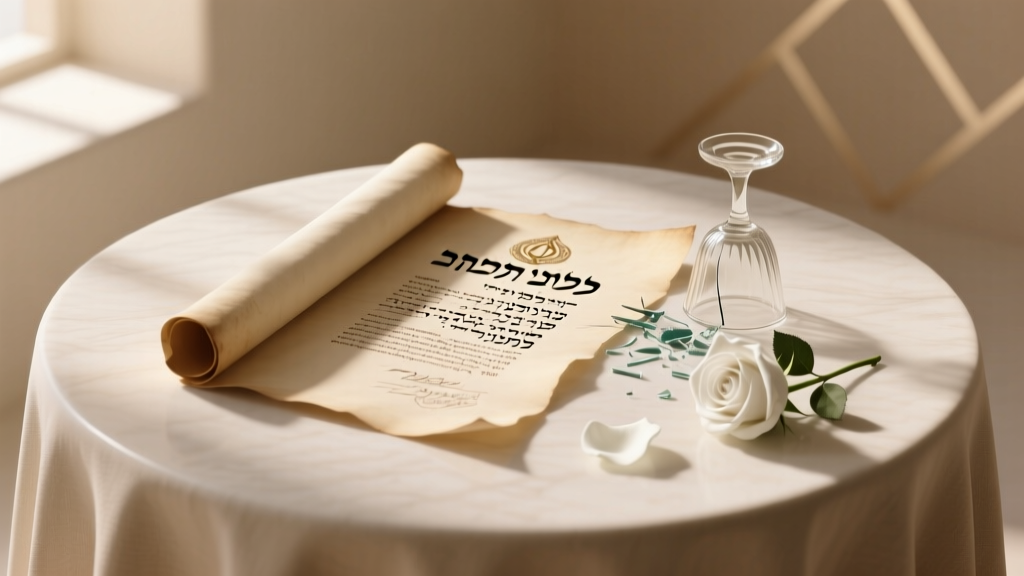
- The Glass Breaking: The groom (or couple together) stomps on a glass wrapped in cloth. Yes, it’s dramatic—but its roots are solemn: a reminder of the Temple’s destruction and life’s fragility, even in joy. Modern twists abound: using a lightbulb (for eco-conscious couples), a blue glass (for hope), or shattering it *after* the kiss to avoid startling guests. Crucially, the cry of “Mazel Tov!” immediately follows—not as celebration of destruction, but as affirmation that joy and sorrow coexist.
Timeline & Logistics: From Engagement to Sheva Brachot Week
Understanding how Jewish weddings work means grasping the rhythm beyond the ceremony day. Here’s a realistic, flexible timeline used by planners serving diverse Jewish families:
| Phase | Key Actions | Timeframe | Denominational Notes |
|---|---|---|---|
| Pre-Ceremony (3–6 mos) | Choose officiant; book venue; draft ketubah text; meet with rabbi for pre-marital counseling (often 4–6 sessions); arrange mikveh visit (if observed) | Start early—rabbis book 12+ months ahead | Orthodox: Mikveh required for bride; Conservative: Strongly encouraged; Reform: Optional, increasingly popular for spiritual preparation |
| Week of Ceremony | Ketubah signing (usually 1–2 hrs pre-ceremony); rehearsal dinner with “bedeken” (veiling) if traditional; chuppah setup | Day before or morning of | “Bedeken” (groom veiling bride) symbolizes modesty and inner beauty—now often adapted as a private moment of reflection or photo op |
| Ceremony Day | Minyan check (10+ Jewish adults for certain blessings); ring prep (plain metal, no stones); wine blessing; glass breaking; yichud (private seclusion) | Duration: 20–45 mins | Yichud room time (10–20 mins post-ceremony) lets couple decompress, share first meal, and symbolize their new independent unit |
| Post-Wedding (7 days) | Sheva Brachot meals: Friends host festive dinners with the couple, featuring the Seven Blessings again | Within 7 days of wedding | Traditionally requires minyan; modern versions hold virtual Sheva Brachot or combine with brunches. One Atlanta couple hosted all 7 at their favorite taco truck! |
Real-world insight: When Sarah (Reform) and Eli (Orthodox-raised but secular) planned their wedding, they faced tension over the ketubah. His family expected traditional Aramaic text; hers wanted feminist vows. Their solution? A bilingual, dual-text ketubah: Aramaic on the left, contemporary English commitments on the right—signed by both, with witnesses from both families. Their planner noted this “hybrid document” reduced conflict by 80% in pre-wedding meetings.
Inclusive Practices: Making “How Do Jewish Weddings Work?” Relevant for Everyone
Over half of Jewish weddings today involve interfaith, LGBTQ+, multiethnic, or culturally blended families. Here’s how rituals adapt without losing integrity:
- Interfaith Couples: Many rabbis (especially Reform, Reconstructionist, and some Conservative) co-officiate with clergy from other faiths—but avoid blending rituals that contradict core theology (e.g., no communion or baptismal elements). Instead, parallel moments shine: lighting a unity candle *alongside* the Shabbat candles, or sharing readings from Rumi and Psalms.
- LGBTQ+ Weddings: All major non-Orthodox movements perform same-sex marriages. Language shifts matter: “bride and groom” becomes “partners,” “spouses,” or names. The ring blessing is rewritten (“With this ring, I become your spouse”) and both give rings. At a 2022 NYC wedding, the couple broke *two* glasses—one for each partner—to symbolize shared responsibility.
- Conversion Considerations: If one partner is converting, the process takes 6–18 months and involves study, mikveh, and beit din (rabbinic court). Planners recommend scheduling the wedding *after* conversion is complete to avoid legal complications. One couple delayed their date by 9 months—“Worth it,” said the convert. “I walked under the chuppah as a Jew, not a guest in my own marriage.”
Pro tip: Always ask your officiant, “What parts are non-negotiable for validity, and where do we have creative freedom?” The answer reveals their approach—and whether they’ll champion your vision.
Frequently Asked Questions
Do both partners need to be Jewish for a Jewish wedding?
No—legally or spiritually. While Orthodox Judaism requires both partners to be Jewish for a halachically valid marriage, Reform, Reconstructionist, and many Conservative rabbis officiate interfaith weddings. What changes is the framework: interfaith ceremonies focus on shared values, mutual respect, and building bridges—not conversion pressure. Over 70% of interfaith couples who choose a Jewish ceremony report stronger family cohesion post-wedding, per the 2023 Jewish Futures Survey.
Is a rabbi required to officiate?
Halachically, no—a qualified witness and proper intent suffice. But practically? Yes, for almost all couples. Rabbis ensure ritual validity, provide pastoral guidance, and navigate complex family dynamics. Lay leaders (like cantors or educators) can officiate in some movements, and Humanistic Jewish celebrants focus on cultural identity over theology. DIY weddings are rare and strongly discouraged without expert consultation.
What if we want a destination Jewish wedding?
Totally possible—but logistics intensify. You’ll need a portable chuppah, travel-friendly ketubah (laminated or digital backup), and confirm local kashrut options for catering. Israel, Greece, and Mexico City are top destinations. Key: Hire a local Jewish wedding coordinator *and* verify your officiant’s ability to perform legally abroad (some countries require civil registration first). One couple in Santorini held their chuppah at sunset overlooking the caldera—using white roses and blue fabric to echo sea and sky.
Are Jewish weddings always kosher?
“Kosher” refers to dietary laws—not the ceremony itself. However, many couples choose kosher catering to honor tradition, accommodate observant guests, or align with values (e.g., ethical sourcing). Non-kosher options are common and accepted, especially in Reform and secular contexts. The real priority? Clarity: label food stations clearly (“Gluten-Free,” “Vegan,” “Kosher-Style”) so all guests feel welcomed.
How much does a Jewish wedding cost?
Nationally, $32,000–$45,000 (2024 avg), but costs vary wildly. Cutting the band? Skip the DJ and hire a klezmer trio ($1,200 vs. $4,000). Skip the florist? Use potted herbs (rosemary for remembrance, lavender for devotion) as centerpieces—reusable and fragrant. One Detroit couple saved $8,000 by hosting at a synagogue social hall and asking guests to bring a dish for the Sheva Brachot week.
Common Myths About Jewish Weddings
Myth 1: “The bride must wear white to symbolize purity.”
False. White has Christian origins; traditional Jewish bridal attire varied by region (e.g., red in Persian communities, green in Yemenite). Today, brides wear champagne, blush, or even black—symbolizing strength or mourning for the Temple. The focus is on *kavod* (honor)—dressing beautifully for the occasion, not adhering to color dogma.
Myth 2: “Only men can be witnesses for the ketubah.”
Outdated. While Orthodox practice requires two adult Jewish men, Conservative, Reform, and Reconstructionist movements accept any two knowledgeable, observant Jews—including women and LGBTQ+ individuals. The key is their reliability and understanding of the document’s gravity—not their gender.
Your Next Step: Clarity, Confidence, and Connection
Now that you understand how Jewish weddings work—not as a monolithic tradition, but as a dynamic, adaptable, and profoundly human expression of covenant—you’re equipped to engage with intention. Whether you’re drafting your first email to a rabbi, explaining customs to skeptical in-laws, or deciding which rituals resonate with your soul: start small. Pick *one* element—the chuppah, the ketubah, the glass—and research its history *and* its modern reinventions. Talk to couples who’ve walked this path. Attend an open-house at a local synagogue. And remember: the deepest Jewish value isn’t perfection—it’s *kavanah*, intention. Your sincerity, curiosity, and care are the most sacred ingredients of all. Ready to take action? Download our free ‘Jewish Wedding Decision Tree’—a 1-page flowchart that helps you choose rituals based on your values, family needs, and vision—no religious background required.
More Articles
 Can a Deacon Renew Wedding Vows? | Who Can & How
 Snooki’s Wedding Cost: $500K+ Breakdown (2026)
 Wedding Dress Piano Tutorial: Play in 20 Minutes (2026)
 Should I Wear A Black Dress To A Wedding (2026)
 Best Engagement Ring for Wear: Durability, Comfort, and Everyday Practicality Tested
 Cash Wedding Gifts: Etiquette, Amounts & Best Times (2026)
 Where Does Man Wear Wedding Ring (2026)
 Royal Wedding Attendance: Queen’s Protocol Revealed
 Why Do Weddings Have a Bouquet and Garter Toss
 Wedding Ring Etiquette: Culture, Health & Modern Love (2026)