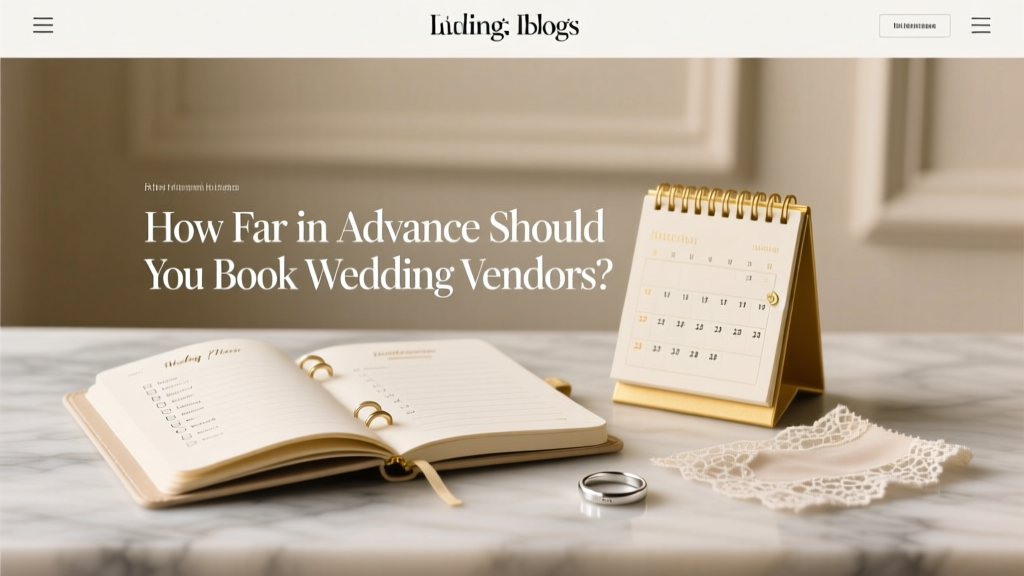
How Far in Advance Should You Book Wedding Vendors
How Far in Advance Should You Book Wedding Vendors?
One of the quickest ways wedding planning can start to feel stressful is realizing your favorite photographer is already booked—or that the venue only has two Saturdays left for the entire season. Couples ask this question early (and often): How far in advance should we book wedding vendors?
It matters because the best-fit vendors—those whose style, personality, and pricing work for you—tend to book first. Booking at the right time protects your budget, gives you more choice, and helps you avoid last-minute compromises you didn’t want to make.
Quick Answer: A Practical Booking Timeline
For most weddings, a solid rule of thumb is:
- 12–18 months out: Venue (and planner, if you’re hiring one), plus high-demand vendors like photographers, bands/DJs, and caterers (if not included).
- 9–12 months out: Florist, videographer, hair and makeup team, rental company (if needed), and officiant.
- 6–9 months out: Cake/dessert, transportation, lighting, stationery/day-of paper goods, and specialty entertainment.
- 2–6 months out: Favors, signage, content creator, photo booth, and final rentals upgrades.
If you’re planning a wedding during peak season (often May–October in many areas), on a Saturday, or in a popular destination, lean toward the earlier end of those ranges.
Q: Why do some vendors need to be booked so far ahead?
A: Availability is the main reason, but it’s not the only one. Many wedding vendors can only take one wedding per day (photographers, planners, HMUA teams, bands, certain venues). Once they’re booked, they’re booked—especially for prime dates.
There’s also a domino effect: your venue date sets your vendor availability, and your key vendors influence everything from your timeline to your guest experience. A photographer you love might be worth choosing a Friday wedding. A caterer’s calendar might affect whether you can host a Sunday brunch celebration.
As wedding planner “Samantha Lee” (fictional), owner of a mid-size planning studio, puts it: Couples underestimate how quickly Saturdays disappear. If you have a specific vision—like a documentary-style photographer or a particular live band—book as early as you can. You’re not just reserving a vendor; you’re reserving your peace of mind.
Q: Which vendors should we prioritize first?
A: Think in layers: book the vendors that are hardest to replace and most tied to your date.
- Venue: Your date, your capacity, your rain plan, and often your catering rules depend on it.
- Planner/coordinator: Full-service planners often book 12–18 months out; month-of coordinators typically 6–12 months out. If you want guidance early, book early.
- Photographer + Videographer: Top teams book well in advance, especially for peak weekends.
- Caterer: If your venue doesn’t include catering, lock this in soon; menus and rentals often hinge on this choice.
- Entertainment (band/DJ): Great bands are a limited commodity; DJs with a strong MC style also book quickly.
A real-world example: “Maya and Chris” (fictional) planned a 120-guest wedding for a September Saturday. They booked their venue 14 months out, their photographer 13 months out, and their DJ 11 months out. Maya shared: The biggest relief was knowing our top three were secured. After that, planning felt like choices—not emergencies.
Q: How do current wedding trends affect booking timelines?
A: A few trends are stretching timelines and shifting priorities:
- Smaller weddings with higher-end details: Couples are investing in premium photography, fashion-forward florals, and elevated dining. Those “signature style” vendors book earlier.
- Destination and weekend-long celebrations: If you’re planning a welcome party, farewell brunch, or multiple-day itinerary, vendors may need to hold more dates—book sooner.
- Friday/Sunday weddings are more common: This can help availability, but popular vendors still book up—especially if they prefer weekends only.
- Wedding content creators: This newer vendor category can book surprisingly early for peak dates, especially in major cities.
- Micro-weddings and elopements: These can be planned faster, but the best photographers and officiants may still be booked months out.
Modern etiquette has shifted, too. It’s completely normal to book key vendors early—even before sending save-the-dates. Locking in your team is considered smart planning, not “jumping the gun.”
Q: Is there a difference between traditional and modern approaches?
A: Yes—mainly in how couples sequence decisions.
Traditional approach: Venue first, then church/officiant, then reception vendors (caterer, band), then photo/video and design. This often worked when weddings followed a more standard format and vendors had more open availability.
Modern approach: Couples lead with their priorities. If photography is your top “splurge,” you might book a photographer immediately after the venue—or even hold a date with a venue while you confirm your dream photo team. If food is your headline experience, you might secure your caterer right after your venue and build the rest around that.
Neither approach is “right.” The best approach is the one that protects what matters most to you.
Q: What if we’re planning on a shorter timeline?
A: You can absolutely plan a beautiful wedding in 3–9 months—you’ll just need to be flexible and decisive.
- Be open to non-Saturday dates (Friday, Sunday, or even a weekday).
- Consider off-peak months (often January–March, depending on your location).
- Use vendor recommendations from your venue or planner; they know who’s reliable and available.
- Streamline your vendor list: For example, choose a venue that includes catering and rentals, or skip separate transportation if everything is on-site.
Photographer “Elena Ruiz” (fictional) explains it this way: When couples come to me six months out, I can often make it work—but flexibility is everything. If you’re open to a Sunday wedding or a morning ceremony, your options multiply.
Q: When should we send inquiries and put down deposits?
A: Start inquiries as soon as you have a target date (or a short list of possible dates). For most vendors, you’ll typically:
- Inquire: 12–18 months out for high-demand vendors; earlier for top-tier venues and planners.
- Book (contract + deposit): As soon as you’re confident. Many couples book within 1–3 weeks of receiving a proposal, especially during peak season.
One practical tip: when you’re comparing vendors, ask how long they can hold your date. Some will hold for 48 hours; others for a week. Don’t assume—ask.
Actionable Tips to Book Vendors Confidently (Without Regret)
- Make a “top 3 priorities” list (photo, food, music, design, etc.) and book those vendors earlier than everything else.
- Ask the venue about restrictions before booking outside vendors (approved caterers, sound limits, end times, insurance rules).
- Read contracts for timing details: overtime rates, travel fees, meal requirements, and cancellation/reschedule policies.
- Build a realistic payment calendar so multiple deposits don’t hit the same month.
- Have a backup plan for weather and timelines—especially for outdoor ceremonies and tented receptions.
- Trust the “communication test” early: if a vendor is slow to respond or unclear in the proposal stage, it usually doesn’t improve later.
Related Questions Couples Also Ask (Edge Cases)
Q: Should we book vendors before we book a venue?
A: Usually, book the venue first. The exception is when you’re planning around a specific vendor’s availability (like a sought-after photographer) and you’re willing to choose your date based on theirs. In that case, confirm the vendor’s available dates, then choose a venue that works.
Q: What about destination weddings—do we need more lead time?
A: Often, yes. Aim for 12–18 months so guests can plan travel, and so you can secure local vendors (or bring vendors in) without rush fees. Also consider local peak seasons that differ from your hometown.
Q: Are weekday weddings easier to book?
A: Generally, yes. Venues and vendors often have more availability, and you may find better rates. Still, popular photographers and planners can book weekdays for corporate events or multi-day weddings, so don’t assume open calendars.
Q: If we’re having a small wedding, can we book later?
A: Sometimes, but not always. A vendor’s schedule is usually limited by dates, not guest count. Small weddings can move faster because you may need fewer rentals and less logistical complexity—but you still need available pros.
Q: What if our date changes?
A: Ask about rescheduling policies before you sign. Some vendors apply your retainer to a new date if they’re available; others treat it as a cancellation. If you’re worried about flexibility, bring it up early and get any promises in writing.
Conclusion: The Reassuring Takeaway
Most couples should plan to book key wedding vendors 12–18 months in advance, especially the venue, planner, photographer, and entertainment. After that, you can fill in the rest in smart waves—without feeling like you’re racing the calendar.
If you’re earlier than that, you’re not “too eager”—you’re giving yourself options. If you’re later, you’re not behind—you just need a flexible mindset and quick decision-making. Either way, the goal is the same: build a vendor team you trust, so you can enjoy being engaged while your wedding comes together calmly.
More Articles
 Clinton Foundation & Chelsea’s Wedding: IRS Truth
 Gretchen Geraghty Wedding Date: Truth Behind 2026 Rumor
 Zendaya's Wedding Ring Cost & Meaning (2026)
 A Wedding Story Season 4: Real or Not? (2026)
 When to Order Your Wedding Favors
 When Should You Order Your Ceremony Programs
 Scarlett Johansson & Four Weddings: Sister Truth?
 Taco Bell Wedding Catering: How It Works
 Wedding Officiant Speech Length: Ideal Timing Tips
 Wedding Photographer Income: Real Earnings in 2026