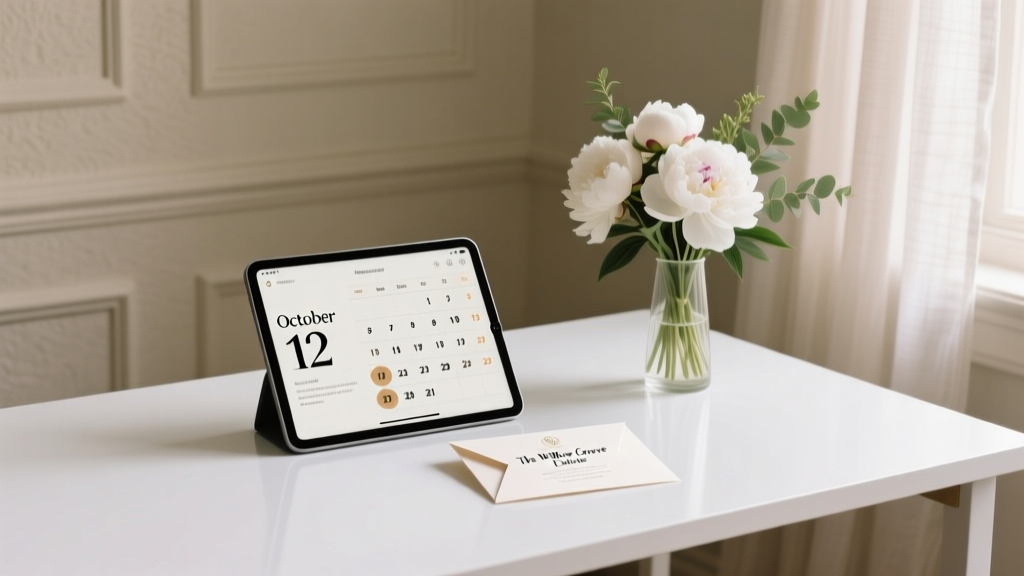
When Is It Too Late to Change Your Wedding Venue
When Is It Too Late to Change Your Wedding Venue?
You book a venue, you exhale… and then something shifts. Maybe the guest list grows, your budget tightens, the parking situation starts looking like a nightmare, or you suddenly realize the “dream” barn is an hour from the nearest hotel. If you’re wondering whether you’ve missed your chance to change your wedding venue, you’re not alone. It’s one of the most common wedding planning questions couples whisper to friends at midnight.
The reason this matters is simple: your venue impacts everything—your date, your vendor team, your layout, your guest experience, and often your overall stress level. Changing it can feel dramatic, but staying put when it’s no longer a good fit can feel worse.
Quick Answer: When is it too late?
It’s “too late” to change your wedding venue when the financial and logistical fallout outweighs the benefits—usually within 8–12 weeks of the wedding, and especially once you’ve confirmed key vendors, sent invitations, and finalized rentals and floor plans. That said, couples do change venues even a few weeks out when there’s a safety issue, a major contract problem, or a venue closure. It’s less about the calendar and more about your flexibility, your contracts, and your tolerance for change.
Q: What makes changing venues hard as the wedding gets closer?
A: Because the venue isn’t a standalone decision—it’s the hub that everything else connects to. As the date approaches, you’ve likely locked in:
- Your vendor contracts (caterer, photographer, planner, rentals, band/DJ), often tied to location, load-in rules, or kitchen access
- Your guest communication (save-the-dates, invitations, wedding website details, hotel blocks, shuttle plans)
- Your design and logistics (floor plan, rain plan, ceremony flip timing, power needs, sound restrictions)
- Your budget allocations (deposits paid, minimums agreed to, cancellation terms)
Wedding planner “Maya R.,” who coordinates events across the Southeast, puts it plainly: Changing venues is like moving houses mid-renovation. Possible? Yes. Peaceful? Not always. The later you get, the more you want a very clear reason and a very organized plan.
Q: Are there “safe windows” for switching venues?
A: Yes—think of it in phases.
Scenario 1: More than 6 months out (usually very doable)
If you’re 6–12+ months out, you typically have time to:
- Find a new space with availability on your date (or adjust the date)
- Rework vendor logistics with minimal fees
- Update your wedding website and avoid reprinting paper goods
This is when changing your wedding venue can be a smart, proactive move—especially if your guest count has changed or you’ve realized the original venue doesn’t match your priorities (privacy, accessibility, air conditioning, nearby lodging).
Scenario 2: 3–6 months out (possible, but expect trade-offs)
This is the “negotiation zone.” Some venues have openings due to cancellations, and non-Saturday dates (Friday/Sunday or weekday weddings) can create options. You may face:
- Lost deposits at the original venue
- Rush fees for rentals or stationery changes
- Vendor schedule conflicts if your date or travel requirements shift
Real-couple experience (fictional but realistic): We changed venues four months out after realizing our original space couldn’t accommodate my grandmother’s wheelchair,
says “Elena,” a 2025 bride. We lost our deposit, but our caterer could adapt. The biggest headache was updating the hotel block and resending details to out-of-town guests.
Scenario 3: 8–12 weeks out (not impossible, but only worth it with a strong reason)
At this point, you’ve likely mailed invitations or you’re about to. Changing venues late often means:
- Calling or texting guests personally (and updating your wedding website immediately)
- Reprinting details cards or sending an email “venue update” notice
- Reconfirming delivery addresses and load-in times for every vendor
- Potentially changing your layout, rental quantities, and staffing plans
Planner “Maya R.” adds: When couples switch venues inside 10 weeks, it’s usually because of a red flag—safety, a venue manager change, surprise fees, or the venue isn’t delivering what was promised.
Scenario 4: Less than 8 weeks out (only in emergencies or when you’re willing to simplify)
This is where most couples feel, understandably, that it’s “too late.” But if the venue cancels, becomes unsafe, or fails to meet contractual obligations, you still have options—often by simplifying. A restaurant wedding, a private room at a hotel, a backyard wedding with tenting (weather permitting), or a small venue with inclusive packages can save the day.
Q: Does etiquette say you shouldn’t change your venue once guests have been told?
A: Traditional etiquette leans toward “don’t change it after invitations go out,” because it can inconvenience guests. Modern etiquette is more flexible and focuses on clear communication and consideration.
If you need to change venues after sending save-the-dates or invitations, the polite approach is:
- Tell guests quickly (don’t wait and hope it “works itself out”)
- Make it easy: update the wedding website, pin the address, include parking/shuttle info, and send a direct message
- Acknowledge the inconvenience without overexplaining
A simple note works well: Quick update: We’ve moved our wedding venue to [New Venue]. Our date and time are the same. The website has all updated travel and parking details—thank you for your flexibility; we can’t wait to celebrate with you.
Q: How do current wedding trends affect this?
A: A few trends make late changes both easier and harder:
- Micro-weddings and “downsized” celebrations: Easier to relocate because fewer guests and rentals are involved.
- Non-traditional days (Sunday, Friday, weekday weddings): More availability if you’re switching late.
- All-inclusive venues: Convenient, but harder to switch because so many services are bundled and subject to cancellation policies.
- Restaurant and buyout receptions: Increasingly popular and often available with shorter lead times, especially for smaller groups.
Keyword reality: If you’re searching “change wedding venue last minute” or “switch wedding venue after invitations,” you’re probably also dealing with budget and availability. Trends toward smaller, flexible events can help—if you’re willing to adjust your vision.
Q: What should we check before making the call?
A: Use this practical checklist before you cancel anything:
- Read your venue contract: cancellation terms, force majeure clauses, refund schedule, and what happens if the venue can’t deliver promised services.
- Ask about rescheduling: moving dates within the same venue may preserve your deposit.
- Confirm your top vendors’ flexibility: especially catering (kitchen needs), rentals (delivery access), and photography (travel time/light).
- Re-run your budget: include lost deposits, new venue fees, stationery updates, and transportation changes.
- Check guest impact: distance from airports, hotel availability, accessibility, parking, and weather considerations.
Venue manager “Jordan K.” (fictional) shares a helpful perspective: If a couple calls early and explains the issue, we can sometimes offer a date transfer or help fill the date to reduce the cancellation hit. The earlier the conversation, the more options everyone has.
Q: What are common reasons couples change venues—and which are “worth it”?
A: Most reasons are valid, but some carry more urgency:
- Worth changing even late: safety concerns, venue closure, major construction, repeated contract breaches, serious accessibility issues, sudden capacity restrictions.
- Worth changing if you’re still early: guest list growth, budget mismatch, style regret, travel logistics, weather/season mismatch.
- Proceed carefully: “venue FOMO,” social media comparison, minor décor dislikes. These are real feelings, but they can often be solved with design tweaks rather than a full venue switch.
Related questions couples ask (and honest answers)
“Can we change venues but keep the same date?”
Sometimes. Flexibility helps—consider Friday/Sunday, off-season, or a different start time. Smaller venues and restaurants may have better last-minute availability.
“Do we need to send new invitations?”
If invitations haven’t gone out, update them. If they have, you can often handle it with a wedding website update plus a direct email/text to all guests. For very formal weddings, a reprinted details card or mailed insert is a nice touch, but not mandatory.
“What if our caterer is exclusive to the original venue?”
This is a big one. If your catering is tied to the venue, switching may mean changing your entire food plan. Ask about transfer options, cancellation fees, and whether the caterer can serve offsite for an added fee.
“What if the venue changes ownership or management?”
Request everything in writing: what stays the same, what’s changing, and who your point of contact is. If new management won’t honor key contract terms, consult your planner or a local attorney familiar with event contracts.
Actionable tips if you decide to switch
- Put one person in charge of communication (planner, maid of honor, or an organized friend) so guests get consistent information.
- Update your wedding website first, then send the message—so guests click to accurate details.
- Create a vendor “change sheet”: new address, load-in instructions, contact names, and timeline updates.
- Consider simplifying: fewer rentals, shorter timeline, or a ceremony and reception in one place to reduce moving parts.
- Be kind to yourselves: a venue change can feel like a setback, but it’s often a course correction toward a better day.
Conclusion: The reassuring takeaway
It’s rarely “too late” in an absolute sense—it’s more that the closer you get, the more a venue change becomes an emergency-level project instead of a normal planning decision. If your current venue no longer works, you’re not being “difficult” for considering a switch. Review your contracts, price out the true impact, communicate clearly, and choose the option that gives you the best combination of peace of mind and a great guest experience. Your wedding isn’t defined by an address; it’s defined by how it feels to celebrate there.
More Articles
 Are Photo Booths at Weddings Tacky? (2026)
 Pearls on Wedding Day: Bad Luck Myth Busted (2026)
 Tom in A Christmas Prince: Royal Wedding Role & Actor
 Where to Shop for Wedding Dresses Online Without the Stress
 Bezos Wedding Performers: What We Know (2026)
 Should You Invite Your Boss to Your Wedding?
 Taylor Wedding Date: Truth Behind Viral Rumors (2026)
 Can a Mourner Attend a Wedding? Cultural & Religious Guide
 Sun’s Wedding Ring: S1E7 (2026)
 Chelsea Clinton Wedding Guest Count: Verified 2026