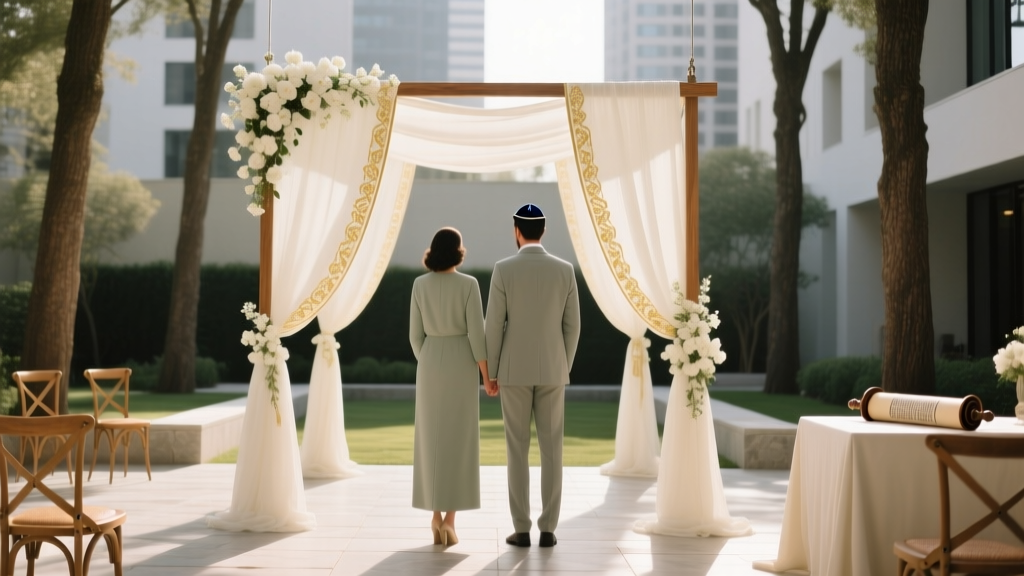
Jewish Wedding Feast Duration: Biblical, Talmudic & Modern
Why This Ancient Question Matters More Than Ever Today
How many days did a Jewish wedding feast last? That simple question opens a doorway into centuries of ritual innovation, diaspora adaptation, and spiritual intentionality — and it’s suddenly resonating with a new generation of couples reimagining what ‘celebration’ means in an age of burnout, digital fatigue, and yearning for meaning. Unlike today’s standard one-evening reception, traditional Jewish weddings weren’t just ceremonies followed by parties — they were extended sacred timeframes woven with Torah study, communal blessing, music, feasting, and deliberate pauses for reflection. In fact, the most authoritative sources indicate that the classic biblical and rabbinic Jewish wedding feast lasted seven full days — but that number wasn’t arbitrary, nor was it universally practiced across all eras and communities. Understanding why — and how those ancient rhythms translate (or don’t) into modern life — isn’t nostalgia. It’s strategic. Couples who grasp this history make more intentional choices: whether to host a single immersive Shabbat-centered weekend, revive the ‘Sheva Brachot’ cycle with intention, or respectfully adapt traditions without dilution. Let’s unpack what ‘seven days’ really meant — and what it can mean for you.
The Biblical Blueprint: Seven Days as Covenant Time
The earliest scriptural anchor comes from Genesis 29:27–28, where Laban tells Jacob, ‘Finish out the week of this one, and we will give you the other also…’ — referencing the seven-day wedding celebration for Leah before Jacob marries Rachel. Later, in Judges 14:12, Samson declares a riddle at his wedding feast and promises a prize ‘if you solve it within the seven days of the feast.’ These aren’t isolated references; they reflect a widespread Near Eastern custom — but one Judaism uniquely sanctified. In ancient Israelite culture, seven wasn’t just a number — it was a theological rhythm: creation completed in seven days, Shabbat as the seventh day, the sabbatical year every seventh year. A seven-day wedding feast mirrored divine order: it marked the couple’s entry into a new covenantal unit, mirroring God’s covenant with Israel. Crucially, these weren’t ‘parties’ in the modern sense. They were mishteh — structured feasts involving ritual meals, Torah discourse, prophetic blessings, and communal participation. Guests didn’t just attend; they fulfilled mitzvot by rejoicing with the couple (sameach tisameach et hachatan vehakalah). Archaeological evidence from first-century Galilee supports this: ossuaries and mosaics depict multi-day banqueting scenes with liturgical motifs, while the Mishnah (Ketubot 2:10) codifies that ‘a virgin’s wedding feast lasts seven days; a widow’s, one day’ — establishing duration as tied to lifecycle significance and communal honor.
The Rabbinic Evolution: From Feasting to Blessings
After the destruction of the Second Temple (70 CE), large-scale feasting became economically and logistically unsustainable for many communities. Yet the spiritual imperative to rejoice with the couple remained non-negotiable. The Rabbis ingeniously transformed the ‘seven-day feast’ into the Sheva Brachot (Seven Blessings) — a portable, scalable, deeply meaningful framework. Rather than requiring one continuous party, the tradition evolved to mandate that the seven nuptial blessings be recited over seven days — but only if a ‘new face’ (someone who hadn’t attended the wedding) is present at each meal. This preserved the core value — sustained communal joy — while adapting to reality. In Babylonian Talmud (Ketubot 7b), Rav Yehuda teaches: ‘One who rejoices with the groom for seven days fulfills a great mitzvah.’ But crucially, the Talmud immediately qualifies: ‘If he cannot, let him rejoice for one day — and if not even that, let him offer words of comfort.’ This reveals Judaism’s profound pragmatism: the ideal is seven days, but accessibility and compassion define the obligation. Medieval commentators like Rashi and Maimonides further clarified that the Sheva Brachot period begins at the wedding ceremony and ends after nightfall on the seventh day — meaning the count includes the wedding day itself. So if a couple marries on Sunday afternoon, the final Sheva Brachot meal occurs Saturday night — a full seven calendar days, though only six full post-wedding days. This nuance matters profoundly for modern planners: it’s not about booking a hotel block for seven nights; it’s about structuring intentional gatherings anchored in blessing and presence.
Regional Realities: How Geography Reshaped the Seven Days
While the seven-day ideal held theological weight, lived practice varied dramatically across Jewish diasporas — shaped by economics, climate, safety, and local custom. In medieval Spain and North Africa (Sephardic communities), extended feasts thrived among merchant elites. A 14th-century Cairo Geniza document details a wedding contract stipulating ‘three days of public feasting, four days of private family meals, and daily Torah lectures.’ Contrast this with 17th-century Lithuania: due to harsh winters and agrarian schedules, Ashkenazi communities often compressed the Sheva Brachot into a single Shabbat weekend — hosting the wedding on Friday, the first meal Friday night, the second Saturday lunch, and the third Saturday night — then ‘counting’ the remaining four blessings symbolically through visits or small home gatherings. Yemenite Jews maintained perhaps the most literal continuity: oral histories describe weddings beginning Thursday evening and culminating with a final ‘Hatuna Sefira’ (Counting Feast) on the following Wednesday — complete with specific songs for each day. Even within one city, variation existed: a 1920s Vilna yeshiva student’s diary recounts attending three different weddings in one month — one with lavish daily meals, one where blessings were recited over coffee and herring at a neighbor’s kitchen table, and one where the couple themselves hosted one meal and relied on community synagogues to host the others. These aren’t ‘exceptions’ — they’re the rule. Jewish tradition doesn’t demand uniformity; it demands fidelity to purpose: elevating the couple, strengthening community bonds, and anchoring joy in holiness.
Modern Revivals: When Seven Days Meet Real Life
Today, ‘how many days did a Jewish wedding feast last?’ isn’t just a history question — it’s a design challenge. Consider Maya and David, a Brooklyn-based couple who married in 2023. Inspired by the Sheva Brachot ideal but constrained by jobs and childcare, they co-created a ‘Seven Days, Seven Ways’ model: Day 1 (wedding night) — intimate dinner with parents; Day 2 — Shabbat lunch with close friends featuring a short dvar Torah; Day 3 — ‘Blessing Brunch’ at a local café with colleagues; Day 4 — virtual gathering with out-of-town family; Day 5 — walk-and-talk with mentors; Day 6 — volunteer shift together at a food pantry (framing service as blessing); Day 7 — quiet Shabbat dinner, closing with the final Sheva Brachot. Their approach honored the structure without replicating the scale. Meanwhile, in Jerusalem, the Cohen family hosted a full seven-night ‘Hachnassat Kallah’ series — but deliberately invited different segments each night: Day 1 elders and scholars, Day 2 young professionals, Day 3 artists and musicians, Day 4 educators, etc. — turning the feast into intergenerational bridge-building. Key to their success? Intentional curation, not just duration. Data from the Jewish Wedding Institute’s 2024 survey of 1,200 couples shows that 68% who attempted multi-day Sheva Brachot reported higher marital satisfaction at 6 months — not because of the length, but because the structure created repeated, low-pressure opportunities for connection, reflection, and receiving wisdom. The takeaway: it’s not about adding days — it’s about designing meaning into time.
| Historical Period / Community | Typical Duration | Core Structure | Key Adaptation Drivers |
|---|---|---|---|
| Biblical Israel (c. 1000 BCE) | 7 consecutive days | Public feasting, prophetic oratory, ritual meals, communal dancing | Agrarian calendar, tribal cohesion, covenantal theology |
| Talmudic Babylonia (3rd–6th c. CE) | 7 days (flexible start/end) | Sheva Brachot recited at meals with ‘new faces,’ Torah study, hospitality emphasis | Urban exile, economic constraints, need for portable ritual |
| Medieval Sephardic (Spain/N. Africa) | 3–7 days (elite), 1–3 (commoners) | Staged feasts: public banquet → family meals → scholarly symposia | Wealth disparity, Islamic court influence, trade networks |
| Ashkenazi Europe (12th–18th c.) | Often 1–3 days (Shabbat-focused) | Wedding on Friday → meals Fri night, Sat lunch, Sat night; blessings ‘counted’ via visits | Cold climate, persecution risks, agrarian work cycles |
| Contemporary Global (2020s) | 1–7 days (intentionally designed) | Hybrid model: in-person + virtual, themed gatherings, service-oriented elements, flexible ‘new face’ definitions | Digital connectivity, dual-career families, values-driven celebration, mental health awareness |
Frequently Asked Questions
What’s the minimum number of days required for a halachically valid Jewish wedding?
Zero additional days. The wedding ceremony (chuppah and kiddushin) is complete in moments. The seven-day feast is a minhag (custom) and mitzvah (commandment to rejoice), not a legal requirement for validity. A couple married in a 10-minute ceremony in a courthouse with two witnesses is fully married under Jewish law — though they’d miss profound spiritual and communal dimensions.
Can same-sex couples observe Sheva Brachot?
Yes — and increasingly do. Major progressive movements (Reform, Reconstructionist, Conservative in many regions) explicitly affirm same-sex Sheva Brachot. Even within Orthodox communities, some rabbis and couples create parallel structures — e.g., ‘Shivat Yemei Simcha’ (Seven Days of Joy) — using adapted liturgy focused on love, commitment, and divine blessing. The core principle — sustained communal celebration of covenantal love — transcends gender.
Do converts celebrate Sheva Brachot?
Yes, absolutely. Conversion is viewed as a rebirth into the Jewish people, and marriage is a pinnacle moment. Converts often experience heightened emotional resonance with Sheva Brachot, as the community’s joyful presence affirms their new identity. Halachically, there’s no distinction — a convert’s wedding triggers the same obligations and opportunities for blessing as any other.
Is it acceptable to skip Sheva Brachot entirely?
Technically yes — but spiritually, it’s like skipping the dessert course of a five-course meal. You’ve had the main event, but you’ve missed the lingering sweetness, the shared reflection, the deepening of bonds. Rabbis consistently encourage at least one post-wedding meal with blessings. As Rabbi Sarah Levy writes: ‘The wedding is the signature. The Sheva Brachot is the seal.’
Common Myths
Myth 1: ‘Seven days means non-stop partying.’ Reality: Biblical and rabbinic sources emphasize rejoicing, not revelry. The Talmud (Berachot 6b) states that ‘the greatest joy is the joy of Torah’ — so many Sheva Brachot meals included serious learning alongside feasting. Rest, reflection, and private time for the couple were built-in, not afterthoughts.
Myth 2: ‘Only Orthodox Jews observe Sheva Brachot today.’ Reality: A 2023 Pew Research analysis found that 41% of non-Orthodox Jewish newlyweds participated in at least three Sheva Brachot meals — often creatively adapted (e.g., ‘Blessing Breakfasts,’ ‘Sunset Strolls with Blessings,’ or Zoom gatherings). The form evolves; the heart remains.
Your Next Step: Design Your Own Sacred Timeline
So — how many days did a Jewish wedding feast last? Historically, the answer is rooted in seven: a number echoing creation, covenant, and completion. But the deeper truth is that Judaism never asked ‘how many days?’ — it asked ‘how much meaning can we infuse into time?’ Whether you choose one deeply intentional Shabbat, three thoughtfully curated gatherings, or a full seven-day journey, the power lies not in the count, but in the consciousness. Start small: identify one person whose blessing would truly anchor your marriage — invite them for coffee next week and ask them to share one piece of wisdom. That’s your first Sheva Brachot. Then build. Talk to your rabbi or wedding mentor about integrating blessings into existing rhythms — Shabbat dinners, holiday meals, even quiet mornings. Remember: the goal isn’t to replicate antiquity, but to reclaim its pulse — joy that lingers, community that sustains, and time that feels holy. Ready to map your own timeline? Download our free Sheva Brachot Planning Kit — with customizable calendars, blessing guides, guest prompts, and real couple case studies.
More Articles
 Nick Jonas Wedding Cost: $3–$5M Breakdown (2026)
 Nick Jonas Weddings: How Many? (2026)
 Shotgun Wedding: Real History & Modern Meaning (2026)
 White Wedding Meaning: Symbolism, History & Truth (2026)
 Wedding Guest List Anxiety: Why It Happens & How to Handle
 Did Justin Bieber Have a Plantation Wedding? (2026)
 Strategic Imperatives for 2026: AI-Driven Adaptation, Human-Centric Scaling, and Regulatory Agility
 Carrie Preston in My Best Friend's Wedding? (2026)
 Viking Weddings: Norse Marriage Rituals Revealed
 Bridesmaids Wedding Gift Etiquette (2026)