## You Don't Need to Be a Dancer to Nail Your First Dance
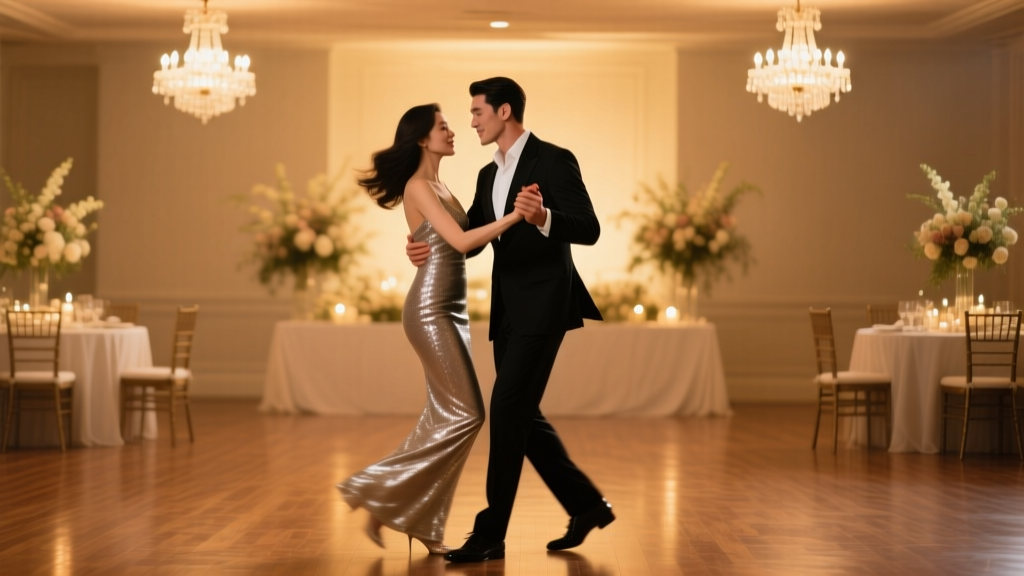
The wedding first dance is one of the most photographed moments of your entire day. For most couples, it's also the most nerve-wracking. The good news? You don't need years of training or natural rhythm to pull it off beautifully. With the right approach, even two left feet can look graceful in front of 150 guests.
---
## 1. Choose the Right Song First — Then Build Your Dance Around It
Most couples pick a song they love emotionally, then panic when they realize it's 4 minutes and 30 seconds of complex tempo changes. Before you commit, consider these factors:
- **Tempo**: 80–100 BPM is ideal for a beginner-friendly slow dance. Use a free tool like [SongBPM.com](https://songbpm.com) to check.
- **Length**: Aim for 2.5–3.5 minutes. Anything longer feels endless on the floor. Most DJs can fade a song out early.
- **Structure**: Avoid songs with dramatic key changes or sudden stops unless you're choreographing around them.
Popular first dance styles and matching song tempos:
| Dance Style | BPM Range | Skill Level |
|---|---|---|
| Slow waltz | 84–90 | Beginner |
| Foxtrot | 112–120 | Intermediate |
| Rumba | 96–104 | Beginner–Intermediate |
| Simple sway | Any | Complete beginner |
If you're starting from zero, a slow waltz or a guided sway with intentional movement is your safest bet.
---
## 2. Learn a Simple Framework — Not a Full Choreography
Here's the mistake most couples make: they try to memorize a full routine, then freeze when they forget step 7. Instead, learn a **framework** — a small set of moves you can repeat and connect naturally.
**The 4-Move Beginner Framework:**
1. **Basic sway** — shift weight side to side, hands connected, maintain eye contact
2. **Slow box step** — a simple 4-count square pattern used in waltz and foxtrot
3. **Underarm turn** — lead partner under one arm, return to hold
4. **Close hold walk** — slow walk in a circle, cheek-to-cheek or forehead-to-forehead
These four moves, rotated naturally, fill 3 minutes without looking repetitive. Practice transitioning between them until it feels conversational, not mechanical.
**Practice schedule (6 weeks out):**
- Weeks 6–4: Learn each move individually, 15 min/day
- Weeks 3–2: String moves together to your actual song
- Week 1: Full run-throughs in your wedding shoes on a hard floor
---
## 3. Take 2–3 Lessons With a Professional — Not 10
You don't need a full dance course. Two or three private lessons with a ballroom or wedding dance instructor will give you:
- Correct posture and frame (this alone makes 80% of the visual difference)
- Feedback on your specific problem areas
- Confidence from having a professional watch you
Average cost: **$60–$120 per lesson** depending on your city. Three lessons = $180–$360 — a small fraction of your total wedding budget for a moment that will be on video forever.
Search for instructors who specifically advertise **"wedding first dance lessons"** — they're used to working with non-dancers on a tight timeline and won't waste sessions on technique you don't need.
**What to bring to your first lesson:**
- Your song (downloaded, not streaming — don't risk buffering)
- Your wedding shoes, or shoes with a similar heel height
- A video of the dance floor space if it's unusually small
---
## 4. Manage the Moment Itself — Not Just the Steps
Even couples who practice extensively report that the actual first dance feels different than rehearsal. Here's how to stay grounded:
- **Look at each other, not your feet.** Guests are watching your faces, not your footwork.
- **Slow down.** Nerves make people rush. Consciously dance slightly slower than you practiced.
- **Have a reset move.** If you lose your place, return to the basic sway. No one in the audience knows your choreography.
- **Smile.** A genuine smile covers a multitude of missteps. It signals confidence even when you don't feel it.
- **Brief your DJ or band.** Tell them exactly when to start, whether to fade or play to the end, and if you want the crowd invited to join at the 2-minute mark.
---
## Common Myths About the Wedding First Dance
**Myth 1: "We need a dramatic, choreographed routine to impress our guests."**
Guests are not judging your technique — they're feeling the emotion of the moment. A simple, connected slow dance where you're clearly present with each other is more moving than a technically impressive routine performed with visible stress. Viral wedding dances are memorable because of joy, not skill.
**Myth 2: "If we haven't danced before, we'll look ridiculous no matter what."**
Posture and frame account for the majority of how a dance looks on camera. Two people standing tall, maintaining a proper hold, and moving with intention look like dancers — even if the footwork is basic. A single lesson focused on posture will transform how you look more than weeks of memorizing steps.
---
## Start This Week — Not the Week Before the Wedding
The couples who feel most confident on the dance floor share one thing: they started early. You don't need to be a dancer. You need a song you love, three or four simple moves practiced until they're automatic, and the decision to be present in the moment rather than in your head.
Book one lesson this week. Learn the basic sway and box step. Everything else builds from there.
 Wedding Singer Release Year: 1998 (Not 1997)
 What Is the Average Cost of a Wedding in 2026
 When Should You Write Your Thank You Notes
 Wedding Band Rules: What Your Choice Reveals (2026)
 Italian Wedding Soup: Truth, History & Authentic Recipe
 Courtney Love at Daughter’s Wedding? Viral Rumor Truth
 Is a Catholic Wedding Legally Binding? (2026)
 Can I Bring a Plus One to a Wedding? (2026)
 60th Wedding Anniversary Color: Diamond White Meaning
 Princess Wedding Style: Sparkle Without the Tiara