# How to Draw a Wedding Gown: Step-by-Step Guide for Beginners
Drawing a wedding gown feels intimidating — until you break it down. Whether you're a fashion student sketching your dream dress, a bride visualizing her big day look, or an artist exploring bridal illustration, learning how to draw a wedding gown is more accessible than you think. With the right approach, you can create a stunning bridal sketch in under an hour.
---
## Section 1: Start with the Fashion Figure (Croquis)
Every great wedding gown drawing begins with a solid foundation: the fashion croquis. This elongated figure (typically 9–10 heads tall) gives your gown the elegant proportions it deserves.
**Steps:**
1. Lightly sketch a vertical center line on your paper.
2. Mark the head, shoulders, bust, waist, hips, knees, and feet using equal head-height intervals.
3. Keep the waist narrow and hips slightly wider — this creates the classic bridal silhouette.
4. Sketch the pose: a slight three-quarter turn adds depth and movement to your gown drawing.
**Pro tip:** Use a light pencil (HB or 2H) for the croquis so you can erase it cleanly once the gown is drawn.
---
## Section 2: Choose and Sketch Your Gown Silhouette
The silhouette is the soul of any wedding dress sketch. The five classic bridal silhouettes each have distinct drawing characteristics:
| Silhouette | Key Drawing Feature |
|---|---|
| A-line | Flares gently from waist to hem |
| Ball gown | Full, voluminous skirt from the waist |
| Mermaid | Fitted through hips, flares at knee |
| Sheath | Straight, body-skimming lines |
| Empire waist | High seam just below bust, flowing skirt |
**Steps:**
1. Decide your silhouette before drawing a single line.
2. Sketch the bodice first — neckline, straps or sleeves, and waistline seam.
3. Draw the skirt shape flowing naturally from the waist or hip seam.
4. Add a train if desired: cathedral trains extend 6–8 feet; sweep trains just brush the floor.
For beginners, the **A-line wedding gown** is the easiest to draw because its gradual flare is forgiving and universally flattering on the figure.
---
## Section 3: Add Details — Lace, Embellishments, and Fabric Texture
This is where your wedding gown drawing comes alive. Details transform a basic outline into a breathtaking bridal illustration.
**Lace and embroidery:**
- Use small, irregular curved lines and floral motifs along the bodice and hem.
- Don't try to draw every lace thread — suggest the pattern with clusters of detail, leaving some areas open.
- Concentrate detail at focal points: neckline, waist, and hem edge.
**Fabric texture:**
- *Satin*: smooth shading with soft highlights down the center of the skirt.
- *Tulle*: light, overlapping curved lines suggesting layers of sheer fabric.
- *Chiffon*: flowing, diagonal folds that follow the body's movement.
**Embellishments:**
- Beading: tiny dots or dashes scattered across the bodice.
- Buttons: a row of small circles down the back adds classic elegance.
- Bow or sash: a simple tied shape at the waist adds dimension.
**Steps:**
1. Work from top to bottom: bodice details first, then skirt, then hem.
2. Use a fine-tip pen or 0.3mm mechanical pencil for delicate lace work.
3. Add shading last — light source from the upper left is a standard fashion illustration convention.
---
## Section 4: Ink, Color, and Finish Your Bridal Sketch
Once your pencil sketch is complete, it's time to refine and render your wedding gown drawing.
**Inking:**
- Trace your final lines with a fine liner (0.1–0.5mm).
- Use thicker lines for outer silhouette edges, thinner lines for interior details.
- Erase all pencil lines after the ink dries completely.
**Coloring options:**
- *Watercolor*: the gold standard for bridal illustration. Use ivory or warm white washes, building up layers for shadow.
- *Colored pencils*: great for beginners. Layer cream, light gray, and pale yellow for a realistic white gown.
- *Digital*: apps like Procreate offer bridal illustration brushes and easy undo — ideal for practicing how to draw wedding dresses repeatedly.
**Final touches:**
- Add a soft blush or champagne tint to the gown for warmth.
- Sketch simple hair and a veil to complete the bridal look.
- Sign your illustration — you've earned it.
---
## Common Myths About Drawing Wedding Gowns
**Myth 1: "You need formal art training to draw a wedding dress."**
Not true. Fashion illustration is a learnable skill. Thousands of brides and hobbyists sketch their own gown ideas with no formal training. The croquis method gives you a reliable structure, and practice builds confidence faster than any class.
**Myth 2: "White gowns are boring and hard to make look interesting on paper."**
Actually, white is one of the most dynamic colors to render. The interplay of light, shadow, and fabric texture on a white wedding gown creates rich visual depth. The key is using off-white, cream, and soft gray tones rather than leaving the paper blank — pure white with no shading looks flat, not elegant.
---
## Start Your Wedding Gown Sketch Today
Drawing a wedding gown comes down to four steps: build your croquis, choose your silhouette, add fabric details, and render with color. You don't need expensive supplies — a pencil, fine liner, and basic watercolors are enough to create a beautiful bridal illustration.
**Your next action:** Grab a pencil and sketch one A-line silhouette today. Don't aim for perfection — aim for completion. Your second sketch will already be better than your first, and by your tenth, you'll have a signature style all your own.
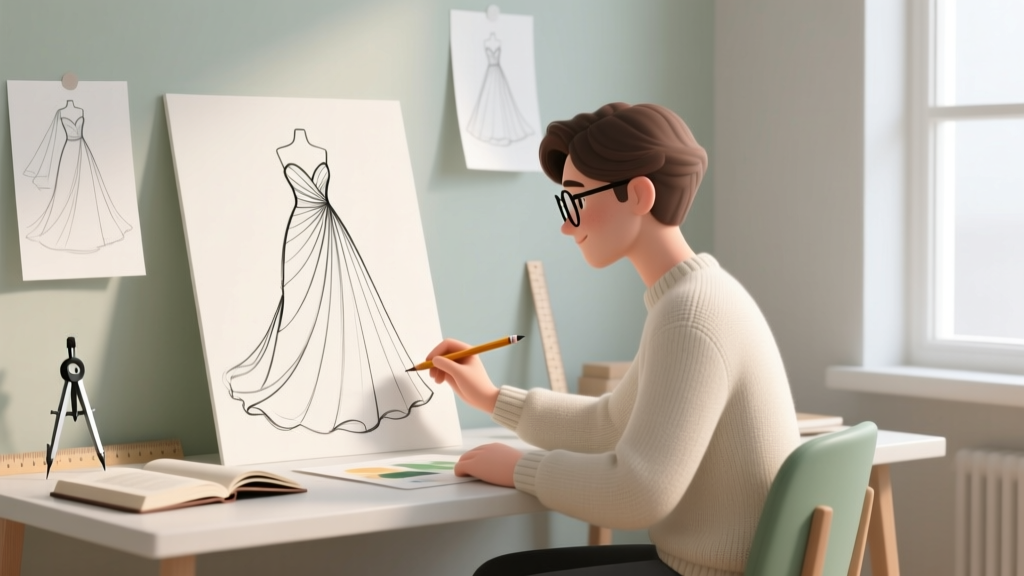
 What Hand Do Guys Wear Wedding Rings On? (2026)
 When to Book Your Wedding Day Beauty Team
 Wedding Industry Truths Revealed by Viral Bridesmaid Quote
 Used Wedding Dresses: Demand & Pricing (2026)
 A Thousand Years Twilight Wedding Planning Guide
 Should You Invite Your Boss to Your Wedding?
 Mexican Wedding Traditions: What Guests Need to Know
 Wedding Ring on Right Hand? Global Traditions (2026)
 Can You Add Sparkle to a Wedding Dress? Yes, Here's How
 Me at Wedding vs Meme: What It Reveals (2026)