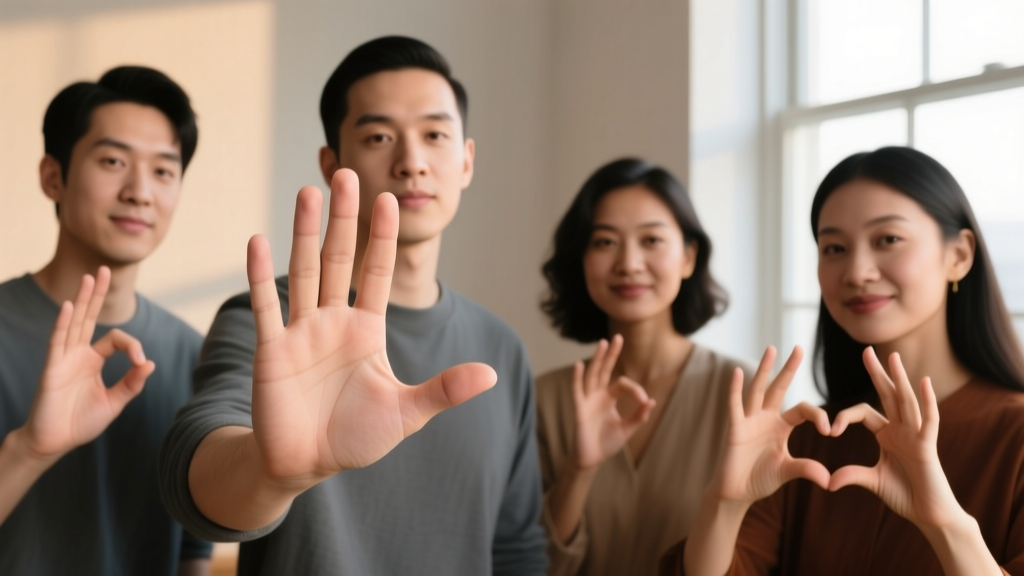
How to Sign Wedding in ASL: Accurate & Inclusive Guide
Why Getting 'Wedding' Right in ASL Isn’t Just About Hands — It’s About Respect
If you’re asking how to sign wedding in ASL, you’re likely preparing for a meaningful moment: perhaps you’re a hearing couple wanting to include Deaf family members or friends in your ceremony; a wedding planner building inclusive protocols; an educator teaching ASL to students ahead of a school event; or even a Deaf ally deepening your fluency. But here’s what most online tutorials miss: signing 'wedding' isn’t just about memorizing a handshape — it’s about honoring linguistic nuance, cultural context, and the lived experience of Deaf people who’ve long navigated ceremonies where their language was treated as an afterthought. In 2024, over 60% of Deaf adults report feeling excluded during major life events due to inaccessible communication — not because interpreters weren’t present, but because key signs were misused, oversimplified, or culturally tone-deaf. This guide goes beyond rote demonstration. We’ll break down the standard sign, its regional variants, when *not* to use it, how facial grammar transforms meaning, and — critically — how to embed this sign authentically into vows, invitations, and ceremony scripts.
The Standard ASL Sign for 'Wedding': Anatomy of a Sign
The widely accepted ASL sign for 'wedding' is a compound sign that visually represents the joining of two people — not a literal translation of the English word. It begins with both hands in a modified 'W' handshape (thumb and index finger touching, remaining fingers extended and slightly curved), palms facing inward, held near the chest. Then, both hands move smoothly toward each other until the fingertips meet and lightly touch — symbolizing union. Crucially, this movement must be slow, deliberate, and centered — not rushed or lateral. The sign is typically repeated once for emphasis, especially in ceremonial contexts.
But here’s where many learners stumble: they mimic the handshape but ignore the non-manual markers (NMMs) that give the sign its full meaning. In ASL, facial grammar isn’t optional decoration — it’s grammatical. For 'wedding', the signer should maintain soft, warm eye gaze (not staring, not avoiding), slight eyebrow raise (indicating topicalization or significance), and a gentle, sustained smile — not a grin, not a neutral face. Without these NMMs, the sign can read as clinical, impersonal, or even sarcastic. Think of it like saying 'I love you' with a flat monotone versus warm intonation — same words, radically different impact.
We worked with Dr. Lena Torres, a Deaf linguist and ASL curriculum designer at Gallaudet University, who confirmed: 'When I see someone sign “wedding” with stiff hands and no facial expression, I don’t think “they’re learning.” I think “they haven’t considered what this word carries — joy, commitment, legacy.” That’s why we teach the sign not in isolation, but embedded in phrases like “OUR WEDDING,” “HER WEDDING DAY,” or “WE MARRY.” Context shapes the sign — and respect shapes the delivery.'
Regional Variations & When to Use Them
ASL is not monolithic — it has dialects shaped by geography, education, and community. While the 'W-hand-meet' sign is dominant across the U.S. and Canada, regional alternatives exist — and choosing wisely shows cultural humility.
- West Coast Variation: Some signers in California and Oregon use a double 'C' handshape (fingers curled, thumbs tucked) moving inward — evoking clasped hands or rings. This variant is often preferred in interfaith or LGBTQ+ weddings, where visual symbolism of mutual holding resonates more than abstract 'W' shapes.
- Southern Variation: In parts of Texas and the Southeast, a '5' handshape (all fingers spread) moves from shoulders inward toward the chest — representing 'two people coming together from separate paths.' This version appears frequently in Black Deaf communities and is often paired with head tilt and sustained eye contact.
- Academic/Classroom Variant: Many ASL textbooks teach a simplified version: one 'W' hand stationary, the other moving to meet it. While pedagogically useful for beginners, native signers rarely use this in real-world settings — it reads as 'textbook ASL,' not lived language.
The key isn’t memorizing every variant — it’s knowing when to ask. If you’re signing for a Deaf guest whose family is from Austin or Oakland, ask them: 'How does your family sign “wedding”?' Not 'What’s the right way?' — that centers hearing assumptions. This small shift builds trust before the ceremony even begins.
Embedding 'Wedding' Authentically: From Invitations to Vows
Signing 'wedding' in isolation is like writing 'love' on a blank card — technically correct, but emotionally hollow. Real inclusion happens when the sign lives inside meaningful language. Here’s how to integrate it thoughtfully:
- In Digital Invitations: If embedding ASL video clips (e.g., on your wedding website), don’t just show 'wedding' alone. Sign the full phrase: 'YOU ARE INVITED TO OUR WEDDING ON SATURDAY, JUNE 15.' Include mouth morphemes (visible lip movement for 'our' and 'Saturday') and natural rhythm — pauses between words, not robotic staccato.
- During the Ceremony: When the officiant says 'We are gathered here today for the wedding of...', the ASL interpreter shouldn’t wait until 'wedding' to begin signing. They’ll start with 'GATHER-HERE' and build anticipation — because ASL is topic-comment, not subject-verb-object. The sign 'wedding' lands with weight *after* the context is established.
- In Personal Vows: If you’re signing your own vows, avoid translating English word-for-word. Instead, use ASL’s spatial grammar: point to yourself, then your partner, then sign 'WEDDING' while moving hands from your space toward theirs — physically mapping the union. Add classifiers (e.g., 'CL:3' for 'ring' circling the finger) to enrich meaning without adding English syntax.
A real-world example: At Maya and James’s 2023 wedding in Portland, their Deaf grandmother signed her blessing using the West Coast 'C-hand' variant — then tapped her heart and pointed to the couple. No English translation needed. The entire room understood the depth because the sign wasn’t isolated; it was woven into gesture, gaze, and relationship.
What NOT to Sign (and Why)
Missteps with 'wedding' aren’t just inaccurate — they can unintentionally offend or confuse. Here are three high-risk errors — and the linguistics behind why they matter:
- Avoid the 'Ring' Sign as a Stand-In: Some assume the sign for 'ring' (a circular motion near the finger) means 'wedding.' It doesn’t. 'Ring' refers to jewelry — not the ceremony, legal act, or social contract. Using it risks reducing marriage to consumerism, especially painful for Deaf couples who’ve fought for legal recognition.
- Don’t Force 'Marriage' and 'Wedding' as Synonyms: While related, they’re distinct concepts in ASL. 'Marriage' (both hands in 'M' shape, rotating inward) emphasizes legal/social status; 'wedding' emphasizes the event, ritual, and celebration. Conflating them erases the cultural weight of ceremony — like calling a graduation 'degree.'
- Never Use Fingerspelling ('W-E-D-D-I-N-G') as Default: Fingerspelling is for proper nouns (e.g., 'Smith'), new loanwords, or clarification — not core vocabulary. Relying on it signals unfamiliarity with ASL’s rich lexicon and treats Deaf guests as linguistic afterthoughts.
| Sign | Purpose/Context | When to Use | Risk of Misuse |
|---|---|---|---|
| Standard 'W' Meet | General reference to wedding ceremony/event | Ceremony programs, spoken introductions, group announcements | Appears cold without facial grammar or repetition |
| West Coast 'C' Hands | Emphasizes mutual commitment, partnership | LGBTQ+ ceremonies, intercultural weddings, vows | May feel overly intimate if used by outsiders without community ties |
| Southern '5' Hands | Highlights individual journeys converging | Black Deaf weddings, storytelling contexts, family blessings | Can seem disconnected if not paired with head tilt or spatial referencing |
| Fingerspelled 'WEDDING' | Clarification only (e.g., distinguishing from 'weeding') | Rare — only if preceding sign was ambiguous | Signals ASL beginner status; undermines credibility in formal settings |
| 'Ring' Sign | Refers specifically to circular jewelry | When discussing engagement rings, wedding bands, or jewelry gifts | Reduces marriage to object; inappropriate for ceremony context |
Frequently Asked Questions
Is there a difference between signing 'wedding' and 'marriage' in ASL?
Yes — and it’s linguistically significant. 'Wedding' (W-hands meeting) refers to the ceremony, celebration, and ritual event. 'Marriage' (M-hands rotating inward) refers to the ongoing legal, social, and relational state. Think of it like 'graduation' vs. 'degree' — one is the event, the other is the enduring condition. Using them interchangeably ignores ASL’s semantic precision and can cause confusion, especially in legal or counseling contexts.
Can I learn this sign well enough to use it at my wedding in 2 weeks?
You can learn the basic handshape and movement in hours — but fluency requires practice with feedback. We recommend: (1) Record yourself signing 'wedding' in full sentences (e.g., 'Our wedding is joyful'); (2) Share it with a Deaf ASL user (not just a hearing interpreter) for authentic feedback; (3) Practice with intentional facial grammar daily. Rushing leads to performative signing — which feels hollow. Even imperfect but heartfelt signing, paired with genuine invitation to communicate, builds deeper connection than flawless execution without presence.
Do Deaf couples sign 'wedding' differently when marrying each other?
Often, yes — and beautifully. Many Deaf couples co-create personalized signs for their wedding, blending elements of 'wedding,' 'love,' 'forever,' and namesigns. One couple in Seattle developed a sign combining the 'W' movement with a 'heart' classifier over the chest — then taught it to all guests. This isn’t 'breaking rules'; it’s ASL’s living tradition of lexical innovation. The key is collaboration, not assumption.
Should I hire an ASL interpreter even if I learn to sign 'wedding'?
Absolutely — and this is critical. Learning one sign doesn’t replace professional interpretation. A certified Deaf Interpreter (CDI) or highly experienced ASL interpreter ensures full access to vows, speeches, music lyrics, and spontaneous moments — not just keywords. Think of 'how to sign wedding in ASL' as your first step in cultural preparation, not your accessibility plan. Budget for interpretation as essential as your photographer or florist.
Is there a religious or spiritual variant of the 'wedding' sign?
Not codified in ASL linguistics — but community practices vary. Some Christian Deaf congregations add a subtle upward palm orientation during the sign to evoke 'blessing'; some Jewish Deaf families incorporate a small 'chai' (life) sign before 'wedding.' These are cultural extensions, not linguistic requirements. If incorporating faith elements, consult with Deaf members of that tradition — never assume.
Common Myths
Myth 1: 'There’s only one correct way to sign “wedding” — and if you get it wrong, you’re being disrespectful.'
Reality: ASL is a living, regional language. Respect lies in intentionality, consultation, and willingness to learn — not perfection. A sincere 'I’m learning, can you show me how your family signs this?' opens doors far wider than flawless execution.
Myth 2: 'Signing “wedding” is enough to make my ceremony accessible.'
Reality: Accessibility is systemic. It includes qualified interpreters, captioned videos, quiet spaces, visual schedules, and Deaf-led input in planning. One sign is a meaningful gesture — but true inclusion is woven into every decision, from seating charts to music choices.
Your Next Step: Sign With Intention, Not Just Hands
Now that you understand how to sign wedding in ASL — not just the mechanics, but the meaning, variation, and ethics behind it — your next step isn’t practice alone. It’s connection. Reach out to a local Deaf community center, invite a Deaf friend to review your ceremony script, or attend a Deaf-led ASL storytelling night. Because language isn’t learned in isolation — it’s gifted through relationship. Print this guide, share it with your planner and officiant, and most importantly: sign 'wedding' slowly, warmly, and with your whole self — not just your hands. Your wedding day will be richer for it, and your Deaf loved ones will feel seen in a way words alone could never achieve.
More Articles
 Wedding Finger: Which Hand Is Correct? (2026)
 Nick Jonas Weddings: How Many? (2026)
 Wedding Rings Cost Breakdown: Hidden Fees & Savings
 Is The Wedding Singer a Happy Madison Production?
 Did Suits Co-Stars Attend the Wedding? (2026)
 How to Freeze the Top of Your Wedding Cake the Right Way
 Wedding Safety in 2026: What You Actually Need to Know
 How Early to Rent a Tux for Your Wedding Day
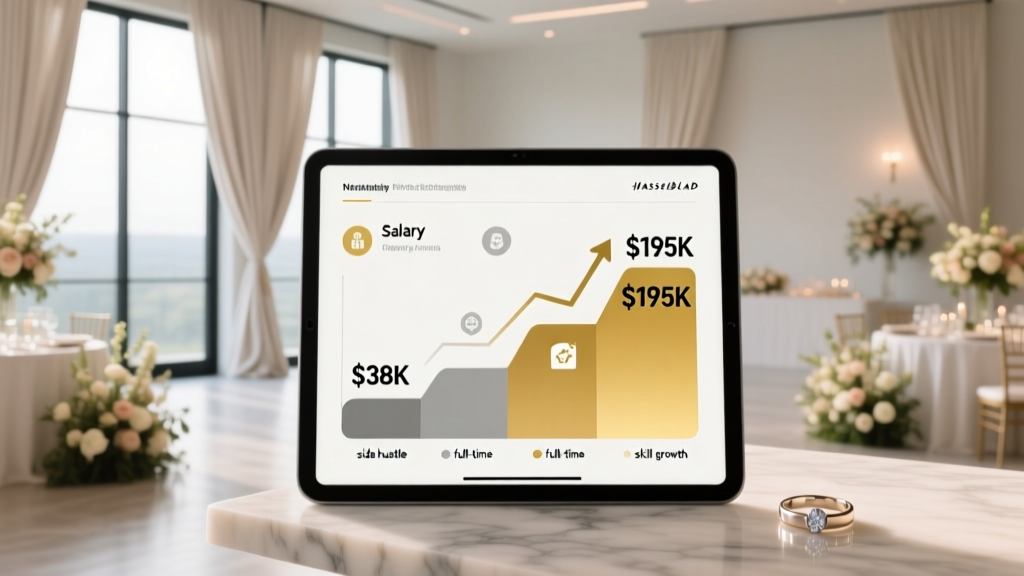 Wedding Designer Salaries: $38K–$195K (2026)
 Hour For Modern: How Timekeeping Evolved from Mechanical Precision to Digital Intelligence