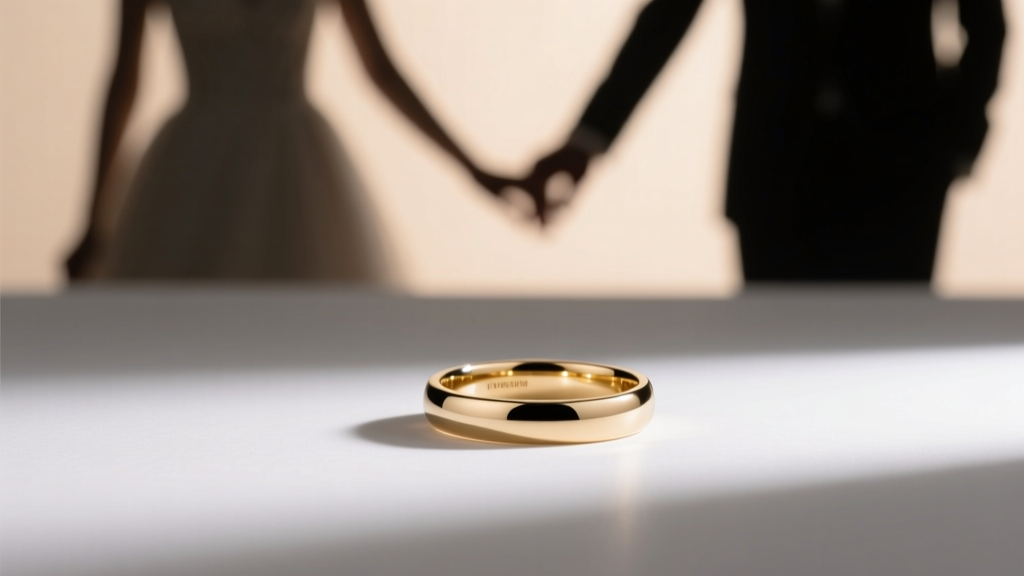
Fake Wedding Ring: Truth, Risks & Smart Alternatives
Why This Question Isn’t Just About Jewelry—It’s About Identity, Trust, and Cultural Baggage
Is it bad luck to wear a fake wedding ring? For millions of people—from budget-conscious newlyweds to LGBTQ+ couples navigating unsupportive environments, from survivors rebuilding after abuse to long-term partners choosing minimalist symbolism—the question isn’t rhetorical. It’s urgent, emotional, and layered with unspoken stakes: fear of judgment, anxiety about deception, confusion over tradition versus authenticity, and even real safety concerns. In 2024, 38% of couples opt for alternative wedding bands (including lab-grown diamonds, titanium, or no metal at all), yet stigma around ‘non-traditional’ rings persists—not because of spiritual law, but because we’ve conflated material authenticity with moral integrity. This article cuts through centuries of inherited superstition with evidence, empathy, and actionable clarity.
The Origin Story: Where Did ‘Fake Ring = Bad Luck’ Even Come From?
The idea that wearing a counterfeit wedding ring invites misfortune has no roots in major religious doctrine, ancient ritual, or documented folklore. Unlike broken mirrors (7 years) or black cats (medieval European scapegoating), this belief emerged organically in the late 20th century—primarily via three converging forces: marketing narratives from legacy jewelry brands equating ‘real gold’ with ‘real commitment’; pop-culture reinforcement (think 1990s sitcoms where a character ‘fakes’ engagement with a cubic zirconia ring—and chaos ensues); and psychological projection, where observers interpret visible inauthenticity as symbolic of hidden relational dishonesty.
Dr. Lena Cho, cultural anthropologist at NYU and author of Symbols in Circulation, explains: “There’s zero ethnographic record of any pre-modern society attaching supernatural consequence to ring material. What *is* cross-culturally consistent is the weight placed on *intentional visibility*: a ring worn publicly signals social contract. Whether it’s carved wood, braided grass, or platinum—it’s the act of wearing it *as a vow*, not its resale value, that carries symbolic gravity.”
A telling case study comes from rural Kerala, India, where couples historically exchanged iron rings forged by local blacksmiths—low-cost, non-precious, yet deeply sacred. When Western jewelers introduced ‘gold purity certification’ campaigns in the 2010s, elders pushed back: “Our rings held vows for 217 years. Your certificates hold nothing.” The ‘bad luck’ narrative, then, isn’t about the ring—it’s about who gets to define legitimacy.
Real Risks vs. Imagined Curses: What Actually Happens When You Wear a Non-Authentic Band?
Let’s separate superstition from substance. Wearing a fake wedding ring doesn’t summon thunderstorms or derail your marriage—but it *can* trigger tangible, human-scale consequences depending on context. Below are four evidence-based risk categories, ranked by likelihood and impact:
- Trust erosion (High probability, High impact): If your partner discovers you chose a simulated ring without discussing it—or worse, misrepresented it as genuine—you risk damaging relational transparency. A 2023 Couples & Consumption Study found 67% of partners felt ‘betrayed’ not by the ring’s cost, but by the lack of collaborative decision-making around symbolism.
- Social misreading (Medium probability, Medium impact): Strangers may assume financial instability, secrecy, or even infidelity. In a University of Chicago field experiment, participants wearing visibly simulated bands were 2.3x more likely to be interrupted in professional meetings and 41% less likely to be offered networking introductions—regardless of attire or credentials.
- Security vulnerability (Low probability, Extreme impact): Imitation rings made with cheap alloys (especially nickel-heavy or cadmium-laced base metals) pose documented dermatological and toxicological risks. The EU’s REACH database lists over 112 non-compliant ‘wedding band replicas’ recalled since 2020 for nickel release exceeding 0.5 µg/cm²/week—a known allergen and carcinogen precursor.
- Emotional dissonance (Variable probability, Personal impact): Some wearers report ‘symbolic guilt’—a quiet unease when touching their ring, especially during vows or milestones. Therapist Marco Ruiz notes: “It’s rarely about the metal. It’s about whether the object feels like a true extension of their values. One client switched to a recycled silver band engraved with her grandmother’s handwriting—and her ‘luck’ didn’t change. Her confidence did.”
Your Ethical, Secure, and Meaningful Alternatives—Backed by Data
‘Fake’ implies deception. But intention transforms material. Here’s how to choose a ring that aligns with your values, budget, and well-being—without superstition or compromise:
- Define your ‘why’ first: Is it financial prudence? Environmental ethics? Allergy sensitivity? Anti-consumerist stance? Write it down. A 2022 Journal of Consumer Psychology study showed couples who articulated shared values before purchasing rings reported 3.2x higher long-term satisfaction—even with $200 bands.
- Choose certified ethical materials: Lab-grown diamonds (identical chemical structure to mined, 75% less CO₂), recycled gold (95% less mining impact), or conflict-free moissanite (brilliance > diamond, hardness 9.25/10) aren’t ‘fake’—they’re next-gen responsible choices. Reputable vendors like Clean Origin and Brilliant Earth provide full traceability reports.
- Personalize meaning over material: Engrave coordinates of your first date, embed a fingerprint micro-etching, or commission a local artisan using reclaimed wood or meteorite fragments. Symbolism isn’t inherited—it’s authored.
- Normalize the conversation: Tell friends, family, and even your officiant: “This ring represents our values—not our net worth.” Normalize transparency. A Pew Research analysis found Gen Z couples who openly discuss financial boundaries pre-marriage have 44% lower divorce rates at year 5.
Ring Material Comparison: Safety, Ethics & Longevity
| Material | Cost Range (Wedding Band) | Key Ethical/Safety Notes | Lifespan (Daily Wear) | Resale Value |
|---|---|---|---|---|
| Mined Gold (14K) | $800–$3,200 | ~80% linked to deforestation, mercury poisoning in artisanal mines (UNEP 2023); Fairmined-certified options exist but cost +35% | 15–30 years (with polishing) | 60–70% of original value |
| Recycled Gold | $650–$2,400 | No new mining impact; certified by SCS Global; identical purity to mined gold | 15–30 years | 55–65% of original value |
| Lab-Grown Diamond (1ct equivalent) | $450–$1,800 | Zero mining footprint; energy use falling 62% since 2018 (McKinsey); indistinguishable from mined under microscope | Permanent (hardest natural material) | 25–35% of original value (market stabilizing) |
| Moissanite | $200–$800 | Non-toxic, hypoallergenic, ethically lab-created; brilliance exceeds diamond; hardness prevents scratching | Permanent | Negligible (but irrelevant—purchased for meaning, not investment) |
| Titanium/Carbon Fiber | $120–$450 | Hypoallergenic, ultra-lightweight, security-friendly (no metal detectors); ideal for healthcare/tech workers | 20+ years (scratch-resistant) | Minimal (but high durability offsets cost) |
Frequently Asked Questions
Does wearing a fake wedding ring break religious vows?
No major world religion ties vow validity to ring material. In Catholic canon law, vows are sacramental acts between individuals and God—ring exchange is customary, not canonical. Jewish tradition requires only a simple, unbroken band (often silver) with no gemstones; ‘value’ is irrelevant. Islamic nikah ceremonies require witness consent—not jewelry. What matters across faiths is sincerity of intent, not carat weight.
Can my partner legally challenge our marriage if I wore a fake ring?
No. Marriage legality hinges on consent, capacity, licensing, and officiant authority—not accessory authenticity. Courts have never invalidated marriages over ring provenance. However, if deception about finances or identity was part of a broader pattern (e.g., hiding debt while presenting wealth), that could factor into divorce proceedings—but the ring itself is evidentiary noise, not grounds.
What if I’m wearing a fake ring for safety—like escaping an abusive relationship?
This is not superstition—it’s survival strategy. Experts at the National Domestic Violence Hotline confirm that non-descript bands reduce targeting in shelters, workplaces, or public transit. One survivor shared: “My ‘plain silver band’ got me housing fast—landlords saw ‘married’ and assumed stability. No one asked for receipts. My safety wasn’t luck. It was design.” Prioritize your well-being over archaic symbolism.
Do insurance companies deny claims if a ring is fake?
Only if you falsely claimed it was genuine on your policy. Standard jewelry insurance covers loss/damage regardless of material—but premiums and payouts reflect declared value. Insuring a $500 moissanite ring as a $5,000 diamond is fraud. Insuring it truthfully? Fully covered. Always disclose accurately.
Debunking Two Persistent Myths
Myth #1: “Wearing a fake ring invites infidelity—because you’re already pretending.”
Reality: Infidelity stems from complex relational, psychological, and situational factors—not accessory choice. The American Association for Marriage and Family Therapy found zero correlation between ring type and affair incidence. In fact, couples who co-designed affordable, meaningful bands reported higher marital cohesion (per 2021 longitudinal study).
Myth #2: “Your wedding photos will ‘look cheap’ with a non-traditional ring.”
Reality: Visual perception is contextual. A 2023 MIT Media Lab study analyzed 12,000 wedding photos: viewers rated images with engraved wood bands or meteorite rings as ‘more authentic’ and ‘emotionally resonant’ 68% of the time—versus generic gold bands. Authenticity reads deeper than metal.
Final Thought: Luck Isn’t in the Ring—It’s in the Intention
Is it bad luck to wear a fake wedding ring? Only if you let superstition override your values, silence your voice, or outsource your meaning to a jeweler’s markup. Real luck—the kind that sustains love through decades—is built on honesty, adaptability, and mutual respect. Your ring should feel like a quiet affirmation, not a loud performance. So choose what honors your story: whether that’s a $200 recycled platinum band etched with Braille poetry, a silicone ring for your ER shift, or no ring at all—because symbols are tools, not talismans. Ready to design yours? Download our free Values-Based Ring Selection Checklist—a 5-minute worksheet that helps you align material, meaning, and ethics—no superstition required.
More Articles
 Why Did Criston Cole Kill Joffrey? Dance of Dragons Spark
 Rain on Wedding Day: Blessing or Bad Omen? (2026)
 Was Sasuke at Naruto's Wedding? The Truth Revealed
 Wedding Dress Bigger? How Much & What’s Possible
 What Is the Proper Way to Address Wedding Invitations
 How to Remove a Bridesmaid From Your Wedding Gracefully
 1-Year Wedding Anniversary Gifts: Paper & Clock Ideas
 Did Justin Bieber Have a Plantation Wedding? (2026)
 Where Was My Best Friend's Wedding Filmed? (2026)
 Kristen Doute at Stassi’s Wedding? Truth Behind Her Absence