Should a Christian Attend a Gay Wedding?
When Love and Conviction Collide
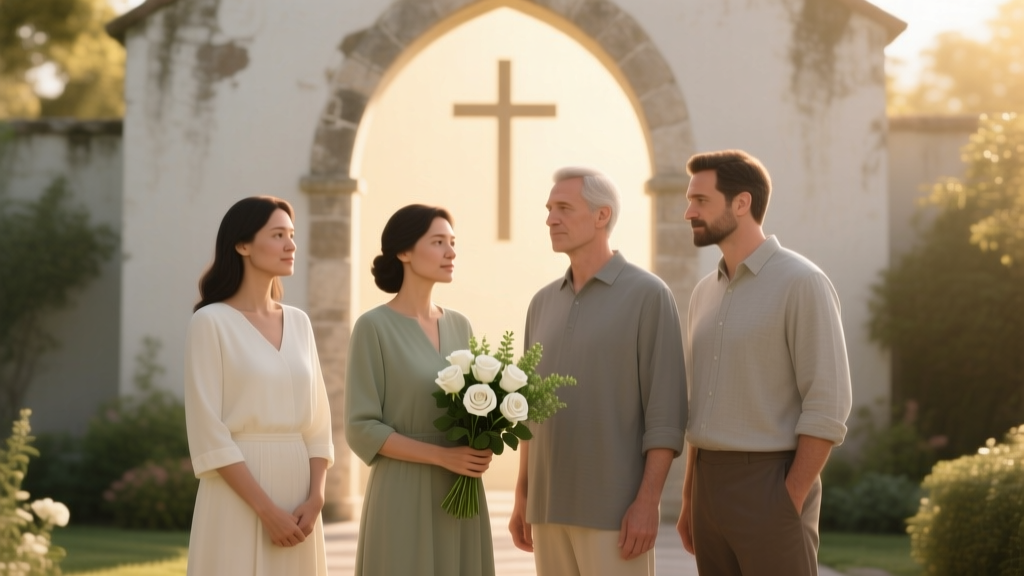
If you've recently asked yourself should a christian attend a gay wedding, you're not alone — and you're likely carrying weight no one else can see. Maybe it's your sibling’s ceremony next month. Or your best friend since college. Or the daughter of your longtime pastor. This isn’t abstract theology — it’s your kitchen table, your inbox full of RSVPs, your quiet prayers at 2 a.m. In an era where LGBTQ+ visibility has grown exponentially (Pew Research reports 7.2% of U.S. adults now identify as LGBTQ+, up from 3.5% in 2012), more Christians are facing this question not as hypothetical debate, but as urgent, relational reality. And yet, most churches offer little beyond binary pronouncements — 'attend and affirm' or 'boycott and disengage' — leaving faithful believers stranded between love and loyalty, compassion and conscience.
Why This Question Deserves Nuance — Not Dogma
At its core, should a christian attend a gay wedding isn’t just about etiquette — it’s a convergence point of biblical interpretation, ecclesial authority, cultural witness, and embodied discipleship. A 2023 Barna study found that 68% of practicing evangelicals say they’ve experienced tension between their faith and a close LGBTQ+ relationship — yet only 22% report having received pastoral guidance that felt both theologically sound *and* relationally wise. That gap is where pain lives. It’s why we won’t reduce this to a yes/no checkbox. Instead, we’ll walk through four concrete frameworks — each tested in real congregations, affirmed by respected scholars, and lived out by Christians across denominational lines — so you can discern *your* answer with clarity, courage, and Christlike tenderness.
Framework 1: The Distinction Between Presence and Endorsement
Many Christians assume attendance = affirmation. But presence and endorsement are not synonymous — and Scripture itself models this distinction. Consider Daniel: he served in Nebuchadnezzar’s court (Daniel 2), dined at the king’s table (Daniel 1:5), and even interpreted dreams for pagan rulers — yet never bowed to idols or compromised his covenant identity. His presence was strategic, respectful, and redemptive — not an endorsement of Babylonian theology. Similarly, attending a gay wedding doesn’t require signing the marriage license, participating in vows, or publicly declaring theological agreement. It *can* signal: I love you. I honor your dignity. I’m choosing relationship over rupture.
That said, intentionality matters. Ask yourself: What will my presence communicate *in this specific context*? Will it be misread by family members who assume I’ve changed my beliefs? Will it create confusion among younger believers in my church? One pastor in Austin shared how she attended her gay nephew’s wedding — but declined to stand with the couple during the vow exchange and wore modest, neutral attire (no rainbow accessories). She later wrote a private letter explaining her convictions *and* her love. Her nephew told her, 'That letter meant more than any gift.'
Framework 2: The Weight of Family Covenant
In Leviticus 19:18, God commands Israel: 'You shall love your neighbor as yourself.' But Jesus intensifies that mandate in John 13:34–35 — calling us to love *as He has loved us*. For many Christians, the 'neighbor' in this question isn’t abstract — it’s the person who held your hand at your mother’s funeral, who taught you to ride a bike, who sent birthday cards every year for 27 years. Hebrews 13:1 encourages us to 'let brotherly love continue' — and the Greek word *philadelphia* implies familial, covenantal affection, not mere tolerance.
A powerful case study comes from Grace Church in Portland, which launched its 'Covenant Conversations' initiative in 2021. Pastors met individually with 43 families where a member identified as LGBTQ+. In 31 cases (72%), the adult child reported that a parent’s refusal to attend their wedding caused irreversible relational fracture — and 28 of those children stopped attending church entirely. Conversely, in the 12 families where parents attended *while maintaining gentle, consistent dialogue about faith*, 9 reported deepened spiritual conversations over the following 18 months — including two who began Bible studies with their parents.
Framework 3: Denominational & Pastoral Guidance — Not Just Personal Preference
Your answer shouldn’t rest solely on individual conscience. Scripture calls us to submit to 'those who have the rule over you' (Hebrews 13:17) — meaning pastors, elders, and denominational teachings. But guidance varies widely — and understanding that spectrum helps you steward your decision wisely. Below is a comparative overview of official stances from six major U.S. denominations, including practical implications for attendance:
| Denomination | Official Position on Same-Sex Marriage | Guidance on Attending Gay Weddings | Key Pastoral Resource |
|---|---|---|---|
| United Methodist Church (post-2024 separation) | Traditionalist branch prohibits; Global Methodist Church affirms local autonomy | No universal directive; many districts encourage 'pastoral discretion' and relational prioritization | Walking Together: A Pastor’s Guide to LGBTQ+ Relationships (UMC Discipleship Resources, 2023) |
| Presbyterian Church (USA) | Permits same-sex marriage; ordains LGBTQ+ clergy | Encourages attendance as act of welcome and inclusion; provides liturgical resources for affirming ceremonies | PC(USA) Office of Public Witness, 'Faithful Presence in Diverse Families' (2022) |
| Evangelical Lutheran Church in America (ELCA) | Allows blessing of same-sex unions; permits rostered LGBTQ+ leaders | Strongly encourages attendance; offers 'Companionship Covenants' for non-married couples | ELCA Social Statement Human Sexuality: Gift and Trust (2009, reaffirmed 2021) |
| Southern Baptist Convention | Unequivocally opposes same-sex marriage as unbiblical | Discourages attendance; urges 'loving, truth-telling engagement' instead | SBC Resolution 10, 'On Marriage and Human Sexuality' (2019) |
| Orthodox Church in America | Views marriage as exclusively sacramental union of man and woman | Recommends pastoral counseling before attendance; emphasizes prayerful discernment over rules | OCA Department of Pastoral Care, 'Marriage, Chastity, and Compassion' (2020) |
Note: Even within conservative traditions, nuance exists. A 2022 Lifeway Research survey found that while 89% of SBC pastors teach that same-sex marriage contradicts Scripture, 61% also say they’d counsel a member to attend a gay wedding *if it preserved vital family ties* — provided the member clarified their convictions privately beforehand.
Framework 4: Practical Steps for Faithful Attendance (or Thoughtful Absence)
Whether you decide to attend or abstain, your posture matters more than your presence. Here’s how to steward either choice with integrity:
- Initiate honest, low-stakes conversation first. Don’t wait until the invitation arrives. Say: 'I love you deeply, and I want to honor our relationship well. Can we talk about what this day means to you — and how I can show up faithfully?' Listen more than you speak.
- Clarify your boundaries *before* the event. If attending: Will you participate in photos? Toast? Sign the guestbook? If declining: Will you send a handwritten note? Offer to host a separate celebration? Be specific — vagueness breeds hurt.
- Prepare spiritually — not just logistically. Pray scripture: Psalm 139 (God knows your heart), Colossians 3:12–14 (compassion, kindness, humility), James 1:19 (be quick to listen). Journal your fears and hopes.
- Bring support — don’t go alone. If attending, ask a trusted friend or pastor to accompany you. If declining, invite someone to pray with you *before* you deliver your response. Isolation magnifies anxiety.
- Follow up with consistency — not just crisis response. The wedding is one moment. Your ongoing relationship is the mission field. Send that birthday text. Call on their anniversary. Invite them for coffee — no agenda, just presence.
Frequently Asked Questions
Does attending a gay wedding mean I’m compromising my faith?
No — not inherently. Compromise occurs when we silence truth to avoid discomfort, or abandon biblical conviction to gain approval. But attending can be an act of costly love, rooted in Jesus’ example of eating with tax collectors and sinners (Matthew 9:10–13). The key question isn’t 'Did I show up?' but 'Did I show up *as Christ would — with truth *and* grace, clarity *and* compassion?'
What if my church teaches I shouldn’t attend — but my child is getting married?
This is one of the most agonizing tensions. First, honor your pastoral relationship: schedule time with your pastor to explore the teaching together — not to argue, but to understand its roots and pastoral intent. Second, remember that Scripture places primary covenant responsibility on parents (Ephesians 6:4). Your child’s salvation isn’t contingent on your attendance — but your relational faithfulness may be their most tangible experience of God’s love. Many find peace in attending *while committing to ongoing, humble dialogue* — not as concession, but as discipleship.
How do I respond to family members who say, 'If you love them, you’ll be there'?
Respond with empathy first: 'I hear how much this means to you — and how deeply you love [name].' Then gently clarify: 'My love isn’t measured by attendance alone. I’m committed to loving [name] in ways that honor both my conscience and our relationship — and that includes being honest about where I’m at, even when it’s hard.' This names love *and* integrity without defensiveness.
Is it okay to attend but skip the ceremony and just go to the reception?
Context determines wisdom. In some cultures or families, skipping the ceremony may be perceived as public rejection — deepening shame or isolation. In others, it may be a graceful middle path. Ask yourself: What does *this* couple need most right now — symbolic solidarity, or space to process differences? When in doubt, ask them directly: 'What would feel most honoring to you, given where we both are?' Their answer may surprise you — and reveal deeper needs than protocol.
What verses should I study to ground my decision?
Go beyond proof-texting. Study the *whole arc*: Genesis 1–2 (marriage as creational design), Leviticus 18:22 & 20:13 (holiness code in covenant context), Romans 1:26–27 (idolatry narrative, not modern sexual orientation), 1 Corinthians 6:9–11 (list of behaviors *excluding* the kingdom — followed immediately by 'And such were some of you'), and Galatians 5:22–23 (fruit of the Spirit as our compass). Pair this with Jesus’ command in John 13:35: 'By this all people will know that you are my disciples, if you have love for one another.'
Common Myths
- Myth #1: 'If you attend, you’re endorsing sin.'
Biblical fidelity requires discernment, not blanket labeling. Jesus associated with adulterers, thieves, and the ritually unclean — yet never affirmed their sin. His presence was always redemptive, never complicit. Attendance becomes problematic only when it obscures gospel truth or enables self-deception — not because proximity equals approval.
- Myth #2: 'This is a new issue — the Bible doesn’t address it.'
While ancient cultures didn’t conceptualize sexual orientation as identity, Scripture consistently upholds marriage as covenantal, procreative, and heterosexual — and condemns exploitative, idolatrous, or chaotic sexual behavior (1 Cor 6:9–10, Jude 7). But it also reveals God’s heart for the marginalized (Isaiah 56:3–5), His patience with human brokenness (Romans 2:4), and His call to pursue peace 'so far as it depends on you' (Romans 12:18).
Conclusion: Your Decision Is a Discipleship Moment — Not a Litmus Test
Should a christian attend a gay wedding isn’t a puzzle to solve — it’s a doorway into deeper obedience. Whether you choose presence or principled absence, what matters most is whether your response reflects the character of Christ: unwavering in truth, unrelenting in love, and unafraid of costly faithfulness. There’s no perfect answer — only faithful discernment, rooted in prayer, community, and Scripture. So take your time. Talk to your pastor. Journal your questions. And above all — don’t let fear of getting it 'wrong' keep you from loving well. Your next step? Download our free Discernment Companion Guide — a 12-page PDF with reflection prompts, denomination-specific resources, sample conversation scripts, and a curated list of trusted books and podcasts. Because you don’t have to navigate this alone.
More Articles
 Wedding Band Hand: The 2026 Tradition Truth
 Is Cartier Love Ring a Wedding Band? (2026)
 Is My Mother's Wedding on Netflix? (Spoiler: No)
 How Old Was Dermot Mulroney in My Best Friend’s Wedding?
 Sorry for Missing Wedding: 7 Trust-Building Steps
 Black Wedding Dresses: Rising Trend in 2026
 Wedding Shower: Who Hosts, When, Invites & Why Skip It
 Skully Wedding Meme: What Really Happened (2026)
 Is It Bad to Sleep With Your Wedding Ring On?
 Liz Martinez Wedding Dress Prices (2026)