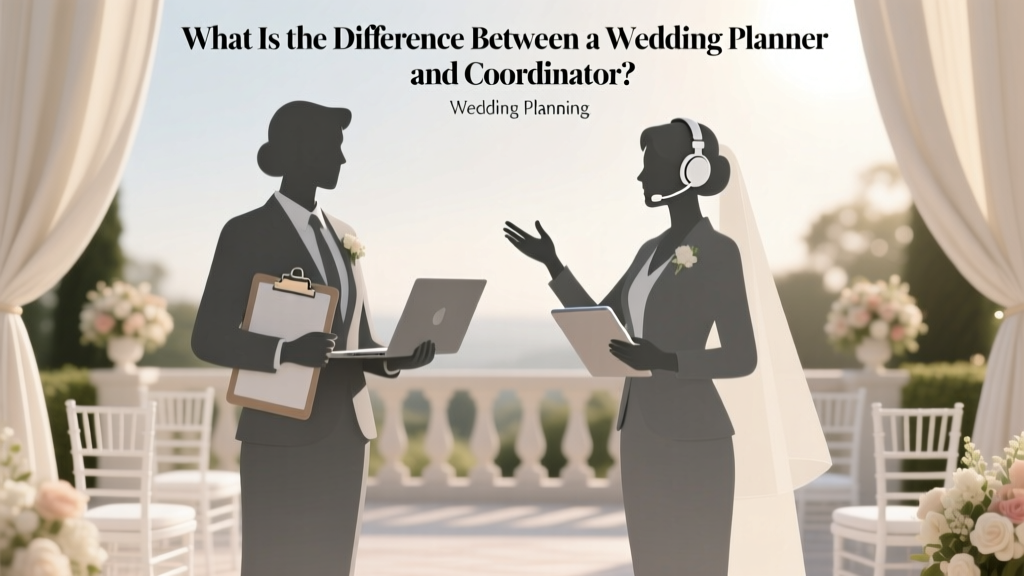
Wedding Planner vs Coordinator: Key Differences
What Is the Difference Between a Wedding Planner and Coordinator?
If you’ve started reaching out to wedding pros (or even just scrolling TikTok wedding timelines), you’ve probably seen the terms wedding planner and wedding coordinator used like they’re interchangeable. Then you get a quote, see wildly different price ranges, and wonder: “Wait—aren’t they basically the same job?”
This question matters because the role you hire affects your budget, your stress level, and how smoothly your wedding day runs. The right support can make planning feel organized and even fun. The wrong support can leave you juggling vendor emails at midnight—or troubleshooting a seating chart while your hair is being curled.
Quick Answer: Planner vs. Coordinator
A wedding planner helps you plan the wedding. They’re involved months (sometimes a year+) ahead, guiding the big-picture vision, budget, vendor selection, and logistics.
A wedding coordinator (often “day-of” or “month-of” coordinator) helps you execute the plan. They step in closer to the wedding date to confirm details, create timelines, and manage the wedding day so you (and your family) aren’t “on duty.”
Think of it like this: a planner is your project manager from the start; a coordinator is your operations manager at the finish line.
Q: What does a wedding planner actually do?
A full-service wedding planner is typically involved early and consistently. Their job is to help you shape the wedding and make sure every decision connects back to your priorities (guest experience, budget, design, cultural traditions, timeline, and logistics).
- Budget creation and management: Helping you allocate funds realistically and avoid surprise costs.
- Vendor recommendations and booking: Shortlisting vendors that match your style and budget, reviewing contracts, and coordinating communication.
- Design and styling guidance: Mood boards, color palettes, rentals, lighting, florals, floor plans—especially helpful for couples planning a cohesive look.
- Logistics and planning: Ceremony flow, rain plans, transportation, hotel blocks, timeline strategy, and guest experience details.
- Problem prevention: Catching issues early (like unrealistic setup times or missing permits) before they become stressful.
As fictional wedding planner Sierra Maldonado of Willow & Wine Events puts it: A planner isn’t just there to make things pretty. We’re hired to make hundreds of small decisions feel manageable—and to keep couples from spending money in the wrong places.
Q: What does a wedding coordinator do?
A wedding coordinator is focused on bringing your plan to life—especially in the final stretch. Many coordinators offer “month-of coordination” (often starting 4–8 weeks before the wedding) because “day-of coordination” is a bit of a misnomer. You can’t coordinate a complex event in a single day without prep.
- Final vendor confirmations: Checking arrival times, load-in instructions, and who brings what.
- Timeline creation and distribution: A clear wedding day timeline for vendors, wedding party, and key family members.
- Rehearsal management: Lining up the processional, cueing music, and helping everyone feel confident.
- Wedding day management: Handling setup oversight, solving problems quietly, cueing events (speeches, first dance), and keeping everything on schedule.
- Point person: So you aren’t answering questions like “Where do the place cards go?” while you’re taking photos.
Fictional couple Priya and Jordan shared: We didn’t need someone to pick our florist—we loved doing that part. But we absolutely needed someone to run the show. Our coordinator handled a seating-card mix-up without telling me until after the honeymoon.
Q: Is a “day-of coordinator” enough?
Sometimes, yes—but it depends on how you’re planning.
A day-of or month-of wedding coordinator is usually enough if:
- You enjoy planning and have time to manage emails, contracts, and decisions.
- Your venue includes a strong in-house team (and you’re clear on what they do and don’t handle).
- Your wedding is fairly straightforward (single venue, standard timeline, limited transitions).
You may want a wedding planner if:
- You have a busy schedule, travel often, or feel overwhelmed by options.
- You’re planning a destination wedding or a multi-day celebration.
- Your wedding includes complex logistics (multiple venues, cultural ceremonies, large guest count, tricky load-in rules).
- You want strong design support and guidance on rentals, layout, and overall aesthetic.
Traditional vs. Modern Weddings: How the Roles Have Shifted
Traditional approach: Historically, many weddings were hosted in places with built-in structure (religious ceremony + reception venue with a banquet manager). Families often handled more logistics, and weddings followed predictable formats.
Modern approach: Today’s weddings are more personalized—nontraditional timelines, private vows, first looks, outfit changes, content creators, interactive food stations, and multi-event weekends. That creativity is fun, but it adds moving parts. Couples also tend to plan without as much family help, and wedding parties are less available for “task duty.”
That’s why “month-of coordination” has become a major trend: couples want to plan themselves, then hand off the operational details before the wedding so they can actually enjoy it.
Real-World Scenarios: Which One Fits You?
Scenario 1: You’re detail-oriented and love spreadsheets
You might thrive with a month-of coordinator. You’ll plan the vendor team and vision, then your coordinator takes over the timeline, confirmations, and day-of management.
Scenario 2: You’re juggling a demanding job (or planning long-distance)
A full-service wedding planner can save serious time and reduce decision fatigue. Many couples find this is where the investment pays off—not just in execution, but in avoiding costly missteps.
Scenario 3: Backyard wedding or nontraditional venue
This often needs more than “day-of.” Rentals, power, restroom trailers, lighting, tenting, permits, weather plans—these are planner-level logistics. A planner (or a coordinator who offers expanded planning support) is usually the calmer route.
Scenario 4: Your venue includes a “coordinator”
Venue coordinators are valuable, but their priority is the venue’s operations. They typically manage things like venue rules, access times, and on-site staff—not your personal details like ceremony cues, décor setup, family dynamics, or vendor communication outside the venue.
One fictional venue manager, Caleb Nguyen, explains it clearly: I’m your point person for the building—timing, safety, staffing. I’m not the person who pins boutonnieres or tracks your photo list. Couples are happiest when they understand that difference upfront.
Actionable Tips: How to Choose the Right Support
- Ask what “coordination” includes. Some coordinators offer light planning, others are strictly execution. Request a service list.
- Confirm when they start working with you. “Day-of” might mean 1–2 weeks prior, 4 weeks prior, or only the wedding weekend.
- Clarify décor setup responsibilities. Will they place centerpieces, welcome sign, favors, escort cards? Or do you need a separate setup team?
- Ask about assistant staffing. Larger weddings often require an assistant coordinator to manage transitions, vendor arrivals, and guest questions.
- Check planning style fit. A planner should feel like a trusted guide. A coordinator should feel calm, organized, and decisive.
- Get specific about communication. Will vendors email them directly? Do they attend venue walkthroughs? Will they build your wedding day timeline?
Related Questions Couples Often Ask
Can one person be both a planner and a coordinator?
Yes. Many professionals offer tiered packages: full-service planning, partial planning, and month-of coordination. The person may be called a “planner,” but what matters is the scope of work in your contract.
What is a “partial wedding planner”?
Partial planning sits between full planning and coordination. It’s great if you’ve booked a few vendors but want help finishing decisions, refining the design, or managing logistics earlier than the final month.
Do I still need a wedding coordinator if I have a planner?
Usually the planner provides coordination as part of their service (or brings a team). If you hire a full-service planner, you typically don’t need a separate coordinator—unless your planner recommends additional staff for a large or complex event.
Can my maid of honor or a family member coordinate instead?
They can, but it often pulls them out of the celebration. Modern etiquette leans toward letting loved ones be guests. If budget is tight, consider hiring an early-career coordinator, a smaller package, or a lead coordinator with an assistant for fewer hours.
What about micro weddings and elopements?
Even small weddings benefit from a coordinator if your day includes multiple vendors and a timeline. For true elopements with minimal vendors, you may only need an elopement planner (often a hybrid role that includes location scouting, permits, and vendor booking).
Conclusion: The Reassuring Takeaway
The difference is simple: a wedding planner helps you build the plan; a wedding coordinator helps you run it. Neither is “better”—they’re just different types of support. If you love planning, a month-of coordinator can protect your peace on the wedding day. If planning feels heavy or complicated, a planner can guide you from day one and keep everything aligned.
Whichever route you choose, the goal is the same: you get to be fully present, soak in the moments, and celebrate without managing logistics in the background.
More Articles
 William and Harry at Charles-Camilla Wedding? Truth (2026)
 Proposing at a Wedding: Is It Disrespectful? (2026)
 When’s the Wedding Movie Release Date? (2026)
 Is Rain on Your Wedding Day Good Luck? (2026)
 Garrison at Christine’s Wedding? Verified Facts (2026)
 Mexican Wedding Cake: Moist & Crumbly (2026)
 How to Handle a Friend Who Wants to Be in Your Wedding Party
 Black Dress to Wedding: Rules, Photos & Venue Data (2026)
 Maroon 5 Wedding Crash: Truth Behind Viral Videos (2026)
 Wedding Cake After 5 Years: Freezing, Safety, Truth (2026)