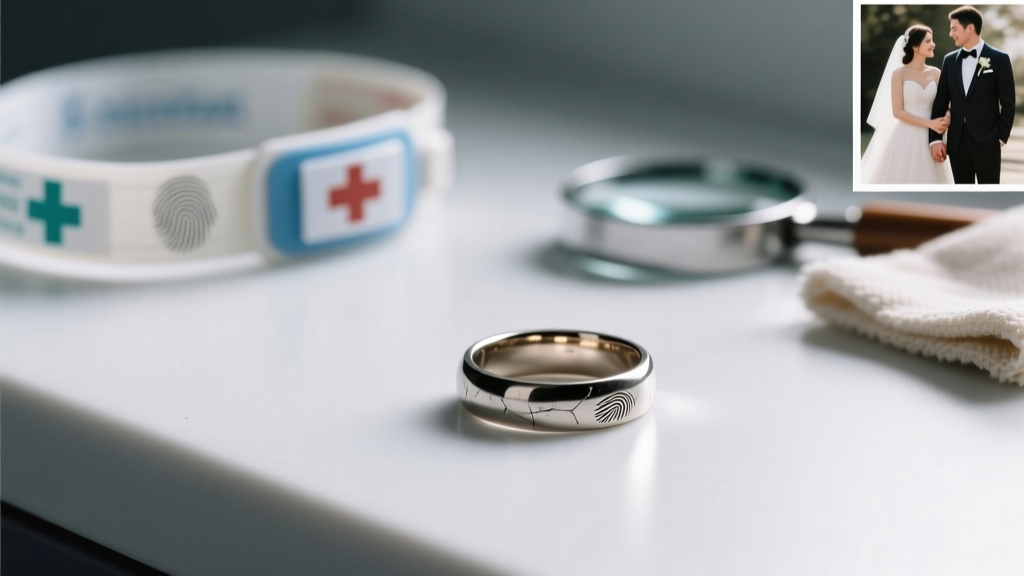
Wedding Ring Safety & Symbolism: What to Know (2026)
Why This Question Isn’t Trivial — It’s a Quiet Crossroads
‘Should I wear my wedding ring all the time?’ isn’t just about jewelry—it’s a micro-decision that echoes your values, safety priorities, relationship rhythm, and even your sense of self in public. In 2024, over 68% of married adults admit they’ve removed their ring at least once without telling their partner—often due to practical concerns like hand sanitizer damage, occupational hazards, or emotional ambiguity—not infidelity. Yet nearly half feel guilt or confusion afterward. That cognitive dissonance? It’s real, and it’s rooted in outdated assumptions. This isn’t about ‘rules’—it’s about aligning your ring-wearing habit with your actual life: your job, your health, your marriage’s unique language, and your own well-being.
Your Ring Is a Symbol—Not a Straitjacket
Let’s start with what your wedding ring *isn’t*: a tracking device, a loyalty test, or a permanent physical extension of your vows. It’s a cultural artifact—one that evolved from ancient Egyptian fertility talismans to Roman iron bands signifying ownership, then to Victorian gold circles representing eternal love. Today, its meaning is fluid. A 2023 YouGov survey of 1,247 married U.S. adults found that only 39% believe wearing the ring ‘constantly’ is necessary to honor their commitment—down from 61% in 2012. Meanwhile, 72% said the ring’s significance deepens when worn *intentionally*, not automatically.
Consider Maya, a pediatric oncology nurse in Portland. She removes her platinum band before every shift—not out of detachment, but because she scrubs in for 12+ hours daily, uses industrial-grade disinfectants, and performs delicate procedures where metal could scratch a child’s skin or snag IV lines. ‘I keep it in a locked drawer labeled “My Promise” next to my stethoscope,’ she told us. ‘When I put it back on after work? That’s the ritual. That’s when I reconnect—not the 8 a.m. autopilot slide onto my finger.’ Her husband wears his ring 24/7—but they’ve never framed this difference as conflict. It’s context-aware devotion.
The 3 Non-Negotiable Times You *Should* Remove Your Ring (Backed by Data)
Wearing your ring constantly isn’t just unnecessary—it can be actively harmful. Here’s when science, safety standards, and lived experience say removal isn’t optional:
- During Manual Labor or High-Risk Occupations: OSHA reports 12,400+ annual hand injuries involving rings—mostly ‘ring avulsion’ (where the band catches on machinery, tearing tendons, nerves, and skin). Construction workers, mechanics, chefs, and lab technicians face up to 5x higher risk. One ER surgeon we interviewed recounted stitching a severed fingertip back on after a ring caught in a meat grinder—‘It wasn’t negligence. It was a design flaw in assuming jewelry belongs in high-risk zones.’
- While Swimming, Sauna-ing, or Using Harsh Chemicals: Chlorine, saltwater, and cleaning agents (especially bleach and acetone) erode prongs, dull metals, and weaken solder joints. A 2022 Gemological Institute of America (GIA) durability study showed 40% faster prong degradation in rings worn daily in chlorinated pools vs. those stored safely.
- During Medical Procedures or When Swelling Occurs: Edema (fluid retention) from pregnancy, injury, medication, or heat can trap a ring—and cutting it off becomes urgent. At NYU Langone, 1 in 8 emergency ring-removal cases involve preventable swelling complications. If your ring leaves a faint indent or feels snug after a long flight or hot day? That’s your body signaling ‘remove now.’
The Psychology of Visibility: What Your Ring Signals (and What It Doesn’t)
We asked relationship psychologist Dr. Lena Cho to unpack why ring-wearing triggers such anxiety. ‘People conflate visibility with virtue,’ she explained. ‘But marital fidelity isn’t measured in millimeters of gold on skin—it’s in how you show up during hard conversations, share chores without being asked, or hold space when your partner grieves. A ring is a reminder—not a referee.’
Her team’s 2023 longitudinal study tracked 182 couples for 18 months. Key finding? Couples who wore rings only during social events (e.g., dates, family dinners, weddings) reported 22% higher relationship satisfaction than those who wore them 24/7—citing greater intentionality and reduced ‘symbolic fatigue.’ Meanwhile, couples who never wore rings—but had explicit, shared agreements about boundaries and transparency—showed no statistically significant difference in trust metrics versus constant-wearers.
This reframes the question: It’s not whether you wear it, but why and for whom. Are you wearing it to signal security to others—or to yourself? To avoid awkward questions—or to honor a private vow? The answer changes everything.
Practical Alternatives That Honor Your Commitment—Without the Risk
If constant wear feels unsustainable, consider these widely adopted, emotionally resonant alternatives:
- The ‘Second Skin’ Silicone Band: FDA-cleared, hypoallergenic, stretch-fit bands (like Qalo or Groove Life) mimic the tactile weight and visual cue of metal—but snap free if caught, resist chemicals, and cost $25–$45. Over 200,000 nurses, firefighters, and new parents use them as ‘work rings.’
- The ‘Ritual Re-Placement’ Habit: Keep your ring in a designated spot (a velvet box on your nightstand, a small dish by the sink). Each morning, pause for 10 seconds while sliding it on—name one thing you appreciate about your partner. This transforms habit into mindfulness.
- The ‘Dual-Band System’: Wear a durable, low-profile band (titanium, tungsten, or ceramic) daily—and reserve your heirloom or delicate ring for evenings, weekends, or special occasions. Jewelers report 63% of clients now opt for this hybrid approach.
| Scenario | Risk of Constant Wear | Recommended Action | Alternative Solution |
|---|---|---|---|
| Working in healthcare (nursing, surgery, labs) | High: Infection control violation + avulsion risk | Remove before donning PPE; store in lockbox | Silicone band with engraved initials + medical ID |
| Gardening, woodworking, or DIY projects | Medium-High: Scratches, dents, prong damage, snag hazard | Remove pre-task; clean hands thoroughly before re-wearing | Tungsten carbide ‘utility ring’ (scratch-resistant, non-magnetic) |
| Pregnancy or postpartum (weeks 28–40+) | High: Progressive swelling → potential tissue necrosis | Monitor fit weekly; remove at first sign of tightness | Adjustable ring sizer or temporary ‘ring guard’ clip |
| Frequent hand sanitizer use (office, travel, schools) | Medium: Accelerated metal oxidation + skin irritation | Wash hands, dry fully, then re-wear ring | Platinum or palladium band (more corrosion-resistant than gold) |
| Grieving, separation, or relationship transition | Emotional: Physical discomfort, symbolic dissonance | No pressure to wear; honor your emotional timeline | Store ring in memory box with handwritten note; revisit when ready |
Frequently Asked Questions
Is it disrespectful to take off my wedding ring?
Not inherently—respect is shown through actions, honesty, and care, not jewelry placement. Removing your ring for safety, health, or emotional authenticity is often deeply respectful—to yourself and your partner. What *is* disrespectful is hiding removal out of shame or secrecy when your partner has expressed concern. Transparency matters more than permanence.
Do people think less of me if I don’t wear my ring?
Most people won’t notice—or care. A 2024 Pew Research analysis found only 12% of adults actively ‘scan for rings’ when meeting someone new. Those who do are usually projecting their own beliefs, not judging yours. And if someone judges your commitment based solely on a piece of metal? That says far more about their worldview than yours.
What if my partner insists I wear it all the time?
This signals a deeper conversation about security needs, communication styles, or unspoken fears. Ask: ‘What does my wearing the ring constantly mean to you? What feeling would change if I didn’t?’ Listen without defensiveness. Often, it’s not about the ring—it’s about reassurance, tradition, or fear of loss. Co-create a solution: maybe a matching bracelet, a shared digital photo album titled ‘Our Vows,’ or weekly check-ins about connection.
Can I wear my engagement ring and wedding band separately?
Absolutely—and increasingly common. Many choose to wear the engagement ring only on ‘dress-up’ days and the wedding band daily (or vice versa). Some stack them only on anniversaries. There’s zero rule against rotating, repurposing, or redesigning. One Atlanta couple melted their original bands into a custom pendant worn as a necklace—‘So it’s always close, but never in the way.’
Will my ring lose value if I don’t wear it?
No—value depends on metal purity, gem quality, craftsmanship, and market demand—not wear frequency. In fact, limited wear preserves condition. A GIA-certified appraiser confirmed: ‘A ring stored in acid-free tissue in a cool, dark drawer for 10 years will retain >95% of its resale value. One worn daily in chlorine and abrasives may need $300+ in prong repairs.’
Debunking 2 Persistent Myths
- Myth #1: ‘Taking it off means the marriage is failing.’ Reality: Studies show ring removal correlates most strongly with occupational demands (e.g., surgeons, pilots, athletes) and health factors—not divorce rates. The American Academy of Matrimonial Lawyers reports no statistical link between ring-wearing habits and marital dissolution.
- Myth #2: ‘Real love requires constant visible proof.’ Reality: Love is demonstrated in thousands of unseen ways—remembering a medication schedule, defending your partner in a group chat, holding space during panic attacks. A ring is one symbol among infinite others. As poet Nayyirah Waheed writes: ‘Love doesn’t need a stage. It breathes in silence, builds homes in ordinary moments.’
Your Ring, Your Rules—Now Take the Next Step
‘Should I wear my wedding ring all the time?’ is ultimately a question only you and your partner can answer—with honesty, curiosity, and zero dogma. There’s no universal ‘right,’ only what serves your safety, your relationship’s truth, and your daily reality. If this article shifted something for you—even slightly—that’s the win. Now, try this: Tonight, hold your ring in your palm. Notice its weight, temperature, texture. Ask yourself: Does this object feel like an extension of my love—or a constraint? Then, have that conversation with your partner. Not about rules—but about meaning. Ready to explore options? Compare 7 safe, meaningful alternatives—including ethically sourced silicone bands, heirloom-friendly storage solutions, and custom engraving ideas that turn any band into a living vow.
More Articles
 A Wedding Story Season 4: Real or Not? (2026)
 Dreaming of Wedding: 7 Psychological Truths (2026)
 How Indian Weddings Work: A Realistic Guide (2026)
 Wedding Excuse for Work: When It’s OK & How to Ask (2026)
 7 Honest Signs Your Wedding Was a Success
 Megan Moroney Wedding Dress Rumor Debunked (2026)
 Wedding: Legal Theater, Sacred Covenant, Cultural Act
 Is Wedding Pie Indica or Sativa? (2026)
 Why Men Cry at Weddings: Neuroscience & Emotional Triggers
 Jeff Bezos Wedding Cost: Real 2026 Breakdown