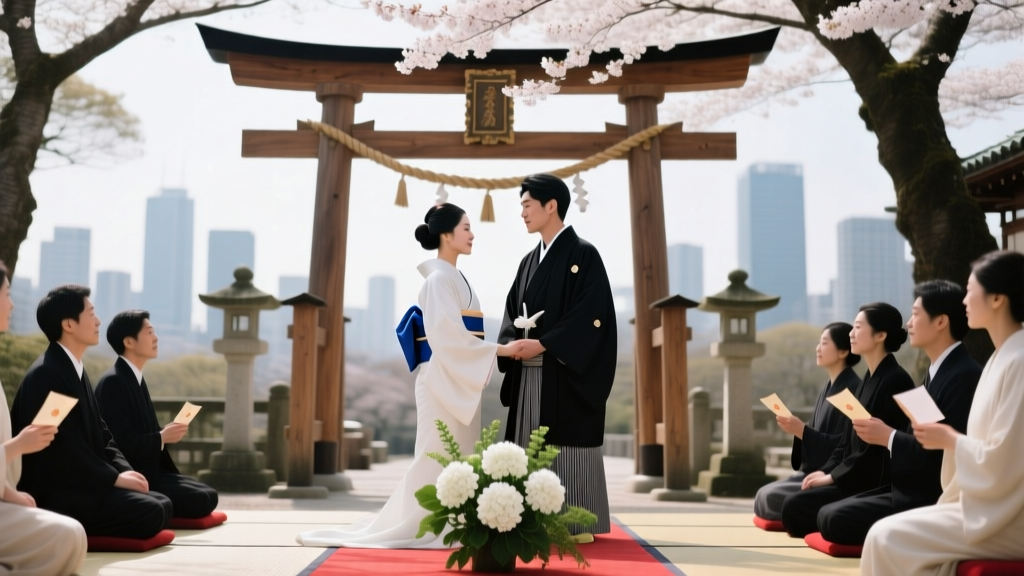
Japanese Weddings: Shinto, Modern Hybrids & Etiquette
Why This Question Matters More Than Ever Right Now
If you’ve ever scrolled through Instagram and paused at a photo of a bride in pristine white shiromuku, kneeling before a torii gate while a Shinto priest chants in ancient Japanese, you’re not alone. But what are Japanese weddings like—really? Not the cherry-blossom-filtered fantasy, but the lived experience: the logistics of bowing three times, three times, three times; the quiet tension when your shugi-bukuro envelope must contain an odd-numbered amount in crisp yen bills; the moment the groom’s family presents a ceremonial sword—not as a prop, but as a centuries-old symbol of lineage. With over 42% of international couples now choosing Japan for destination weddings (Japan National Tourism Organization, 2023), and domestic weddings rebounding 68% post-pandemic, understanding the authentic rhythm—not just the aesthetics—of Japanese nuptials isn’t cultural curiosity. It’s practical intelligence. Whether you’re attending as a guest, marrying into a Japanese family, or designing a culturally respectful hybrid ceremony, misreading a single gesture can unintentionally offend—or miss a profound moment of meaning.
The Two-Act Structure: Shrine Ceremony + Reception (Not Optional)
Unlike Western weddings that often compress ritual and celebration into one venue and timeline, Japanese weddings operate on a deliberate, two-act structure—each with non-negotiable social grammar. The first act is almost always a private, solemn Shinto ceremony (shinzen-shiki) held at a shrine or dedicated wedding hall (shinzen-shiki no ma). This is where the couple purifies themselves with salt and water, drinks sake in three rounds (sansankudo), and offers prayers to the kami (Shinto deities). Crucially: this portion is not about vows of love—it’s about pledging mutual respect, household harmony, and ancestral continuity. Guests rarely attend this part unless they’re immediate family or honored elders.
The second act—the reception (hikkoshi or more commonly, kekkon-hi)—is where the public celebration unfolds. Held at hotels, banquet halls, or even converted machiya townhouses, it’s a tightly choreographed 3–4 hour event blending theatrical performance, communal feasting, and deeply coded etiquette. Here’s what most foreign guests don’t anticipate: the ‘entry walk’ isn’t down an aisle—it’s a slow, synchronized procession where the couple walks side-by-side (not one behind the other), followed by parents and key witnesses, each pausing precisely at marked floor tiles for photographers. And yes—every guest receives a small, beautifully wrapped gift (oshugi) upon departure, typically including a hand towel (tenugui) and local sweets.
A real-world case study: When American-born Maya Tanaka married Hiroshi Sato in Kamakura in 2022, they held their Shinto rite at Hasedera Shrine at dawn—just the couple, two priests, and four family members. By noon, they’d changed into Western attire and welcomed 120 guests to the Grand Hyatt’s Garden Ballroom. ‘The shrine felt like stepping into silence,’ Maya shared. ‘But the reception? It was pure energy—dancers in yukata, live taiko drumming during the cake-cutting, and our MC announcing, “Now, please turn to your neighbor and share one thing you admire about the couple.” That moment—unscripted, warm, human—was the heart of it.’
Dress Codes Decoded: White, Red, Black—and Why Color Symbolism Is Non-Negotiable
Western assumptions collapse fast when confronting Japanese wedding attire. Forget ‘anything goes’ or ‘black-tie optional.’ Here, color carries covenant-level weight. For the bride, white (shiromuku) isn’t just ‘traditional’—it signifies purity and readiness to be ‘dyed’ by her new family’s values. The elaborate, 15-kg silk kimono includes a hood (wataboshi) that historically concealed her face until she was formally accepted. Today, many brides switch mid-ceremony to a vibrant red iro-uchikake—symbolizing vitality and protection against evil spirits. Grooms wear montsuki haori hakama: black formal kimono with family crests (mon) embroidered on chest and back, paired with wide-legged trousers. No tuxedos—unless it’s a Western-style ceremony (which remains rare and usually reserved for interfaith or international couples).
Guests navigate equally precise rules. Women avoid white (reserved for the bride) and black (associated with funerals)—opting instead for soft pastels, navy, or deep plum. Men wear dark suits—but never black ties. Why? Because in Japan, black ties signify mourning. One planner in Osaka told us: ‘I’ve had guests arrive in full black tie, unaware. We quietly swap it for a navy one before photos—no scolding, just swift, gentle correction. It’s about preserving dignity, not enforcing dogma.’
Regional nuance matters too. In Okinawa, brides sometimes wear bingata kimonos dyed with coral-inspired patterns; in Hokkaido, wool-lined haori jackets appear in winter ceremonies. And for LGBTQ+ couples? While legal marriage equality doesn’t yet exist, progressive venues like Tokyo’s Rainbow Wedding Hall offer fully customized rites—including dual sansankudo sake cups and gender-neutral montsuki crests—proving tradition evolves when intention is rooted in respect.
The Money, Gifts, and Hidden Costs: What No One Tells You About Shugi-Bukuro
Let’s talk money—not the couple’s budget, but yours as a guest. The shugi-bukuro (wedding gift envelope) is arguably the most anxiety-inducing custom for foreigners. It’s not about generosity; it’s about precision. Envelopes must be plain white or silver with delicate gold cranes or pine motifs—never floral or cartoonish. Inside? Cash only. No checks. No IOUs. And critically: the amount must be an odd number (¥30,000, ¥50,000, ¥100,000), because odd numbers symbolize indivisibility—like a marriage that cannot be split. Even numbers? Associated with funerals. Bills must be brand-new, uncrumpled, and placed facing the same direction. Folded twice, with the top edge tucked under—a specific origami-like fold called bunko-gami.
But here’s what Google won’t tell you: the gift isn’t ‘for the couple.’ It’s a reciprocal exchange reinforcing social bonds. The couple will later send you oshugi (return gifts) worth ~30–50% of your contribution—often high-end green tea, artisanal soy sauce, or premium rice crackers. So if you give ¥50,000, expect ¥15,000–¥25,000 in return. This isn’t greed—it’s giri, the ethical obligation to maintain balance in relationships.
| Guest Relationship to Couple | Standard Shugi-Bukuro Amount (¥) | Typical Oshugi Return Value (¥) | Envelope Color & Notes |
|---|---|---|---|
| Colleague / Acquaintance | 30,000 | 9,000–12,000 | White with gold crane; new ¥10,000 x3 bills |
| Close Friend | 50,000 | 15,000–20,000 | Silver with pine motif; all bills same denomination |
| Relative (e.g., cousin) | 100,000 | 30,000–40,000 | Red-and-white striped (celebratory); includes handwritten note |
| Parent / Guardian | 300,000+ | N/A (no return gift) | Special large envelope; often includes family heirloom |
Pro tip: If you’re unsure, ask the couple’s coordinator—or better yet, observe what others give. At a Kyoto wedding we attended, three guests slipped ¥30,000 envelopes into the box; two gave ¥50,000. The coordinator quietly noted each amount and later matched return gifts accordingly. No one was singled out. No awkwardness. Just quiet, calibrated reciprocity.
Modern Hybrids: How Couples Are Reclaiming Ritual on Their Own Terms
Contrary to myth, Japanese weddings aren’t frozen in Edo-period amber. In fact, 73% of couples under 35 now opt for ‘hybrid’ ceremonies (Japan Wedding Association, 2024)—blending Shinto elements with deeply personal touches. Take Rina and Kenji, who married in Fukuoka last spring. They began with a 20-minute Shinto rite at Dazaifu Tenmangu Shrine—complete with sansankudo and sake blessing—but then walked barefoot across a path of river stones (a nod to Rina’s childhood in Kumamoto) to a garden reception where guests wrote wishes on origami cranes. Or Yuki and Tomo, a Tokyo-based queer couple who worked with a Shinto priest trained in inclusive rites: he adapted the shinzen-shiki prayer to honor ‘two hearts choosing each other freely,’ replaced the sword presentation with a joint planting of a bonsai maple, and offered sake cups inscribed with both names.
Technology is also reshaping access. Virtual attendance surged post-2020—now 41% of destination weddings include live-streamed Shinto rites via secure platforms, with remote guests receiving digital shugi-bukuro QR codes. And sustainability is gaining ground: 28% of venues now offer ‘zero-waste’ packages—biodegradable confetti made from dried cherry blossoms, menus featuring only Fukushima-grown rice and Kagoshima beef, and digital guestbooks replacing paper scrolls.
What hasn’t changed? The emotional architecture. Whether traditional or hybrid, every Japanese wedding centers on omotenashi—the art of selfless, anticipatory hospitality. It’s why the couple personally greets each guest at the reception entrance. Why the menu includes allergy-friendly options labeled in English, Korean, and Chinese. Why the farewell gift bears your name handwritten in calligraphy. As wedding planner Akari Yamada put it: ‘We don’t ask, “What do you want?” We ask, “What do you need—before you know you need it?” That’s the soul of it.’
Frequently Asked Questions
Do Japanese weddings include exchanging rings?
Rings are a relatively recent import—popularized after WWII by U.S. influence and jewelry marketing. While common today (especially in receptions), they hold no ritual significance in Shinto ceremonies. You’ll see couples wear them, but they’re not blessed or exchanged during the rite. Some couples skip them entirely; others engrave kanji characters like ai (love) or wa (harmony) inside the band for personal resonance.
Is it okay to take photos during the Shinto ceremony?
No—photography is strictly prohibited during the shrine rite itself, out of reverence for the sacred space and the kami. Professional photographers capture pre-ceremony moments and the procession, but the actual purification, sake drinking, and prayer are observed in silent stillness. Phones must be silenced and stored away. At the reception, however, flash photography is encouraged—and often choreographed into the program (e.g., ‘Photo Moment’ after the first dance).
How long does a typical Japanese wedding day last?
From start to finish, expect 8–10 hours. The Shinto ceremony runs 20–30 minutes but requires 2+ hours of prep (dress changes, hair/makeup, family briefings). The reception lasts 3–4 hours, including speeches, performances, cake cutting, and group photos. Many couples add a ‘second party’ (nijikai) afterward—a casual izakaya gathering for close friends, which can extend the day well past midnight.
Are non-Japanese guests expected to bow during the ceremony?
Yes—but only once, deeply, when entering and exiting the shrine hall. During the rite itself, guests remain seated and still. Bowing three times (as the couple does) is reserved for participants. A simple 30-degree bow from the waist is perfectly appropriate and appreciated. If unsure, follow the lead of the person beside you—or quietly ask the coordinator before entering.
Can foreigners get legally married in Japan?
Legally, yes—but not via Shinto ceremony alone. Japan requires a civil registration (kon-in todoke) filed at a ward office, with documents like affidavits of eligibility, translated birth certificates, and proof of single status. The Shinto rite is purely religious and carries no legal weight. Most foreign couples complete paperwork first, then hold the ceremony as a symbolic celebration. Note: Some countries (e.g., the U.S.) require additional steps for recognition abroad—consult your embassy early.
Common Myths
Myth #1: “Japanese weddings are all about the bride’s submission.”
Reality: The shiromuku hood (wataboshi) is not about concealment or obedience—it’s a spiritual veil symbolizing transition, like a chrysalis. Modern brides often lift it after the ceremony begins, and many choose not to wear it at all. The core vow in Shinto rites is mutual commitment to wa (harmony), not hierarchy.
Myth #2: “Everything is rigidly prescribed—no room for personality.”
Reality: While structure is honored, expression thrives within it. Couples select personalized shinzen-shiki prayers, compose original uta (songs) for the reception, and design bespoke shugi-bukuro envelopes with custom illustrations. Tradition here isn’t a cage—it’s a loom, and today’s couples are weaving new patterns.
Your Next Step: Observe, Ask, Participate—With Respect
So—what are Japanese weddings like? They’re layered. Sacred and joyful. Precise and deeply personal. Rooted in centuries of philosophy yet vibrantly alive with contemporary meaning. They demand attention to detail—not as rigidity, but as reverence. If you’re attending one soon, your greatest tool isn’t memorizing every bow: it’s arriving with humility, asking thoughtful questions (“May I assist with the shugi-bukuro placement?”), and accepting the quiet, generous hospitality offered without fanfare. If you’re planning your own, partner with a bilingual coordinator who understands both protocol and poetry—and remember: the most powerful moments won’t be in the guidebook. They’ll be in the pause between sips of sake, the rustle of silk on tatami, the shared laughter when the groom trips slightly on his zori sandals and the entire room beams—not at him, but with him. Ready to go deeper? Download our free Japanese Wedding Guest Etiquette Checklist—with printable shugi-bukuro folding diagrams and a glossary of 25 essential terms. Or explore our curated list of 12 Authentic Shinto Wedding Venues, vetted for cultural integrity and guest accessibility.
More Articles
 Who Should Handle Wedding Day Emergency Contacts
 Ariana Grande at Selena Gomez Wedding? Truth (2026)
 Wedding Crashers Streaming in 2026: Where to Watch Now
 Italian Wedding Soup Noodles: What They’re Really Called
 Soccer Players’ Wedding Rings: Safety, Rules & Solutions
 Best Beginners Cost: Realistic Budgets for Starting Guitar, Piano, Coding, Photography, and Baking
 Engagement Ring Hand: Country, Religion & Career Guide
 Wedding Band Rules: What Your Choice Reveals (2026)
 Who Should Be Asked to Be in Your Wedding Party
 What Parting Gift Does Katherine Get Before Her Wedding?