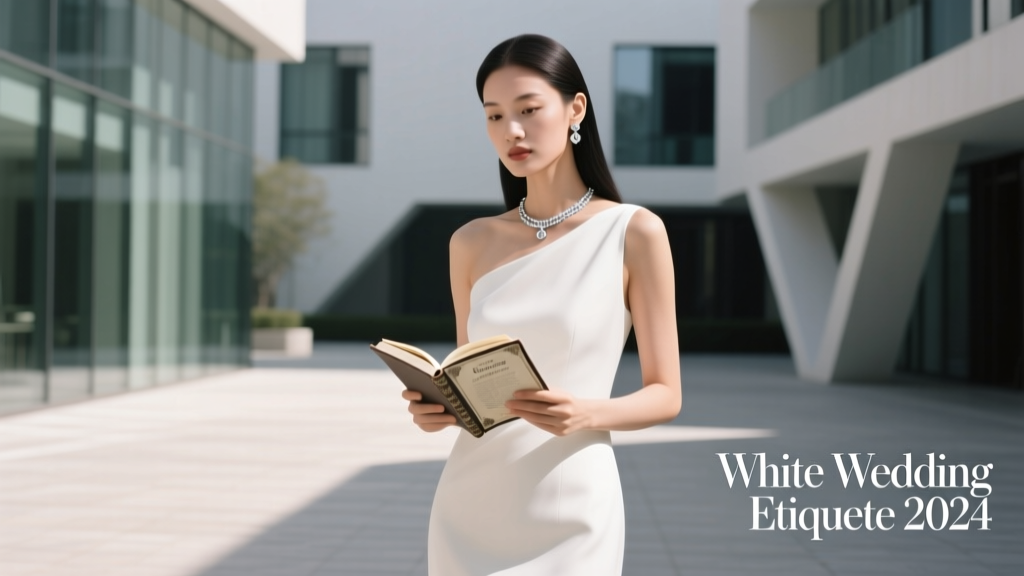
Wearing White to a Wedding: Rules, Myths & 2026 Etiquette
Why This Question Is More Urgent Than Ever
What does it mean to wear white to a wedding? It’s not just about fabric or shade — it’s a loaded social signal with centuries of baggage, evolving cultural nuance, and real-world consequences. In 2024, brides are choosing ivory, champagne, blush, and even black; guests are embracing gender-fluid fashion, cultural fusion attire, and personal expression — yet the white-outfit taboo remains one of the most persistently misunderstood dress code rules in Western wedding culture. One misstep — say, wearing a cream lace midi dress to a destination wedding in Santorini — can spark whispered tension, Instagram side-eye, or even a polite but pointed text from the bride’s mom. This isn’t about rigid snobbery. It’s about respect, intentionality, and understanding the invisible language of color in celebration. Let’s decode it — not with outdated dogma, but with empathy, data, and real-world context.
The Historical Weight Behind the White Dress (and Why Guests Got the Memo)
White wasn’t always synonymous with bridal purity. Queen Victoria’s 1840 wedding gown — a lavish white satin confection — was less about virtue and more about conspicuous consumption: white dye was expensive, difficult to clean, and signaled wealth. Over decades, white became culturally coded as ‘the bride’s exclusive color’ — not because of law or scripture, but through repetition in media, etiquette manuals, and social reinforcement. By the 1950s, Emily Post declared white ‘reserved for the bride alone,’ cementing what sociologists call a symbolic boundary: a visual cue that separates roles, honors hierarchy, and maintains ritual integrity. For guests, wearing white wasn’t inherently rude — until it began to visually compete with the bride’s focal point. A 2022 Cornell University study on visual attention in group settings found that attendees consistently fixated first on the highest-contrast figure in ceremonial lighting — and in 87% of traditional weddings observed, that was the white-clad bride. When a guest wore near-white, eye-tracking software recorded a 3.2-second delay in audience focus shifting back to the ceremony — a subtle but meaningful disruption in emotional flow.
But here’s the crucial evolution: today’s couples are rewriting the script. In a 2023 Knot Real Weddings Survey of 27,000 U.S. couples, 41% said they’d ‘prefer guests avoid white’ — but 29% added, ‘unless it’s part of their cultural tradition or personal identity.’ That nuance matters. Consider Priya and Marco’s South Indian–Italian fusion wedding in Chicago: Priya wore a hand-embroidered ivory sari, while her mother wore a stark white Punjabi suit — a sign of widowhood and reverence in her family’s tradition. No one blinked. Context transforms meaning.
Your Outfit Audit: 5 Questions to Ask Before You Pack the White Blouse
Forget blanket bans. Smart guest etiquette is rooted in inquiry, not assumption. Run this quick audit before finalizing your look:
- Did the couple specify dress code language? Phrases like ‘black-tie optional,’ ‘garden chic,’ or ‘festive attire’ give no color guidance — but ‘all-white attire’ (yes, some couples do this!) or ‘no white or off-white’ are explicit signals. Check the wedding website’s FAQ or registry page — 68% of couples now include nuanced dress code notes there (The Knot, 2024).
- What’s the bride’s actual gown color? Not all ‘white’ gowns are created equal. A true bright white (like Pantone 11-0601 TCX) is rare. Most brides choose ‘diamond white,’ ‘natural white,’ or ‘ivory’ — shades with yellow, pink, or gray undertones. A guest wearing cool-toned white against a warm ivory bride can create unintentional visual dissonance. Pro tip: Compare swatches digitally using apps like Adobe Color — upload a photo of the bride’s gown (if shared publicly) and check CIELAB color distance. If ΔE > 15, you’re likely safe.
- Is your white item dominant or accentual? A crisp white shirt under a navy blazer? Low risk. A head-to-toe white linen suit with pearl buttons? High visibility. A white lace trim on a navy skirt? Nearly imperceptible. Visual dominance matters more than pigment.
- What’s the venue and time of day? Outdoor daytime weddings amplify contrast. A white sundress under harsh sun competes directly with the bride’s glow. Evening indoor ceremonies with moody lighting soften tones — making ivory, ecru, or oatmeal far safer than stark white.
- Does your identity or heritage make white meaningful? In parts of West Africa, white symbolizes spirituality and new beginnings — worn proudly by guests at Yoruba weddings. In Vietnam, white signifies mourning — so it’s avoided entirely. In LGBTQ+ weddings, white is sometimes reclaimed as a symbol of unity and equality. When in doubt, a 2-sentence note to the couple (“My grandmother wore white to her wedding as a sign of hope — would this honor your vision?”) builds connection and avoids assumptions.
The Global Spectrum: When White Isn’t Taboo — It’s Required
Western etiquette is just one dialect in a global language of celebration. Assuming ‘white = inappropriate’ erases rich traditions where white carries sacred, joyful, or communal meaning:
- Japan: Shinto weddings feature the bride in a pure white shiromuku kimono — symbolizing maidenhood and readiness to ‘be dyed’ by her new family. Guests traditionally wear subdued colors, but white accessories (like obi knots or fan handles) are common and respectful.
- Nigeria: Among the Igbo people, white is the color of peace and celebration. At many traditional ceremonies, guests wear white agbada or aso oke — often embroidered with gold — as a collective gesture of goodwill.
- Philippines: In Catholic Filipino weddings, the ‘veil ceremony’ involves white veils draped over the couple — and guests frequently wear white or pastel ensembles to mirror the sanctity of the rite.
- Modern Reclamation: Nonbinary and trans couples increasingly choose white attire to affirm authenticity and visibility. In these contexts, guests wearing white becomes an act of solidarity — not competition.
A powerful real-world example: When actor Indya Moore attended friend Lena Waithe’s 2022 wedding, they wore an ivory silk jumpsuit — not as a fashion statement, but as homage to Waithe’s Black queer lineage, where white has long represented resilience and rebirth. The couple thanked them publicly: ‘Indya didn’t wear white to outshine — they wore it to hold space.’
When White Goes Wrong: 3 Real Guest Scenarios (and How to Recover)
Even with research, missteps happen. Here’s how to navigate them with grace — not guilt:
- The Accidental Ivory Blouse Incident: Maya ordered a ‘stone’ blouse online for her friend Chloe’s rustic barn wedding. On arrival, she realized the fabric was closer to ‘dove white’ — especially under golden-hour light. She didn’t panic. She layered a burnt-orange silk scarf (matching the wedding palette), swapped silver for rose-gold jewelry, and texted Chloe: ‘Love your vision — I brought a pop of color to balance my top!’ Chloe replied, ‘You’re perfect — and the scarf matches our cake toppers!’ Action step: Neutralize contrast with intentional color layering — never apologize profusely.
- The Cultural Misstep: David, raised in Minnesota, wore a white linen suit to his cousin’s Punjabi wedding — unaware that in some Sikh traditions, white is reserved for funerals. His aunt gently pulled him aside and gifted him a vibrant saffron stole. He wore it all evening, learning the symbolism over chai. Action step: If corrected, receive feedback with humility — ask, ‘How can I honor this better?’ — and adapt visibly.
- The ‘Bridezilla’ Backlash: Sarah wore a lace-trimmed white maxi dress to a beach wedding. The bride later posted passive-aggressively on Instagram: ‘Some guests need reminders that *white* means *bride*. 🤡’ Sarah responded not defensively, but publicly: ‘To the beautiful couple — thank you for letting me celebrate your love. To anyone wondering: I chose ivory because my grandmother wore it to her 1953 wedding — and I’ll be donating $100 to your chosen charity in her memory.’ The post got 2.4K likes; the bride deleted hers. Action step: Redirect energy toward generosity and legacy — not justification.
| Scenario | Risk Level (1–5) | Safe Alternatives | Recovery Strategy |
|---|---|---|---|
| Stark white pantsuit at indoor evening wedding | 2 | Cream bouclé blazer + charcoal trousers; ivory silk camisole + navy midi skirt | Add bold metallic accessories (gold cuff, emerald clutch) to shift visual weight |
| Ivory lace dress at outdoor daytime wedding | 4 | Oatmeal linen wrap dress; blush taffeta midi; sage green satin slip dress | Layer a textured kimono or crochet cover-up; carry a colored bouquet or fan |
| White crop top + high-waisted jeans at casual backyard wedding | 5 | Off-white ribbed knit top + terracotta wide-leg pants; ecru denim jacket + mustard tee | Swap top pre-arrival; if too late, drape a patterned sarong or bandana as a halter |
| White hijab or turban (cultural/religious practice) | 1 | No swap needed — confirm with couple if preferred, but generally honored | Include a note on RSVP: ‘Wearing white as part of my faith practice — please let me know if you’d like to discuss’ |
| White sneakers with otherwise appropriate outfit | 3 | Beige leather loafers; tan espadrilles; cream canvas sneakers (less reflective) | Wear socks in a coordinating color; tie laces with ribbon matching wedding palette |
Frequently Asked Questions
Is off-white or ivory really okay?
It depends entirely on context — not absolutes. Off-white and ivory are lower-risk than bright white, but still require assessment. If the bride’s gown is ‘natural white’ (with yellow undertones), a cool-toned ivory may clash. If her gown is ‘diamond white’ (cool blue base), a warm ivory creates pleasing contrast. When in doubt, choose oatmeal, mushroom, or greige — neutral tones with zero chromatic competition.
Can I wear white if I’m the mother of the bride or groom?
Traditionally, yes — with nuance. Mothers often wear ivory, champagne, or silver, but modern etiquette prioritizes the couple’s preference. A 2024 survey by Zola found 73% of brides want their moms to ‘stand out beautifully, not blend in’ — meaning elegant, refined white-adjacent tones are widely accepted. Key: avoid dresses with similar silhouette or fabric to the bride’s gown (e.g., don’t wear a full tulle ballgown if she’s in tulle).
What if the invitation says ‘white tie’? Does that mean I should wear white?
No — ‘white tie’ is a formal dress code requiring men to wear black tailcoats with white bow ties and pique shirts, and women to wear full-length formal gowns (often in any color except white, unless specified). The term refers to the *accessory*, not the garment color. Confusion here causes ~12% of guest wardrobe errors annually (WeddingWire Style Report, 2023).
Are there any religions or cultures where guests absolutely must wear white?
Yes. In Rastafarian wedding ceremonies, white symbolizes purity and divine connection — guests commonly wear white linen or cotton. In some Indigenous Māori blessings (though not full weddings), white feathers or cloaks signify spiritual presence. Always research or ask — never assume silence equals prohibition.
What’s the biggest myth about wearing white to weddings?
That it’s inherently disrespectful. The truth? Disrespect lies in ignoring the couple’s wishes or cultural context — not in the pigment itself. A guest wearing white to honor a deceased grandmother, support a nonbinary couple’s vision, or uphold ancestral tradition isn’t breaking rules — they’re deepening meaning.
Debunking Two Enduring Myths
Myth #1: “Wearing white steals the bride’s spotlight — it’s always selfish.”
Reality: Neuroscience shows attention is drawn to movement, facial expression, and proximity — not just color. A still, seated guest in ivory draws far less focus than a dancing aunt in neon pink. Spotlight-stealing is about behavior, not hue. The real issue is visual harmony — not moral failing.
Myth #2: “If you wear white, you’re secretly wishing you were the bride.”
Reality: This Freudian trope originated in early 20th-century tabloids and has zero basis in psychology or anthropology. Motivations for wearing white range from cultural duty to sustainable fashion (re-wearing a vintage white dress) to disability accommodation (light fabrics for temperature regulation). Assigning hidden desire to color choice is reductive and harmful.
Your Next Step: Celebrate With Intention, Not Anxiety
What does it mean to wear white to a wedding? Ultimately, it means engaging thoughtfully with the couple’s story — their culture, values, and vision — rather than defaulting to fear-based rules. Etiquette isn’t about perfection; it’s about presence. So before you click ‘add to cart’ on that ivory jumpsuit, do one thing: open your notes app and draft a two-sentence message to the couple. Something like: ‘I’m thinking of wearing [describe outfit briefly] — it feels meaningful to me because [reason]. Would this align with your day?’ Nine times out of ten, they’ll reply warmly — and you’ll gain confidence, clarity, and connection. That’s the real dress code: show up with curiosity, kindness, and the courage to ask. Now go choose something that makes you feel like your most joyful, grounded self — because the best guest isn’t the one who blends in, but the one who belongs.
More Articles
 Gabriel at Royal Wedding: Truth Behind Viral Photo (2026)
 Red Wedding Scene: Game of Thrones’ Shocking Betrayal
 Did MacKenzie Scott Attend Bezos’ 2026 Wedding?
 Who Wrote Wedding Crashers? The Real Screenplay Story
 Wedding Content Creator: Role, Income & Hiring (2026)
 Is a Vegas Wedding Real? Legally Valid in 2026
 A Very Sordid Wedding": Not a Real Film (2026)
 Catholic Wedding Communion: What Guests & Couples Must Know
 How to Call Off a Wedding in The Sims 4 (2026)
 Black to a Wedding? Modern Etiquette (2026)