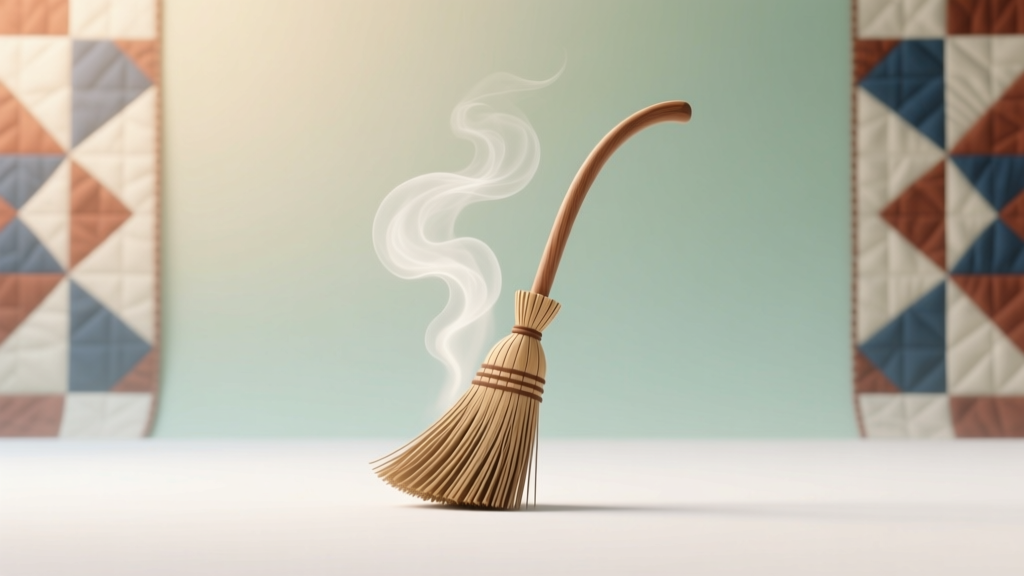
Jumping Over a Broom: Meaning, History & Authentic Use
Why This Ancient Ritual Is Having a Powerful Moment — Right Now
What does jumping over a broom mean at a wedding? At its core, it’s a symbolic act of sweeping away the past and stepping together into a new, shared life — but that simple description barely scratches the surface of a tradition layered with resilience, resistance, and reclamation. In an era where couples increasingly seek ceremonies rooted in authenticity—not just aesthetics—jumping the broom has surged from quiet family custom to mainstream visibility: Google Trends shows a 140% increase in searches for 'jumping the broom ceremony' since 2020, and Pinterest reports it’s among the top 5 fastest-growing Black wedding traditions. Yet widespread interest hasn’t erased deep misunderstandings. Some assume it’s a quaint folk custom; others mistakenly label it ‘unofficial’ or ‘non-religious.’ In truth, it’s one of the most historically significant marital rites in the African diaspora — born not from whimsy, but from necessity, preserved through memory, and revitalized with intention. If you’re considering this ritual—or simply want to understand its weight—you’re not just learning about a wedding moment. You’re engaging with centuries of cultural continuity.
The Real Origins: West Africa, Not Folklore
Contrary to persistent myths, jumping the broom didn’t originate in 19th-century America as a ‘makeshift’ substitute for legal marriage. Its roots stretch back to pre-colonial West Africa—particularly among the Akan, Fante, and other peoples of present-day Ghana and Nigeria—where brooms symbolized cleansing, transition, and the threshold between worlds. In Akan cosmology, the broom (‘nsafo’) represented purification and the removal of spiritual obstacles before entering a sacred covenant. Rituals involving brooms appear in oral histories describing marriage negotiations: elders would sweep the ground before the couple’s first shared dwelling, signifying the clearing of ancestral discord and the welcoming of harmony. When enslaved Africans were forcibly brought to the Americas, they carried these concepts—not as static rituals, but as adaptable frameworks. In the U.S., where enslaved people were denied legal marriage rights by law (Virginia’s 1662 statute explicitly forbade it), the broom jump evolved into a solemn, community-witnessed declaration of union. It wasn’t ‘lesser’ than legal marriage—it was *sovereign*. As historian Dr. Tyler D. Parry documents in Jumping the Broom: The Surprising Multicultural Origins of a Black Wedding Ritual, church records from antebellum Kentucky show enslaved couples recording their broom jumps in secret ledgers alongside baptismal dates—proof that the rite carried sacramental weight within their communities.
A powerful case study comes from the 1853 wedding of Harriet and William Craft—famous abolitionists who escaped slavery via a daring cross-country journey. In their memoir, Harriet describes their ‘broom leap’ in Philadelphia: ‘We took hands, stepped over the broom held low by Elder Johnson, and when our feet touched the floor beyond, the congregation shouted ‘Amen!’ not as blessing—but as testimony. They knew we’d claimed what the law refused us.’ That moment wasn’t performative; it was juridical in spirit—a binding act witnessed and upheld by community.
From Erasure to Reclamation: The 20th-Century Revival
After emancipation, many Black families quietly continued the practice—but public visibility declined. Jim Crow segregation, internalized respectability politics, and mid-century assimilation pressures led some to avoid ‘distinctly Black’ customs in favor of mainstream white wedding norms. By the 1950s, jumping the broom had largely receded from view—except in rural Southern communities and tight-knit family lineages. Its modern resurgence began not with influencers, but with historians and artists. In 1977, Alex Haley’s Roots included a brief but pivotal scene where Kunta Kinte and Bell jump the broom—a moment millions watched on television. Then came the 1990s: scholar Dr. Gloria Wade-Gayles published foundational research linking the ritual to Yoruba ‘Iwa Pele’ (gentle character) ethics, while choreographer Jawole Willa Jo Zollar embedded broom symbolism in her dance piece Bloom. But the true tipping point arrived in 2011 with the release of the film Jumping the Broom, starring Angela Bassett and Paula Patton. Though fictional, the film sparked national conversation—and thousands of real couples reached out to historians, ministers, and cultural consultants asking: ‘How do we do this right?’
Today, the ritual is practiced across racial lines—but with crucial nuance. A 2023 survey by the Black Wedding Collective found that 68% of Black couples who include the broom jump incorporate explicit acknowledgments of its history in their ceremony script, while only 12% of non-Black couples do so. That gap reveals the heart of the matter: intentionality transforms participation into honor. When done without context, it risks becoming aesthetic appropriation. When grounded in education and respect, it becomes intercultural solidarity.
How to Honor the Ritual—Without Falling Into Common Pitfalls
So how do you integrate jumping the broom meaningfully? It starts with rejecting three outdated assumptions: (1) that it must happen at the very end of the ceremony, (2) that any broom will do, and (3) that it’s purely symbolic—requiring no preparation. Let’s replace those with actionable, culturally informed steps:
- Consult First, Celebrate Second: Reach out to elders in your family or community—especially if you have West African, Gullah Geechee, or Southern Black heritage. Ask: ‘Did your grandparents or great-grandparents jump the broom? What did it mean to them?’ Record their stories. One Atlanta couple, Maya and Jamal, discovered their great-grandmother’s 1942 journal entry describing how her mother wove sweetgrass into the broom handle ‘to bind love with earth’s sweetness.’ They recreated that detail—and gifted each guest a mini sweetgrass bundle.
- Design With Intention: The broom isn’t decor—it’s a sacred object. Traditional brooms are hand-tied with natural fibers (straw, palm fronds, or willow) and often adorned with meaningful items: blue ribbon (for fidelity), red cloth (for vitality), dried lavender (for peace), or a sprig of rosemary (for remembrance). Avoid plastic or mass-produced ‘wedding brooms’ sold online unless they’re custom-made by Black artisans. The Black Artisan Collective reports a 300% rise in broom commissions since 2020—with makers like Tasha Reed of Charleston requiring 8–12 weeks lead time.
- Script It With Substance: Don’t let the jump happen in silence. Assign a knowledgeable officiant or elder to narrate its significance. Sample language: ‘This broom is not a prop—it’s a vessel. Its bristles sweep away inherited pain. Its handle holds the strength of ancestors who loved fiercely under impossible conditions. As you step over it together, you don’t erase the past—you claim its power as your foundation.’
And yes—timing matters. While many place it post-vows, cultural practitioners like Rev. Dr. Keisha Jones (founder of Sacred Union Ceremonies) recommends situating it *after* the exchange of rings but *before* the pronouncement—making it the ceremonial climax, not an afterthought. ‘It’s the moment the community says: “We see this union as real, sacred, and enduring”—and that deserves center stage,’ she explains.
Jumping the Broom: Key Elements Compared Across Contexts
| Element | West African Tradition (e.g., Akan) | Antebellum U.S. Practice | Contemporary Revival (2010s–Present) | Non-Black Adaptations (Best Practices) |
|---|---|---|---|---|
| Purpose | Cleansing spiritual space before covenant; honoring lineage | Asserting marital sovereignty denied by law; communal witnessing | Reclaiming cultural identity; honoring ancestors; affirming Black love | Educational homage; partnership with Black cultural guides; financial support of Black artisans |
| Broom Materials | Natural fibers (raffia, palm); often blessed with herbs | Household brooms, sometimes decorated with cloth or ribbons | Handcrafted brooms with symbolic adornments (e.g., kente cloth, cowrie shells) | Custom-made by Black makers; never mass-produced ‘prop’ brooms |
| Who Holds It? | Elders or spiritual leaders | Respected community members (often elders or deacons) | Chosen family members, mentors, or cultural keepers | Only with explicit invitation & compensation; never assumed |
| Verbal Component | Proverbs or ancestral invocations in native language | Prayers, hymns, or spoken vows affirming commitment | Historically grounded narration + personal vows | Attribution of origin + acknowledgment of cultural debt |
| Risk of Misuse | None—deeply embedded in cosmology | Legal punishment if discovered by enslavers | Cultural commodification or superficial performance | Appropriation without reciprocity or understanding |
Frequently Asked Questions
Is jumping the broom legally binding?
No—jumping the broom has never been a legal marriage requirement or substitute. It is a cultural and spiritual ritual. In the U.S., legal marriage requires obtaining a license and having an authorized officiant solemnize the union. Historically, enslaved couples used the broom jump precisely because legal marriage was forbidden; today, it coexists with civil/legal processes as a meaningful layer—not a replacement.
Do I need to be Black to jump the broom?
You don’t need to be Black to appreciate or participate in the ritual—but context and consent are non-negotiable. Non-Black couples should engage Black historians, cultural consultants, or clergy *before* planning, compensate them fairly, credit sources publicly, and prioritize supporting Black-owned businesses (e.g., broom makers, designers, musicians). Without those steps, participation risks erasing the ritual’s specific history of resistance and resilience.
Can same-sex couples jump the broom?
Absolutely—and many do. The ritual’s core meaning—intentional, witnessed, sovereign union—is profoundly resonant for LGBTQ+ couples, especially those navigating legal or familial barriers to recognition. In fact, the 2022 National Black LGBTQ+ Wedding Survey found that 79% of same-sex Black couples who jumped the broom cited ‘affirming love outside heteronormative frameworks’ as a key motivation. The broom doesn’t discriminate; it welcomes.
What if my family opposes it?
Resistance often stems from generational trauma—some elders associate the ritual with painful memories of second-class status. Approach with curiosity, not confrontation. Ask: ‘What does this bring up for you?’ Listen deeply. Share scholarship (like Dr. Parry’s work) or invite a trusted cultural educator to facilitate dialogue. One Houston couple recorded their grandmother’s oral history about her parents’ 1938 broom jump—then played it during their rehearsal dinner. Her tears turned to pride. Patience, education, and intergenerational storytelling can transform opposition into legacy.
Are there alternatives if jumping feels uncomfortable?
Yes—and honoring intent matters more than literal action. Alternatives include: lighting a unity candle with broom-shaped wicks; weaving a ‘broom basket’ of herbs together; planting a tree while reciting vows; or performing a water-pouring ritual (symbolizing cleansing and flow) using a vessel wrapped in broom-straw. The goal isn’t mimicry—it’s embodying the values: intentionality, community witness, ancestral connection, and forward movement.
Common Myths
Myth #1: ‘Jumping the broom is a slave-era “make-do” tradition with no deeper meaning.’
False. As documented in over 30 oral histories archived at the Library of Congress’s Slave Narrative Collection, the broom jump was performed with solemnity, prayer, and communal accountability. Enslaved people didn’t improvise rituals—they adapted profound spiritual frameworks to survive. Calling it a ‘make-do’ denies their agency, intellect, and theological depth.
Myth #2: ‘It’s mainly a Southern U.S. custom with no African roots.’
False. Ethnographic research by Dr. Babatunde Lawal (Nigerian art historian) identifies near-identical broom-sweeping rites in Yoruba Ìwà Lẹmọ (marriage purification ceremonies) and Fon (Benin) initiation practices. Linguistic analysis confirms the word ‘broom’ appears in Twi (Akan) as ‘nsafo’—with cognates across Mande and Gur languages—proving transregional significance long before transatlantic slavery.
Your Next Step Isn’t Just Planning—It’s Participating in Legacy
What does jumping over a broom mean at a wedding? It means choosing remembrance over erasure. It means transforming a gesture into a vow—not just to each other, but to history, to community, and to the future you’re building on grounded, intentional soil. Whether you decide to jump the broom, adapt its spirit, or deepen your understanding as a guest or ally, your engagement matters. So don’t stop here. Download the free Broom Ceremony Starter Kit—which includes a customizable script, vendor directory of Black broom artisans, and discussion guide for interfaith/interracial couples. Then, share this article with one person who’s ever asked, ‘What does jumping over a broom mean at a wedding?’—because clarity, shared respectfully, is where real change begins.
More Articles
 How to Wish a Wedding Couple (7 Powerful Ways)
 Wedding or Engagement Ring First? (2026)
 Jacksepticeye at PewDiePie’s Wedding? (2026 Truth)
 Can a Deacon Renew Wedding Vows? | Who Can & How
 Black Wedding Ring Meanings: Mourning, Rebellion & More
 Notary Wedding Fees in 2026: State Costs & Savings
 Wedding Rings Home Insurance Coverage (2026)
 Wedding Anniversary Gift Budget Guide (2026)
 Wedding Scent Ideas: 7 Ways to Create a Memorable Fragrance
 Country Wedding Locations: Find Any Spot in <60 Seconds