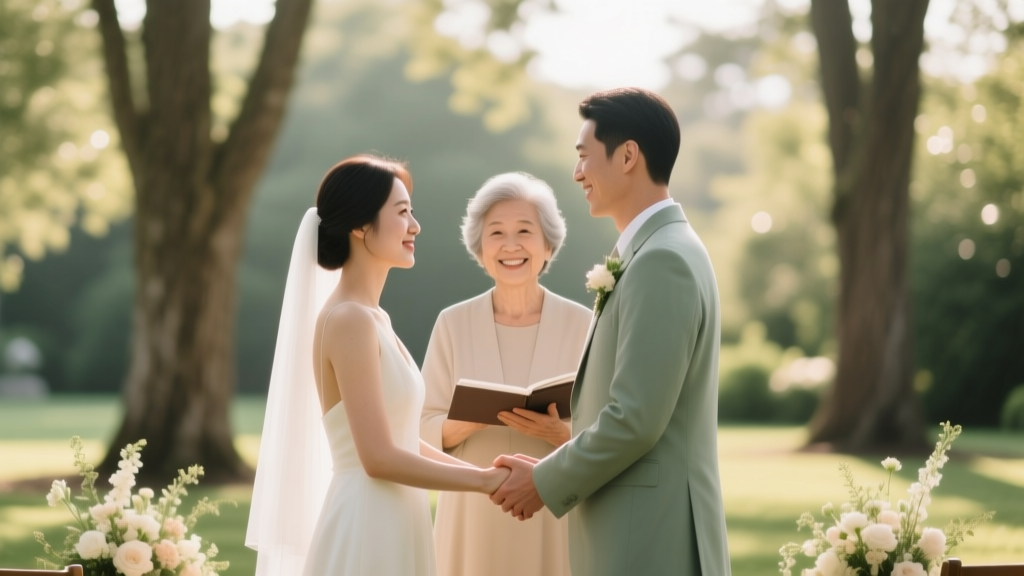
What Is a Wedding Celebrant? (2026)
Why This Question Matters More Than Ever in 2024
If you've just gotten engaged—or are deep into planning—you've likely stumbled upon the term what is a wedding celebrant while scrolling Pinterest, reading forums, or overhearing friends say, 'Our celebrant wrote *everything*—it felt like our story, not a script.' That curiosity isn’t random. It’s a signal: traditional ceremonies are fading fast. In Australia, 82% of non-religious weddings now use independent celebrants; in England and Wales, that number jumped from 12% to 34% between 2019–2023 (ONS & UK Celebrant Society). And it’s not just about aesthetics—it’s about agency, authenticity, and legality. A wedding celebrant isn’t just a ‘nice-to-have’ speaker. They’re often the single most consequential vendor decision you’ll make—shaping whether your ceremony feels like a bureaucratic formality or the emotional heart of your entire wedding experience.
What Is a Wedding Celebrant? Beyond the Dictionary Definition
A wedding celebrant is a trained, authorized professional who legally solemnizes marriages (in jurisdictions where they hold statutory authority) or co-creates and leads deeply personalized, non-legal vow ceremonies (where legal registration happens separately). Crucially, they are *not* interchangeable with a registrar, a clergy member, or even a generic ‘officiant.’ Unlike registrars—who follow strict government-mandated scripts, time limits, and venue rules—a celebrant operates under a different legal framework (or no legal framework at all, depending on location) and is hired first and foremost for their storytelling skill, cultural fluency, and ability to translate your relationship into resonant language.
Take Maya R., a queer couple in Manchester: Their registrar offered a 15-minute slot at the town hall, with zero flexibility on vows or music. They booked Sarah, a certified Humanist celebrant, for a full-day woodland ceremony—including ancestral acknowledgments, bilingual readings, and a ‘ring warming’ ritual passed among guests. Legally, they’d already signed paperwork at the registry office the week before. Emotionally? Their wedding began—and belonged—to them the moment Sarah welcomed them under the oak canopy. That distinction—legal function vs. narrative leadership—is the core of what a wedding celebrant is.
How Celebrants Differ—Legally, Logistically, and Emotionally
Confusion around this role stems from massive regional variation. Let’s cut through the noise with jurisdiction-specific clarity:
- Australia: Celebrants are federally registered under the Marriage Act 1961. They can legally marry couples anywhere—beaches, backyards, barns—with full autonomy over content, length, and structure. No separate civil registration needed.
- New Zealand: Similar to Australia. Licensed celebrants (through the Department of Internal Affairs) hold full legal authority. Over 90% of weddings use them.
- England & Wales: Only registrars and religious ministers can legally solemnize marriages. Independent celebrants conduct beautiful, meaningful ceremonies—but couples must complete a separate legal registration (often a 10-minute appointment at a register office) days or weeks before. Think of it as ‘legal admin + emotional ceremony’—two distinct events.
- USA: Varies by state. Some (e.g., Colorado, California, Maine) allow self-solemnization or online ordination for legal officiation. Others require specific county credentials. Most professional celebrants operate in a hybrid model: legally ordained (via Universal Life Church or similar) *plus* trained in ceremony design—ensuring both validity and artistry.
- Canada: Provincial jurisdiction. Ontario and BC require licensed officiants (often through municipal programs); Quebec requires civil ceremony first. Many couples opt for a ‘blessing ceremony’ led by a celebrant post-legal signing.
This isn’t red tape—it’s context. Knowing what is a wedding celebrant in your locale determines your timeline, budget, and creative freedom. Mistake this, and you risk planning a dream ceremony that isn’t legally binding—or paying for redundant services.
Your Ceremony, Your Rules: The Real Power of a Celebrant
Here’s what shifts when you hire a celebrant—not just an officiant:
- You own the narrative. No ‘I do’ checkboxes. Instead: ‘We promise to argue about dishwashing but never stop choosing each other,’ or ‘We commit to building a home where your anxiety feels safe, and my ADHD feels celebrated.’ A great celebrant interviews you for 3–5 hours across multiple sessions—not to fill a template, but to unearth your private jokes, family lore, shared values, and unspoken hopes.
- Inclusion is designed-in—not added-on. When Priya and David married, their celebrant wove Tamil and Hebrew blessings into a seamless flow, invited grandparents to light candles representing their immigration journeys, and paused for 90 seconds of silent reflection—a nod to David’s meditation practice. A registrar couldn’t accommodate that depth; a generic officiant rarely thinks to ask.
- It’s collaborative, not transactional. You don’t ‘hire’ a celebrant—you co-author. They send drafts, revise based on your notes, rehearse with you, troubleshoot sound systems, and often stay late to help calm nervous parents. One UK-based celebrant told us: ‘My job isn’t to speak *at* you. It’s to give voice *to* you—so when guests leave, they say, “I finally understand why these two are perfect together.”’
Real impact? A 2023 study by the University of Sussex found couples who worked with a bespoke celebrant reported 41% higher emotional satisfaction with their ceremony (vs. registrar-led) and 3.2x more guest recall of specific moments (“That part where she read his childhood letter!”).
Choosing, Hiring, and Working With Your Celebrant: A No-Fluff Checklist
Not all celebrants are created equal. Here’s how to avoid disappointment:
- Verify credentials first. In regulated countries (AU/NZ/UK), check official registers: Attorney-General’s Department (AU), NZ Department of Internal Affairs, or the General Register Office (UK). In unregulated areas, look for membership in bodies like the Association of Independent Celebrants (AIC) or Celebrant Foundation & Institute (CF&I)—which mandate ethics training, insurance, and ongoing education.
- Listen to their voice—not just their bio. Ask for 2–3 audio clips of past ceremonies (with permission). Do they speak warmly? Pause intentionally? Avoid clichés like ‘soulmates’ or ‘forever’? One couple rejected three celebrants because all used identical ‘journey of love’ metaphors—until they heard Lena, whose opening line was: ‘Let’s talk about how you survived IKEA furniture assembly *together*. That’s your love story.’
- Clarify scope—and fees—upfront. Does the quoted fee include rehearsal? Travel beyond 20 miles? Multiple ceremony revisions? Late-night email support? Hidden costs (e.g., PA system rental, certificate printing) add up fast. Our benchmark: £650–£1,200 (UK), AUD $900–$2,200 (AU), $800–$1,800 (US).
- Trust your gut on chemistry. You’ll share vulnerable stories with this person. If your first call feels like a job interview—not a conversation—walk away. As celebrant Marcus T. puts it: ‘If you wouldn’t invite me to your dinner party, don’t invite me to your wedding.’
| Milestone | Registrar | Religious Officiant | Professional Wedding Celebrant |
|---|---|---|---|
| Legal Authority | Yes (statutory) | Yes (denomination-approved) | Yes (AU/NZ); No (UK/CA); Varies (US) |
| Venue Flexibility | No (only licensed venues) | Limited (usually church/sanctuary) | Full (beach, forest, backyard, museum) |
| Ceremony Length | Max 20 mins | Fixed liturgy (45–90 mins) | 15 mins–2.5 hrs (your choice) |
| Vow Customization | None (fixed wording) | Minimal (within doctrine) | 100% bespoke—written with you |
| Inclusivity Support | Standardized (no pronouns, names, etc.) | Depends on denomination | Embedded (LGBTQ+, interfaith, neurodiverse, blended families) |
| Average Lead Time | Book 3–6 months ahead | Book 6–12+ months ahead | Book 9–18 months ahead (top-tier) |
Frequently Asked Questions
Can a wedding celebrant legally marry us?
It depends entirely on your country and region. In Australia and New Zealand: yes, absolutely—they’re federally licensed to solemnize marriages. In England and Wales: no. You must have a separate legal ceremony with a registrar (or religious minister) before or after your celebrant-led event. In the US: check your state laws. Some states recognize online ordination; others require county-level approval. Always verify with your local vital records office—and ask your celebrant for written confirmation of their legal standing in your area.
How much does a wedding celebrant cost?
Costs vary widely by location, experience, and package inclusions. In the UK, expect £600–£1,500; in Australia, AUD $850–$2,500; in the US, $700–$2,200. Budget extras: travel fees (beyond 25 miles), PA system rental (£120–£200), printed ceremony booklets (£5–£12 per copy), and rehearsal attendance (often included, but confirm). Pro tip: Celebrants charging under £500 (UK) or $600 (US) may lack insurance, training, or availability—don’t sacrifice security for savings.
Do we need both a celebrant AND a registrar?
In England, Wales, Scotland, Canada, and many US states: yes, if you want your marriage to be legally recognized. The registrar handles the statutory requirements (signing the marriage schedule, witnessing, filing paperwork). Your celebrant handles meaning, emotion, and personalization. Think of it like filming a movie: the registrar is the legal copyright filing; the celebrant is the director, screenwriter, and lead actor—all rolled into one. You need both for a full experience.
What questions should we ask during our celebrant consultation?
Go beyond ‘Are you available?’ Ask: ‘How many couples do you work with per weekend?’, ‘Can we see a full sample ceremony you’ve written?’, ‘What’s your process if one of us gets sick the week of?’, ‘Do you offer virtual rehearsals?’, and ‘How do you handle unexpected weather or venue changes?’ Their answers reveal professionalism, empathy, and preparedness far more than their website bio.
Can celebrants perform ceremonies for LGBTQ+ or interfaith couples?
Yes—and this is where they truly shine. Unlike some religious officiants or rigid registrars, professional celebrants specialize in inclusive, non-dogmatic ceremonies. They’ll seamlessly integrate Hindu mantras and Catholic prayers, craft gender-neutral vows, or honor chosen family alongside biological relatives. A 2024 survey of 127 UK celebrants found 94% had performed at least one same-sex wedding in the past year, and 88% had co-created interfaith rituals. Their toolkit isn’t doctrine—it’s deep listening.
Debunking Common Myths
Myth #1: “Celebrants are just for non-religious couples.”
False. Many faith-adjacent couples choose celebrants precisely to honor tradition *without* dogma—for example, lighting a unity candle alongside a Jewish chuppah, or weaving Sufi poetry into a Christian blessing. Celebrants collaborate with rabbis, imams, and priests when desired; they don’t replace faith—they frame it personally.
Myth #2: “Any friend can officiate—why pay a professional?”
While legally possible in some places (e.g., Colorado’s self-solemnization), amateur officiants rarely match a trained celebrant’s skill in vocal pacing, crowd engagement, emotional calibration, or crisis management (e.g., calming a sobbing parent mid-vow). One couple shared: ‘Our best friend did a lovely job—but he forgot half the vows, rushed the ring exchange, and didn’t know how to pause for tears. We loved him, but we missed the gravity. A professional would’ve held that space.’
Ready to Begin Your Ceremony Story?
Now that you know what is a wedding celebrant—not just as a title, but as a catalyst for authenticity, inclusion, and enduring meaning—it’s time to take action. Don’t wait until 6 months out. Top celebrants in high-demand regions (London, Sydney, Portland) book 14–18 months in advance. Start today: revisit your wedding vision board, jot down 3 moments that define your relationship, and identify one value you *must* express aloud on your wedding day. Then, search ‘[Your City] + wedding celebrant’ and filter for those who publish real ceremony samples—not just stock photos. Read their words. Hear their voice. Trust the resonance. Because your ceremony shouldn’t just mark your marriage—it should deepen it. And that begins with asking the right question… and finding the right person to answer it with you.
More Articles
 Wedding Ring Rules: 7 Must-Know Tips (2026)
 Who Should Host the Bridal Shower in 2026
 Did Candace Owens Go To Charlie Kirk S Wedding (2026)
 Do Americans Wear Wedding Rings on the Right Hand? (2026)
 Authentic Materials in Wedding Jewelry
 How to Say Thanks for Wedding Anniversary Wishes
 7 Ways a Haven Wedding Saves You Time, Money, and Stress
 Same Ring for Engagement and Wedding? (2026)
 Chris Perez: Does He Still Have Selena’s Wedding Ring?
 What Is the Proper Way to Address Wedding Invitations