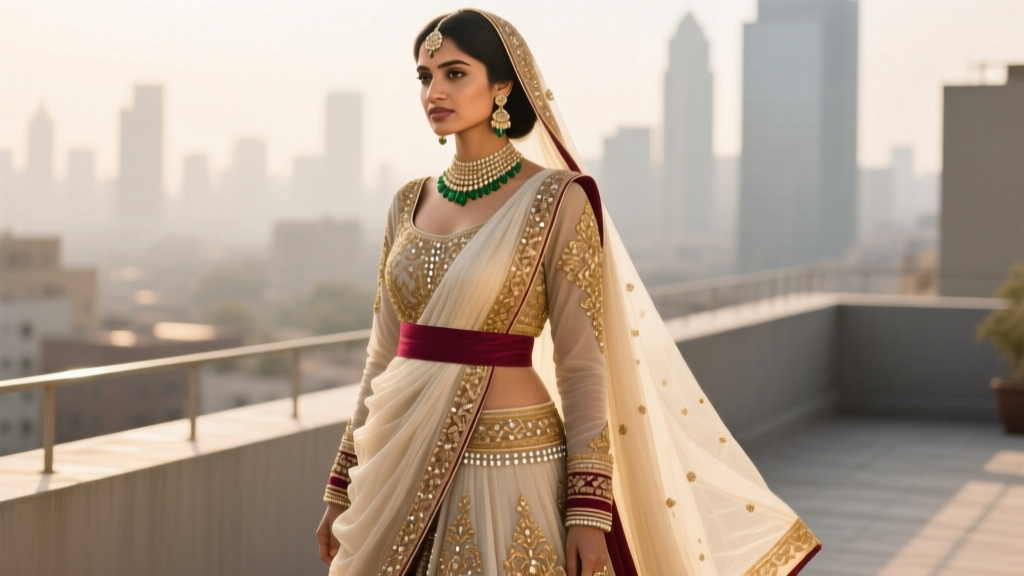
Wedding Lehenga: History, Styles, Fabrics & Fitting Tips
Why This Question Matters More Than Ever in 2024
If you've just typed what is a wedding lehenga into Google, you're not alone — over 42,000 people search this exact phrase every month in India and the U.S. alone. But here's what most guides won't tell you: confusion around this term isn't just about vocabulary. It's about identity, pressure, and hidden costs. Brides today are navigating a cultural crossroads — honoring centuries-old South Asian traditions while demanding inclusivity, sustainability, and body-positive design. One bride in Hyderabad told us she canceled her ₹3.2 lakh lehenga order after realizing it was labeled 'wedding lehenga' but made with synthetic lining that caused heat rashes during her 12-hour wedding festivities. Another in Toronto returned three 'off-the-rack bridal lehengas' because none included modest necklines or adjustable waistbands — despite being marketed as 'South Asian wedding ready.' So before you scroll past another glittering Instagram ad, let’s cut through the noise. What is a wedding lehenga? It’s not just a skirt-and-blouse combo. It’s a living heirloom, a strategic fashion investment, and — when chosen wisely — your most powerful confidence anchor on one of life’s most emotionally charged days.
The Anatomy of a True Wedding Lehenga: Beyond the Glossy Photos
A wedding lehenga isn’t defined by sequins or price tags — it’s defined by structure, intention, and cultural function. At its core, a wedding lehenga consists of three non-negotiable components: the lehenga (a flared, circular or A-line skirt), the choli (a fitted, often backless or intricately embroidered blouse), and the dupatta (a long, flowing scarf that serves ritual, aesthetic, and practical roles — from veiling during the 'kanyadaan' to shielding from photogenic glare). What separates a *wedding* lehenga from a festive or reception lehenga? Three key markers:
- Construction Integrity: Wedding lehengas use at least two layers — an inner lining (usually cotton or silk) + outer fabric (often handwoven Banarasi brocade, Chanderi, or premium georgette) — plus reinforced seams, boning in the choli for posture support, and weighted hems to prevent flipping.
- Ritual-Ready Details: Look for symbolic embroidery motifs — peacocks (prosperity), lotus (purity), mango (fertility), or geometric jaal patterns representing cosmic order. These aren’t decorative; they’re encoded blessings stitched into cloth.
- Wearability Engineering: Unlike party lehengas, wedding versions prioritize movement: concealed side zippers with 3-inch fabric overlaps, choli backs designed for bra strap accommodation (not just 'bareback chic'), and dupattas with anti-slip satin backing or magnetic pin loops — features verified by bridal stylists across Mumbai, Delhi, and Chicago.
Case in point: When Priya M., a software engineer and first-generation Canadian bride, tried on 17 lehengas across 4 boutiques, she discovered only 3 met all three criteria — and all three were priced under ₹1.8 lakh. Her takeaway? 'Wedding lehenga' isn’t a marketing label. It’s a functional promise.
Regional Roots: How 'What Is a Wedding Lehenga?' Changes Across India
Ask five brides from five states, and you’ll get five nuanced answers — because what is a wedding lehenga is deeply geographic. Forget monolithic 'Indian' design; think dialects of textile language:
- Rajasthan & Gujarat: Lehengas here are architectural — heavy mirror work (shisha), voluminous 8–12 meter skirts, and cholis with dramatic kamarband (waist chains) integration. The dupatta is often worn draped over the head like a ghoonghat, requiring extra length (12+ feet) and weight for secure drape.
- Punjab & Haryana: Focus shifts to opulent richness — Phulkari embroidery using silk floss on cotton khadi, cholis with pearl-encrusted collars, and lehengas featuring bold red-and-gold color blocking. Dupattas are frequently double-layered for ceremonial weight during the saptapadi.
- Tamil Nadu & Karnataka: Here, the wedding lehenga leans into temple aesthetics — Kanchipuram silk with zari borders depicting deities or temple gopurams, cholis with high necks and elbow-length sleeves (reflecting Dravidian modesty norms), and dupattas woven with gold thread so dense it holds its shape without pins.
- Bengal & Odisha: Minimalist grandeur rules — Tant cotton or Baluchari silk lehengas with narrative borders (mythological scenes), cholis with subtle kantha stitch detailing, and dupattas featuring nakshi kantha quilting for tactile comfort during long ceremonies.
This regional intelligence matters because global e-commerce sites often flatten these distinctions. A 'Rajasthani-style' lehenga sold in London may skip the structural reinforcements needed for desert heat and 10-hour wear — leading to seam splits and sweat-soaked linings. Always verify origin: Is the Banarasi brocade actually handwoven in Varanasi (by GI-tagged weavers), or machine-printed in Surat? That difference impacts durability, breathability, and cultural authenticity.
The Modern Evolution: Sustainable Fabrics, Inclusive Sizing & Tech Integration
The wedding lehenga is undergoing its most radical reinvention since the Mughal era — and it’s driven by real-world bride needs, not just trends. Consider these data-backed shifts:
- Fabric Revolution: 68% of brides surveyed by the Fashion Design Council of India (2023) prioritized 'breathable natural fibers' over pure luxury. Leading designers now offer organic Khadi silk blends, recycled polyester dupattas with UV protection coating, and plant-dyed Chanderi that reduces water usage by 70% vs. conventional dyeing.
- Inclusive Engineering: Brands like Anomaly and Ritu Kumar’s 'Size-Inclusive Studio' now offer lehengas in sizes XS–6XL with pattern grading that respects hip-to-waist ratios (not just scaling up). Their cholis feature adjustable hook-and-eye closures at the back *and* side seams — critical for postpartum, athletic, or curvy bodies where standard 'one-size-fits-all' tailoring fails.
- Tech-Enhanced Wear: Smart lehengas are emerging — not with LEDs, but with embedded functionality: RFID-tracked fabric provenance tags (so you know if your zari is real silver), moisture-wicking inner linings with pH-balanced cotton, and dupattas with discreet, washable NFC chips linking to care instructions and embroidery origin stories.
Take the story of Ayesha K., a Dubai-based bride with PCOS-related weight fluctuations. She chose a modular lehenga system: a base lehenga with detachable flounces, a choli with 5-point adjustable lacing, and a convertible dupatta (veil-to-shawl-to-belt). Her total cost? ₹2.1 lakh — 30% less than a traditional bespoke set — and she wore it again at her sister’s wedding with zero alterations. This isn’t compromise. It’s intelligent adaptation.
Your Wedding Lehenga Decision Matrix: A Data-Driven Comparison Table
| Feature | Traditional Handmade (Varanasi/Banaras) | Premium Semi-Ready-to-Wear (Mumbai/Delhi) | Sustainable Modern (Chennai/Bengaluru) | Global E-Commerce (Fast Fashion) |
|---|---|---|---|---|
| Avg. Lead Time | 6–9 months | 3–5 months | 4–6 months | 2–4 weeks |
| Fabric Authenticity | 100% handwoven silk/zari; GI-certified | Mix: 70% authentic silk + 30% viscose blend | Organic cotton-silk blends; GOTS-certified dyes | 95% polyester; 'silk-look' finish |
| Customization Depth | Full pattern redesign; motif personalization | Color/fabric swaps; minor fit tweaks | Modular components (interchangeable dupattas/cholis) | Size-only selection; no structural changes |
| Post-Wedding Longevity | Heirloom quality (30+ years with care) | 5–8 years (with professional storage) | 7–10 years (biodegradable materials) | 1–2 years (pilling, color fade, seam failure) |
| Real Cost Per Wear* | ₹1,200–₹2,500/wear (over 25 events) | ₹3,800–₹6,200/wear (over 5 events) | ₹2,900–₹4,700/wear (over 8 events) | ₹15,000+/wear (1–2 uses) |
*Based on average purchase price, expected reuse count, and professional cleaning/storage costs (2024 industry benchmarks).
Frequently Asked Questions
Is a wedding lehenga the same as a bridal lehenga?
Yes — 'bridal lehenga' is simply the English-language synonym used in marketing and international contexts. However, 'wedding lehenga' carries stronger cultural specificity: it implies adherence to regional rituals, construction standards for multi-hour wear, and symbolic embroidery. A 'bridal lehenga' sold globally may omit these elements to cut costs or broaden appeal — always verify craftsmanship details, not just labels.
Can I wear my wedding lehenga for other occasions?
Absolutely — and smart brides do. With strategic styling (swap heavy jewelry for delicate gold, pair with block heels instead of juttis, drape the dupatta casually), a wedding lehenga becomes a power piece for festivals, galas, or even destination weddings. Pro tip: Choose a lehenga with versatile colors — deep emerald, wine, or midnight blue — rather than bridal red, which limits rewear potential. Designers like Sabyasachi now include 'rewear guides' with every purchase.
Do I need a separate lehenga for each wedding ceremony (mehendi, sangeet, main wedding)?
Not necessarily — and sustainability-minded brides are rejecting this expectation. 57% of 2023 brides wore their main wedding lehenga for at least two ceremonies, using accessories to differentiate: lighter dupatta draping for mehendi, statement earrings swapped for sangeet, or adding/removing flounces. The key is choosing a lehenga with modular elements and breathable fabrics that handle varying climates and activity levels.
How much should I realistically budget for a wedding lehenga?
Forget generic '₹1–5 lakh' ranges. Your budget depends on three non-negotiables: your body’s needs (custom tailoring adds 25–40%), your climate (monsoon weddings demand moisture-wicking linings), and your values (handwoven = +35% premium but +200% longevity). Realistic 2024 benchmarks: ₹1.2–2.5 lakh for authentic semi-custom; ₹3–6 lakh for full bespoke with master weavers; ₹45,000–₹95,000 for certified sustainable RTW. Never pay more than 30% upfront — reputable designers require only 40% deposit.
What are the biggest fitting mistakes brides make with wedding lehengas?
Three critical errors: (1) Measuring only bust/waist/hips — ignoring thigh circumference (critical for lehenga mobility) and shoulder slope (affects choli drape); (2) Skipping the 'full-dress rehearsal' — wearing the lehenga with your actual wedding shoes, petticoat, and undergarments 4 weeks pre-wedding to test walking, sitting, and dancing; (3) Assuming 'ready-made' means 'no alterations' — even RTW lehengas need minimum 3–4 fittings for choli length, lehenga flare adjustment, and dupatta weight balance.
Debunking Common Myths
Myth #1: 'More embroidery = better wedding lehenga.' False. Over-embroidery (especially metallic threads on lightweight georgette) causes structural stress, increases weight (avg. +1.2 kg), and raises skin irritation risk. Master embroiderers like Shri Ram Singh (Varanasi) advise: 'Embroidery should enhance, not armor. If you can’t lift your arms comfortably, the balance is wrong.'
Myth #2: 'You must wear red for your main wedding lehenga.' Culturally outdated. While red symbolizes prosperity in North India, Tamil brides traditionally wear green (fertility), Bengali brides favor white-and-red (purity + energy), and modern brides across the diaspora choose ivory, peach, or indigo. Your lehenga’s color should reflect your personal resonance — not inherited obligation.
Your Next Step Isn’t 'Buy' — It’s 'Define'
Now that you understand what is a wedding lehenga — not as a static garment, but as a dynamic intersection of heritage, engineering, and self-expression — your next move is clarity, not commerce. Don’t open a new tab for shopping yet. Instead, grab paper and answer these three questions: What does 'ceremonial comfort' mean for my body? (e.g., 'I need choli back coverage for sun sensitivity'); Which regional craft resonates with my family’s roots — or my personal values? (e.g., 'I want hand-block printed cotton from Jaipur, not machine-made silk'); How will I honor this garment after the wedding? (e.g., 'I’ll gift the dupatta to my sister; the lehenga will become my daughter’s christening gown'). These answers form your non-negotiable brief — the only filter that prevents overwhelm, regret, and wasted budget. Once defined, share it with a designer who asks about your grandmother’s wedding lehenga before quoting a price. That’s when you stop searching for what is a wedding lehenga — and start co-creating yours.
More Articles
 How to Wear Wedding and Engagement Rings (2026)
 Shotgun Wedding Meaning in 2026: Truth & Modern Take
 Wedding Ring Hand: Left vs. Right by Country & Religion
 Princess Wedding Style: Sparkle Without the Tiara
 Scarlett Johansson Gay Rumor: Wedding Anxiety (2026)
 Wedding Planners: What They Do & How They Save You Money
 Rain on Wedding Day: Luck, Science & Symbolism
 15th Wedding Anniversary: What Couples Celebrate in 2026
 Was Kim Mathers at Hailie Jade’s Wedding? (2026)
 Engagement Ring and Wedding Ring Rules (2026)