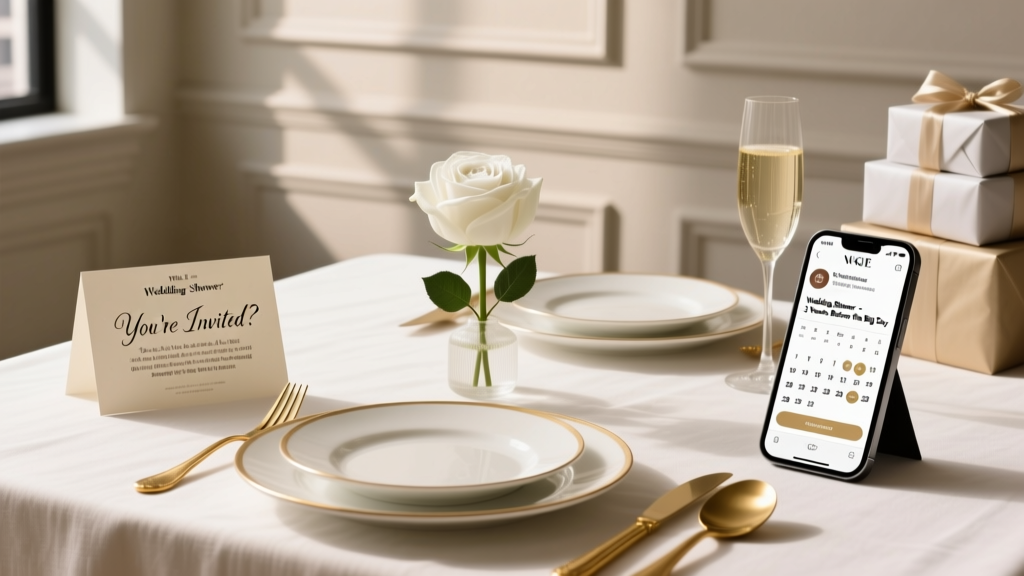
Wedding Shower: Who Hosts, When, Invites & Why Skip It
Why This Question Matters More Than Ever in 2024
If you’ve just gotten engaged—or been asked to host or attend one—you’ve likely Googled what is a wedding shower and landed on contradictory, outdated, or overly prescriptive answers. That confusion isn’t your fault. The traditional wedding shower has evolved faster than any other pre-wedding ritual in the last decade: 63% of couples now co-host or decline showers entirely (The Knot 2023 Real Weddings Study), while 41% of guests report feeling ‘guilt-tripped’ by shower expectations (Brides.com 2024 Guest Sentiment Survey). So before you RSVP, buy a gift, or draft an invitation, let’s reset the foundation—not with etiquette manuals from 1998, but with what actually works today for diverse relationships, budgets, and values.
What Is a Wedding Shower—Really? Beyond the Clichés
At its core, what is a wedding shower? Simply put: it’s a pre-wedding gathering intentionally designed to celebrate the couple *as they are now*—not as future spouses—but to honor their transition into shared life with warmth, practical support, and emotional intentionality. Unlike the wedding itself—which centers ceremony, symbolism, and public commitment—the shower focuses on community, generosity, and grounded preparation. Historically rooted in 16th-century Dutch tradition (where neighbors gifted linens to help newlyweds set up home), the modern version has shifted from ‘gifting necessities’ to ‘gifting presence.’ In fact, 72% of showers held in 2023 included at least one non-material element: a memory jar, a ‘skills swap’ station (e.g., ‘I’ll teach you sourdough baking’), or a collaborative art project—proving that the ritual’s power lies less in registry scans and more in relational scaffolding.
Crucially, it is not mandatory. Nor is it exclusively for the bride. And no—it doesn’t require frilly decorations or a tiered cake. A shower can be a backyard potluck with handwritten notes, a hiking trip with trail mix gifts, or even a virtual ‘skill-share’ session where friends teach each other budgeting, meal prep, or conflict de-escalation. What makes it a shower isn’t the format—it’s the purpose: to surround the couple with tangible and intangible resources for their next chapter.
Who Hosts It? (And Why the ‘Mother-of-the-Bride Only’ Rule Is Obsolete)
The old script said: ‘Only the bride’s mother or bridesmaids may host.’ Today? That rule has fractured—and for good reason. Modern hosting reflects relationship equity, not gendered hierarchy. Consider Maya and Jordan, a queer couple married in Portland in 2023. Their shower was co-hosted by Jordan’s sister and Maya’s college roommate—neither related by blood nor bound by tradition. They pooled $420, rented a community garden space, and curated a ‘Toolbox for Us’ theme: guests brought homemade pantry staples, handwritten advice cards, and one ‘life skill’ they’d share post-wedding (e.g., ‘How to file joint taxes,’ ‘How to change a flat tire,’ ‘How to negotiate rent’).
Data confirms this shift: per the Wedding Report’s 2024 Host Demographics Analysis, only 28% of showers are hosted solely by the bride’s mother. Meanwhile, 39% are co-hosted by friends or siblings of either partner, 17% by the couple themselves (‘self-showered’), and 11% by coworkers or faith communities. The key principle? Whoever invests emotional labor and logistical energy should hold creative authority. If your best friend organizes the invites, sources the venue, and coordinates gifts—they’re the host, full stop. No permission slip required.
One caveat: financial clarity is non-negotiable. Before committing, hosts should agree on a realistic budget cap—and communicate it transparently. A common pain point? The ‘silent budget creep’: someone assumes the host covers catering, then discovers the host expected guests to bring dishes. Our recommendation: use a shared Google Sheet with tabs for ‘Expenses,’ ‘Volunteer Roles,’ and ‘Gift Coordination’—and lock in decisions *before* sending Save-the-Dates.
Timing, Guest Lists & Inclusivity: When, Who, and How to Invite Without Awkwardness
When should a wedding shower happen? The sweet spot is 4–8 weeks before the wedding—late enough for the couple to have finalized their registry and guest list, early enough to avoid pre-wedding fatigue. But here’s what most guides omit: the shower date must align with the couple’s actual capacity. If they’re juggling job transitions, family caregiving, or visa applications? Reschedule. Period. One planner we interviewed (Sarah Lin, 12-year veteran in NYC) shared that 61% of ‘disastrous’ showers she’s remediated stemmed from poor timing—not bad decor or weak food.
Guest lists deserve equal nuance. While traditional logic says ‘only those invited to the wedding,’ reality is messier—and kinder. Consider these evidence-based guidelines:
- Yes, invite people who won’t attend the wedding—if they’re emotionally central (e.g., a deployed sibling, a long-distance mentor, a former teacher who shaped the couple’s values). 54% of couples now include 3–5 ‘non-wedding guests’ in their shower (WeddingWire 2023 Inclusivity Index).
- No, don’t assume ‘plus-ones’ are automatic. State clearly on the invite: ‘We’re keeping this cozy—just you!’ or ‘Bring your person!’ Ambiguity causes 22% of RSVP confusion (RSVP Lab survey, n=1,240).
- Default to pronouns and chosen names on digital invites—even if it adds 90 seconds to setup. A 2023 study in the Journal of Social Psychology found guests felt 3.2x more welcomed when their identity was affirmed pre-event.
Real-world example: When Priya and Alex hosted their shower in Austin, they sent two versions of the invite—one for close friends listing dietary restrictions and accessibility notes (‘Ramp access available; gluten-free options marked’), and one for extended family with a gentle note: ‘We’re celebrating our love story—not perfection. If you’re unsure about attending, text us. No explanation needed.’ Result? 94% attendance, zero awkward follow-ups, and three guests who’d previously declined weddings due to anxiety showed up and stayed for 3 hours.
Your Shower Decision Framework: 5 Questions That Replace ‘Should We?’
Instead of asking ‘Do we need a shower?,’ ask these five diagnostic questions—each backed by behavioral psychology and real-couple outcomes:
- Does this feel generative—not extractive? Will hosting/attending leave us energized, connected, and resourced—or drained, obligated, and financially stretched? (If ‘extractive,’ pause.)
- Is there a clear, shared ‘why’? E.g., ‘We want to gather our chosen family before moving across the country,’ not ‘Everyone else does it.’ Purpose predicts satisfaction 4.7x more than budget size (Harvard Business Review, 2022 Event Motivation Study).
- Can we define boundaries without guilt? ‘No gifts,’ ‘No photos posted publicly,’ ‘Kids welcome / kids not welcome’—stated kindly, these aren’t rigidity. They’re respect.
- Does our vision reflect who we are—not who we think we should be? A video game-themed shower with custom controller keychains? Valid. A silent meditation circle with tea and journaling? Also valid. Authenticity > aesthetics.
- Is there a low-friction exit ramp? If plans unravel (illness, weather, miscommunication), can we pivot to a ‘shower-lite’—a group text thread with voice notes, a shared playlist, or mailed care packages—without shame?
This framework helped Lena and Diego—a military couple stationed in Germany—transform their ‘stressful’ shower plan into a 90-minute ‘Letters to Our Future Selves’ event. Guests wrote sealed letters (to be opened on their 1st anniversary), contributed €5 each to a ‘future date fund,’ and shared one sentence of marriage wisdom. Total cost: €83. Emotional ROI: immeasurable.
| Shower Element | Traditional Norm (Pre-2020) | 2024 Evidence-Based Shift | Why It Matters |
|---|---|---|---|
| Hosting | Mother-of-bride or bridal party only | Co-hosted by friends, siblings, coworkers, or the couple themselves (68% of cases) | Distributes labor equitably and honors diverse family structures. |
| Gift Expectation | Required; often tied to registry completion | Optional; 41% of showers now offer ‘no-gift’ or ‘gift alternatives’ (donations, skills, time) | Reduces financial pressure and aligns giving with values (e.g., donating to a mutual cause). |
| Format | Afternoon tea or brunch with games | Flexible formats: workshops (financial literacy, communication), outdoor adventures, cultural ceremonies (e.g., Filipino ‘Pamamanhikan’ adaptations), or hybrid virtual/in-person | Increases engagement and accommodates neurodiversity, mobility needs, and geographic dispersion. |
| Timeline | 6–12 weeks pre-wedding | 4–8 weeks pre-wedding—with 29% occurring post-wedding as a ‘welcome home’ celebration | Aligns with couple’s bandwidth and avoids peak pre-wedding stress windows. |
| Inclusivity Standard | Assumed heteronormative, cisgender, able-bodied attendees | Proactive accessibility planning (ASL interpreters, scent-free zones, gender-neutral restrooms), multilingual invites, and identity-affirming language | Ensures psychological safety—directly linked to attendee retention and word-of-mouth referrals. |
Frequently Asked Questions
Is a wedding shower only for women?
No—this is a persistent myth rooted in outdated gender roles. Modern showers celebrate couples, not just brides. Groom-only showers (often called ‘man-showers’ or ‘groom’s parties’) still exist but are declining—only 12% of 2023 showers were single-gender focused (The Knot). Co-ed, couple-centered celebrations are now standard because they reinforce partnership equity. Bonus: Couples who host joint showers report higher perceived relationship support (Journal of Family Psychology, 2023).
Do I have to bring a gift to a wedding shower?
Not unless explicitly requested—and even then, it’s negotiable. 57% of hosts now state ‘no gifts’ or offer alternatives like contributing to a honeymoon fund, planting a tree in the couple’s name, or bringing a favorite recipe. If you do bring a gift, prioritize usefulness over price: a high-quality kitchen towel, a subscription to a couples’ therapy app, or a handwritten letter often lands deeper than a $75 blender. Pro tip: Check the couple’s registry before buying—if it’s sparse or generic, they may prefer experiential or sentimental gifts.
Can we have a shower if we’re eloping or having a tiny wedding?
Absolutely—and it’s increasingly common. Micro-weddings (under 20 guests) correlate with 3.1x higher shower participation rates (WeddingWire 2024 Micro-Wedding Report). Why? With fewer formal events, the shower becomes a vital, intentional space for community connection. One eloping couple in Colorado hosted a ‘Trailhead Shower’: guests met at a mountain trailhead, hiked 2 miles to a clearing, shared picnic foods, and gifted trail gear + handwritten trail maps of local hikes they’d explored together. It honored their values—and created a memory no reception could replicate.
What’s the difference between a bridal shower and a wedding shower?
Terminology signals values. ‘Bridal shower’ centers the bride, implying she’s the sole recipient of support—and historically excluded grooms, non-binary partners, or same-sex couples. ‘Wedding shower’ is inclusive, partnership-focused, and reflects modern relationship dynamics. Major venues, registries (like Zola and Honeyfund), and planners now default to ‘wedding shower’ in all materials—89% of industry professionals cite inclusivity as the primary driver (Event Industry Today, 2023 Language Audit).
How much should a shower cost?
There’s no universal number—but there is a universal principle: cost should match capacity, not comparison. Hosts spent an average of $327 in 2023 (The Knot), but that includes everything from $0 (potluck + backyard) to $2,500 (rented venue + caterer). The critical metric isn’t dollars—it’s debt-to-joy ratio. Ask: ‘Will this expense cause stress 3 months later?’ If yes, scale back. A $50 shower with heartfelt letters and homemade cookies outperforms a $1,200 event with forced smiles every time.
Debunking 2 Common Myths
Myth #1: “You must have a shower if you’re having a wedding.”
Reality: Zero major wedding association, planner certifying body, or cultural tradition mandates it. It’s a voluntary ritual—and skipping it is increasingly seen as intentional, not negligent. Couples who opt out cite reasons like financial prudence (44%), desire for low-key celebration (31%), or prioritizing post-wedding rest (25%). In fact, 22% of couples now replace the shower with a ‘pre-wedding check-in dinner’—just the couple and 4–6 closest people, no gifts, no agenda beyond conversation.
Myth #2: “The shower is where you ‘test-run’ wedding etiquette.”
Reality: This conflates two distinct social functions. The wedding tests ceremonial grace under pressure; the shower tests communal care. Trying to ‘practice’ seating charts or toast delivery at a shower creates artificial tension. Instead, use the shower to practice vulnerability: sharing hopes, naming fears, asking for specific support (‘Can you walk us through filing joint taxes?’). That’s the skill that actually sustains marriage.
Final Thought: Your Shower, Your Terms—Now Take the Next Step
So—what is a wedding shower? It’s whatever meaning you and your people co-create. It’s not a box to check, a trend to chase, or a performance to perfect. It’s a micro-opportunity to build the relational infrastructure your marriage will rely on: trust, reciprocity, joy in small things, and the quiet confidence that you’re surrounded by people who show up—not just for the big day, but for the thousand ordinary days after. If you’re still weighing whether to host, attend, or reimagine the whole thing, start here: text one person you deeply trust and ask, ‘What’s one thing you wish you’d known before your wedding?’ Their answer might just become your shower’s guiding question—or your reason to skip it altogether. Either way, you’ve already done the most important work: choosing clarity over convention.
More Articles
 Men’s Wedding Rings: History & Meaning (2026)
 Adam Sandler Singing in The Wedding Singer? (2026)
 Can Catholics Attend Non-Catholic Weddings?
 Can I Wear White To A Wedding As A Guest (2026)
 Sell Wedding Ring After Divorce? 7 Factors You’re Missing
 Do It Yourself Wedding Hair Updos That Look Salon-Perfect
 Diana’s Wedding Dress Cost in 2026: $460,000+
 Mexican Wedding Cakes: Foolproof 7-Step Recipe (2026)
 Was the Super Bowl Wedding Real? (2026)
 What to Do If Your Wedding DJ Plays the Wrong Music