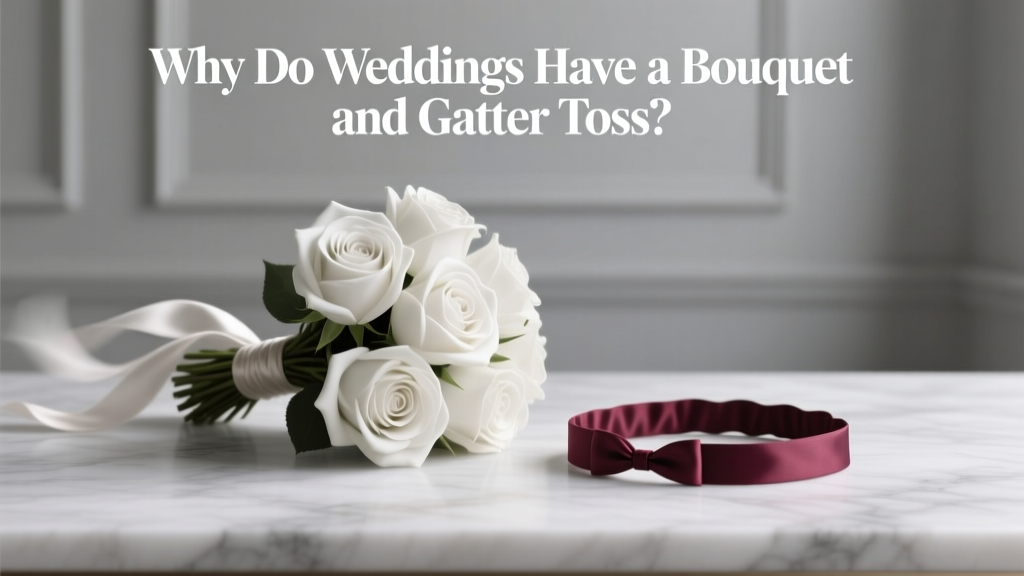
Why Do Weddings Have a Bouquet and Garter Toss
Why Do Weddings Have a Bouquet and Garter Toss?
If you’ve been to a few weddings, you’ve probably seen it: the DJ calls all the single guests to the dance floor, the bride tosses her bouquet, and later the garter makes an appearance—usually with a mix of cheers, laughter, and a few people trying to disappear behind a centerpiece. Many engaged couples wonder the same thing: why do we even do this, and do we have to?
It matters because these moments affect the vibe of your reception. They can feel fun and lighthearted—or awkward and outdated—depending on your crowd, your comfort level, and how they’re presented.
Quick Answer: What’s the Purpose of the Bouquet and Garter Toss?
The bouquet and garter toss started as old wedding traditions tied to “good luck” and symbolism around marriage and fertility. Over time, they evolved into reception games meant to entertain guests and spotlight unmarried friends. Today, they’re optional—and many couples tweak or replace them to better fit modern etiquette, diverse guest lists, and personal comfort.
Q: Where Did the Bouquet Toss Come From?
A: The bouquet toss traces back to the idea that something from the bride carried good fortune. Centuries ago in parts of Europe, guests would sometimes try to tear a piece of the bride’s dress or accessories as a lucky charm. Brides began tossing an item—often a bouquet—to distract guests and make a quick exit.
In its modern form, the bouquet toss became a playful tradition: whoever catches it is “next” to marry. Many couples still like the moment because it’s upbeat, photo-friendly, and gives single guests a spotlight in a fun way.
Real-world example: “We did a bouquet toss, but our DJ invited anyone who wanted to participate—not just single women,” says fictional bride Mariana L. “My married friends jumped in, my cousin’s boyfriend caught it, and it was honestly one of the funniest photos of the night.”
Q: Where Did the Garter Toss Come From—and Why Is It a Thing?
A: The garter toss has roots in older European customs where guests believed grabbing a piece of the bride’s clothing brought luck. Eventually, the garter became the symbolic item. In some traditions, the groom removes the garter and tosses it to unmarried men, mirroring the bouquet toss.
Modern receptions often pair it with the bouquet toss: the garter-catcher places it on the bouquet-catcher, implying they’re the “next” couple. For some crowds, it’s silly and harmless. For others, it can feel overly sexualized or uncomfortable—especially with older relatives, kids present, or guests from more conservative cultures.
Wedding planner perspective: “The garter toss is the tradition I see couples question the most,” says fictional wedding planner Danielle Cho of Cho Wedding Co. “It’s not that it’s ‘wrong’—it’s that it can land awkwardly if your guest list is mixed or if it doesn’t match your personalities.”
Q: Do We Have to Do a Bouquet and Garter Toss?
A: No. These are optional reception traditions. There’s no modern etiquette rule saying you must include them. In fact, current wedding trends show more couples skipping the garter toss in particular, and many are reinventing the bouquet toss to be more inclusive and less focused on relationship status.
If you’re planning your wedding reception timeline, think of these as “extra entertainment,” not required rituals.
Traditional vs. Modern Approaches: What Works Best?
Scenario 1: You Love Tradition (and Your Crowd Will Too)
If your families expect classic moments and your friend group will enthusiastically participate, a traditional bouquet and garter toss can be a great fit.
- Keep it short and upbeat—no long build-up.
- Ask your DJ to frame it as a fun photo moment.
- Consider doing both tosses back-to-back to avoid interrupting dancing twice.
Scenario 2: You Want the Bouquet Toss, But Not the Garter
This is one of the most common modern choices. The bouquet toss is generally easier to keep light and family-friendly. The garter toss is the one most likely to feel uncomfortable.
Alternative: The groom can toss a boutonniere, a small plush, or even a prize item (like a mini bottle of champagne or a gift card) instead of a garter.
Scenario 3: You Want Something Inclusive (Not Focused on “Singles”)
Many couples now avoid calling “all the single ladies” because it can feel awkward for guests who are divorced, widowed, in complicated relationships, or simply private. A more inclusive approach is to invite:
- “Anyone who wants a little extra luck!”
- “All friends who love a good competition!”
- “Everyone—married, dating, single—come join us!”
Trend note: Inclusive wording is a big part of modern wedding etiquette, especially with diverse guest lists and blended families.
Scenario 4: You’d Rather Skip Both
Skipping both traditions is completely normal. If you want to fill that spot in the reception, consider:
- Anniversary dance: Married couples stay on the dance floor until the longest-married couple remains.
- “Pass the bouquet” game: Like musical chairs with the bouquet—no relationship status involved.
- Private last dance: A sweet moment for just the two of you while guests grab dessert.
- Group photo moment: Call everyone to the dance floor for a big group shot.
Actionable Tips: How to Do It (or Skip It) Gracefully
Tip 1: Decide Based on Your Guest List
If your reception includes kids, grandparents, coworkers, and friends from different cultures, the garter toss may feel out of place. If it’s mostly a close friend group who enjoys playful traditions, it might be fine.
Tip 2: Set the Tone with Your DJ or MC
The wording matters. Ask your DJ to avoid jokes that could embarrass guests. A simple script works best:
- “Join us if you want to catch the bouquet—no pressure!”
- “This is just for fun—cheer loudly for everyone up here.”
DJ perspective: “When couples tell me the vibe they want—sweet, silly, or quick—I can announce it in a way that feels natural,” says fictional DJ Marco H. “The awkwardness usually comes from forcing participation or making it too long.”
Tip 3: Use a Toss Bouquet
If you’re attached to your bridal bouquet (and many people are), order a smaller toss bouquet. This protects your keepsake flowers and is often cheaper and lighter to throw.
Tip 4: Keep It Optional, Always
No one should feel pressured to join. The best bouquet toss moments happen when guests genuinely want to participate.
Tip 5: Consider a “Gift Toss” Instead
Some couples toss a small wrapped gift—like movie tickets, a bottle of wine, or a “date night” basket. It keeps the excitement while removing the “you’re next to marry” implication. This can also align nicely with weddingsift.com-style planning, where experiences and thoughtful gifts are part of the celebration vibe.
Related Questions Couples Ask (and Helpful Edge Cases)
Q: What if there are very few single guests?
A: If only two or three people would be “eligible,” it can feel uncomfortable. Either open it up to everyone who wants to play, or skip it and choose an anniversary dance or group photo moment instead.
Q: What if someone might feel called out (divorced, widowed, LGBTQ+ guests, etc.)?
A: Use inclusive language and avoid labeling. “Anyone who wants to participate” works beautifully. If you know certain guests may be sensitive to the spotlight, skipping the “singles” framing is a kindness they’ll remember.
Q: Can we toss the bouquet but keep the garter private?
A: Absolutely. Some couples still wear a garter for tradition or photos, but skip the removal and toss. You can also do a garter “toss” without removal (the groom can discreetly hand it off) if you truly want the tradition without the performance—though most couples who feel unsure are happier skipping it entirely.
Q: When should we schedule it in the reception timeline?
A: Commonly after dinner and before open dancing ramps up, or later in the night as a “reset” moment. If you’re doing parent dances, toasts, and cake, you don’t want too many interruptions—your coordinator or DJ can help place it smoothly.
Takeaway: Choose the Version That Feels Like You
The bouquet and garter toss exist because wedding traditions often start as symbols of luck and evolve into party moments. Keeping them, updating them, or skipping them altogether is all good etiquette—what matters is that your reception feels comfortable, fun, and true to you as a couple.
If you’re on the fence, a simple rule helps: keep what delights you, drop what stresses you. Your guests will follow your lead—and the best wedding memories come from moments that feel genuine, not obligatory.
More Articles
 What to Do If Your Wedding Flowers Arrive Wilting
 Do Men Have to Wear a Jacket to a Wedding: The Truth
 When Is the Red Wedding in Game of Thrones? (2026)
 My Big Fat Gypsy Wedding: Watch Legally (2026)
 Wedding Rings vs Engagement Rings Cost (2026)
 Italian Wedding Soup Carbs: Real Count & Low-Carb Swaps
 Indian Weddings: Real Rituals, Costs & Joy (2026)
 Jeff Bezos Wedding Rumor: Truth Behind the Viral Myth
 Church Wedding Guest Outfit Guide (2026)
 Sims 4 Wedding Pack Fixed in 2026? Latest Bugs & Patch Info