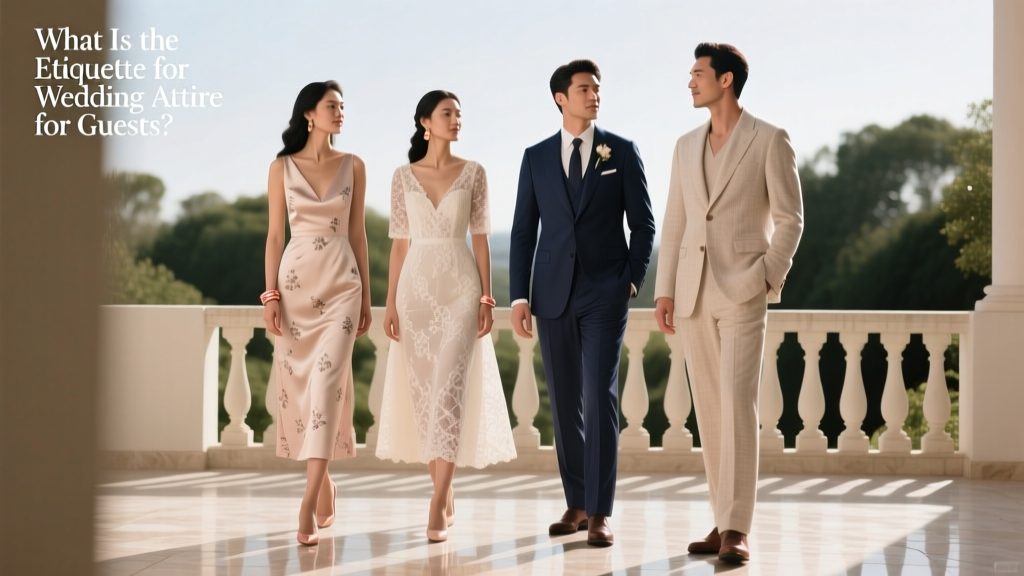
What Is the Etiquette for Wedding Attire for Guests
What Is the Etiquette for Wedding Attire for Guests?
If you’ve ever stared at a wedding invitation and thought, “What exactly are people supposed to wear to this?” you’re not alone. Guest attire is one of those details that can quietly affect your whole wedding vibe—photos, comfort, and even how smoothly the day feels.
As an engaged couple, you’re also on the other side of the question: you want guests to look appropriate without feeling stressed or guessing. The good news is that modern wedding etiquette around dress codes is clearer than it used to be—and more flexible, too.
The short answer (so you can stop worrying)
Wedding attire etiquette for guests is to follow the dress code if one is provided, match the formality of the venue and time of day, and avoid anything that could distract from the couple (especially white or overly attention-grabbing looks). When in doubt, guests should aim slightly more polished than everyday wear and choose something respectful, comfortable, and photo-friendly.
Q: What should guests do first when choosing what to wear?
A: Start with the dress code on the invitation or wedding website. If you share a dress code, you’re giving guests a gift—clarity. The most common wedding dress codes guests will see include:
- Black tie: Floor-length gowns, formal cocktail dresses, tuxedos or dark formal suits.
- Black tie optional / formal: Formal dresses or elevated cocktail; tuxedos welcome, dark suits acceptable.
- Cocktail: Knee-length or midi dresses, dressy jumpsuits, suits and ties, polished separates.
- Semi-formal / dressy casual: Sundresses or dressy separates; button-downs, slacks, optional tie; avoid jeans unless clearly encouraged.
- Casual: Neat, clean, and intentional—think “nice brunch,” not “errands.”
Wedding planner “Maya Ellison” puts it simply: The dress code is your roadmap. If couples say cocktail, guests shouldn’t show up in floor-length sequins or ripped denim. Matching the vibe is the goal.
Q: What if we don’t list a dress code—what’s the etiquette then?
A: Guests should read the room (and the venue). If you don’t provide a dress code, guests will make assumptions based on location, time, and season. That can work beautifully—especially for smaller weddings or laid-back celebrations—but it can also create anxiety or mismatched formality in photos.
Real-world examples:
- Saturday evening at a hotel ballroom: Most guests will default to cocktail or formal wedding attire.
- Sunday afternoon garden ceremony: Guests often choose semi-formal, florals, lighter colors, and breathable fabrics.
- Beach wedding at sunset: “Beach formal” is common—dressy but lightweight, with footwear that can handle sand.
One couple, “Jenna and Luis,” shared: We skipped a dress code because we wanted it relaxed. Half our friends wore cocktail and the other half wore casual. Nobody was upset, but our photos look like two different parties.
If you care about a cohesive look, offering guidance helps.
Q: Is it still rude for guests to wear white to a wedding?
A: Generally, yes—avoid white unless the couple clearly says it’s welcome. Traditional etiquette says guests shouldn’t wear white, ivory, cream, or anything that reads “bridal.” Modern weddings are more creative—some couples request an all-white dress code for guests, or encourage neutral palettes—but that has to come from you.
Helpful rule of thumb: If a guest has to ask, “Is this too close to white?” it probably is. Prints with a white background are usually fine if the overall look isn’t bridal, but a mostly-white dress with a tiny pattern still photographs as white.
Q: What about black—can guests wear black to a wedding?
A: Yes, black is widely accepted and often chic, especially for evening weddings. The old “black equals mourning” rule has mostly faded. If you’re hosting a daytime or outdoor wedding and want a brighter palette, you can suggest it—just avoid sounding controlling. A simple note like “Colorful attire encouraged!” goes a long way.
Q: How have current wedding trends changed guest attire etiquette?
A: Guests have more freedom, but clearer communication matters more than ever. Recent wedding trends have made dress codes both more creative and more confusing. You might see:
- “Garden party,” “coastal chic,” “festive,” “mountain formal”: These vibe-based dress codes are popular, but they need examples.
- More jumpsuits, suits for women, and gender-inclusive options: Guests appreciate language like “cocktail attire (suits, dresses, jumpsuits welcome).”
- Comfort-first fashion: Block heels, dressy flats, and breathable fabrics are common—especially for outdoor weddings.
- Bold color moments: Guests are leaning into jewel tones, florals, and statement accessories—great, as long as it doesn’t compete with the wedding party.
Stylist “Rachel Kim” notes: Couples are asking guests to dress with intention—less ‘whatever I had in my closet’ and more ‘I’m part of the atmosphere.’ A single line of guidance plus a photo example on the website solves most confusion.
Q: Traditional vs. modern etiquette—what’s the difference?
A: Traditional etiquette focuses on strict formality rules; modern etiquette focuses on clarity and guest comfort.
Traditional approach: Time of day dictates formality (more formal at night), and guests stick closely to classic categories (black tie, formal, cocktail). The couple typically doesn’t micromanage colors beyond “don’t wear white.”
Modern approach: Couples often give more specific direction—color palettes, “no jeans,” or shoe guidance for grass/sand. This can be helpful, but it’s best when framed as comfort and practicality rather than strict policing.
Balanced, guest-friendly wording: “Cocktail attire. The ceremony and cocktail hour are outdoors on grass, so block heels or flats are recommended.”
Actionable tips for couples: How to set guest attire expectations kindly
- Put the dress code in two places: Invitation and wedding website. Repeat it in the FAQ.
- Add 1–2 sentences of context: Mention outdoors/indoors, uneven terrain, temperature swings, or religious spaces.
- Offer visual examples: A small “attire inspiration” gallery can reduce guest texts dramatically.
- Avoid overly strict color demands: If you want a general vibe, say “earth tones encouraged” instead of “no bright colors.”
- Plan for comfort: If it’s a summer wedding, consider saying “lightweight fabrics recommended.” For winter, “coats will be checked” is reassuring.
- Empower your wedding party to answer questions: Choose one point person (planner, maid of honor, best man) so you aren’t fielding every outfit photo.
Related questions and tricky scenarios couples ask about
Q: Can we ask guests not to wear a specific color?
A: Yes, but use it sparingly and explain why. The most common reason is that the wedding party is wearing a certain color and you want them to stand out. If you do this, keep it simple: “Wedding party will be in sage; guests are welcome to wear any other color.” Avoid long lists of banned colors—it can feel stressful and high-maintenance.
Q: What about cultural or religious attire?
A: Encourage it when appropriate. If your families include traditional garments (saris, hanboks, kilts, hijabs, etc.), it’s thoughtful to explicitly welcome them: “Traditional cultural attire warmly welcomed.” That’s both respectful and clarifying.
Q: Is it okay for guests to dress more formal than the dress code?
A: Slightly more formal is usually fine; dramatically more formal can feel out of place. A guest in a tux at a casual backyard wedding may look like they missed the memo. If you’re worried about this, choose a clear dress code and add examples.
Q: Are jeans ever acceptable wedding guest attire?
A: Only if you say so. Some barn weddings, backyard weddings, and casual celebrations welcome dark, dressy denim—especially with boots and a blazer. If jeans are okay, spell it out: “Dressy casual—dark jeans welcome.” Otherwise, many guests will assume jeans are not appropriate.
Q: How do we handle guests who ignore the dress code?
A: Plan for a little variation and protect your peace. Even with perfect communication, a few guests will show up underdressed or overdressed. Unless it’s truly disruptive (for example, a guest wearing a bridal-looking white gown), it’s rarely worth addressing on the day. If you anticipate chronic offenders, enlist a trusted family member to gently redirect ahead of time.
Conclusion: The reassuring takeaway
Wedding guest attire etiquette is less about rigid rules and more about shared understanding: guests dress to honor your celebration, and you guide them so they can show up confidently. A clear dress code, a bit of context, and a warm tone will get you the polished, comfortable, photo-ready crowd you’re hoping for—without anyone feeling like they’re taking a test.
More Articles
 Where Is Ryan Wedding Hiding? (2026)
 How Much Did Jeff Bezos Spend on His Wedding?
 How to Spell “Wedo” in Spanish—It’s Not a Word
 Communion at Catholic Weddings: Who Can Receive?
 Wedding Ring on Left Hand: History, Science & 2026 Trends
 Bible Wedding Rings: No Command, But Deep Symbolic Roots
 Anant Ambani Wedding Cost: Real Numbers & Legacy (2026)
 Red Wedding Episode in Game of Thrones (2026)
 Why Do Couples Have a Post-Wedding Brunch
 How to Handle a Guest Who Brings an Uninvited Plus One