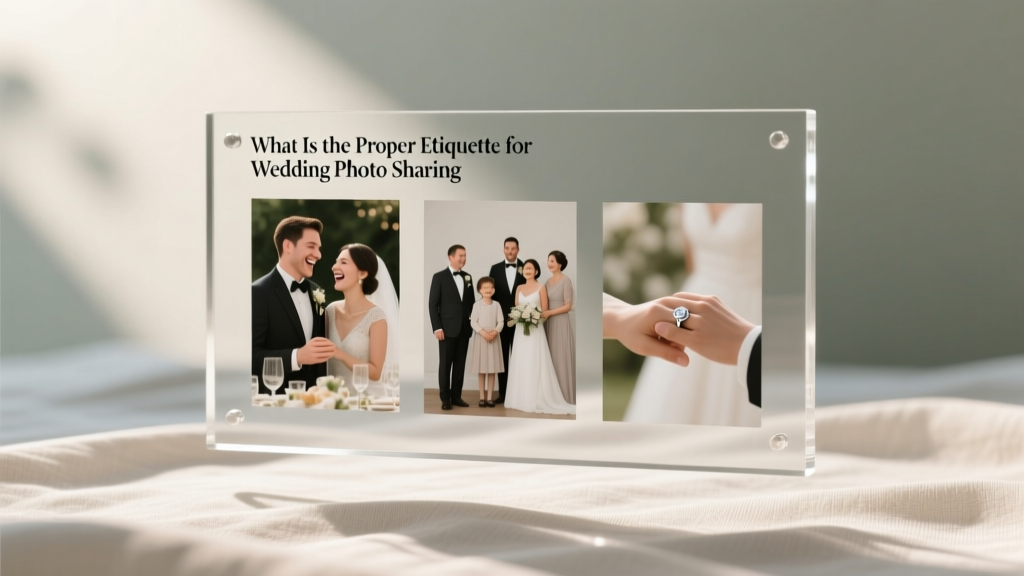
What Is the Proper Etiquette for Wedding Photo Sharing
What Is the Proper Etiquette for Wedding Photo Sharing?
Wedding photos are one of the most joyful parts of the day—until the sharing gets tricky. Maybe you’re excited to post your sneak peek, but you’re worried about spoiling your photographer’s reveal. Or you’ve seen a guest upload a not-so-flattering dance-floor photo before you’ve even left the reception.
Photo sharing etiquette matters because it touches a lot of feelings at once: privacy, timing, credit for vendors, and the couple’s right to control how their wedding is shown to the world. The good news: clear expectations and a few simple boundaries can prevent most awkward moments.
The direct answer: Who should share wedding photos, and when?
The couple sets the rules. Proper etiquette is for guests (and even the wedding party) to wait until the couple shares first, avoid posting key moments without permission, and respect any “unplugged” or “no social media” requests. Couples, in turn, should communicate their preferences kindly and early, and they should follow their photographer’s contract about crediting, tagging, and timing.
Q: What’s the “normal” approach to photo sharing now?
Modern wedding trends lean toward a balanced approach: couples often want guests to take casual photos, but not during the ceremony and not at the expense of professional coverage. A common setup looks like this:
- Unplugged ceremony (no phones during the processional and vows), then “phones welcome” at cocktail hour and reception.
- Couple posts first—usually a phone selfie that night or a professional sneak peek within a few days.
- Guests share with a hashtag or upload to a shared album, while avoiding posting unflattering images or private moments.
“Most couples aren’t anti-social-media—they just want a little control over the first impression,” says Renee Park, a (fictional) wedding planner in Chicago. “If you give guests a plan, they’re happy to follow it.”
Q: Traditional etiquette vs. modern etiquette—what changed?
Traditional etiquette was simple: guests took few photos, and the couple waited weeks for professional prints. Sharing was mostly in-person or via mailed albums. The focus was privacy and formality.
Modern etiquette recognizes that weddings are documented in real time. Guests love capturing candid moments, and couples often enjoy seeing the day through friends’ eyes. But with that comes new friction points: a guest live-streaming your vows, a blurry aisle shot posted before you’ve even seen your own photos, or someone tagging you in every picture (including the ones you’d rather forget).
A real-world example: “We loved having everyone take photos at the reception, but we asked for no posting until we shared our first picture,” says Maya, a newlywed in Austin (fictional). “Our officiant made a quick announcement, and it worked—people still took tons of photos, they just waited.”
Q: What should couples decide ahead of time?
Think of wedding photo sharing as part of your overall wedding communication, like dress code or plus-ones. Here are the key decisions to make:
- Do you want an unplugged ceremony? If yes, specify whether that includes the processional, vows, recessional, or the entire ceremony.
- Are guests allowed to post during the wedding? Some couples are fine with reception posts but prefer guests to avoid ceremony photos.
- Do you want to “post first”? If yes, say so clearly: “Please wait to post until we share a photo.”
- Do you want a wedding hashtag? Hashtags can be useful, but they’re less common now than a few years ago. Many couples prefer a shared album link or QR code instead.
- Any privacy concerns? Consider jobs, family situations, or guests who shouldn’t appear online. If privacy matters, you’re allowed to set firmer boundaries.
From a trend standpoint, couples are increasingly using QR codes on signage that link to a Google Photos or Apple Shared Album, so guests can upload directly without posting publicly. It’s a modern solution that keeps the joy while minimizing oversharing.
Q: How do we communicate our photo sharing preferences without sounding strict?
Warm and clear beats long and apologetic. Use a few simple touchpoints:
- Your wedding website FAQ: “We’re having an unplugged ceremony. Afterward, feel free to snap and share—just please wait until we post our first photo!”
- Signage at the ceremony: Short and friendly: “Unplugged ceremony—please keep phones away until the reception.”
- Officiant announcement: This is the most effective. Guests hear it at the exact moment it matters.
- Wedding party briefing: Ask them to model the behavior you want (no phones in the aisle, no posting early).
“If the couple cares about timing, I recommend they say it out loud, not just write it,” says David Lin, a (fictional) wedding photographer. “Guests are excited and distracted. A quick announcement prevents 90% of the issues.”
Q: What about sharing the professional photos—who owns them?
This is where etiquette and contracts overlap. Generally:
- The couple usually owns the prints (the delivered images for personal use), but the photographer often retains copyright.
- Read your photography contract for rules on posting, printing, editing, and vendor credit.
- Don’t apply heavy filters to professional images unless your photographer is okay with it; it can misrepresent their work.
- Tagging and crediting vendors is a thoughtful move and often appreciated—especially if your photographer has requested it.
If you’re unsure, a polite message solves it: “We’d love to post these—do you prefer we tag your business page or add a photo credit in the caption?” That’s both good etiquette and great vendor relationship-building.
Q: What if a guest posts photos we don’t like (or posts before we’re ready)?
This happens, and it doesn’t have to become a big drama. Choose the response that matches the situation:
- If it’s just early posting: Send a kind note: “We’re so excited you shared! Would you mind taking it down for a day? We were hoping to post our first photo ourselves.”
- If it’s unflattering or private: Be direct and calm: “Could you please remove that photo? We’re keeping certain images offline.”
- If it’s a pattern: Ask a trusted person (maid of honor, sibling) to step in. Sometimes it’s easier coming from someone else.
A realistic script from a planner: “Assume good intentions first,” says Renee Park. “Most guests think they’re being supportive. Clear, polite requests usually work.”
Q: Are there different rules for the wedding party?
Yes—because the wedding party is in more photos and closer to the timeline. It’s fair to ask them to:
- Not post getting-ready photos that reveal your look before the ceremony.
- Avoid standing behind the photographer during portraits (it splits attention and can affect expressions).
- Wait on posting professional shots until you’ve shared or approved.
If you’re fine with them posting, say that too. People appreciate knowing what’s welcome.
Related questions couples often ask (and the edge cases)
Q: Should we create a wedding hashtag?
A: Only if you’ll actually use it. Hashtags can be fun, but many couples now prefer a shared album link. If you do a hashtag, keep it short, easy to spell, and printed where guests will see it.
Q: Can we ask guests not to post our kids or certain family members?
A: Yes. This is increasingly common. Add a line to your website: “Please avoid posting photos of children and keep family photos off public social media.” You can also quietly tell key relatives.
Q: What about live streaming?
A: If you want a stream, designate one person and one angle so it doesn’t turn into dozens of phones in the air. If you don’t want it, say clearly: “Please no live streaming or posting ceremony video.”
Q: Is it okay to ask guests to upload photos somewhere?
A: Absolutely—and it’s a great trend. Use a QR code that links to a shared album, and place it at the reception or on table cards. Guests love contributing, and you get candid photos quickly.
Q: When should we share our professional gallery?
A: Share when you’re ready. Some couples post a small curated set first, then share the full gallery link later (especially if it includes private family moments). If you’re using a password-protected gallery, that’s a nice middle ground.
Conclusion: A little clarity goes a long way
Proper wedding photo sharing etiquette comes down to one principle: respect the couple’s wishes—and as the couple, state those wishes clearly. Whether you’re going unplugged, going fully social, or choosing a modern in-between approach with a shared album, your guests will usually follow your lead when you give them a simple plan. You get to enjoy the celebration and keep the first chapter of your wedding story in your hands.
More Articles
 Jeffrey Epstein at Chelsea Clinton’s Wedding? Truth Check
 Delete Wedding Website on The Knot: Step-by-Step (2026)
 Andrea Bocelli Wedding Singer: Truth Behind Viral Videos
 Invite Therapist to Wedding? 7 Unspoken Rules (2026)
 Does Every Country Wear Wedding Ring On Left Hand (2026)
 Bridal Party vs Wedding Party: The 2026 Rule
 How to Fix a Hole in a Wedding Veil (2026)
 Chinese Wedding Ring Finger: Left or Right Hand? (2026)
 Don Jr Wedding Photo: Truth, Sources & How to Verify
 8th Wedding Anniversary: Bronze, Salt & Modern Ideas