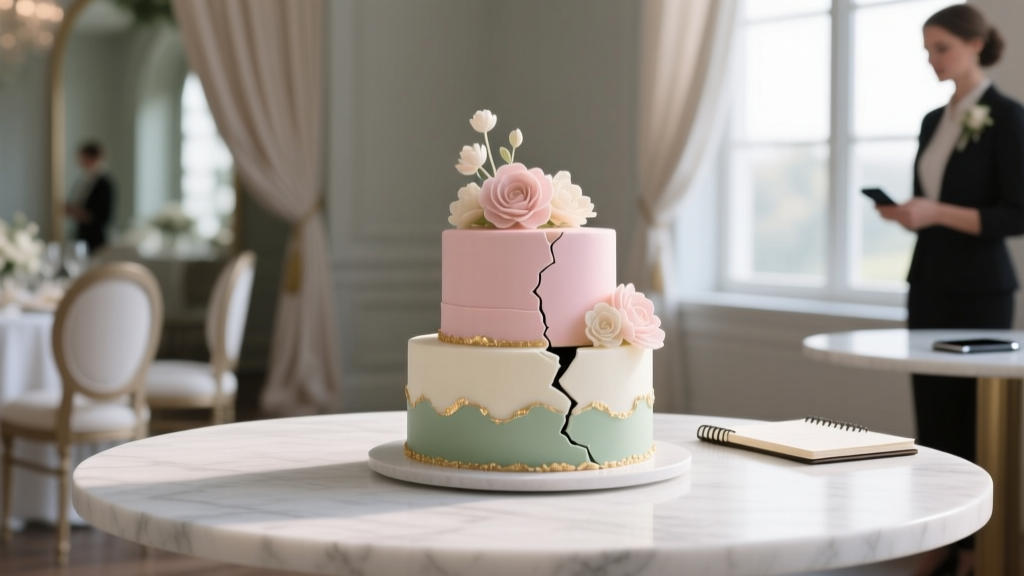
What to Do If Your Wedding Cake Arrives Wrong
What to Do If Your Wedding Cake Arrives Wrong
You’ve planned the flowers, the timeline, the seating chart—then the wedding cake arrives and it’s… not what you ordered. Maybe the color is off, the design is wrong, the topper is missing, or (worst-case) the flavor is different. Cake is both dessert and décor, so when it’s wrong, it can feel like a big, very public problem.
The good news: this happens more often than couples realize, and there are clear, calm steps you can take to fix it quickly—often without guests ever knowing. A “wrong wedding cake” doesn’t have to ruin the day.
The quick answer: what to do immediately
If your wedding cake arrives wrong, don’t panic—document it, contact the bakery right away, and decide what matters most: a fast fix, a partial fix (like re-icing or adding flowers), or a refund/credit. If you can, delegate the calls and decisions to your wedding planner, venue coordinator, or a trusted friend so you can stay present and enjoy your day.
First, figure out what “wrong” means (and how urgent it is)
Not all cake issues are created equal. Your response should match the problem:
- Cosmetic differences (slightly different shade of white, fewer sugar flowers, piping style changed): usually fixable on-site with décor tweaks.
- Structural issues (leaning tiers, cracked fondant, sliding layers): urgent—needs immediate stabilization.
- Wrong size (fewer servings than contracted): urgent if you’re relying on cake for all dessert servings.
- Wrong flavor or fillings: depends on your priorities; can be significant if guests have allergies or if you paid for premium flavors.
- Allergy/dietary mismatch (not gluten-free, contains nuts, wrong labeling): urgent and potentially dangerous—treat as a safety issue.
- Late delivery: urgent, but sometimes solved by pushing cake cutting later and serving another dessert first.
Wedding planner and day-of coordinator Morgan Lee (fictional) puts it simply: “The first question I ask is: is anyone’s safety at risk, and will guests go without dessert? If the answer is no, we can usually make it look intentional.”
Step-by-step: what to do when the cake is wrong
1) Take photos—fast and from a few angles
Snap clear photos of the front, sides, top, and any problem areas, plus a picture of the delivery label if it’s attached. This protects you if there’s a dispute later and helps the bakery assess what they can fix.
2) Pull out your contract and final design confirmation
Find the last email or invoice showing flavors, tier sizes, frosting type, décor details, delivery time, and set-up responsibilities. If you have a wedding website folder or shared planning doc, this is where it pays off.
3) Call the bakery immediately (and keep it calm and specific)
If you’re the couple, hand this off. If you’re the designated helper, say something like:
“Hi, this is Jamie calling from the Carter wedding at Rosewood Venue. The cake delivered at 2:15 doesn’t match the final order: the bottom tier is smooth fondant instead of buttercream and the monogram is missing. Can you send someone to fix it, or advise an on-site solution within the next hour?”
Specific details get faster results than general frustration. Many bakeries keep extra flowers, piping bags, ribbon, and supports for emergencies.
4) Loop in the venue coordinator (and planner if you have one)
Venues often have emergency kits, extra florals, cake stands, or a pastry chef on-site. Some venues can offer sheet cake or plated dessert as a backup. Your coordinator can also handle logistics—like where a baker can park, what door to use, and how to avoid guest traffic.
5) Decide your “non-negotiables”
In the moment, you need a short list:
- Safety (allergens, stability)
- Enough servings
- Looks good in photos (front view, cake table styling)
- Taste (if you care more about flavor than design)
Everything else becomes optional. Couples are often surprised by how little guests notice, especially with candlelight receptions and busy dessert stations—two major current wedding trends.
Real-world examples (and how they were handled)
Scenario A: The cake looks different, but it’s still pretty.
A couple ordered a textured buttercream cake with pressed florals; it arrived in smooth buttercream with minimal texture. Their planner added extra blooms from the floral team and repositioned the cake so the best side faced the room. “Once it was on the table with candles and greenery, it looked like the plan,” the bride, Alina (fictional), said. “No one knew it wasn’t exactly the mock-up.”
Scenario B: The cake is the wrong flavor.
The bakery delivered vanilla instead of lemon-raspberry. The couple decided not to swap it because the reception was already underway and the cake was otherwise perfect. They negotiated a partial refund afterward. “We cared more about keeping the vibe calm than chasing lemon cake,” the groom, Mateo (fictional), shared.
Scenario C: The cake is too small.
A three-tier cake intended for 120 servings arrived sized closer to 80. The venue offered sheet cake from their pastry kitchen for the remaining servings, plated and served from the back. The display cake still had the “wow” moment, and everyone got dessert.
Scenario D: Allergy issue.
A cake labeled nut-free arrived with a hazelnut filling note on the box. The couple removed it from service immediately and served an alternate dessert. They later received a full refund. This is the one area where etiquette is simple: protect your guests first.
Traditional vs. modern approaches: what “counts” as fixing it
Traditional approach: The wedding cake is a centerpiece, and the expectation is that it matches the agreed design and is served to most guests. If it’s wrong, families may push for an immediate replacement or a strong complaint on the spot.
Modern approach: Many couples now do a small cutting cake plus sheet cake, cupcakes, donuts, or a dessert bar. With these wedding trends, a cake that’s “wrong” becomes less of a crisis—because the cake’s main job is photos and the ceremonial cut, not feeding every guest.
Pastry chef Dana Rios (fictional) says, “More couples are choosing a simple, camera-friendly cutting cake. That trend makes problems easier to solve because we can quickly re-decorate one tier or swap a small cake faster than rebuilding a huge one.”
Etiquette: how to address the bakery without burning bridges
Even if you’re upset, stay professional. You’re asking for help under time pressure. A calm tone increases the chances they’ll send their best person, fast.
- Do ask for a clear remedy: repair, replacement, partial refund, full refund, or future credit.
- Do document everything: photos, texts, call times, names.
- Don’t argue in front of guests: keep the cake conversation behind the scenes.
- Don’t post in the moment: wait until after you’ve resolved it. You can always leave an honest review later.
Actionable tips to prevent a wrong wedding cake (or reduce the damage)
- Confirm details 1–2 weeks out: email the final design, flavors, delivery window, and venue contact info.
- Request a labeled sketch: which tier is which flavor, and where décor elements go.
- Have a “cake point person”: planner, maid of honor, best man, or coordinator—someone empowered to approve quick fixes.
- Build in a delivery buffer: earlier delivery gives time to fix mistakes before guests arrive.
- Order a cutting cake + sheet cake: one of the easiest ways to protect your budget and your timeline.
- Pack a mini cake kit: ribbon, florals (real or sugar), a small offset spatula, and extra topper pieces if you have them.
Related questions couples also ask
What if the cake arrives damaged?
If it’s minor (smudges, small cracks), ask the bakery/venue to patch it with buttercream, extra florals, or strategic positioning. If it’s unstable or unsafe, remove it from display and switch to an alternate dessert plan. Your photos matter, but guest safety matters more.
Who pays if the bakery made the mistake?
Check your contract. Most reputable bakeries will offer a refund or partial refund based on the severity. If they subcontract delivery, confirm who is responsible for damage during transit. Keep all documentation for follow-up.
Can the venue fix it?
Sometimes. Many venues can provide extra décor, plating, or backup desserts. They usually can’t legally or safely alter someone else’s product beyond simple presentation tweaks, but they can absolutely help you pivot.
Should we still do the cake cutting if it’s wrong?
If the cake is safe and presentable, yes—cake cutting photos are about the moment, not perfection. If it’s a major mismatch or an allergy concern, cut a backup cake (even a small one) or skip the cut and do a different “moment” (champagne tower, dessert toast, or anniversary box sealing).
Conclusion: a calm fix is usually the best fix
A wrong wedding cake is frustrating, but it’s rarely a day-ruiner. Document the issue, contact the bakery quickly, prioritize safety and servings, and lean on your planner or a trusted friend to handle the details. With today’s trend toward dessert tables, cutting cakes, and flexible reception timelines, you have more backup options than ever—and your guests will remember the celebration, not whether the piping matched the inspiration photo.
More Articles
 A Wedding to Die For: Surprising Hallmark & Lifetime Stars
 Why Wedding Insurance Matters More Than You Think
 A Different World Wedding: Watch Whitley & Dwayne (2026)
 Is It Haram to Attend a Church Wedding? (2026)
 Wedding Budget Disagreements: How to Resolve Them
 Can Yaman Wedding Rumors: Fact vs. Fiction (2026)
 Why Hannah Mears Postponed Her Wedding (2026)
 Jewish Wedding Glass Smashing Meaning & Origins
 How to Congratulate a Newly Wedded Couple (2026)
 White Wedding Dress Origin: Queen Victoria’s 1840 Symbolism