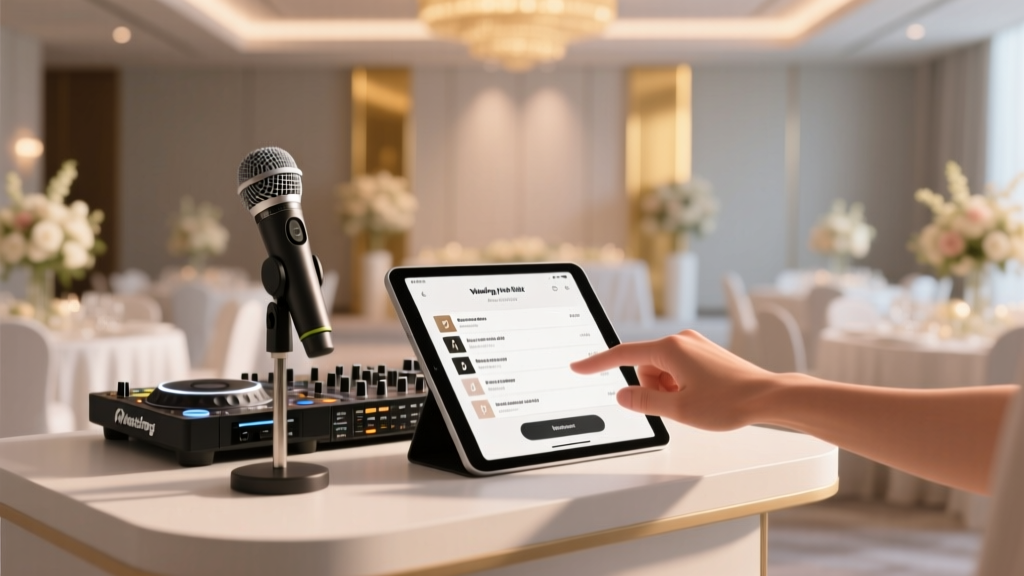
When Do You Need to Submit Your Song List to the DJ
When Do You Need to Submit Your Song List to the DJ?
You’ve booked your venue, you’ve picked your outfits, and now your brain is suddenly stuck on one surprisingly stressful detail: the music. It makes sense—music is the “feel” of your wedding. It cues the tears during the ceremony, sets the tone at cocktail hour, and can make the reception feel either electric or… awkwardly quiet.
Couples often ask this because it’s one of those planning tasks that seems small until you realize it touches everything: timing, special moments, family expectations, and your DJ’s ability to create the kind of dance floor you actually want.
Quick answer: Aim to submit your song list 2–4 weeks before the wedding
Most couples should send their song list, “must-play” songs, and “do-not-play” list to the DJ about 2–4 weeks before the wedding. That window gives your DJ enough time to prep, source any uncommon tracks, build a cohesive flow, and confirm details—without locking you in so early that your plans change.
If you’re doing lots of special moments (choreographed dances, cultural music sets, a very specific cocktail hour vibe, or multiple formalities), plan on sharing the essentials 6–8 weeks out, then sending final updates 2–3 weeks out.
Q: Why does the timeline matter so much?
A: Because your DJ isn’t just pressing play—they’re producing a live event in real time. A well-timed song list helps them:
- Match the energy curve of the night (warm-up, peak dance floor, late-night singalongs).
- Prep clean edits (shortened first dance, radio versions, seamless transitions).
- Find rare tracks (especially for indie artists, cultural music, or remixes that aren’t on standard DJ pools).
- Coordinate with your timeline (grand entrance timing, toasts, cake cutting, bouquet toss, private last dance).
- Avoid awkward surprises (explicit lyrics around grandparents, a “do-not-play” artist, or an ex’s song).
“My biggest stress as a DJ is getting a key song the week of—especially if it’s a niche remix,” says Marisol Chen, wedding DJ and entertainment director. “If I have it a month out, I can get the clean version, test the audio quality, and make it feel effortless.”
Q: What should you send first vs. later?
A: Break it into two rounds: “foundation” and “final polish.” This keeps you from obsessing over a 120-song playlist while you still haven’t chosen your processional.
Send early (6–8 weeks out) if you can:
- Your must-play songs (10–30 is usually plenty)
- Your do-not-play list (specific songs and/or genres)
- Your special moment songs (more on that below)
- Your general vibe: “modern disco,” “2000s throwbacks,” “country + pop,” “Afrobeats,” “Punjabi hits,” etc.
- Any cultural or family expectations (line dances, traditional sets, bilingual announcements)
Send later (2–4 weeks out):
- Updated must-plays based on recent favorites
- Any timeline changes
- “If there’s time” requests (nice-to-have songs)
- Final versions of songs (clean edits, acoustic vs. original)
Real-couple perspective: “We started a shared playlist the day we booked our DJ, but we didn’t send it until three weeks before,” says Jenna R.. “That helped us collect ideas without feeling locked in, and our DJ pulled the best parts and made it flow.”
Q: Which songs do you actually need to pick yourself?
A: Most couples only need to choose songs for the meaningful “anchor moments,” then let the DJ do what you hired them to do: read the room. Typically, you’ll pick:
- Ceremony processional (wedding party and/or partner entrance)
- Ceremony recessional (your walk back up the aisle)
- Grand entrance song (if doing one)
- First dance
- Parent dances (optional)
- Cake cutting (optional)
- Last dance (optional but trending)
If you’re not sure about some of these, it’s completely normal. DJs are used to helping couples decide. Some couples also add “signature songs” for dinner or cocktail hour—especially now that many weddings lean into a curated, restaurant-lounge vibe earlier in the evening.
Traditional vs. modern approaches: What timeline fits your style?
Scenario 1: Traditional DJ-led reception
If you want classic crowd-pleasers and you trust your DJ to steer the party, your list can be shorter. Submit your must-plays and do-not-plays 2–4 weeks out, and let them handle the rest. This works great for mixed-age guest lists where the DJ needs freedom to pivot.
“When couples give me 15 must-plays and a clear do-not-play list, that’s the sweet spot,” says Devon Patel, DJ/MC. “I can keep their taste at the center while still reacting to the dance floor.”
Scenario 2: Modern “playlist-driven” wedding (highly curated)
More couples are building detailed Spotify playlists for cocktail hour and dinner and asking their DJ to mirror the vibe for dancing. If that’s you, start sharing your playlists 6–8 weeks out. You don’t need every song finalized, but your DJ should understand your sound early so they can plan transitions and avoid genre whiplash.
Scenario 3: Cultural fusion wedding
If you’re blending cultures (for example, Latin + Top 40, or Bollywood + hip-hop), timing matters more. Share:
- Key artists and “must-hit” songs for each side of the family
- Any traditional dance segments (hora, money dance, garba, etc.)
- Pronunciation notes for names and announcements
Plan on sending this 6–8 weeks out so your DJ can source tracks and confirm they’re comfortable mixing the styles authentically.
Actionable tips for submitting your DJ song list (without overthinking it)
- Keep must-plays realistic: 10–30 songs is plenty. If you hand over 150 “musts,” your DJ loses the ability to read the room.
- Use categories: “Must play,” “Play if it fits,” “Do not play.” This helps your DJ prioritize.
- Flag explicit lyrics: If you’re okay with explicit music later in the night, tell your DJ when it’s fair game.
- Share what you hate as well as what you love: A short “no country” or “no line dances” note can prevent moments you’ll cringe at later.
- Give context for special songs: If a song matters because it was your first concert together, say so. DJs love knowing what’s emotionally non-negotiable.
- Ask about their format: Many DJs use an online planning portal. Others prefer a Google Doc or spreadsheet. Match their system so nothing gets missed.
Related questions couples ask (and the honest answers)
Q: What if I’m still deciding on first dance songs?
A: Tell your DJ your top 2–3 contenders by 4–6 weeks out, then finalize 2–3 weeks before. If you’re doing a choreographed dance, choose earlier so you can practice to the exact version (radio edit vs. extended).
Q: Can I submit a Spotify playlist instead of a list of songs?
A: Yes—many DJs love it for understanding your taste. Just don’t assume they’ll play it in order. Use it as a vibe guide, and still send a separate list for must-plays and formal moment songs.
Q: What if we make changes the week of the wedding?
A: Small changes are usually fine (swap a parent dance song, add one new favorite). But last-minute overhauls can cause stress and mistakes. If you must change something big, text/email it clearly and ask for a quick confirmation that they received it.
Q: Do we need a “do-not-play” list, or is that rude?
A: It’s not rude—it’s helpful. Modern wedding etiquette is less about pleasing every guest and more about avoiding known mood-killers or uncomfortable choices. A do-not-play list is a kindness to your DJ and to you.
Q: What if our families keep requesting songs we hate?
A: Decide your boundary as a couple. Some couples allow a short “family requests” section (3–5 songs), and the DJ places them strategically. Others keep the reception music fully couple-led. A good DJ can also gently deflect pushy requests with, “I’ll see what I can do,” without promising anything.
Q: We have a live band and a DJ—when do we submit song info?
A: Earlier is better. Bands need lead time for arrangements, and DJs need to coordinate set times and “handoff” moments. Share your plan 8–10 weeks out, then finalize details 3–4 weeks out.
Conclusion: Submit early enough to prep, late enough to stay flexible
The sweet spot for most weddings is sending your DJ your song list 2–4 weeks before, with earlier sharing (6–8 weeks) if your music is highly curated or culturally specific. You don’t need a perfect playlist to be “a good client.” Give your DJ clear must-plays, clear do-not-plays, and the vibe you want—and you’ll set yourselves up for the kind of night where the music feels like you.
More Articles
 Maid of Honor: 7 Truths No One Tells You (2026)
 Jeff Bezos Wedding Guest Count: Why So Small?
 Why Can’t the Groom See the Bride Before the Wedding?
 Wedding Guest List Anxiety: Why It Happens & How to Handle
 Wedding Ring Insurance Cost: 2026 Rates & Savings
 Wedding Ring Hand: Global Traditions & What to Do Abroad
 Is It Taboo to Wear Red to a Wedding? (2026)
 How to Handle a Bridesmaid Who Does Not Contribute
 Meghan Markle at Pippa Middleton’s Wedding? (2026)
 Wedding Photography for Beginners: 7 Must-Do Steps (2026)