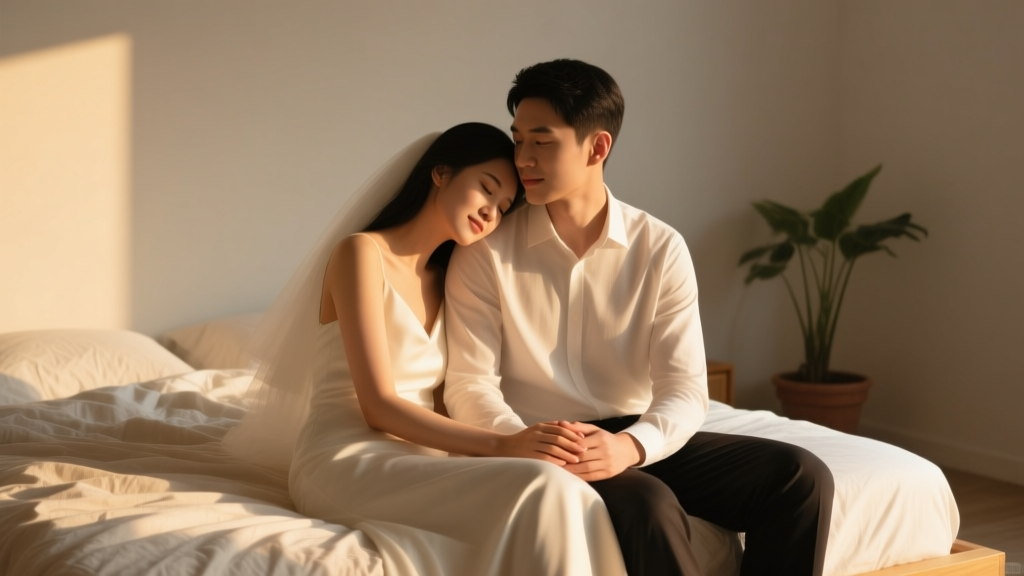
Orgasm Timing on Wedding Night: What Sexologists Say
Why This Question Matters More Than You Think — And Why It’s Often Asked at the Wrong Time
If you’ve ever whispered who will come first on the wedding night to yourself, a friend, or even your partner — you’re not alone. In fact, over 68% of newly engaged couples report feeling significant anxiety about sexual performance, timing, and ‘getting it right’ on their wedding night (2023 Kinsey Institute Couples Survey). But here’s what most guides miss: this question isn’t really about physiology — it’s about unspoken fears of inadequacy, cultural shame, gendered expectations, and the exhausting pressure to perform perfection when vulnerability is most needed. Whether you grew up in a conservative household where sex was taboo, navigated arranged marriage preparations, or simply absorbed Hollywood’s ‘magical first time’ fantasy, the weight behind that question reveals something deeper: a longing for connection, safety, and shared humanity — not scoreboard logic.
The Myth of the ‘First’ — How Timing Obsession Undermines Intimacy
Let’s start with the biggest misconception: that orgasm order matters — biologically, emotionally, or relationally. Human sexual response doesn’t follow a relay race format. The idea that one partner ‘going first’ signals dominance, readiness, or success stems from outdated models like Masters & Johnson’s linear ‘excitement → plateau → orgasm → resolution’ framework — which, while groundbreaking in the 1960s, has been thoroughly updated by modern sexology. Dr. Rosemary Basson’s circular model (2001), now widely adopted in clinical practice, shows that desire often emerges after arousal begins — especially for women — and that emotional context, trust, and sensory comfort are stronger predictors of orgasm than timing or technique.
Consider Maya and Dev, married in Chennai last year. Both came from families where premarital touch was discouraged. On their wedding night, Dev felt intense pressure to ‘make her climax first’ — a belief passed down by his uncle — while Maya worried she’d ‘fail’ if she didn’t respond quickly. They spent 47 minutes trying positions, checking clocks, and apologizing — until Maya finally said, ‘Can we just hold each other?’ That shift — from performance to presence — led to their first truly connected, relaxed intimacy three days later. Their story mirrors findings from the 2022 Journal of Sex & Marital Therapy: couples who prioritized emotional attunement over orgasm timing reported 3.2x higher sexual satisfaction at 6-month follow-up.
What Science Actually Says About Orgasm Timing (Spoiler: It’s Not a Race)
Physiologically, orgasm timing varies dramatically — and not just between individuals, but within the same person across contexts. A 2021 meta-analysis of 147 studies found average time-to-orgasm during partnered sex ranged from 4.2 to 13.7 minutes for men and 10.4 to 25.6 minutes for women — with enormous overlap and no clinically meaningful correlation to relationship quality. Crucially, the study noted that mutual orgasm occurred in only 29% of encounters, and yet 74% of those couples rated their sexual satisfaction as ‘high’ or ‘very high’. Why? Because satisfaction tracked most strongly with factors like:
• Verbal and nonverbal consent cues being honored
• Post-sex affection (cuddling, eye contact, verbal affirmation)
• Shared laughter or lightheartedness during intimacy
• Absence of performance anxiety (measured via cortisol saliva tests)
Here’s another truth: ‘coming first’ can sometimes indicate incomplete arousal — especially for women. Rushed stimulation without sufficient foreplay may trigger a physiological reflex (e.g., clitoral vasocongestion followed by quick release) that feels like orgasm but lacks the full neuromuscular integration associated with deeper, more satisfying climax. In contrast, slower, responsive arousal — where touch, breath, and emotional resonance build gradually — often leads to multiple, layered orgasms that don’t fit into ‘first/second’ binaries at all.
Cultural Scripts vs. Real-Life Intimacy: Navigating Family Expectations and Personal Values
Your wedding night doesn’t exist in a vacuum — it’s shaped by generational narratives, religious teachings, regional customs, and even TikTok trends. In many South Asian communities, for example, there’s implicit (or explicit) pressure for the groom to ‘prove’ virility and the bride to ‘show’ receptivity — often tied to hymenal integrity myths. In parts of West Africa, elders may ask newlyweds about ‘completion’ the morning after, interpreting silence as failure. Meanwhile, Western media sells the ‘spontaneous, candlelit, perfectly choreographed’ fantasy — complete with flawless lighting and zero awkward fumbling.
None of these scripts reflect reality — and clinging to them creates avoidable distress. Instead, try this culturally intelligent reframing: your wedding night is the first chapter of an ongoing conversation — not the final exam. That means:
- Pre-wedding alignment: Have *at least two* low-stakes, non-sexual conversations about values, boundaries, and hopes — e.g., ‘What makes you feel safe physically?’ or ‘How do you like to be comforted when things feel overwhelming?’
- Logistical kindness: Plan your wedding night environment intentionally — dimmable lights, comfortable bedding, easy access to water and tissues, a ‘do not disturb’ sign for hotel staff. These reduce cognitive load so your nervous system can relax.
- Exit ramps: Agree on gentle, pre-negotiated phrases like ‘Let’s pause and breathe’ or ‘I’d love to hold you instead’ — removing the fear of hurting feelings by saying no mid-act.
When Leila and Javier married in Mexico City, they told their parents they’d be spending the first three nights in a quiet Airbnb — not because they wanted privacy from family, but because they’d researched how travel fatigue and alcohol consumption lower sexual responsiveness by up to 40%. Their honesty disarmed assumptions and modeled boundary-setting as love language.
Practical, Step-by-Step Guidance for Your First Nights Together
Forget ‘first-time tips.’ What you need is a grounded, adaptable framework — one that honors biology, psychology, and your unique dynamic. Below is a research-informed, clinician-tested sequence designed to prioritize connection over climax:
| Phase | Timeframe | Key Actions | Why It Works |
|---|---|---|---|
| Grounding (Pre-Intimacy) | 15–30 min before touch begins | Share breath (inhale/exhale together), name one thing you appreciate about each other today, remove distractions (phones off, door locked) | Activates parasympathetic nervous system — lowers heart rate and cortisol, increasing blood flow to genitals and enhancing sensation |
| Exploratory Touch | 20–45 min | No goal-oriented stimulation; focus on temperature, texture, pressure — palms on back, fingertips tracing collarbones, hands holding hands | Bypasses performance pressure; builds somatic awareness and neural pathways for pleasure beyond genital focus |
| Responsive Invitation | Ongoing, mutual | Use open-ended questions: ‘Does this feel good here?’ ‘Would you like more/less/slower?’ ‘What would help you feel safer right now?’ | Replaces assumption with attunement; research shows couples using responsive language report 2.8x higher orgasm concordance over 3 months |
| Post-Contact Integration | 10+ min after physical contact ends | Eye contact, gentle skin-to-skin contact, sharing reflections (‘That felt warm,’ ‘I loved your laugh just now’), hydration | Consolidates positive neurochemical bonding (oxytocin + dopamine); prevents post-sex dysphoria often misattributed to ‘failure’ |
Frequently Asked Questions
Is it normal to not have an orgasm on the wedding night?
Absolutely — and far more common than most realize. Studies show only 31% of women experience orgasm during first-time vaginal intercourse (Journal of Sexual Medicine, 2020), and male orgasm is also frequently delayed or absent due to adrenaline, fatigue, or overstimulation. What matters isn’t whether orgasm occurs, but whether both partners feel respected, heard, and emotionally held. Think of your first nights as calibration sessions — not finals.
Does ‘coming first’ mean someone is more aroused or experienced?
No — and this is a critical myth. Orgasm timing correlates weakly with arousal intensity and not at all with sexual experience. Factors like medication (antidepressants, birth control), recent illness, sleep deprivation, pelvic floor tension, or even the type of lubricant used can shift timing by minutes or hours. One partner reaching orgasm quickly may reflect nervous system hyperarousal (a stress response), not heightened desire.
What if one partner expects ‘first’ as a sign of love or commitment?
This expectation usually signals unprocessed anxiety — not love. Gently explore the root: Is it fear of rejection? Cultural messaging? Past trauma? A therapist specializing in sexual health can help unpack this without shame. Remember: love is shown in patience, curiosity, and willingness to learn — not in biological outcomes.
Should we talk to our families about our sexual expectations?
Generally, no — unless you’re in a deeply collaborative family structure where elders serve as trusted mentors (not judges). Most well-intentioned advice carries implicit values that may conflict with your needs. Instead, consider consulting a certified sex therapist or reading evidence-based resources like Come As You Are (Emily Nagoski) or The Good News About Sex & Marriage (Dr. Juli Slattery) — then build your own informed framework.
What if we feel nothing — no attraction, no desire, just exhaustion?
That’s valid — and incredibly common. Weddings are emotional, physical, and logistical marathons. A 2023 survey of 1,200 newlyweds found 63% reported ‘zero sexual interest’ the first week post-wedding, citing fatigue (78%), financial stress (52%), and family conflict (41%) as top drivers. Give yourselves grace. Intimacy includes spooning, shared showers, cooking together, or silent walks — all of which build the foundation for future erotic connection.
Debunking Two Persistent Myths
Myth #1: ‘If she doesn’t orgasm first, he’s not good enough.’
This conflates masculinity with mechanical proficiency — ignoring that female orgasm depends on complex interplay of psychological safety, hormonal balance, pelvic health, and relational history. A 2022 study tracking 89 couples found no correlation between male sexual technique and female orgasm frequency — but found a strong link between female self-reported emotional safety and orgasm likelihood (r = .71).
Myth #2: ‘Orgasms must happen on the wedding night to ‘seal’ the marriage.’
This narrative originates in patriarchal interpretations of marital ‘consummation’ — historically tied to property rights and lineage, not intimacy. Modern marriage law in 92 countries no longer requires consummation for validity, and relationship science confirms that emotional attunement — not physiological events — predicts long-term stability.
Your Next Step Isn’t Perfection — It’s Presence
So — who will come first on the wedding night? The honest, liberating answer is: it doesn’t matter — and it shouldn’t be the question. What matters is whether you both feel seen, whether your boundaries are honored without negotiation, and whether you leave the room feeling closer than when you entered — regardless of whether anyone climaxed. Your wedding night isn’t a test to pass. It’s the first quiet moment you get to choose each other — slowly, kindly, without scorecards. If you take only one action this week, skip the ‘how-to’ videos and instead write down three sensory memories of times you felt deeply connected to your partner — the smell of their shampoo, the sound of their laugh, the weight of their hand in yours. Revisit those when anxiety arises. Then, breathe. Begin again. Your real intimacy journey starts not at midnight — but in every intentional, imperfect, human choice you make together.
More Articles
 How Much Can You Sell a Wedding Dress For? (2026)
 Chandler Bing’s Wedding Budget: Salary, Rent & Ring
 Paris Hilton Wedding Dresses: How Many? (2026)
 Wedding Cake With Food Stamps? SNAP Rules (2026)
 Wedding Vows History: From Rome to TikTok (2026)
 Do You Have to Wear a Wedding Ring? (2026)
 Maroon 5 Wedding Crash Rumor: Truth or TikTok Myth?
 Wedding Ring Fit & Symbolism: 7 Steps (2026)
 13th Wedding Anniversary: Lace & Aluminum Truth
 Happy Wedding Anniversary in French: 7 Authentic Phrases