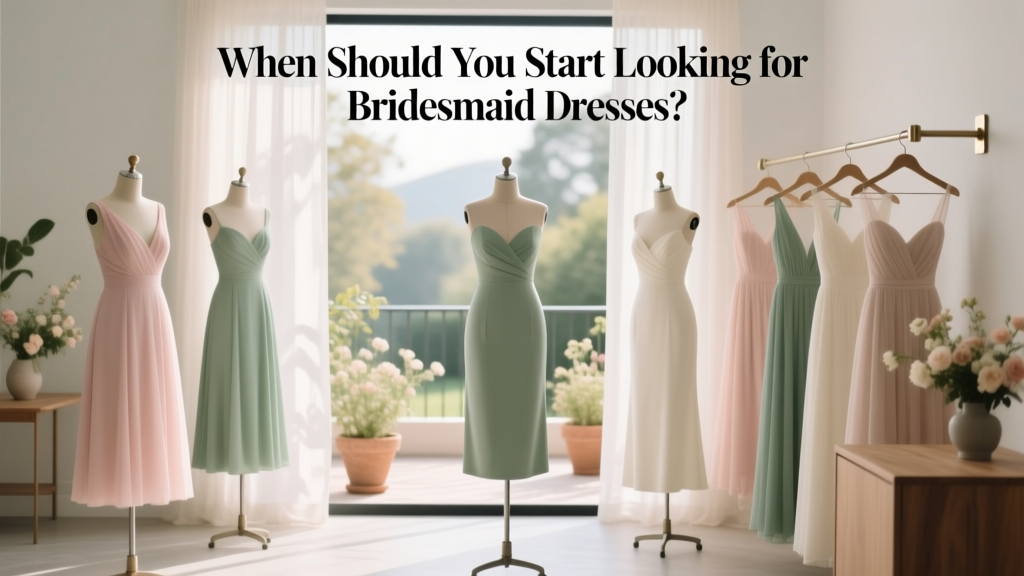
When Should You Start Looking for Bridesmaid Dresses
When Should You Start Looking for Bridesmaid Dresses?
If you’re asking this, you’re already ahead of the game. Bridesmaid dresses sound simple—pick a color, pick a style, place the order—but real life quickly adds layers: different budgets, different bodies, backordered fabrics, shipping delays, and a calendar that fills up faster than you expect. Starting at the right time can mean the difference between a smooth, fun experience and a last-minute scramble.
Bridesmaid dress timelines also affect other pieces of wedding planning, like your color palette, bouquet choices, suit colors, and even the vibe of photos. The good news: you don’t need to have everything finalized immediately. You just need a smart window and a plan.
Quick Answer: When should you start shopping?
Start looking for bridesmaid dresses about 6–8 months before the wedding, and aim to place orders 4–6 months out. If you’re using a traditional bridal salon (made-to-order dresses), start closer to 8–10 months out. If you’re choosing ready-to-ship bridesmaid dresses online, 4–6 months is usually plenty—assuming you build in time for exchanges and alterations.
If your wedding is during peak season (spring/fall), includes international shipping, or you have a larger bridal party with varied sizing needs, give yourself the longer end of those ranges.
Why timing matters more than it used to
Modern weddings are more flexible than ever—mix-and-match bridesmaid dresses, “wear-any-dress-in-this-color” guidelines, and even nontraditional bridal party looks are common. But timelines haven’t gotten simpler. In fact, they can be trickier because:
- Inventory moves fast. Popular colors sell out, especially in trending shades like champagne, terracotta, sage green, dusty blue, and mocha.
- Shipping and production vary wildly. One brand may deliver in a week; another may take 10–14 weeks.
- Alterations are still a thing. Even “standard sizes” often need hemming or strap adjustments.
- Bridesmaids live everywhere. Coordinating try-ons across multiple cities adds time.
“The biggest misconception is that bridesmaid dresses are quick and easy,” says Marisa Kent, a fictional bridal stylist with 12 years in bridal retail. “Even when a dress is in stock, you still need time for shipping, a size swap, and tailoring. The couples who start early have more options—and less stress.”
A realistic bridesmaid dress timeline (with examples)
Here’s a planning timeline that works for most couples, whether you’re going traditional, modern, or somewhere in between.
8–10 months before: Research and direction
- Confirm your wedding style and color palette.
- Decide your approach: matching, mix-and-match, or “choose your own.”
- Set a budget range you’re comfortable suggesting.
Real-world example: “We wanted mismatched satin dresses, but I didn’t want chaos,” says Jules (fictional bride). “At nine months out, I picked three approved colors and two fabric options. That gave my bridesmaids freedom without turning it into a group project.”
6–8 months before: Start shopping seriously
- Narrow down brand(s), fabric, and color(s).
- If you’re using a bridal salon, schedule appointments and check production timelines.
- If shopping online, order swatches (especially for neutrals and reds, which vary a lot).
4–6 months before: Order the dresses
- Have each bridesmaid order her dress (or order them all at once if you’re paying).
- Confirm return/exchange windows.
- Save confirmations and estimated delivery dates.
“I always tell couples to treat the order date like a vendor deadline,” says Tanya Rivera, fictional wedding planner. “Put it on the calendar, assign who’s tracking deliveries, and follow up. It’s not nagging—it’s project management.”
2–3 months before: Alterations
- Schedule alterations as soon as the dress arrives.
- Hem length should be based on the shoes they’ll wear (or bring the shoes to fittings).
2–4 weeks before: Final try-on
- Confirm undergarments and accessories.
- Do a final fit check and steam/press plan.
Traditional vs. modern approaches: What’s best for you?
Traditional (bridal salon, same dress for everyone)
Best for: Classic weddings, very specific looks, or when you want everything uniform.
Timeline: Start 8–10 months out. Made-to-order dresses often require more lead time, and many salons recommend ordering early to avoid rush fees.
Modern (mix-and-match, coordinated colors, different silhouettes)
Best for: Bridal parties with different body types, budgets, or style preferences.
Timeline: Start 6–8 months out. You’ll need time to test colors, confirm fabric consistency, and ensure the overall look feels cohesive in photos.
Ultra-flexible (“choose any dress in this color”)
Best for: Low-stress couples who care more about vibe than uniformity.
Timeline: You can start 4–6 months out, but give clear parameters—color name, fabric type (like chiffon or satin), length (floor-length vs. midi), and whether prints are allowed.
Current bridesmaid dress trends that affect timing
- Mix-and-match palettes: Gorgeous in photos, but you’ll want swatches early so the colors coordinate rather than clash.
- Convertible and re-wearable styles: Bridesmaids love the “wear again” concept, but sizing and strap configurations still need testing.
- Nontraditional colors: Rust, olive, and browns are having a moment. These can sell out quickly in popular fabrics.
- Minimalist slip dresses: Often quicker to ship, but more likely to need tailoring for bust/hip fit.
Actionable tips to make the process easier
- Pick a deadline and communicate it kindly. Example: “Please order by March 1 so we have time for shipping and alterations.”
- Use a shared tracker. A simple spreadsheet with size, order date, arrival date, and alteration status prevents confusion.
- Order swatches before committing. Lighting changes everything, especially with blush, champagne, and dusty tones.
- Consider comfort and season. Satin in midsummer outdoor heat is different than velvet in winter. Fabric matters.
- Build in a buffer. Assume one dress will need an exchange, one bridesmaid will order late, and one package will be delayed.
- Be upfront about costs. If you’re requesting a specific dress, share the price range early so no one is blindsided.
Related questions couples ask (and what to do)
What if one bridesmaid orders late?
Have a backup plan: a second approved dress option in the same color, or a retailer with fast shipping. If you’re doing mix-and-match, it’s easier to absorb one different silhouette. If everyone must match, consider purchasing one extra dress in a common size (only if return policies allow), or ask the late bridesmaid to prioritize ordering immediately and pay for expedited shipping if needed.
What if bridesmaids are in different cities?
Lean into online ordering with swatches, or choose a national retailer that’s easy to access. Ask each bridesmaid to get measured locally and order based on the size chart (not her usual street size). Schedule one virtual check-in to confirm the plan and deadlines.
What if someone is pregnant or postpartum?
Choose flexible silhouettes (wrap styles, empire waist, stretch fabrics) and wait to order until the timing makes sense. For a pregnancy, many will order closer to 3–4 months out depending on due date. Consider letting that bridesmaid choose a dress in the same color but a maternity-friendly cut.
What if you’re planning a short engagement?
If your wedding is in 3–5 months, focus on ready-to-ship options and keep the plan simple. Pick one color, one fabric, and 2–3 dress styles. Prioritize retailers with reliable delivery and clear exchange policies, and encourage immediate ordering.
Should the bride pay for bridesmaid dresses?
Etiquette varies. Traditionally, bridesmaids often pay for their own dresses in many regions, but it’s increasingly common for couples to cover dresses (or offer a stipend), especially when requesting a specific look. The kindest approach is clarity: if bridesmaids are paying, keep the budget realistic and avoid surprise costs.
Conclusion: A simple rule that keeps everyone calm
If you remember one thing: start looking 6–8 months before the wedding and order by 4–6 months out. That timeline gives you options, avoids rush fees, and leaves room for real life—shipping delays, exchanges, and alterations.
Bridesmaid dresses don’t have to be a stress point. With a clear deadline, a little flexibility, and a buffer for the unexpected, you’ll end up with a bridal party that feels confident, comfortable, and ready to celebrate with you.
More Articles
 Wedding Ring Etiquette: Rules You’re Breaking (2026)
 Wedding Date Change After Marriage: Legal Truth (2026)
 The Situation’s Wedding Cost Breakdown (2026)
 How Much Was Paris Hilton’s Wedding Dress? (2026)
 Why Wedding Dresses Are White: The Truth (2026)
 Wedding Gift Amount: Is $75 Good? (2026)
 Jewish Wedding Glass Smash: What Rabbis Actually Teach
 Luke and Laura Wedding Filming Location (2026)
 75th Anniversary Truth: Not a Diamond Jubilee
 Married Without a Wedding: Legal, Emotional, Social Guide