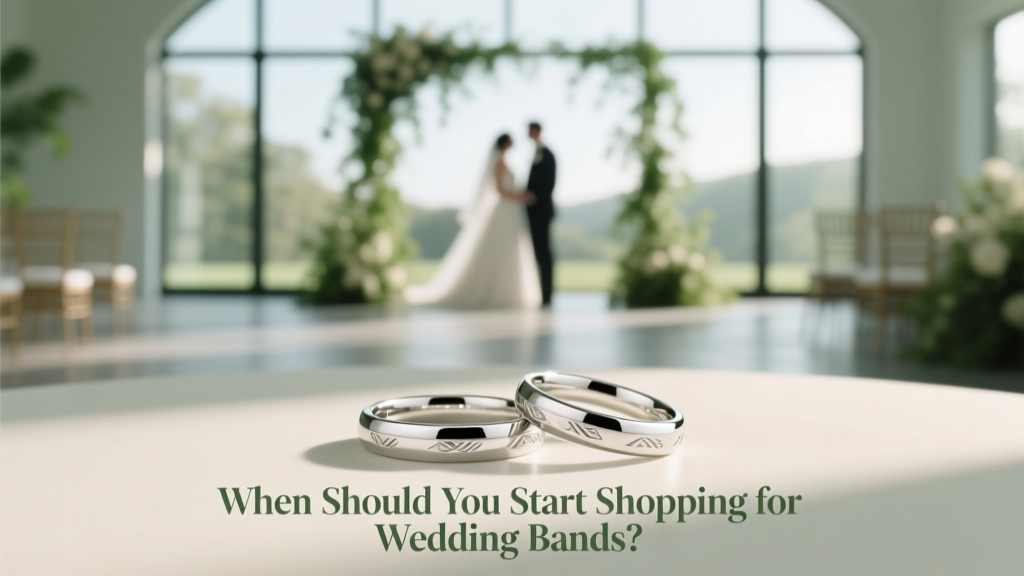
When Should You Start Shopping for Wedding Bands
When Should You Start Shopping for Wedding Bands?
If you’ve started wedding planning, you’ve probably noticed how quickly the “small stuff” becomes the stuff that keeps you up at night. Wedding bands are a perfect example: they’re tiny compared to a venue or a guest list, but you’ll wear them every day (hopefully forever), and they come with surprising timelines.
Couples often ask this question because they’re juggling a lot—engagement ring decisions, budgets, vendors, and family opinions—while also wanting their rings to feel personal. The good news: there’s a simple window that works for most couples, plus easy adjustments if you’re on a shorter (or longer) engagement.
Quick Answer: Start Shopping 3–6 Months Before the Wedding
Most couples should start shopping for wedding bands 3 to 6 months before the wedding date. That gives you time to browse styles, confirm sizing, place an order (especially for custom rings), and handle resizing or exchanges without stress.
If you’re doing custom wedding bands, ordering from a boutique jeweler, or choosing harder-to-size styles (like eternity bands), aim for 6+ months. If you’re buying simple classic bands in standard sizes, you can often do it in 6–10 weeks—but it’s still nicer to give yourselves breathing room.
Why the Timeline Matters (More Than Most Couples Expect)
Wedding bands aren’t just a quick purchase at the end of planning. Timing affects:
- Availability: Popular styles and metals (like 14k yellow gold, rose gold, and platinum) can have longer lead times, especially during peak wedding seasons.
- Customization: Engraving, mixed metals, unique finishes (matte, hammered), lab-grown diamonds, and heirloom redesigns can add weeks.
- Fit with the engagement ring: Many couples want a wedding band that sits flush with the engagement ring—this can require a curved band, contour band, or custom fit.
- Resizing reality: Even when you measure, sizing isn’t always perfect on the first try. Weather, travel, pregnancy, and even salt intake can affect how a ring fits.
As jeweler Nadia Chen of the fictional studio Chen & Co. often tells clients, “People think rings are an easy checkbox. But the best results happen when we have time—time to try, compare, and fine-tune.”
What “Shopping” Actually Looks Like (A Realistic Step-by-Step)
Here’s how the wedding band process tends to go for engaged couples:
- Inspiration phase: You browse wedding band styles online, save photos, and talk about what you like (classic, vintage, minimal, bold, gemstone, etc.).
- Try-on phase: You visit a jeweler (or order try-on kits online) to test widths, profiles, metals, and comfort-fit styles.
- Decision + ordering: You place the order and confirm details like engraving, finish, diamond size/setting, and return policies.
- Pick-up + check: You confirm the fit, inspect the setting (if stones), and ensure the engagement ring and band feel good together.
- Adjustments: If needed, resizing or remaking happens while you’re still comfortably ahead of the wedding.
One couple, Maya and Jordan (married last fall), described it this way: “We thought we’d pick bands in one afternoon. It took us three weekends because once we tried them on, we changed our minds about everything—width, metal color, even whether we wanted matching rings.”
Traditional vs. Modern Approaches: Both Are Normal
Traditional approach: Bands are chosen together, closer to the wedding
Traditionally, couples shop for wedding bands after the engagement ring is set and wedding plans are underway. It’s still common to buy them a few months out, especially if you’re choosing straightforward gold or platinum bands.
Modern approach: Shopping earlier, non-matching sets, and personal symbolism
Current wedding trends have shifted the timeline and the style expectations:
- More personalization: Custom engraving (vows, coordinates, fingerprints), hidden gemstones, and mixed metals are trending—and require lead time.
- Non-matching bands: Many couples choose rings that fit their own style rather than buying a coordinated set.
- Stacking and “ring wardrobe” thinking: Some people choose a wedding band designed to stack with other bands over time (anniversary bands, eternity bands), which encourages more thoughtful selection.
- Online ring shopping: Buying online can be convenient and budget-friendly, but shipping, returns, and resizing can add time.
Wedding planner Elise Romero (fictional) puts it plainly: “Couples are more intentional now. They’re not just buying a band—they’re designing something they’ll wear every day. That takes more than one late-night scroll.”
Scenario-Based Timing: What’s Right for Your Situation?
If you’re doing custom wedding bands or redesigning heirloom pieces
Start 6–9 months before. If you’re melting down family gold, resetting stones, or working with a designer, build in time for sketches, wax models, and revisions.
If your engagement ring needs a curved/contour band
Start 4–6 months before. Rings with large center stones, low settings, halos, or unusual shapes often need a band designed to sit correctly.
If you’re planning a short engagement
Start as soon as you have a date—ideally 8–12 weeks before at minimum. Choose a ready-to-ship option, keep customization simple, and ask about resizing turnaround time before you buy.
If you’re shopping online
Start 4–6 months before. You’ll want time for shipping, returns, and potential exchanges. Look for brands with clear policies and free resizing, especially for comfort-fit bands or alternative metals.
If you’re buying simple classic bands
You can start 2–3 months before, but shopping earlier still helps you compare prices, confirm comfort, and avoid rush fees.
Actionable Tips to Make Wedding Band Shopping Easier
- Try rings on at the time of day your hands are “normal.” Fingers swell with heat, exercise, and travel. An afternoon appointment often reflects real-life fit better than first thing in the morning.
- Bring the engagement ring. Even if you’re not matching, you’ll want to see how they sit together and how the combined height feels.
- Decide your “must-haves” vs. “nice-to-haves.” For example: must-have comfort-fit; nice-to-have engraving. This keeps you from getting overwhelmed.
- Ask about maintenance. White gold may need rhodium plating over time; platinum develops patina; pavé bands can require occasional stone checks.
- Confirm resizing rules before you buy. Eternity bands, tungsten, and certain designs may not be resizable—or only within a small range.
- Consider lifestyle. If you work with your hands, travel often, or hit the gym daily, comfort-fit and durability matter as much as appearance.
- Build in a “buffer month.” Aim to have rings in-hand at least 4 weeks before the wedding for peace of mind.
Modern Etiquette Questions Couples Ask (And What’s Actually Okay)
Do we have to shop together?
No. Many couples shop together because it’s meaningful and practical (sizing, style alignment), but it’s also fine to shop separately. Some couples prefer it as a surprise.
Should our wedding bands match?
They don’t have to. A growing trend is choosing bands that share a subtle detail—like the same metal or finish—without being identical.
Can we wear the wedding band before the wedding?
Some couples do (especially for comfort or religious reasons), but most wait. If you want to wear it early, consider wearing it on your right hand until the ceremony.
What if we’re losing weight, pregnant, or expecting size changes?
This is common. Choose a style that can be resized, avoid full-eternity bands if you expect fluctuations, and ask the jeweler about timing your final sizing closer to the wedding.
What if one of us doesn’t want a ring?
That’s okay. Some people choose an alternative (a watch, a tattoo, a silicone band for work, or no jewelry at all). The “right” choice is what feels respectful and authentic for both of you.
A Few Words on Budget and Timing
Starting earlier can actually save money. You’ll have time to compare vendors, watch for seasonal promotions, and avoid rush fees. If cost is a concern, ask jewelers about:
- 14k vs. 18k gold (14k is often more durable and budget-friendly)
- Lab-grown diamonds for diamond wedding bands
- Half-eternity styles (sparkle with easier resizing and often lower cost)
- Simple engraving for a personal touch without a big price jump
Conclusion: Give Yourselves Time, Not Pressure
The sweet spot for most couples is starting wedding band shopping 3–6 months before the wedding, with extra lead time for custom designs, online ordering, or complex ring pairings. The goal isn’t to find the “perfect” ring under pressure—it’s to choose something you’ll love wearing on ordinary days, not just on your wedding day.
If you start early, you’ll have room to explore, change your mind, and still end up with bands that feel like you. That’s the kind of wedding planning decision that should feel exciting—not stressful.
More Articles
 Paige Drummond Wedding Cost: $1.2M Breakdown (2026)
 Save the Dates: 12+ Non-Wedding Events That Need Them
 Do Widowers Wear Wedding Rings? A Compassionate Guide
 Are Wedding Registries Free? (2026)
 Meghan Markle Bow to Queen: Wedding Protocol Truth
 Do Men Wear Wedding Rings? (2026 Trends & What to Choose)
 Wedding Officiant: Validating Your License
 When Should You Book Your Wedding Day Transportation
 How Much to Tip Your Wedding Hair Stylist: The Exact Numbers
 Gretchen Geraghty Wedding Date: Truth Behind 2026 Rumor