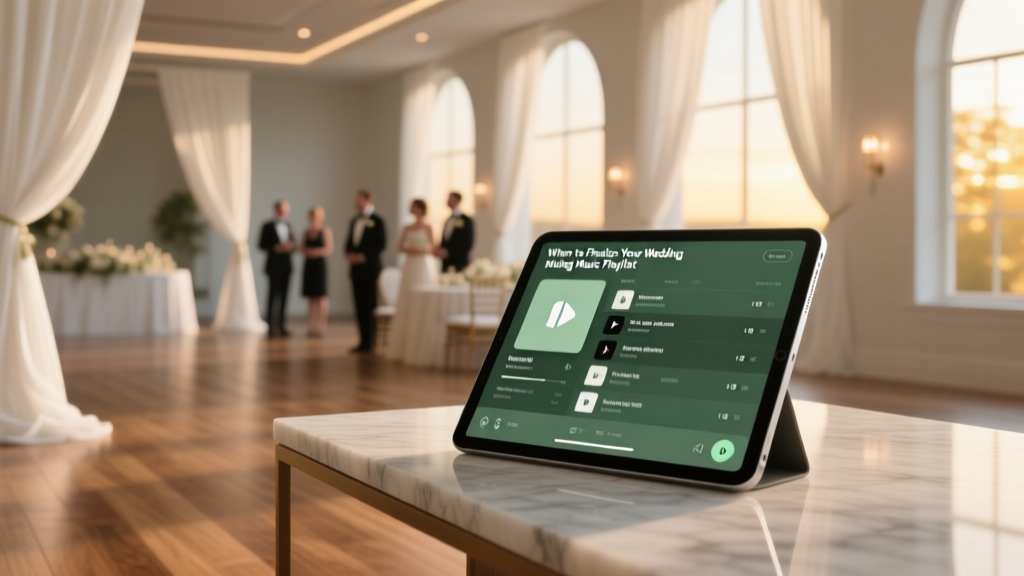
When to Finalize Your Wedding Music Playlist
When to Finalize Your Wedding Music Playlist
Music quietly controls the mood of your wedding day. It’s the difference between a ceremony that feels cinematic and one that feels rushed, between a dance floor that fills up fast and one that never quite gets going. That’s why couples often ask, “When should we actually finalize our wedding music playlist?”—especially when they’re juggling vendors, seating charts, and a hundred opinions from family and friends.
The good news: you don’t have to have every song picked a year out. You just need to lock in the right pieces at the right times, with enough runway for your DJ or wedding band to do their best work.
Quick answer: When should you finalize your wedding playlist?
Finalize your wedding music playlist (or your “must-play/do-not-play” list) about 3–4 weeks before the wedding. If you’re working with a live band, aim for 4–6 weeks. Your ceremony music and key moment songs (processional, recessional, first dance, parent dances) should be chosen sooner—typically 6–10 weeks out—because those moments often involve timing, cues, and sometimes edits.
If you’re planning a destination wedding, hiring a newer vendor, or doing a lot of custom edits, build in extra time and plan to finalize closer to 6–8 weeks before the date.
Why the timing matters (and what “finalize” really means)
“Finalizing” your wedding music playlist doesn’t always mean choosing every single track that will play all night. For most couples, it means:
- Locking in the songs that must happen (ceremony, entrances, first dance, etc.)
- Giving your DJ/band your music direction (genres, vibe, decades, clean versions)
- Providing a do-not-play list (songs that make you cringe or bring up bad memories)
- Confirming special requests (cultural music sets, surprise performances, a last-song singalong)
Most DJs and bands build the rest of the reception playlist live—reading the room, adjusting tempo, and keeping momentum. The earlier you give them your preferences, the better they can prepare, but a little flexibility close to the wedding is normal.
As DJ and entertainment coordinator “Marco L.” puts it: Couples think they need 5 hours of songs. What I really need is their ‘north star’: three words for the vibe, 10 must-plays, and 10 do-not-plays. Then we fine-tune the key moments about a month out.
A practical timeline couples can follow
3–6 months before
- Choose your ceremony style: live musicians, DJ, string quartet, or curated playlist
- Start a shared playlist (Spotify/Apple Music) for “potential wedding songs”
- Talk about your non-negotiables: clean edits, explicit lyrics, line dances, cultural traditions
8–10 weeks before
- Select your key moment songs: processional, recessional, grand entrance, first dance, parent dances, cake cutting (if doing), bouquet/garter (if doing), last song
- Tell your vendor about any edits (shortened first dance, specific start time, lyric-free version)
4–6 weeks before (especially for bands)
- Send your must-play list (usually 10–30 songs depending on vendor preference)
- Send your do-not-play list
- Confirm any special performances (a friend singing, a surprise dance)
3–4 weeks before (ideal finalization window)
- Finalize your music worksheet (most DJs provide one)
- Confirm pronunciations and entrances (names, wedding party lineup)
- Align with your timeline (when to open dancing, when to do toasts)
1 week before
- Minor tweaks only: swapping a song, adding one meaningful track, confirming clean versions
- Share a “VIP requests” note (if you want to prioritize a few guests, like grandparents)
Modern wedding trends that affect your playlist timing
Music planning has shifted in the past few years, and those trends can nudge your timeline earlier:
- Shorter receptions and tight timelines: With more couples choosing 4–5 hour celebrations or earlier end times, your “hits” need to be strategic. Finalize sooner so your DJ can pace the night.
- Outfit changes and multiple entrances: A second look often comes with a second entrance song, which is another cue to lock down.
- More personalized ceremonies: Vows, readings, and unity rituals can require precisely timed music fades.
- Genre-blending dance floors: Couples are mixing Afrobeats, Latin, K-pop, country, and ‘90s hip-hop. That’s fun—but it works best when your DJ knows the plan ahead of time.
One bride, “Talia,” shared: We kept changing our first dance song because we couldn’t decide. Once we picked it six weeks out, everything else fell into place—the vibe, the parent dances, even our final song.
Different scenarios: traditional, modern, DIY, and cultural celebrations
If you’re having a traditional wedding
You’ll likely have more “moment songs” (formal entrances, parent dances, maybe bouquet/garter). Choose those earlier, then finalize the rest 3–4 weeks out. Traditional etiquette still applies: keep ceremony music respectful, and if you’re in a house of worship, check any guidelines on song choices.
If you’re having a modern, non-traditional wedding
You may skip some formalities and focus on a big party vibe. In that case, your “finalize” moment is mostly about communicating your music style—your DJ can handle the flow. You can often finalize closer to the 3-week mark, as long as your key songs are chosen.
If you’re DIYing a playlist (no DJ)
Finalize earlier: 6–8 weeks before. DIY receptions need more prep because you’re replacing a professional’s real-time decisions. Build separate playlists (cocktail hour, dinner, dancing, last song), test transitions, and assign a trusted friend to manage volume and timing.
Wedding planner “Erin C.” advises: If you’re DIYing, your playlist is your vendor. Treat it like one—test it, back it up, and make it someone’s job, not a ‘hope it works’ situation.
If you’re incorporating cultural or religious music
Finalize earlier—6–10 weeks out—especially if you need specific versions, live drummers, or traditional sequences (like a baraat, hora, lion dance, or tea ceremony music). Share reference tracks so your DJ can match the right energy and timing.
Actionable tips to make finalizing easy (and avoid last-minute stress)
- Use the “10-10-10 method”: 10 must-plays, 10 do-not-plays, and 10 “love this vibe” songs. It’s enough guidance without micromanaging.
- Pick your top 3 vibe words: “glam + upbeat + nostalgic” or “indie + romantic + dancey.” Share these with your DJ.
- Decide on clean vs. explicit versions early: If kids or conservative relatives will attend, request radio edits ahead of time.
- Be specific about the first dance: Tell your DJ where to start the track and whether you want it shortened (many couples prefer 90 seconds to 2 minutes).
- Build a ‘do-not-play’ list without apology: If you hate the Cha Cha Slide or you don’t want breakup songs, that’s valid. Your reception, your rules.
- Ask your vendor how they prefer input: Some want a Spotify link, others want a worksheet. Follow their system so nothing gets missed.
Related questions couples ask (and real-world edge cases)
What if we change our mind after we finalize?
Small changes are normal up to about a week before. After that, changes may be missed due to travel, printing timelines, or vendor coordination. If you’re swapping a major moment song (like processional), tell your DJ/band and planner immediately and ask for written confirmation.
Do we need to provide a full wedding reception playlist?
No—most couples don’t. A great DJ prefers guidance, not a rigid setlist, because they’ll adjust based on the crowd. A live band may want more structure, but even then, you’re typically choosing highlights and must-plays.
When should we finalize ceremony music?
Earlier than reception music. Aim for 6–10 weeks out, especially if you need precise cues for walking timing, multiple processional songs, or a specific cut of a song.
How do we handle guest song requests?
Decide your approach ahead of time: open requests, limited requests, or no requests. Many couples choose a middle ground: “Requests welcome unless on the do-not-play list.” If there are songs that would derail the vibe, put them on the list—your DJ will happily play the bad guy.
What if our families disagree about music?
Pick a few “peace offering” songs that make your VIPs feel seen (a classic for your parents, a cultural favorite for grandparents), then keep the rest aligned with your taste. A short early dance set with crowd-pleasers can help, then transition into your ideal party music.
Conclusion: the calm, confidence-building takeaway
Most couples feel the best when they finalize their wedding music playlist about 3–4 weeks before the wedding (and a bit earlier for live bands or DIY setups). Choose your key moment songs sooner, give your DJ or band clear direction, and leave room for professional flexibility. When your music plan is solid, the rest of the day tends to feel smoother—because the soundtrack is doing its job: carrying everyone from “we’re married!” to a packed dance floor.
More Articles
 Kim Kardashian Wedding Dress Cost: Real Breakdown
 Do You Wear Both Wedding and Engagement Rings? (2026)
 Can You Return Wedding Dresses? (2026)
 Engagement Ring vs Wedding Ring Cost (2026)
 What Happens in Madea Destination Wedding (2026)
 What Parting Gift Does Katherine Get Before Her Wedding?
 Wedding Planner Salary: Real 2026 Earnings Data
 Bad Bunny Halftime Wedding: Was It Real? (2026)
 Wedding Rings: Left or Right Hand? (2026)
 When Should You Announce Your Wedding Website