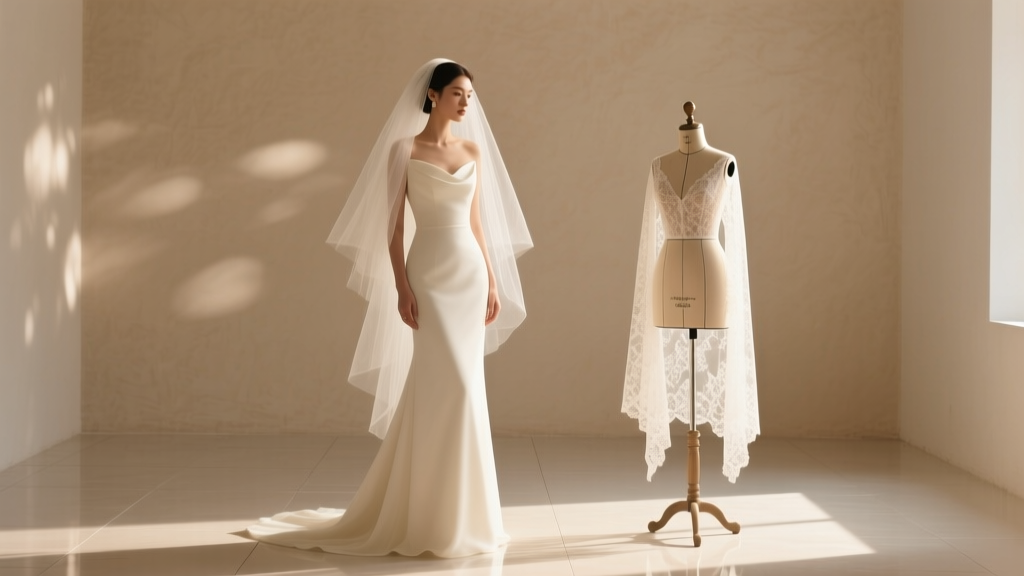
When to Have Your Final Dress Fitting
When to Have Your Final Dress Fitting
You’ve found the dress, you’ve done the big “yes” moment, and now you’re staring down the part that can feel strangely high-stakes: the final fitting. Timing it well matters because the goal isn’t just a pretty silhouette—it’s a dress you can breathe in, sit in, dance in, and wear confidently from ceremony to last call.
If you’ve heard conflicting advice (“Two weeks!” “A month!” “The week of!”), you’re not alone. Alteration timelines vary by fabric, body changes, wedding travel plans, and even current wedding trends like second looks and after-party outfits. Here’s the clearest way to plan it.
Quick answer: When should your final dress fitting be?
Plan your final dress fitting for about 2–3 weeks before your wedding date. That’s the sweet spot where your body size is usually stable, there’s still time for tiny tweaks, and you’re close enough to the wedding that the dress will fit as intended.
If you’re traveling for your wedding or wearing a highly structured gown (corset bodice, heavy beading, complex bustle), aim closer to 3–4 weeks before. If your schedule is tight and you’re staying local, 10–14 days before is often perfect.
Why timing matters (and what the final fitting actually accomplishes)
Your final fitting is the checkpoint where your seamstress confirms the dress fits your body right now, the hem is correct with your exact shoes, and all functional details are tested—especially the bustle, straps, cups, and any sleeve or neckline adjustments.
As bridal tailor Mariana Lopez of Thread & Thimble Bridal (NYC) puts it: “The final fitting isn’t about redesigning the dress. It’s about locking in the fit and making sure you can move—walk, sit, hug, dance—without thinking about your gown all day.”
Modern gowns also have more moving parts than they used to. Detachable sleeves, overskirts, bows, capes, and dramatic trains are popular right now, which means more to practice and more potential for last-minute adjustments.
Typical alteration timeline (so the final fitting doesn’t sneak up on you)
Most brides and brides-to-be do 2–4 fittings total, depending on what the dress needs:
- First fitting: Usually 6–10 weeks before the wedding (sometimes earlier for major changes). Pinning, initial shaping, discussing hem and bustle style.
- Second fitting: Around 4–6 weeks out. Fine-tuning fit, confirming neckline, straps, sleeves, and checking movement.
- Final fitting: About 2–3 weeks out. Hem and bustle confirmation, last tweaks, and picking up the dress (or scheduling pickup shortly after).
- Optional “mini fitting”: 7–10 days out for peace of mind, especially if you’re postpartum, recently changed medications, or actively altering your fitness routine.
Real couple example: Jenna (wedding in Charleston) shared, “I did my final fitting three weeks before because I had to fly with my dress. I’m glad I didn’t wait—my seamstress noticed one bustle point wasn’t sitting flat and fixed it the same week.”
Traditional vs. modern approaches: Which one fits your situation?
Traditional approach: final fitting close to the wedding
The classic advice is to do the final fitting about 1–2 weeks before the wedding. This works well if:
- You’re not traveling far
- Your dress is relatively straightforward (minimal beading, simpler train)
- Your boutique/seamstress is local and has flexible appointment slots
Modern approach: final fitting earlier + a safety check
With destination weddings, multi-day celebrations, and tight vendor schedules, many couples prefer an earlier final fitting (around 3–4 weeks before) and then a quick check-in closer to the date if needed. This is especially common when:
- You’re flying or driving long-distance with the dress
- You’re planning a second look or outfit change
- Your gown has a corset bodice, significant weight, or extensive handwork
- You want extra time to practice bustling and walking in the dress
Wedding stylist Erin Patel notes: “Couples are building fuller weekends—welcome parties, outfit changes, after-parties. An earlier final fitting gives you time to think through undergarments, shoes, and comfort so you’re not solving problems two days before the wedding.”
Real-world factors that should change your final fitting date
Use these scenarios to choose the right timing for you:
If you’re traveling for a destination wedding
Schedule the final fitting 3–4 weeks before, then pick up the gown 2–3 weeks before. This creates buffer time for any last alterations and for travel logistics (steaming, packing, garment bag, insurance).
If you’re actively trying to lose or gain weight
Aim for your final fitting 10–14 days before and keep your routine steady after that. Big changes close to the wedding can backfire—dresses can become too loose in the bust or hips, causing pulling, gaping, or constant adjusting in photos.
Seamstress quote: “I always tell clients: pick comfort over a number,” says Lopez. “A dress that fits the body you have on your wedding day will photograph better than one that’s slightly too tight everywhere.”
If you’re postpartum or breastfeeding
Breast size can fluctuate dramatically. Consider a final fitting 7–14 days before, and talk to your tailor about flexible options: supportive cups, adjustable straps, or a slightly more forgiving closure.
If your dress is heavily beaded, lace-heavy, or couture-level structured
Do the final fitting 3 weeks out (or earlier if your seamstress recommends). Handwork takes time, and you don’t want to rush a repair if a bead line needs reinforcement or a lace appliqué needs re-tacking.
If you’re wearing different shoes than you bought originally
This is more common than people admit. If you switch from heels to flats (or vice versa), your hem can be off. Bring your exact shoes to the final fitting—or your most realistic option if you’re deciding between two pairs. Hem length is one of the top reasons couples need an extra appointment.
Actionable tips to make the final fitting smooth
- Bring the full “wedding day base layer”: Shoes, undergarments, shapewear, sticky bra, bodysuit, slip, nipple covers—whatever you’ll actually wear. Even small changes affect fit.
- Practice real movement: Sit down, raise your arms, take deep breaths, hug someone, and walk up a step if your venue has stairs.
- Confirm the bustle (and record it): Ask your seamstress to show you how it’s done. Take a video on your phone. Make sure your maid of honor, partner, or a trusted friend can do it too.
- Plan for wedding-day timing: If you’ll be in the dress for 10+ hours, ask about comfort fixes—softening scratchy seams, adding a modesty panel, or reinforcing straps.
- Ask about steaming and storage: Find out whether you should hang or lay the dress flat, and how long steaming typically takes for your fabric.
- Do a “photo check” in fitting-room light: Take a few pictures and a short video. Look for pulling at the waist, gaping at the bust, or straps that slide.
Related questions couples often ask
Can I have my final fitting the week of the wedding?
You can, but it’s risky unless your seamstress is very confident and you’re staying local. The week of weddings is unpredictable—vendor calls, seating charts, travel delays. If a small fix turns into a bigger one (like a zipper replacement), you’ll be stressed.
How close to the wedding should I pick up my dress?
Many boutiques recommend picking it up 1–2 weeks before. If you’re traveling, you may need it earlier. Once you bring it home, store it somewhere clean, dry, and away from pets, smoke, and cooking odors.
What if my body changes after the final fitting?
Small fluctuations happen. If the dress feels slightly snug or loose, call your seamstress immediately—minor adjustments are often possible. If it’s within a few days of the wedding, a skilled tailor can sometimes do a quick fix, but don’t count on it without asking early.
Do I need a final fitting if my dress “already fits”?
Usually, yes. Even if the fit is close, the final fitting confirms the hem with your actual shoes and tests comfort and mobility. It’s also where you make sure your bustle is secure and your dress isn’t shifting on your body.
What about a second look or reception dress?
If you’re wearing a second outfit, schedule its fitting thoughtfully too—often 1–2 weeks before. Reception dresses are commonly shorter and simpler, but you still want to test dancing, sitting, and bathroom logistics.
Conclusion: the most confidence-building timing
For most weddings, the best time for your final dress fitting is 2–3 weeks before the big day. It’s close enough that the fit reflects your current body, but early enough to give you breathing room for any last tweaks.
If you’re traveling, wearing a complex gown, or planning outfit changes, shift the final fitting earlier and give yourself buffer time. The goal is simple: when you zip up that dress on your wedding day, you want it to feel familiar, comfortable, and completely yours.
More Articles
 Don Jr Wedding Photo: Truth, Sources & How to Verify
 Wedding Anxiety: Why It’s Normal & How to Cope (2026)
 When to Order Your Wedding Favors
 Is It Rude to Skip a Wedding? (2026)
 Who Pays for the Wedding? Modern Etiquette Guide
 Was Jeff Bezos’s Mother at His Wedding? (2026)
 Is a Wedding a Waste of Money? (2026)
 Are Weddings Biblical? What Scripture Actually Says
 Should You Invite Your Boss to Your Wedding?
 Ash Wednesday Fasting Rules: What You Must Know