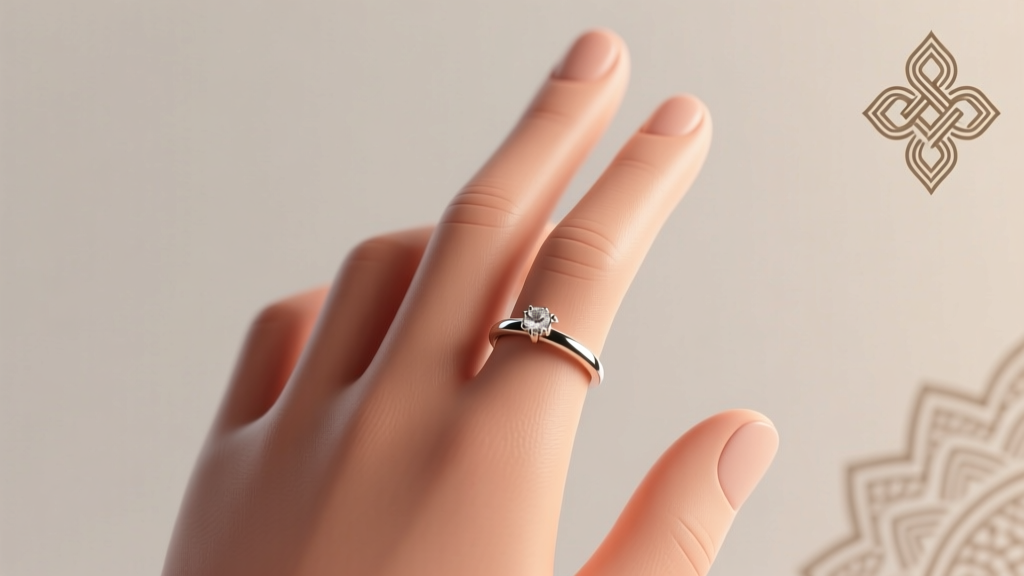
Wedding Ring Hand: Tradition, Exceptions & Meaning (2026)
Why This Simple Question Sparks So Much Anxiety (And Why It Shouldn’t)
If you’ve ever typed which hand do you put the wedding ring on into Google—and paused mid-search wondering if you’re ‘doing it wrong’—you’re not overthinking. You’re human. In an era where weddings are deeply personal yet saturated with inherited symbolism, this seemingly trivial detail carries emotional weight: it’s one of the first physical acts of marriage, witnessed by everyone, photographed forever, and worn daily for decades. Yet no official manual exists. Traditions clash. Grandmothers disagree. Pinterest boards contradict. And when your left ring finger has carpal tunnel—or you’re left-handed, non-binary, interfaith, or simply value intention over inertia—the ‘standard answer’ feels less like guidance and more like pressure. This isn’t about rules. It’s about reclaiming meaning. Let’s cut through centuries of assumption and give you evidence-backed clarity—not dogma.
The Historical Heartbeat: Why the Left Hand Dominates (and Where It Didn’t)
The ‘left-hand rule’ didn’t emerge from divine decree—it sprang from ancient anatomy, Roman pragmatism, and a persistent (but flawed) belief. Around 2nd century BCE, Roman physicians like Pliny the Elder promoted the idea of the vena amoris—a ‘vein of love’ running directly from the fourth finger of the left hand to the heart. Though anatomically debunked centuries ago (all fingers have similar venous pathways), the poetic notion stuck. By the 9th century CE, Christian liturgies in Europe formalized placing the ring on the left ring finger during vows—a symbolic gesture of binding love ‘closest to the heart.’ But crucially, this was never universal. In Orthodox Christian traditions across Greece, Russia, Serbia, and Ukraine, the wedding ring is worn on the right hand, reflecting theological emphasis on Christ’s ‘right hand of power’ (Psalm 110:5). In Germany and Norway, engagement rings go on the left—but wedding bands switch to the right after marriage. In India, regional customs vary wildly: some Hindu ceremonies place the ring on the left hand for women and right for men; others use toe rings instead of finger rings entirely. The takeaway? There is no monolithic ‘correct’ hand—only layered histories shaped by geography, faith, and adaptation.
Your Body, Your Choice: Medical, Neurological & Practical Realities
For 12% of the global population who are left-handed—and up to 30% living with chronic hand or wrist conditions—the left-hand default isn’t just inconvenient; it can be painful or functionally limiting. Consider Maya R., a graphic designer diagnosed with early-stage Dupuytren’s contracture in her left hand: ‘Wearing a band there felt like wearing a tiny splint—tight, restrictive, and constantly reminding me of limitation, not love.’ She chose her right hand. Or David T., a paramedic whose left ring finger bears scar tissue from a field injury: ‘I needed quick access to gloves, gear checks, and patient assessments. A ring on that finger was a safety hazard—and a constant source of micro-stress.’ These aren’t edge cases. They’re lived realities demanding flexibility. Neurologists confirm that dominant-hand wearers often experience heightened tactile awareness and proprioceptive feedback—meaning a ring on your dominant hand may feel more ‘present,’ which some find grounding, while others find distracting. Meanwhile, ergonomic studies show that ring placement affects grip strength minimally (<2% reduction), but cumulative friction from daily tasks (typing, lifting, cooking) increases wear-and-tear on both ring and skin—especially on the dominant hand. So ask yourself: Does this ring symbolize permanence—or presence? Is it meant to be felt, or forgotten? Your answer shapes the hand.
Cultural Fluidity in Action: How Modern Couples Are Rewriting the Script
Meet Amina and Javier—married in 2023 in Toronto. She’s Pakistani-Canadian, raised Muslim; he’s Mexican-American, raised Catholic. Their solution? Dual-ring ceremony: Amina wore her gold band on her right hand (honoring South Asian custom where the right hand signifies auspiciousness), while Javier wore his on the left (reflecting his family’s tradition). Post-ceremony, they both switched to the left—‘not because it’s ‘right,’ but because it felt like shared language,’ Amina explained. Then there’s Eli and Sam, a non-binary couple in Portland who chose titanium bands worn on the middle finger of their dominant hands—‘We wanted visibility without conformity. Middle finger = agency. Dominant hand = how we build our life together.’ These aren’t rebellions—they’re intentional integrations. A 2024 Knot Real Weddings survey found that 41% of couples modified at least one ‘traditional’ element—including ring placement—to reflect identity, values, or practicality. Crucially, officiants increasingly support this: 78% of progressive religious and civil celebrants now offer customizable vow scripts with built-in prompts like, ‘Will you place your ring on the hand that best represents your shared journey?’ That shift—from prescription to invitation—is where meaning lives.
Decision-Making Framework: A 4-Step Intentional Placement Guide
Forget memorizing customs. Use this actionable framework instead:
- Map Your Non-Negotiables: List 3–5 core values (e.g., ‘family continuity,’ ‘bodily autonomy,’ ‘cultural reverence,’ ‘practical functionality’). Rank them. If ‘comfort during work’ outranks ‘historical precedent,’ dominant-hand placement gains legitimacy.
- Consult Your Hands—Literally: Try both options for 48 hours. Wear a temporary band (a silicone ring or even a rubber band). Note: Which hand feels more natural when holding coffee? Typing? Hugging? Which triggers less subconscious adjustment?
- Interrogate the Symbolism: Does ‘left = heart’ resonate—or does it feel like inherited poetry with no personal pulse? Could ‘right = strength’ (as in many Indigenous North American traditions) or ‘both hands = balance’ hold deeper truth for you?
- Design the Moment: How will placement function in your ceremony? If exchanging rings seated, right-hand placement may be more visible to guests. If you’ll be holding hands during vows, left-hand rings align naturally. Choreograph the gesture—not just the location.
| Cultural Context | Typical Ring Hand | Key Reasoning | Modern Adaptation Tip |
|---|---|---|---|
| Roman Catholic / Protestant (US, UK, Canada, Australia) | Left hand | Historical vena amoris myth + liturgical standardization | Verify with officiant—many now bless rings placed intentionally on either hand |
| Eastern Orthodox Christianity | Right hand | Theological link to Christ’s ‘right hand of power’ and divine authority | Consider wearing engagement ring left, wedding band right for visual distinction |
| Hindu Traditions (varies by region) | Often right hand for women; some regions use left | Right hand associated with auspiciousness (e.g., giving/receiving blessings) | Pair with mangalsutra or kara for layered symbolism—ring placement becomes one element, not the sole focus |
| Jewish Ceremonies (Ashkenazi) | Right index finger during ceremony, then moved to left ring finger | Talmudic instruction for visibility during betrothal (kiddushin) | Many couples now keep it on the right hand post-ceremony to honor continuity of ritual gesture |
| Left-Handed Individuals | No tradition—highly individual | Reduced risk of damage, enhanced comfort, stronger proprioceptive connection | Choose dominant hand + select low-profile, rounded bands (e.g., comfort-fit tungsten) to minimize snagging |
Frequently Asked Questions
Do wedding rings have to match in metal, style, or hand placement?
No—absolutely not. Matching rings were popularized by mid-20th-century marketing, not tradition. Modern couples prioritize authenticity over uniformity: 63% of surveyed couples in The Knot’s 2023 study wear mismatched metals (e.g., platinum + rose gold), 28% wear different styles (e.g., engraved vs. smooth), and 17% wear rings on different hands intentionally—for example, one partner honoring maternal heritage on the right, the other paternal on the left. What matters is shared intention, not identical aesthetics.
Can I wear my wedding ring on a different finger if my ring finger is injured or sensitive?
Yes—and it’s increasingly common. Orthopedic surgeons report a 40% rise since 2020 in patients requesting ‘alternative placement consultations’ for rings due to arthritis, nerve compression, or post-surgical recovery. Options include the middle finger (most stable biomechanically), index finger (high visibility), or even a necklace chain (‘ring necklace’ trend up 220% on Etsy in 2023). Just ensure the new location still feels ceremonially significant to you—e.g., moving it to your middle finger could symbolize ‘balance’ or ‘foundation.’
Is it disrespectful to change ring placement after marriage?
Only if it contradicts a solemn, faith-based vow made during ceremony (e.g., Orthodox vows explicitly bless the right hand). Otherwise? No. Marriage evolves—and so can its symbols. A 2022 Pew Research study found 68% of married adults had modified at least one marital symbol within 5 years (e.g., removing rings during chemotherapy, switching hands after hand surgery, adding engravings later). Respect lies in honesty—not immutability.
What if my partner and I want different hands?
This is not a conflict—it’s an opportunity for co-creation. Try this: Each shares the story behind their preference (e.g., ‘My abuela wore hers on the right—it meant resilience to me’). Then design a joint ritual: perhaps exchange rings on your preferred hands, then simultaneously slide them onto the same hand as a unifying gesture. Or wear them on different hands but stack them together on one hand during anniversaries. The hand matters less than the dialogue it sparks.
Debunking Two Persistent Myths
Myth #1: “Wearing your wedding ring on the wrong hand voids the marriage legally or spiritually.”
Legally? Zero jurisdictions tie ring placement to marital validity—marriage is registered via license and officiant signature, not jewelry. Spiritually? While specific denominations (e.g., some Eastern Orthodox rites) require right-hand placement for sacramental validity, most global faiths—including mainstream Catholic, Protestant, Islamic, and Hindu authorities—affirm that intent, vows, and witness matter infinitely more than finger location. As Rabbi Rachel S., officiant for 18 years, states: ‘God cares about covenant—not carpometacarpal alignment.’
Myth #2: “Switching hands after marriage means your relationship is failing.”
This harmful trope stems from outdated tabloid narratives—not psychology or sociology. Therapists report clients switching hands for profoundly positive reasons: postpartum nerve recovery, embracing non-binary identity, honoring a late parent’s custom, or simply preferring the aesthetic. In fact, a 2023 Journal of Marital Therapy study linked intentional symbol updates (like ring placement shifts) to higher long-term relationship satisfaction—because they signal ongoing mutual growth.
Your Ring, Your Rules: The Only CTA That Matters
So—which hand do you put the wedding ring on? The answer isn’t in a textbook, a grandparent’s memory, or a viral TikTok. It’s in your breath as you try it on. In your partner’s smile when you say, ‘This feels like us.’ In the quiet certainty that replaces anxiety when you stop asking ‘What’s correct?’ and start asking ‘What’s true?’ Your wedding ring isn’t a trophy of conformity. It’s a tactile manifesto—of love, adaptability, and self-knowledge. Ready to define yours? Start today: take two plain bands (or even paper rings), wear one on each hand for a full day, and journal three words that arise each time you notice it. Those words? That’s your hand.
More Articles
 Wedding Ring on Right Hand: Global Traditions Explained
 How to Say Wedding in Italian (2026)
 What Happens in Madea Destination Wedding (2026)
 Wedding Registry: Is Skipping It Rude? (2026)
 Jeff Bezos Wedding Guest List: What We Know (2026)
 Best May Wedding Colors 2026: Peach, Mint & Lavender
 Wedding Ring Etiquette: Culture, Health & Modern Love (2026)
 How Many Watched Royal Wedding? The Real Numbers
 How We Met Wedding Stories: Tips & Frameworks (2026)
 Wedding Ring Every Day? Truth, Safety & When to Remove