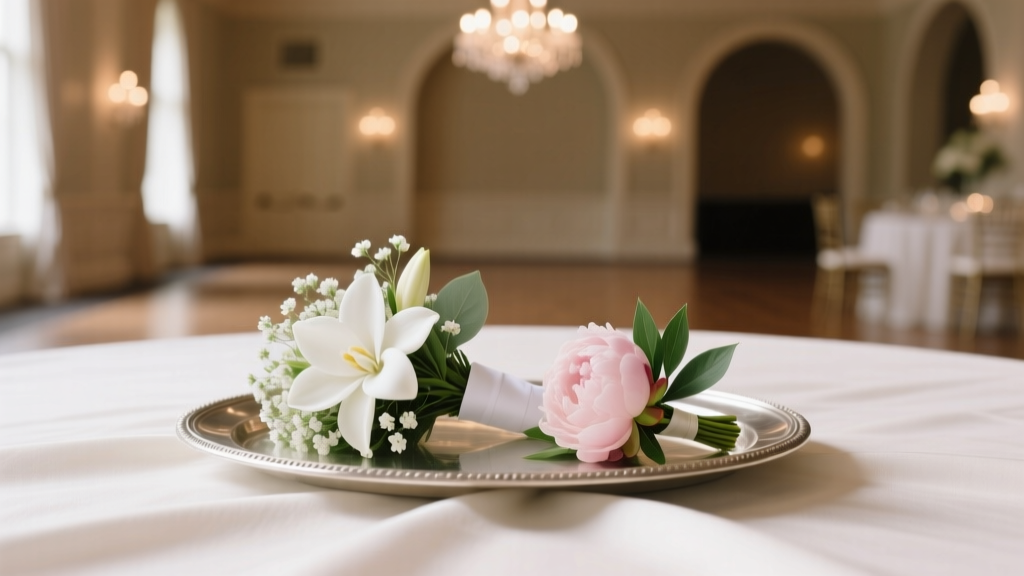
Who Gets a Corsage and Boutonniere at a Wedding
Who Gets a Corsage and Boutonniere at a Wedding?
Corsages and boutonnieres are small details that somehow carry a lot of emotional weight. They’re also one of the easiest places for couples to feel stuck: you want to honor the right people, keep things fair between families, and stay within your floral budget—without turning it into a complicated hierarchy.
If you’ve been wondering who “should” get a corsage or boutonniere (and whether you can bend the rules), you’re asking the right question. These flowers are a visible sign of role and recognition, and a little clarity goes a long way toward preventing awkward moments on the wedding day.
The short answer: who gets them?
Traditionally, immediate family and the wedding party receive personal flowers:
- Boutonnieres: groom, groomsmen, fathers, stepfathers, grandfathers, ring bearer (optional), officiant (optional)
- Corsages: mothers, stepmothers, grandmothers, female guardians, readers/ushers (optional), flower girl (usually gets a floral accessory instead)
Modern weddings often expand or simplify this list based on relationships, budget, and style. The “right” answer is the one that clearly communicates, “You’re important to us,” without creating stress.
Q: What’s the traditional etiquette for corsages and boutonnieres?
Traditional wedding etiquette focuses on honoring the people closest to you and those with formal roles in the ceremony. A classic lineup looks like this:
- The couple: The groom (and sometimes the bride’s partner, in any gender pairing) typically wears a boutonniere. In some cultures and styles, both partners wear a boutonniere or a small floral piece.
- Wedding party: Groomsmen and ushers wear boutonnieres; bridesmaids may carry bouquets (or wear corsages if you’re skipping bouquets).
- Parents: Mothers and stepmothers receive corsages; fathers and stepfathers receive boutonnieres.
- Grandparents: Grandmothers often get corsages and grandfathers get boutonnieres, especially if they’ll be in photos or the processional.
As wedding planner Marisol Klein of Willow & Finch Events puts it, “Personal flowers are essentially a ‘label’ guests recognize. They help people understand who’s who, and they’re a very kind way to honor family without a big announcement.”
Q: Do we have to give them to both sides equally?
Most couples aim for balance, but it doesn’t have to be perfectly identical. The healthiest guideline is: match by relationship tier. If you’re giving corsages to mothers, do it for both mothers (and stepmothers, if applicable). If you’re honoring grandparents on one side, try to honor grandparents on the other side too—unless there’s a very specific reason not to (distance, estrangement, or someone who truly wouldn’t want one).
A real-world example: “We gave boutonnieres to our dads and grandfathers, but skipped grandparents on my partner’s side because they weren’t attending,” says Hannah, a recent bride in Chicago. “To keep it from feeling uneven, we wrote a special line in our program recognizing them and FaceTimed them before the ceremony.”
Q: What’s the modern approach (and what are current trends)?
Current wedding trends lean toward personalization, comfort, and streamlined florals. That’s why you’ll see couples adjusting the “rules” in ways that still feel intentional:
- Fewer pinned flowers: Many people dislike pinning boutonnieres or worry about damaging delicate fabrics. Magnetic boutonnieres and pocket boutonnieres are trending because they’re easier and cleaner-looking.
- Wrist corsages are back—so are alternatives: Wrist corsages (especially with silk ribbon) are popular again, but some couples choose a small bouquet, a floral hairpin, or even a single bloom tied with ribbon for moms and grandmas.
- All-gender wedding parties: Instead of “corsages for women, boutonnieres for men,” couples often choose whichever personal flower matches attire and preference. A boutonniere looks great on a blazer; a corsage can be wearable for anyone.
- Non-floral options: For a minimalist look, some couples use greenery only, dried florals, herbs (rosemary is popular), or even a meaningful pin instead of fresh flowers.
Florist Dev Patel of Brightstem Studio says, “The trend I’m seeing is couples choosing one unifying element—like a sprig of olive or a white ranunculus—and repeating it across corsages and boutonnieres so the whole family feels included without needing big, expensive pieces.”
Q: Who “counts” as immediate family for these flowers?
Here’s a practical breakdown many couples use when planning wedding corsages and boutonnieres:
- Almost always: parents/guardians, stepparents who are actively in your life, wedding party members
- Often: grandparents, siblings not in the wedding party (especially if they’re doing a reading), officiant, ushers
- Sometimes: godparents, a close aunt/uncle who helped raise you, a mentor who is being formally recognized
If you’re wondering whether someone is “supposed” to get one, ask yourself: Will guests expect this person to be honored as family or a key VIP? If yes, a corsage or boutonniere is a simple, universally understood way to do it.
Q: What if we have a tight floral budget?
This is one of the most common concerns, and you have several graceful options that still feel special:
- Prioritize parents and wedding party first. If you need to cut somewhere, grandparents or ushers are the most common “optional” categories.
- Use smaller designs for VIPs beyond parents. A mini boutonniere with greenery and one bloom can look elegant and costs less than a full statement piece.
- Repurpose ceremony flowers. Ask your florist if small stems can be pulled from extra arrangements for a few additional boutonnieres (not always possible, but worth asking).
- Choose in-season blooms and more greenery. This keeps the look lush while keeping costs down.
One smart trend: couples ordering fewer total items but making sure the ones they do order are comfortable to wear. A single well-made wrist corsage for mom often gets more love than a complicated pinned one that falls off halfway through cocktail hour.
Q: How do we handle tricky family dynamics (divorce, remarriage, estrangement)?
Corsages and boutonnieres can feel political in blended-family situations, so aim for clarity and kindness—without forcing anything.
- Divorced parents: It’s standard to give both parents personal flowers if they’re attending and involved. Keep designs similar in size and style.
- Stepparents: If a stepparent has a meaningful role in your life, include them. If not, you can skip without it being rude—especially if you’re consistent and not using flowers to “rank” people.
- Estrangement: You’re not obligated to provide a boutonniere or corsage to someone you’re not honoring. If you’re worried about optics, consider keeping the list small overall (parents + wedding party only).
- Multiple mother/father figures: You can absolutely do more than one corsage/boutonniere per side. Order what reflects your real family structure.
Planner Marisol Klein shares, “When family dynamics are sensitive, I encourage couples to keep the ‘personal flowers list’ role-based: parents/guardians, wedding party, officiant. It reduces the chance someone reads into it.”
Actionable tips: making it smooth on the wedding day
- Write a final “personal flowers list” early. Share it with your florist and planner so the quantities are correct.
- Label everything. Ask for name tags on boxes or baggies: “Mother of the Bride,” “Grandpa Joe,” etc.
- Assign a distributor. Choose one person (planner, coordinator, organized friend) to hand them out so you aren’t tracking people down while getting ready.
- Plan for pinning. Have extra boutonniere pins or magnets available, and ask someone confident (often a coordinator or photographer) to help with placement.
- Communicate expectations. If someone is picky about flowers or allergic, offer an alternative like a ribbon boutonniere, greenery, or a meaningful lapel pin.
Related questions couples ask (edge cases)
Do siblings get corsages or boutonnieres if they’re not in the wedding party?
Optional. If they’re doing a reading, seating guests, or you want them visually recognized as immediate family, yes. If not, it’s perfectly acceptable to skip.
Does the officiant get a boutonniere?
Sometimes. If your officiant is a close friend or family member, a boutonniere is a thoughtful gesture. If they’re a hired professional, it’s optional and often based on their preference and attire.
What about same-sex couples or nontraditional attire?
There are no fixed rules. Many couples choose boutonnieres for both partners, or one boutonniere and one bouquet, or wearable florals that suit each outfit. The best approach is to match the vibe of your wedding attire and comfort level.
Do ushers and readers need them?
If you want guests to easily identify them, yes—especially for ushers. If you’re keeping a minimal floral plan, you can skip and instead recognize them in the program.
What if someone refuses to wear one?
It happens. Have a backup plan: offer a pocket boutonniere, a pin, or simply let it go. The honor is the thought, not the accessory.
Conclusion: the most reassuring rule
The most reliable guideline is simple: give corsages and boutonnieres to the people you’re publicly honoring as VIPs—typically parents/guardians, wedding party, and often grandparents. From there, you can expand or simplify based on your budget, your relationships, and your style.
If you’re worried about getting it “wrong,” you’re already doing it right: be consistent, be kind, and choose a plan that feels true to your family. The flowers are just a symbol—what people remember is that they felt included.
More Articles
 Victoria Beckham at Son’s Wedding: Truth Behind Headlines
 Wedding Ring on Right Hand? Global Traditions (2026)
 Wedding Finger Ring Etiquette: Rules & Real-World Advice
 How Much Was Paris Hilton’s Wedding Dress? (2026)
 Who Buys the Wedding Band? 2026 Truth & Trends
 Why Patrice Lovely Missed Madea’s Destination Wedding
 Wedding Dress Resale Value: What It’s Really Worth (2026)
 A.J. Colby Wedding: Everything You Need to Know Now
 Wedding Ring Hand: Left vs. Right by Country & Religion
 I Turned Pretty Wedding: Summer Timeline (Spoiler-Safe)