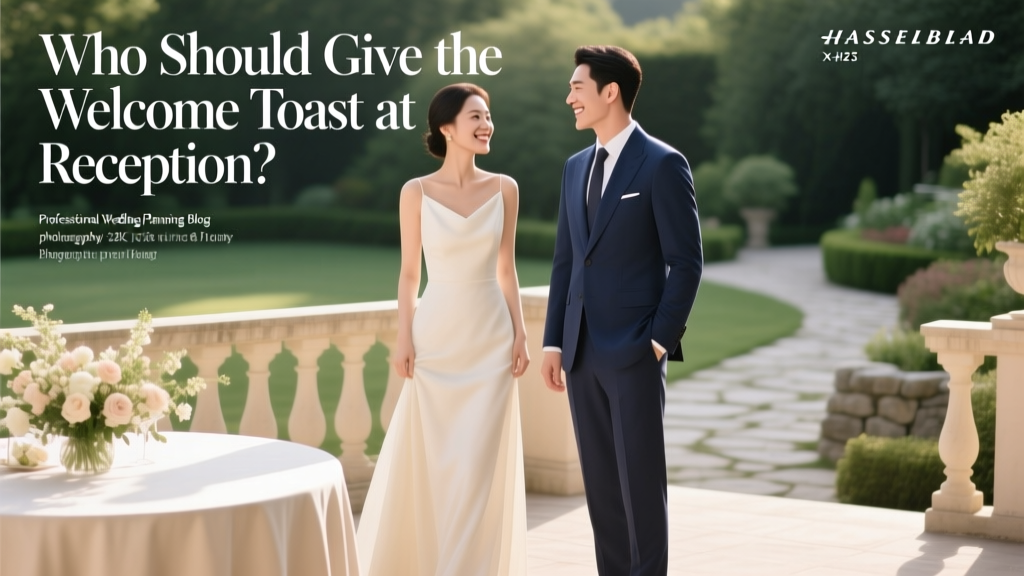
Who Should Give the Welcome Toast at the Reception
Who Should Give the Welcome Toast at the Reception?
If you’re deep in wedding planning, you’ve probably realized that “toasts” can mean a few different things: a quick welcome, a heartfelt speech, a formal blessing, or a series of tributes after dinner. The welcome toast seems simple—until you’re deciding who should do it, how formal it should be, and whether anyone will feel left out.
This question matters because the welcome toast sets the tone for the whole reception. It’s the first moment where guests feel oriented, acknowledged, and invited into the celebration. Done well, it’s warm, brief, and confidence-boosting for everyone in the room—especially you.
Quick Answer: The Couple Should Give the Welcome Toast (or Host If the Couple Prefers)
Most modern wedding etiquette points to the couple giving the welcome toast. It’s the simplest, most inclusive option: you’re the reason everyone is gathered, and a short “thank you for being here” feels natural and meaningful.
If you’d rather not speak early on, the welcome toast can be given by the host of the wedding (often the parents who hosted, a parent figure, or whoever is paying/hosting), or by the person serving as your master of ceremonies (MC)—frequently the best man, maid of honor, or a professional emcee/DJ.
What Exactly Is a Welcome Toast (and How Is It Different From Other Speeches)?
A welcome toast is usually a brief opener—30 to 90 seconds—that greets guests and sets expectations. It often happens right after the couple’s entrance, before dinner begins, or right after the first course is served.
It’s different from:
- Parents’ speeches (often more personal, 2–4 minutes)
- Best man/maid of honor speeches (story-driven, funny and heartfelt)
- A blessing (religious or cultural; can be its own moment)
- Thank-you speech (sometimes at the end of the night, thanking vendors and guests again)
Wedding planner “Maya Ellison” of Ellison Events explains it this way: “A welcome toast is more like opening the front door to your home. It doesn’t have to be sentimental. It just needs to be sincere and clear.”
Traditional Etiquette vs. Modern Weddings: Who “Should” Do It?
Traditional approach: The hosts welcome guests
In more traditional weddings, the welcome toast is often delivered by the father of the bride or the parents hosting the event. The logic is straightforward: if parents are hosting, they’re welcoming guests to the celebration.
This still makes sense for many families—especially if the parents are paying for most of the reception or are inviting a large portion of the guest list. It can also be a sweet way to honor parents publicly without requiring them to deliver a long speech later.
Modern approach: The couple welcomes everyone
Today’s trend is toward couples speaking for themselves, even when families contribute financially. With many weddings being jointly hosted (or hosted by the couple), it feels more natural for the couple to be the first voices guests hear.
Couple “Dani & Priya” (married in 2024) shared: “We kept it simple. Right after our entrance we said, ‘We’re so grateful you’re here—please eat, drink, and dance with us.’ It took 20 seconds and calmed our nerves for the rest of the night.”
Ultra-modern approach: The MC or DJ does the welcome
Another current wedding trend is a more “produced” reception flow, where a DJ/emcee makes announcements, keeps the timeline moving, and introduces formal moments. In that case, the MC may welcome guests and then hand the mic to the couple (or skip directly into dinner service).
DJ/emcee “Carlos Benton” says: “If the couple hates public speaking, I’ll do a quick welcome and then cue the first event. But I always suggest the couple at least says a one-sentence thank you at some point—it’s the part guests remember.”
Real-World Scenarios (and Who Usually Works Best)
Scenario 1: The couple is hosting (or paying for most of it)
Best choice: The couple gives the welcome toast.
You can keep it short, and it avoids any confusion about “who’s hosting.” It also works perfectly for backyard weddings, restaurant receptions, micro-weddings, and destination weddings where the vibe is more intimate.
Scenario 2: Parents are hosting and want a role
Best choice: A parent (or both parents) gives the welcome, followed by the couple with one sentence of thanks.
This is a great compromise when families care about etiquette but you still want your voice heard. For example: parent welcomes everyone; couple says, “We’re so glad you made it—enjoy the night!”
Scenario 3: Divorced or blended families
Best choice: The couple gives the welcome toast.
This is one of the easiest ways to avoid awkward politics around who gets the mic. If you’d like to include parents, you can still do a private thank-you earlier in the day, a printed note, or a short acknowledgment later in the reception.
Scenario 4: The couple is shy or anxious about public speaking
Best choice: The MC welcomes guests; the couple does a small, planned line later.
You can also do a “table touch” instead of a welcome toast: visit each table briefly during dinner. Guests experience it as personal and warm, and you avoid a microphone moment.
Scenario 5: A cultural or religious tradition includes a formal welcome
Best choice: Follow the tradition, then keep the rest simple.
In some cultures, an elder, a sponsor, or a designated family representative traditionally welcomes guests. If you’re blending traditions, you can do both: traditional welcome first, then a short couple’s toast.
Actionable Tips for Choosing the Right Person (and Making It Feel Easy)
- Decide what you want the welcome toast to do. Is it purely gratitude? A quick logistics note (“dinner is served outside”)? A tone-setter for a party vibe?
- Keep it short. The welcome toast is not where you need to tell your whole love story. Aim for 30–60 seconds.
- If more than one person will speak, assign roles. Example: parents welcome; couple thanks guests; wedding party speeches later.
- Coordinate with your planner, DJ, or venue coordinator. Timing matters—especially if you’re doing a first dance, plated dinner cues, or a sunset photo break.
- Write a simple script. A good template: “Thank you for coming + special travel mention + honor parents + invite guests to enjoy.”
- Choose the right moment. Popular options: right after the couple’s entrance, right before dinner begins, or right after everyone has a drink in hand.
Here’s a sample couple welcome toast that doesn’t feel stiff:
“Hi everyone—thank you so much for being here tonight. We know it took time and travel for many of you, and it means the world. We’re so grateful to our families and friends for helping us get to this day. Please eat, drink, and celebrate with us!”
Related Questions Couples Usually Ask
Do we have to do a welcome toast at all?
No. A welcome toast is optional. Some receptions flow beautifully with a DJ welcome and no formal toasts until later—or none at all. If you’re doing a very casual celebration, you can skip it without breaking any etiquette rules.
What if both sets of parents want to speak first?
This is common, especially with larger family weddings. The cleanest solution is to have one welcome toast (either by the couple or by a single representative host), and then schedule parent speeches later in the meal. If you want both sets of parents included early, consider a joint welcome: each parent gives one brief line, then the couple closes with a thank you.
Can the maid of honor or best man do the welcome toast?
Yes, especially if they’re acting as MC. It works best when the couple prefers not to speak early. Just make sure it doesn’t turn into a full best man/maid of honor speech—that’s a different moment in the reception timeline.
What about a small wedding or micro-wedding?
For intimate receptions, the welcome toast can happen naturally—standing at your table, clinking a glass, and thanking everyone. Micro-wedding trends lean toward informal, heartfelt remarks rather than staged speeches, so this is a perfect place for the couple to speak.
Where does the “thank you for gifts” fit?
Couples often worry about mentioning wedding gifts or cash gifts. You don’t need to address gifts in the welcome toast. A simple “thank you for celebrating with us” is enough, and formal thank-you notes handle the rest.
Conclusion: Pick the Option That Feels Warm, Simple, and True to You
If you’re unsure who should give the welcome toast at the reception, the most universally appreciated choice is the couple—brief, sincere, and focused on gratitude. If family dynamics, hosting traditions, or public-speaking nerves make that tricky, a parent host or MC can step in smoothly.
The best welcome toast isn’t the most perfect speech. It’s the one that makes your guests feel genuinely glad they came—and lets you start the celebration feeling supported and excited.
More Articles
 Do Men Attend Wedding Showers? (2026)
 Engagement vs Wedding Ring Order: What’s Correct?
 Taylor Swift at Abigail’s Wedding? The Truth (2026)
 Is a Wedding Ring a Gift? Legal & Tax Facts
 Wedding Cake After 10 Years: Food Safety Truth (2026)
 Princess Anne’s Wedding Suit: Royal Protocol Breaker (2026)
 Epstein at Trump’s Wedding? Timeline, Evidence, 2026
 Does a Plus One Give a Wedding Gift? (2026)
 When to Finalize Your Wedding Music Playlist
 Why Katie LaSalle Isn’t Wearing Her Wedding Ring (2026)