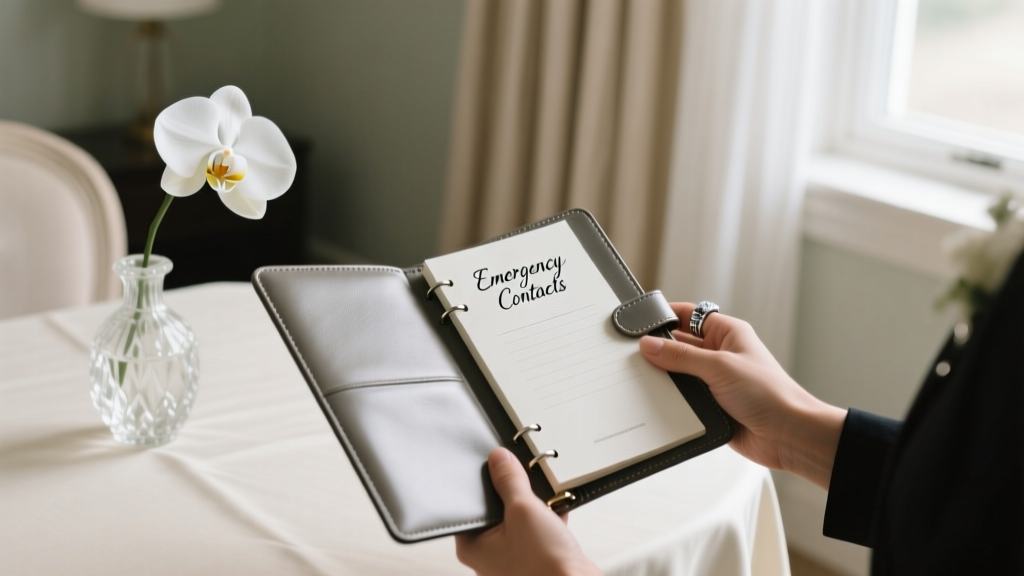
Who Should Handle Wedding Day Emergency Contacts
Who Should Handle Wedding Day Emergency Contacts?
On your wedding day, you’ll have a hundred tiny decisions happening at once—vendors arriving, family looking for directions, a missing boutonniere, a sudden weather shift. Most couples don’t want to be the person answering calls and texts while they’re trying to enjoy the moment (and actually get married).
That’s where wedding day emergency contacts come in. Having one clear point person for wedding-day communication is one of those “small” planning steps that prevents big stress. It keeps your timeline moving, protects your peace, and makes it easier for everyone to get help fast if something goes sideways.
Quick Answer: Who Should Be the Emergency Contact?
Your wedding day emergency contact should be someone calm, organized, and not emotionally pulled in a million directions—ideally your wedding planner/coordinator or a trusted person you appoint as a “day-of point person.” This person should have the vendor contact list, the wedding day schedule, and the authority to make small decisions without bothering you.
If you have a professional planner or day-of coordinator, they’re usually the best choice. If you don’t, choose a responsible friend or relative who isn’t in the ceremony (or at least isn’t essential for photos and key moments).
What “Emergency Contact” Really Means on a Wedding Day
Most wedding “emergencies” aren’t medical emergencies—they’re logistics. Think:
- The florist is at the wrong entrance.
- The shuttle driver needs a new pickup location.
- A groomsman forgot his tie.
- The venue can’t find your décor boxes.
- Rain starts earlier than forecast and the ceremony plan needs to shift.
The emergency contact’s job is to shield the couple from these issues and route problems to the right solution quickly. It’s part communication hub, part decision-maker, part calm voice.
As wedding planner “Maya Reynolds” puts it: The best wedding days are the ones where the couple’s phones disappear. If vendors need something, they need one reliable person who can answer immediately—so the couple can stay present.
Traditional vs. Modern Etiquette: Who “Should” Do It?
Traditional approach: parents or family take the lead
Traditionally, a parent—often the mother of the bride—handled many day-of questions and coordination tasks. Sometimes that still works, especially for smaller weddings where the family is already running point.
When it works well: A parent is naturally organized, wants the role, and won’t be overly emotional or distracted.
When it backfires: Parents are hosting, greeting relatives, managing their own emotions, and trying to look good in photos. That’s a lot to add “vendor hotline” on top of it.
One recent bride, “Elena,” shared: I made my mom the emergency contact because she offered. By noon she had 27 texts—half from relatives asking where to park. She was stressed before the ceremony even started.
Modern approach: planner/coordinator or designated point person
Current wedding trends lean strongly toward delegation and boundaries. Couples are more likely to hire at least a month-of or day-of coordinator, or they appoint a trusted friend to manage wedding day communications.
This trend is growing for a reason: weddings have more moving parts now—multiple venues, rideshares or shuttles, content creators, photo timelines, private vows, outfit changes, and personalized details that require coordination.
As coordinator “Jason Patel” says: Even a simple wedding has a complex timeline. A coordinator or point person keeps small problems from becoming couple problems.
The Best Options (Ranked) for Wedding Day Emergency Contacts
1) Your wedding planner or day-of coordinator
Best for: Most couples, especially medium-to-large weddings.
Why: They know the vendor team, can interpret contracts and timelines, and are comfortable making judgment calls. They’re also not emotionally invested the way family is.
Pro tip: Confirm whether your planner will be the direct contact for vendors and guests—or if they prefer a separate guest contact (many planners are happy to be vendor-facing but don’t want guest travel questions).
2) Venue coordinator (with a reality check)
Best for: Venue-related issues only.
Why: Venue coordinators know the space and staff—but their role usually focuses on the venue’s operations, not your full wedding plan.
Helpful approach: Use the venue coordinator as an emergency contact for building logistics (access, power, room flips), but still appoint someone to handle your vendors like florist, photographer, and DJ.
3) A trusted friend who’s not in the wedding party
Best for: Couples without a coordinator, smaller weddings, or budget-focused plans.
Look for: Someone who answers their phone, stays calm, and can politely “hold the line” with persistent relatives.
Avoid: Your most sensitive friend, or someone who tends to escalate stress.
4) A sibling or cousin (often a great middle ground)
Best for: Families where siblings are naturally operational and not overwhelmed by hosting duties.
Watch out for: If they’re in formal photos nonstop, they’ll be hard to reach.
5) A parent (only if it truly fits your family dynamic)
Best for: Very small weddings or families that function like a well-run team.
Potential downside: Parents can become the emotional “complaint desk,” especially for guest drama.
Real-World Scenarios: What Works Best?
Scenario A: You hired a planner
Make your planner the primary emergency contact for vendors and the timeline. Consider a second contact for guests—like a sibling—so your planner isn’t fielding “What time is the ceremony?” texts from 40 people.
Scenario B: You don’t have a planner, but you have a wedding party
Choose someone not getting hair and makeup, not taking formal photos, and not giving a major speech. A friend who’s attending as a guest often makes the best wedding day point person. If you must choose a wedding party member, pick someone who’s naturally organized and give them a clear window of responsibilities.
Scenario C: Destination wedding or lots of travel logistics
Destination weddings create extra “emergencies”: flight delays, lost luggage, transportation confusion, check-in issues. Consider a dedicated guest logistics contact (often a friend who arrived early) and keep your vendor contact separate (planner/coordinator).
Scenario D: DIY backyard wedding
Backyard weddings feel casual, but they often require the most coordination. Appoint a point person who can handle rentals, deliveries, setup questions, and neighbor/parking issues. If possible, hire a day-of coordinator even for a few hours—this is a popular trend for DIY couples who want the day to feel effortless.
Actionable Tips: How to Set Up Wedding Day Emergency Contacts
- Name one primary contact and one backup. Phones die. People get pulled into conversations. A backup prevents bottlenecks.
- Create a “wedding day contact list” sheet. Include vendor names, roles, phone numbers, arrival times, and any key notes (parking instructions, load-in doors, setup locations).
- Decide what counts as an “ask the couple” issue. Give your contact permission to make small calls (like moving décor, adjusting the processional order, or changing cocktail hour music volume).
- Use a separate Google Voice number if you want privacy. Some couples set up a wedding phone number that forwards to the emergency contact. This is increasingly common for larger weddings.
- Tell vendors who to contact—explicitly. Put the emergency contact’s info on your wedding timeline and vendor emails: “On wedding day, please contact Alex (day-of point person) at (555) 123-4567.”
- Tell family and guests where to go with questions. Add a line to your wedding website: “Day-of questions? Text our point person” (especially helpful for parking and timing).
- Keep medical emergencies separate. Your emergency contact can call 911, but also identify who has access to medical info (allergies, medications) and where the first aid kit is located.
Related Questions Couples Usually Ask (and Practical Answers)
Should the couple be listed as the emergency contact anywhere?
For vendors: ideally no. If a vendor already has your number, ask them to use the point person on wedding day unless it’s a true emergency (missing marriage license, venue locked, etc.). For the venue: you can list the coordinator/point person first, with the couple as backup.
What if my planner says they don’t handle guest questions?
That’s normal. Many planners are vendor-and-timeline focused. Assign a separate guest contact for parking, directions, hotel info, and “Where do I go?” messages.
Can my maid of honor or best man do it?
They can, but it’s often a lot. They’re also managing attire, photos, and emotional support. If you go this route, give them a backup person and keep their tasks simple: answer calls, coordinate arrivals, and escalate only what truly matters.
What about divorced parents or tense family dynamics?
If there’s any risk of conflict, choose someone neutral (planner/coordinator or trusted friend). The emergency contact role should reduce stress, not create opportunities for power struggles.
Should we create a group chat for emergencies?
A small one, yes: couple (optional), planner/coordinator, point person, and key helpers. But avoid giant chats—messages get missed. The goal is one clear decision-maker, not a committee.
Takeaway
Your wedding day emergency contact should be someone who can handle pressure, answer quickly, and make practical decisions—usually a planner/coordinator, or a trusted friend or relative who isn’t front-and-center in the wedding. Set them up with the right info, name a backup, and give yourself the gift of being unreachable for anything that doesn’t truly require you.
The best compliment you can give your future selves is a wedding day where the only “urgent” thing on your agenda is enjoying it.
More Articles
 Did Noah Schnapp Attend Millie’s Wedding? (2026)
 Where to Watch Madea Destination Wedding (2026)
 Candid Wedding Photos: Real Storytelling Tips (2026)
 How to Decide on Your Wedding Party Size
 Did Johnny Gaudreau’s Sister Get Married? (2026)
 Wedding Photographer Salary: Real 2026 Earnings
 Red Wedding Episode: Exact Timing & Narrative Impact
 Wedding Officiant Gift: What to Do Instead (2026)
 Engagement vs Wedding Ring: Key Differences (2026)
 Wedding & Engagement Ring Order: What 92% Get Wrong