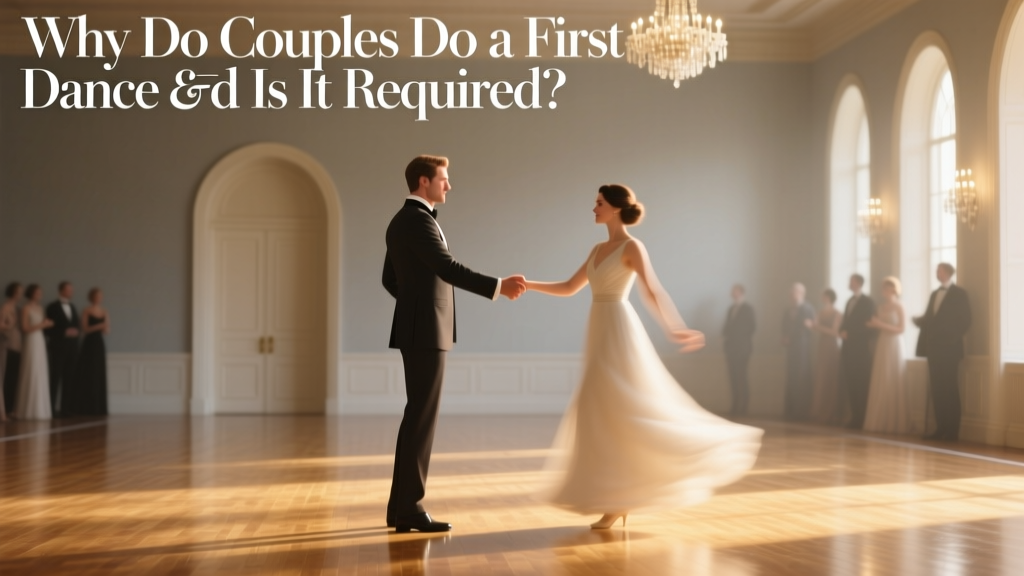
Why Do Couples Do a First Dance and Is It Required
Why Do Couples Do a First Dance and Is It Required?
If you’ve ever been to a wedding reception, you’ve probably seen the couple step onto the dance floor for a “first dance” while everyone watches, smiles, and maybe snaps a few photos. It can look magical—and also a little intimidating if you’re not into being the center of attention.
Engaged couples ask about this all the time because the first dance sits right at the intersection of tradition, personal comfort, family expectations, and reception timelines. If you’re wondering whether you have to do it (and what happens if you don’t), you’re not alone.
Q: Why do couples do a first dance?
A: Couples do a first dance to symbolically mark their first moments as a married pair at the reception, create a shared memory, and kick off the dancing portion of the night. It’s a classic wedding tradition that also works as a simple way to guide the flow of the reception.
Q: Is the first dance required?
A: No—your wedding first dance is not required. Modern wedding etiquette is clear: you can skip it entirely, replace it with something else, or adjust it to fit your comfort level. Guests won’t be offended if you don’t do a first dance, especially if your reception still feels intentional and celebratory.
The Tradition Behind the First Dance (and Why It Stuck)
The first dance has roots in older wedding customs where the couple would “open” the dance floor. Historically, it signaled the start of the celebration and helped set a romantic tone. Over time, it became a spotlight moment—often paired with a meaningful song and followed by parent dances.
There’s also a practical side: a first dance acts like a built-in transition in the wedding reception timeline. When dinner is ending and you want guests moving toward dessert, speeches, or dancing, a first dance gives your DJ or band a clear cue to shift the energy.
As wedding planner “Maya Desai” puts it: The first dance isn’t about perfect choreography. It’s a pacing tool for the reception and a photo moment. Couples can use it, modify it, or skip it—there’s no etiquette penalty.
Modern Etiquette: Tradition vs. Comfort
Today’s weddings are more personalized than ever. Couples are rethinking traditions and keeping only what feels meaningful. That’s why you’ll see everything from formal ballroom routines to a quick sway-and-smile moment, to no first dance at all.
Current wedding trends also affect this decision:
- More intimate weddings: With smaller guest counts, couples often feel less pressure and may choose a casual first dance—or skip the “spotlight” entirely.
- Non-traditional reception formats: Brunch weddings, cocktail-style receptions, and restaurant buyouts may not include a formal dance floor moment.
- Shorter, more energetic timelines: Many couples prefer quick transitions—like a 60–90 second first dance—then inviting everyone to join.
- Content-friendly moments: Some couples like the first dance because it creates a strong video highlight. Others skip it because they don’t want a staged moment.
A real-couple-style perspective from “Jordan & Elise,” married last fall: We thought we had to do a full three-minute song. Our DJ suggested we pick a favorite song and fade it out after a minute and a half. It felt like us, and nobody cared that it was short.
Different Scenarios: What Makes Sense for Your Wedding?
Scenario 1: You love tradition (and your families do too)
If you’ve always pictured that classic first dance, go for it. You can keep it simple—no choreography required. A gentle sway, a few turns, and a kiss at the end is perfect.
Tip: Ask your photographer where they want you positioned for the best light and background. A small placement tweak can make the moment feel more relaxed and look amazing.
Scenario 2: You want the moment, but not the spotlight
If the idea of everyone staring makes you uncomfortable, consider one of these “low-pressure” first dance options:
- Private last dance instead: After the send-off (or after guests exit), you dance together alone while your photographer captures a few frames.
- First dance during cocktail hour: Do it earlier with fewer eyes on you.
- Short first dance + invite everyone in: Dance for 30–60 seconds, then have the DJ invite guests to join. Suddenly it’s a group moment.
DJ “Carlos Nguyen” shares: If a couple is nervous, I’ll start them alone for one verse and chorus, then bring in the wedding party or all couples to the floor. It keeps the romance but drops the pressure instantly.
Scenario 3: You’d rather skip it completely
Skipping the first dance is increasingly common. The key is to replace it with a different “anchor” moment so the reception doesn’t feel like it’s missing a beat. Great alternatives include:
- A welcome toast from the couple
- Cutting the cake earlier to kick off the party
- A “dance floor opening” song where everyone joins immediately
- A cultural tradition (tea ceremony, horah, money dance, etc.) that naturally creates a focal point
We didn’t do a first dance because my partner hates being watched,
says “Samira,” a recent bride. Instead, we opened the dance floor with our favorite throwback song and asked everyone to join us. It felt more like a party and less like a performance.
Actionable Tips If You’re Doing a First Dance
- Pick a song that fits your comfort level. A slow song gives you time to breathe. A mid-tempo song can feel less emotional and more fun.
- Edit the song. Ask your DJ to fade out at 60–120 seconds. Few guests want a full four-minute spotlight moment—short and sweet is a trend for a reason.
- Take one dance lesson. One private lesson can teach you how to start, how to turn, and how to end confidently. You don’t need choreography to look polished.
- Decide on a “home base.” Choose a simple step you can return to if you get nervous—like a slow sway with a gentle side step.
- Practice in your shoes. Even 10 minutes at home helps. If you’re wearing a long dress, practice lifting it slightly as you move.
- Talk to your photographer and DJ. Tell them if you want it short, private, or quickly joined by guests. They can coordinate lighting, announcements, and timing.
Common Questions Couples Also Ask
Do we have to do parent dances if we do a first dance?
No. You can do a first dance and skip parent dances, or do parent dances without a first dance. Some couples replace parent dances with a single “family dance” where all parent/child pairs are invited up together.
What if one of us doesn’t want to dance?
You still have options: a super short sway, a “join us on the dance floor” moment right away, or a different reception highlight (like a toast, dessert moment, or a private dance). The goal is to honor both comfort levels.
What if we’re having a small wedding or micro-wedding?
For small weddings, first dances often feel less stressful because the crowd is mostly your closest people. Or you can skip it and keep the evening flowing like a dinner party with great music.
What if we’re doing a non-traditional reception (brunch, backyard, restaurant)?
If there’s no dance floor, a first dance might feel awkward—so don’t force it. You could do a short dance in a cleared space, or swap it for a meaningful moment like a thank-you toast or a group photo followed by music.
Will guests think something is “missing” if we skip it?
Usually, no. Guests take their cues from the energy you create. If you skip the first dance but provide another clear transition into the party portion of the night, it feels intentional—not absent.
Takeaway: You’re Not Breaking a Rule
The first dance exists because it’s romantic, memorable, and useful for the flow of a wedding reception—but it’s not a requirement. If it excites you, do it your way. If it stresses you out, skip it or replace it with a moment that feels more natural. The best wedding etiquette is simple: choose what reflects your relationship, and your guests will follow your lead.
More Articles
 Engagement Ring and Wedding Ring Rules (2026)
 Wedding Mass & Sunday Obligation: Canon Law Explained
 Was Courtney Love at Frances Bean’s Wedding?
 What Is a Three Cock Wedding? (It’s Not Real)
 Wedding Ring Removal: 7 Safe Methods (2026)
 Wedding Objection Truth: What Really Happens
 Wedding Band Hand: The 2026 Tradition Truth
 Wedding Ring Finger: Global Traditions & Modern Rules (2026)
 Who Should Manage the Wedding Day Timeline
 How to Handle Wedding Gift Expectations