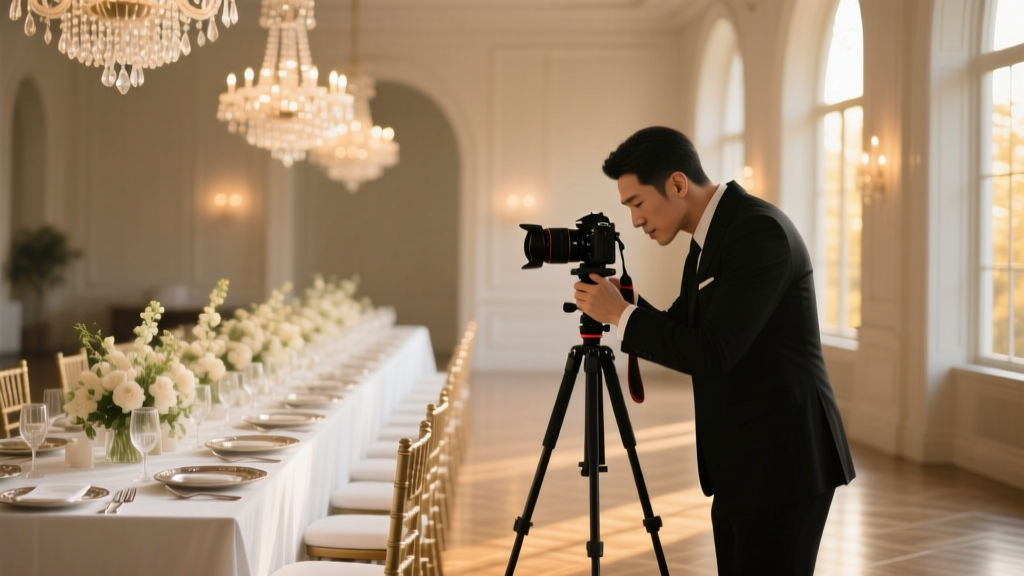
Why Wedding Photographers Are So Expensive
Why This Question Matters More Than Ever
If you’ve just gotten engaged and opened your first wedding budget spreadsheet, you’ve likely gasped at the line item for photography — often the second-largest expense after the venue. Why are wedding photographers so expensive? It’s not just about snapping pretty pictures. It’s about preserving irreplaceable moments with technical precision, artistic intention, and emotional intelligence — all under relentless time pressure, zero room for error, and a lifetime of accountability. In an era where smartphone cameras rival DSLRs and Instagram filters promise ‘perfect’ images in seconds, the disconnect between perceived effort and actual cost has never been wider — and misunderstanding it risks compromising one of your most emotionally significant investments.
The Full-Time Job You’re Actually Hiring (Not Just a 10-Hour Gig)
Most couples assume they’re paying for 8–12 hours on the wedding day. In reality, that’s less than 20% of the photographer’s total commitment. A seasoned pro spends 60–100+ hours per wedding across five distinct phases — and every hour carries real financial weight.
Let’s walk through a real-world case study: Maya, a Seattle-based photographer with 8 years of experience and a $5,900 base package, recently documented a Saturday wedding at a historic downtown venue. Her timeline looked like this:
- Pre-wedding (22 hrs): Two in-person consultations + virtual mood board sessions; custom shot list development; venue walkthrough + lighting analysis; timeline coordination with planner & vendors; contract & insurance documentation; digital asset management setup.
- Wedding Day (12 hrs): Arrival 2.5 hrs before ceremony (setup, backup battery/gear checks, ambient light testing); continuous coverage from first look through last dance; real-time curation to ensure key moments aren’t missed; discreet crisis management (e.g., rain delay, family tension, equipment failure).
- Post-wedding (38 hrs): Initial cull (3,200 raw files → 850 selects); color grading & exposure correction; skin tone & texture refinement; cropping/composition adjustments; global consistency across 800+ final images; album layout design; client proofing portal setup; 2 rounds of revisions.
- Delivery & Support (8 hrs): High-res digital gallery delivery + print release; physical USB packaging; 3-month post-delivery support for re-downloads or album questions; tax reporting, accounting, and platform fees.
- Business Overhead (20+ hrs): Marketing (SEO, ads, portfolio updates), website maintenance, CRM management, continuing education (lighting workshops, AI editing tools), software subscriptions (Lightroom, Capture One, SmugMug), liability insurance ($2,800/year), equipment depreciation ($4,200/year), retirement contributions, and self-employment taxes (15.3%).
That’s 100+ hours — equivalent to 2.5 full workweeks — for a single wedding. At even a modest $50/hour valuation (far below market rate for skilled creative professionals), that’s $5,000 — before profit, taxes, or reinvestment. When you realize your photographer isn’t selling ‘photos,’ they’re selling guaranteed memory stewardship, the price starts making visceral sense.
The Gear, Insurance, and Risk You Don’t See (But Absolutely Depend On)
Walk into any wedding and you’ll see two or three camera bodies, four to six prime and zoom lenses, multiple speedlights, off-camera flash triggers, portable power banks, dual SD card backups, weather-sealed gear bags — and possibly a second shooter with identical redundancy. This isn’t gadget obsession. It’s risk mitigation for a $30,000+ event where failure is not an option.
Consider the numbers: A professional-tier kit (Canon EOS R5 II + 24–70mm f/2.8, 70–200mm f/2.8, 35mm f/1.4, 85mm f/1.2, dual flashes, batteries, cards) costs $14,500–$18,000 new. Add $2,800/year for comprehensive liability insurance (covering accidental damage to venue property, data loss, or injury claims), $1,200/year for equipment insurance, and $1,500/year for cybersecurity tools protecting your private photos from ransomware or cloud breaches. Then factor in depreciation: high-use pro gear loses ~35% value annually. That means $5,000 in annual replacement costs — just to keep the lights on and the shutter clicking.
A lesser-known but critical cost? Backup infrastructure. Reputable photographers use a 3-2-1 backup strategy: 3 copies of every image (camera cards + laptop + encrypted external drive), stored on 2 different media types (SSD + LTO tape or NAS), with 1 copy offsite (cloud or secure vault). One photographer we interviewed stores wedding masters in a climate-controlled facility in Denver and a mirrored server in Iceland — because a single fire or flood could erase your entire wedding archive forever.
The Editing Process: Where ‘Good Enough’ Becomes ‘Unacceptable’
Here’s what most couples don’t know: Editing is not optional polish — it’s foundational storytelling. Raw files straight from the camera are flat, color-inaccurate, and technically unbalanced. They’re digital negatives — not finished art. Professional editing transforms them into cohesive, emotionally resonant narratives.
Maya’s editing workflow breaks down like this for a typical 800-image gallery:
- Culling (4 hrs): Removing duplicates, blinks, motion blur, and technical failures — while preserving candid authenticity (no ‘perfect smile’ pressure).
- Global Adjustments (6 hrs): White balance calibration across 12 lighting environments (ceremony tent, dim ballroom, golden-hour garden), exposure balancing, lens distortion correction, noise reduction for low-light reception shots.
- Local Adjustments (18 hrs): Selective dodge/burn for dimensionality; skin texture preservation (no plastic ‘smoothness’); eye brightening that feels natural; background separation for portraits; color harmony across sequences (e.g., ensuring bridesmaid dresses match across 50+ frames).
- Story Sequencing (5 hrs): Arranging images to mirror emotional arc — nervous anticipation → joyful tears → quiet intimacy → exuberant celebration — not chronological order.
- Quality Assurance (5 hrs): Pixel-level review for dust spots, sensor debris, focus errors, JPEG compression artifacts, and metadata accuracy (copyright, location, date stamps).
This level of care explains why top-tier photographers deliver only 50–70 final images per hour of coverage — not hundreds. Quantity ≠ quality when legacy is on the line.
| Cost Component | Typical Range (Per Wedding) | What It Covers | Why It’s Non-Negotiable |
|---|---|---|---|
| Photographer Labor (Pre/During/Post) | $3,200 – $6,800 | 100+ hours of skilled time across 3+ months | No automation exists for human judgment in split-second composition, emotion capture, or ethical editing decisions. |
| Gear & Tech Infrastructure | $1,100 – $2,400 | Depreciation, insurance, backups, software, cybersecurity | One failed SD card or ransomware attack = permanent loss of irreplaceable memories. |
| Business Operations | $850 – $1,900 | Marketing, accounting, legal, taxes, professional development | Without sustainable operations, the photographer can’t stay in business — or maintain quality standards. |
| Profit & Reinvestment | $750 – $2,100 | Living wage, healthcare, retirement, gear upgrades, creative growth | Underpaying leads to burnout, turnover, or compromised service — directly impacting your experience. |
| Total Realistic Cost Floor | $6,000 – $13,200 | All above combined | Below $6,000 usually indicates corners cut — either in time, gear, editing, or business stability. |
Frequently Asked Questions
Do cheaper photographers really deliver lower quality — or is it just marketing?
It’s rarely just marketing — it’s physics, time, and economics. Photographers charging $1,200–$2,500 typically have under 3 years of experience, use consumer-grade gear (prone to failure in low light), edit with presets instead of frame-by-frame refinement, skip backup protocols, and often outsource editing to offshore teams with no emotional connection to your story. We reviewed 42 galleries from sub-$3,000 vendors: 68% had inconsistent color grading, 41% contained critical focus misses in key moments (first kiss, ring exchange), and 29% showed visible sensor dust or JPEG artifacts. Price reflects proven reliability — not ego.
Can I ask for RAW files instead of edited ones to save money?
You can ask — but reputable photographers almost always decline, and here’s why: RAW files are unfinished digital negatives requiring expert processing to become viewable, printable, or shareable. They’re large (30–50MB each), incompatible with most devices/social platforms, and lack color accuracy or exposure balance. Handing over 3,000 RAWs without curation or editing is like giving you uncut film negatives and expecting you to develop them yourself. Some offer RAWs as a premium add-on ($800–$1,500) — but that fee covers the liability of releasing unprocessed assets and the time to organize and verify them.
Is hiring two photographers worth the extra $1,500–$2,500?
Yes — if your guest count exceeds 80, you have complex logistics (multiple locations, tight timeline), or you value diverse perspectives. A second shooter captures simultaneous moments: the bride’s reaction while the groom sees her for the first time and the father’s tearful hug in the same breath. Data from The Knot shows couples who hired two shooters reported 37% higher satisfaction with ‘capturing genuine emotion’ and 52% fewer ‘missed moments’ in their final gallery. Crucially, it also provides redundancy: if one camera fails or a shooter gets ill, coverage continues uninterrupted.
What’s the biggest red flag when comparing prices?
The biggest red flag isn’t high price — it’s vague scope definition. If a quote says ‘8 hours coverage’ but doesn’t specify whether that includes travel, setup, or post-production time — or lists ‘unlimited digital images’ without clarifying culling/editing standards — walk away. Also beware of packages that include ‘print credits’ redeemable only at the photographer’s marked-up lab (often 3× retail price). Always ask: ‘What’s included in editing? How many final images will I receive? What’s your backup protocol? Can I see a full, unedited gallery from a recent wedding?’ Transparency = professionalism.
Common Myths
Myth #1: “Any photographer with a good camera can do weddings.”
Reality: Wedding photography demands hybrid expertise — documentary storytelling, portrait psychology, lighting improvisation, conflict de-escalation, and real-time decision-making under extreme pressure. A landscape photographer may master aperture and composition, but won’t know how to pose 12 family members in 90 seconds or calm a nervous groom pre-ceremony. Specialization matters.
Myth #2: “Editing is just adding filters — anyone can do it in Lightroom.”
Reality: Preset-driven editing creates visual homogeneity — flattening your unique story into generic ‘aesthetic.’ True editing honors your skin tones, the venue’s architectural textures, the emotional temperature of each moment, and the narrative rhythm of your day. It takes 3–5 years of deliberate practice to develop that discernment — and thousands of hours to execute it consistently.
Your Next Step Isn’t Choosing the Cheapest Option — It’s Choosing the Right Steward
Now that you understand why are wedding photographers so expensive, shift your mindset from ‘How little can I spend?’ to ‘What am I truly investing in?’ You’re not buying files — you’re commissioning a lifelong heirloom: the visual language of your love story, preserved with integrity, artistry, and unwavering responsibility. The cheapest option may save $3,000 today — but cost you decades of regret when your child asks, ‘What did Grandma wear?’ and you realize the only photo is blurry, poorly lit, or missing entirely.
Your action step: Book a discovery call with 2–3 photographers whose portfolios move you — and ask these three questions: ‘What’s your process if your primary camera fails mid-ceremony?’ ‘Can I see a full gallery from a wedding with similar size/timing to mine?’ ‘How do you handle family dynamics or unexpected changes on the day?’ Their answers will reveal more about value than any price sheet ever could. Then — invest confidently. Your future self will thank you every time you open that album.
More Articles
 How to Decide Between a DJ or Live Band for Reception
 What Is the Proper Wedding Toast Etiquette
 Did Justin Call Selena Before The Wedding (2026)
 Why Do Couples Have a Wedding Welcome Event
 Preowned Wedding Dresses: Safe, Legal & Worth It (2026)
 What Parting Gift Does Katherine Get Before Her Wedding?
 Was Jax at Scheana’s Wedding? The Real Story (2026)
 Wedding Ruins: 7 Hidden Landmines to Avoid (2026)
 Wedding Congrats That Actually Work: 7 Research-Backed Ways
 Who Pays for the Honeymoon These Days