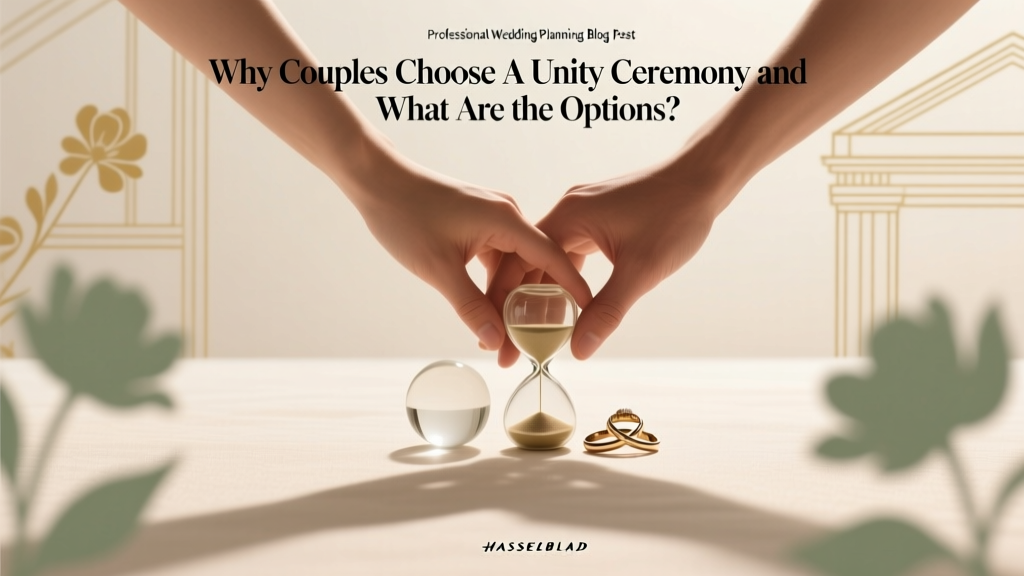
Unity Ceremony: Meaning & Popular Options
Why do couples have a unity ceremony—and what are the options?
If you’re planning a wedding, you’ve probably heard someone mention a “unity ceremony” and wondered if it’s something you have to do—or if it’s just another Pinterest trend that adds time and cost. Maybe you like the idea of a meaningful ritual, but you’re not sure what fits your personalities (or your venue), especially if you’re keeping things short.
A unity ceremony can be a beautiful way to show what your marriage is about, but it’s also one of the easiest parts of a wedding to customize, modernize, or skip entirely. Knowing the purpose and your options helps you choose a moment that feels genuine rather than forced.
Quick answer: What’s the point of a unity ceremony?
Couples have a unity ceremony to symbolize two lives (and sometimes two families) joining into one—in a way guests can see, feel, and remember. It’s optional, and it works best when it reflects your values, culture, faith (if any), and the tone of your wedding. Modern weddings use unity rituals to add personal meaning, involve loved ones, and create a keepsake from the day.
Q: What exactly is a unity ceremony?
A unity ceremony is a short ritual during the wedding ceremony—often right after vows or readings—where the couple performs a symbolic action together. Traditionally, this might be a unity candle, but today it can be anything from a sand ceremony to planting a tree.
“A unity ceremony is like a visual vow,” says Maya Reynolds, wedding officiant. “It gives guests a moment to breathe and absorb what’s happening, and it gives the couple a shared action they’ll remember when the nerves kick in.”
Q: Do we have to include a unity ceremony?
No. There’s no etiquette rule that says you need one. Many couples skip a unity ritual and still have a deeply meaningful ceremony. If your ceremony is already packed (religious requirements, cultural traditions, readings, live music), it’s perfectly polite to leave it out.
That said, unity ceremonies are popular because they’re a simple way to personalize the wedding ceremony without writing a novel of vows. They’re also useful when you want to involve children or parents, or when you want a wedding tradition that doesn’t feel overly religious.
Why couples choose a unity ceremony (real-world reasons)
- A clear symbol: For couples who aren’t comfortable with long vows, a unity ritual adds meaning without extra words.
- Family blending: A unity ceremony can include kids or parents in blended family weddings.
- A cultural bridge: Interfaith or multicultural couples sometimes use a unity ritual as a neutral “we’re building something new” moment.
- A keepsake: Some unity ceremony ideas create an item you can keep at home (a framed print, planted tree, wine box, quilt square).
- Guest experience: It breaks up the ceremony flow and gives guests a memorable highlight—especially in shorter modern ceremonies.
“We wanted something symbolic but not cheesy,” shares Jordan & Elise, who married in a backyard micro-wedding. “We mixed sand from beaches where we grew up. It took 45 seconds, but our families still talk about it.”
Unity ceremony options (and how to choose the right one)
1) Unity candle ceremony
Best for: Traditional weddings, indoor ceremonies, couples who like classic symbolism.
How it works: Two taper candles (representing each person/family) light a center candle together.
Modern considerations: Outdoor weddings can be windy. Many couples use hurricane glass or LED candles for reliability and venue safety.
Tip: If parents are involved, have them light the side candles, then you light the center together—simple and sweet.
2) Sand ceremony
Best for: Beach weddings, destination weddings, kids involvement, couples who want an easy setup.
How it works: You pour different colored sands into a single vessel.
Modern considerations: Choose a container you’d actually display. Many couples use a glass frame or a lidded vase to prevent shifting.
3) Handfasting
Best for: Couples who want a spiritual-but-not-religious moment, Celtic-inspired weddings, outdoor ceremonies.
How it works: The officiant ties a cord or ribbon around your hands while you exchange vows or blessings.
Modern considerations: Great for modern ceremonies because it’s visually meaningful and doesn’t require props beyond cords. You can use fabric from family heirlooms for extra sentiment.
4) Tree planting ceremony
Best for: Nature lovers, backyard weddings, eco-friendly weddings, couples who want a living keepsake.
How it works: You add soil and water to a potted tree or plant.
Modern considerations: Check venue rules (some venues won’t allow digging). Many couples plant into a pot on-site, then transfer it later.
“It’s one of the most ‘us’ things we did,” says Priya, who chose a potted olive tree. “We water it on our anniversary, and it feels like a tiny ritual that kept going after the wedding.”
5) Wine box (or love letter) ceremony
Best for: Couples who love wine, private moments, sentimental keepsakes.
How it works: You place a bottle of wine (or favorite spirit) and letters to each other in a box, then seal it to open on a future anniversary (or during a tough time).
Modern considerations: Works especially well for intimate weddings and micro-weddings. Assign someone responsible to store it safely afterward.
6) Unity knot / rope ceremony
Best for: Couples who want a quick, non-messy ritual with strong symbolism.
How it works: You tie a knot together (sometimes using multiple cords representing values or families).
Modern considerations: Ideal for venues with strict rules (no flames, no confetti, no liquids).
7) Blended family unity ceremony ideas
Best for: Couples with children, stepfamilies, family-centered ceremonies.
Options: Family sand ceremony (each child pours), handfasting with kids holding the cords, a family vow, or a “family puzzle” where each person places a piece.
Tip: Keep the language warm and inclusive. Your officiant can say: “Today, this isn’t just a marriage—it’s a family.”
Traditional vs. modern approaches: which one fits you?
If you’re more traditional: Unity candle, a religious unity ritual aligned with your faith, or a family blessing often feels appropriate. These fit well in formal venues and classic ceremony scripts.
If you’re more modern: Handfasting, tree planting, or a wine box ceremony tends to feel less staged and more personal. These are popular in 2025 wedding trends favoring “meaningful minimalism”—shorter ceremonies, fewer formalities, and more intentional moments.
If you’re blending cultures or faiths: A unity ceremony can be the “third space” that belongs to both of you. Consider pairing it with a short explanation in your program so guests understand the symbolism.
Actionable tips to make your unity ceremony feel natural
- Keep it short: Aim for 30–90 seconds. Your guests should understand what’s happening without a long speech.
- Assign the setup: Ask a coordinator, planner, or trusted friend to place items before the ceremony starts so there’s no awkward scrambling.
- Check venue rules: Many venues restrict open flames, liquids, or planting in the ground—especially historic sites and indoor spaces.
- Practice once: Especially for handfasting and sand pouring. A quick rehearsal prevents fumbling with cords or spilling sand on formalwear.
- Make it display-worthy: If you’re creating a keepsake, choose colors and materials that match your home style, not just your wedding palette.
- Don’t force sentiment: If it doesn’t feel like you, skip it. Your vows, ring exchange, or a meaningful reading can carry the emotion.
Common questions and edge cases
What if we want a unity ceremony, but we’re not religious?
You have tons of options. Sand ceremonies, handfasting, tree planting, unity knots, and wine box ceremonies are popular choices for secular weddings. Your officiant can frame it as a symbol of partnership rather than spirituality.
Can we do more than one unity ritual?
You can, but keep the total time in mind. If you’re doing multiple traditions (for example, a cultural tea ceremony plus a unity candle), consider making one part private or moving it to the reception to keep the ceremony flow smooth.
Is a unity ceremony appropriate for a second marriage?
Absolutely. Many couples in a second marriage choose a unity ritual that focuses on the present—like a wine box with letters, a tree planting ceremony, or a simple handfasting. If children are involved, a blended family unity ceremony can feel especially meaningful.
What if our families expect a unity candle, but we don’t want it?
This comes up a lot. A respectful compromise is choosing a different unity ceremony and explaining it as “our version” of the tradition. Or you can include family by having parents do a short blessing or lighting of candles before the processional, keeping your main ceremony exactly how you want it.
How do we explain the unity ceremony to guests?
Keep it simple: one sentence from the officiant or a short note in the program. Example: “The couple will now blend sands from their hometowns, symbolizing two stories becoming one shared future.”
Takeaway
A unity ceremony isn’t required, but it’s a lovely way to show your guests what your marriage stands for—especially in modern weddings where personalization matters more than tradition for tradition’s sake. Choose a unity ritual that feels like you, keep it short and well-planned, and you’ll end up with a meaningful moment (and maybe a keepsake) you’ll be glad you included.
More Articles
 White House Weddings: 11 Ceremonies & Why None Since 1971
 Thank You for Wedding Congratulations: 7 Sincere Responses
 Wedding Alone? 7 Truths You Need to Know
 Snooki’s Wedding Cost: $500K+ Breakdown (2026)
 Wedding Dress Regret: Why 68% of Brides Feel It (2026)
 Wedding Gifts and Taxes: When You Might Owe IRS (2026)
 Do Women Get Engagement Rings & Wedding Bands? (2026)
 Engagement vs Wedding Ring Order: What 87% Get Wrong
 Wedding Band Before Engagement Ring? (2026)
 Wedding Ring Side: The Left-Hand Tradition (2026)